• Theaster Gates illuminates the dark history of Maine’s interracial exiles

    Document Journal
    2019-03-18

    Ann Binlot

    For his first solo museum exhibition in France at Palais de Tokyo, Theaster Gates explores America’s dark forgotten past through the interracial exile of Malaga Island.

    “Nothing is pure in the end… A sea of wood, An island of debate. Can an exhibition start to shift the negative truths of the history of a place?”

    Theaster Gates has exemplified the meaning of social practice in his work, creating new models for building community while bringing awareness to both the historical and present-day struggles of black America. In Amalgam, his first solo museum exhibition in France at the Palais de Tokyo in Paris, the Chicago-based artist shed light on Malaga Island, a 41-acre island located at the mouth of the New Meadows River in Casco Bay, Maine. The island was a fishing hamlet, home to an interracial community born out of the Civil War until 1912, when the Maine governor Frederick Plaisted forced its poorest population, a group of about 45 mixed-race individuals, off the island. Some relocated in Maine, while others were involuntarily committed to psychiatric institutions. Ashamed to be associated with the island and the stigma that came with being from there, many of its descendants feared speaking about the incident, which stemmed from racism and classism…

    Read the entire article here.

  • That Middle World: Race, Performance, and the Politics of Passing by Julia S. Charles (review)

    Journal of Southern History
    Volume 88, Number 1, February 2022
    pages 164-165
    DOI: 10.1353/soh.2022.0019

    Tyler Sperrazza
    University of New Haven, West Haven, Connecticut

    That Middle World: Race, Performance, and the Politics of Passing. By Julia S. Charles. (Chapel Hill: University of North Carolina Press, 2020. Pp. xviii, 224. Paper, $29.95, ISBN 978-1-4696-5957-2; cloth, $95.00, ISBN 978-1-4696-5956-5.)

    The past decade has seen a tremendous growth in scholarly inquiry around the subject of racial passing. The context of the current historical moment coupled with viral discussions of cultural appropriation and “blackfishing” brings a sense of urgency to understanding the long history of passing and its function in the U.S. context. Julia S. Charles’s That Middle World: Race, Performance, and the Politics of Passing offers a perspective on this phenomenon that places performance at the heart of the racial passing experience. Charles calls for a rejection of previous scholarly treatments of passing that foreground experiences of loss among those who pass and instead argues for a focus on the opportunities that performing race offered to certain mixed-race African American citizens. Charles presents a book of theory and philosophy on racial passing meant to inform the ways scholars of African American literature and media studies can make sense of mixed-race and passing characters throughout nineteenth- and twentieth-century literature.

    The title of Charles’s book also serves as its main theoretical construction. “That Middle World” is a location that Charles defines as an interstitial and metaphysical space occupied by mixed-race characters that becomes the “location of culture and identity for so-called mulattoes in African American fiction” (p. 22). This space both creates and destroys boundaries between Black and white and offers a means of interpreting passing African Americans’ experiences as a constant process of both making and crossing borders in a liminal space free of the “inadequate Black-white racial binary” (p. 40). Throughout the central chapters of the book, Charles adroitly moves between the historical lives and contexts of African American authors and the worlds their characters inhabit. Many of her subjects—Charles W. Chesnutt being central—were themselves mixed-race and able to navigate the boundaries of That Middle World in their everyday lives. Charles’s interweaving of the historical and the literary is a welcome addition to this growing field of passing studies…

    Read or purchase the review here.

  • Belonging is Everything: Talking with Georgina Lawton

    The Rumpus
    2021-03-01

    Donna Hemans

    “My teacher’s methods were most definitely trash, but that day she taught me a valuable lesson about race,” Georgina Lawton writes in her memoir Raceless: In Search of Family, Identity, and the Truth about Where I Belong. “She let me know that whiteness is a wholly exclusive racial category based around notions of racial purity, and as such would never allow admittance to anyone like me.” While Lawton’s teacher had drawn boundaries around whiteness that excluded Lawton, her white, Anglo-Irish parents stubbornly insisted that their darker-skinned daughter was white like they were.

    In her memoir, out now from Harper Perennial, Lawton describes her family’s silence around her racial identity, their refusal to acknowledge her difference, her own experience with racial reckoning, and the detrimental effects of growing up in a color-blind household. “As a child I spent a very long time trying to work everything out for myself before eventually becoming invested in upholding the story my parents told me: I was theirs and that’s all that mattered,” Lawton writes.

    As her father is dying of cancer, Lawton and he briefly speak for the first time about the potential that their DNA is different. After her father’s death in her early twenties, Lawton embarks on a journey of self-discovery, traveling to and living in predominantly Black communities in the United States, the Caribbean, and Africa, in a bid to understand and claim her own identity. The memoir, though, is not solely about Lawton’s childhood and journey. She talks to sociologists, psychologists, and others who, like her, had a part of their identities obscured, to understand how identity is formed and its relationship with race.

    I spoke to Lawton recently about the challenges of writing a memoir about a story her family would rather not confront, the necessity and value of family stories, and the lasting impact of silences…

    Read the entire interview here.

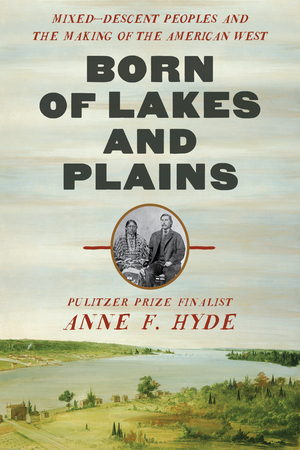
  • Born of Lakes and Plains: Mixed-Descent Peoples and the Making of the American West

    W. W. Norton & Company
    2022-02-25
    464 pages
    Hardcover ISBN: 978-0-393-63409-9

    Anne F. Hyde, Professor of History
    University of Oklahoma

    A fresh history of the West grounded in the lives of mixed-descent Native families who first bridged and then collided with racial boundaries.

    Often overlooked, there is mixed blood at the heart of America. And at the heart of Native life for centuries there were complex households using intermarriage to link disparate communities and create protective circles of kin. Beginning in the seventeenth century, Native peoples—Ojibwes, Otoes, Cheyennes, Chinooks, and others—formed new families with young French, English, Canadian, and American fur traders who spent months in smoky winter lodges or at boisterous summer rendezvous. These families built cosmopolitan trade centers from Michilimackinac on the Great Lakes to Bellevue on the Missouri River, Bent’s Fort in the southern Plains, and Fort Vancouver in the Pacific Northwest. Their family names are often imprinted on the landscape, but their voices have long been muted in our histories. Anne F. Hyde’s pathbreaking history restores them in full.

    Vividly combining the panoramic and the particular, Born of Lakes and Plains follows five mixed-descent families whose lives intertwined major events: imperial battles over the fur trade; the first extensions of American authority west of the Appalachians; the ravages of imported disease; the violence of Indian removal; encroaching American settlement; and, following the Civil War, the disasters of Indian war, reservations policy, and allotment. During the pivotal nineteenth century, mixed-descent people who had once occupied a middle ground became a racial problem drawing hostility from all sides. Their identities were challenged by the pseudo-science of blood quantum—the instrument of allotment policy—and their traditions by the Indian schools established to erase Native ways. As Anne F. Hyde shows, they navigated the hard choices they faced as they had for centuries: by relying on the rich resources of family and kin. Here is an indelible western history with a new human face.

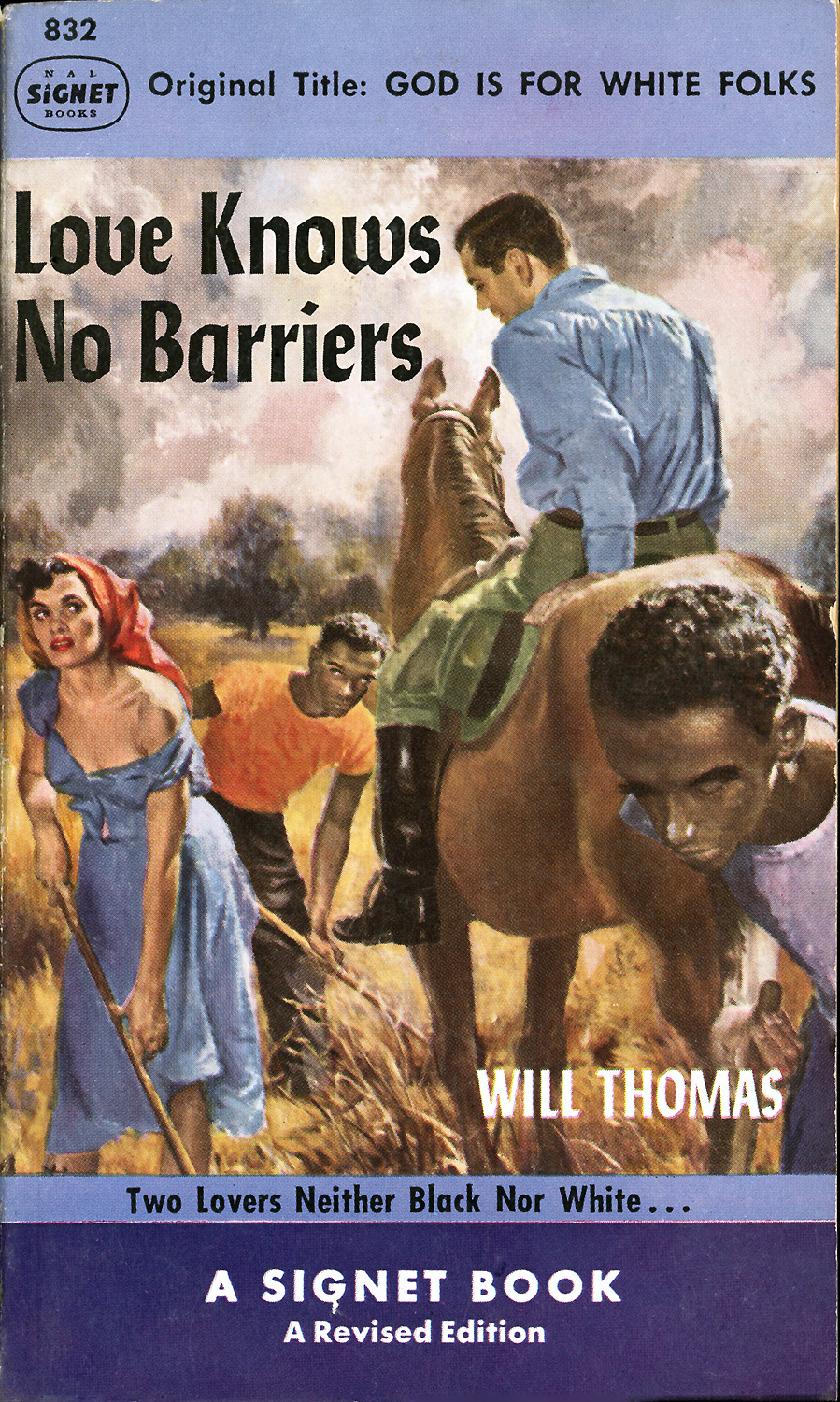
  • Love Knows No Barriers

    New American Library
    1950 (originally published by Creative Age Press in 1947 as God is for White Folks)

    Will Thomas [William Smith] (1900-1970)


    Many Worlds Mingled at Riverbend Plantation

    Riverbend Plantation, isolated and decaying, had seen many strange events, passionate conflict and tragic romance. In the shadows of its crumbling walls you will meet:

    • Beau Beauchamp — the cast-off son of the white plantation owner and his ravishing, dark Creole mistress.
    • Elisse Leseur — a beautiful blonde of mixed descent who shunned the offers of wealthy whites and poor Negroes.
    • Bartolomew — an understanding Northerner who put his theories into practice and fought off an enraged mob.
    • Gaynor Brackens — the hot-blooded son of the leading banker, who determined to have Elisse — at any price.
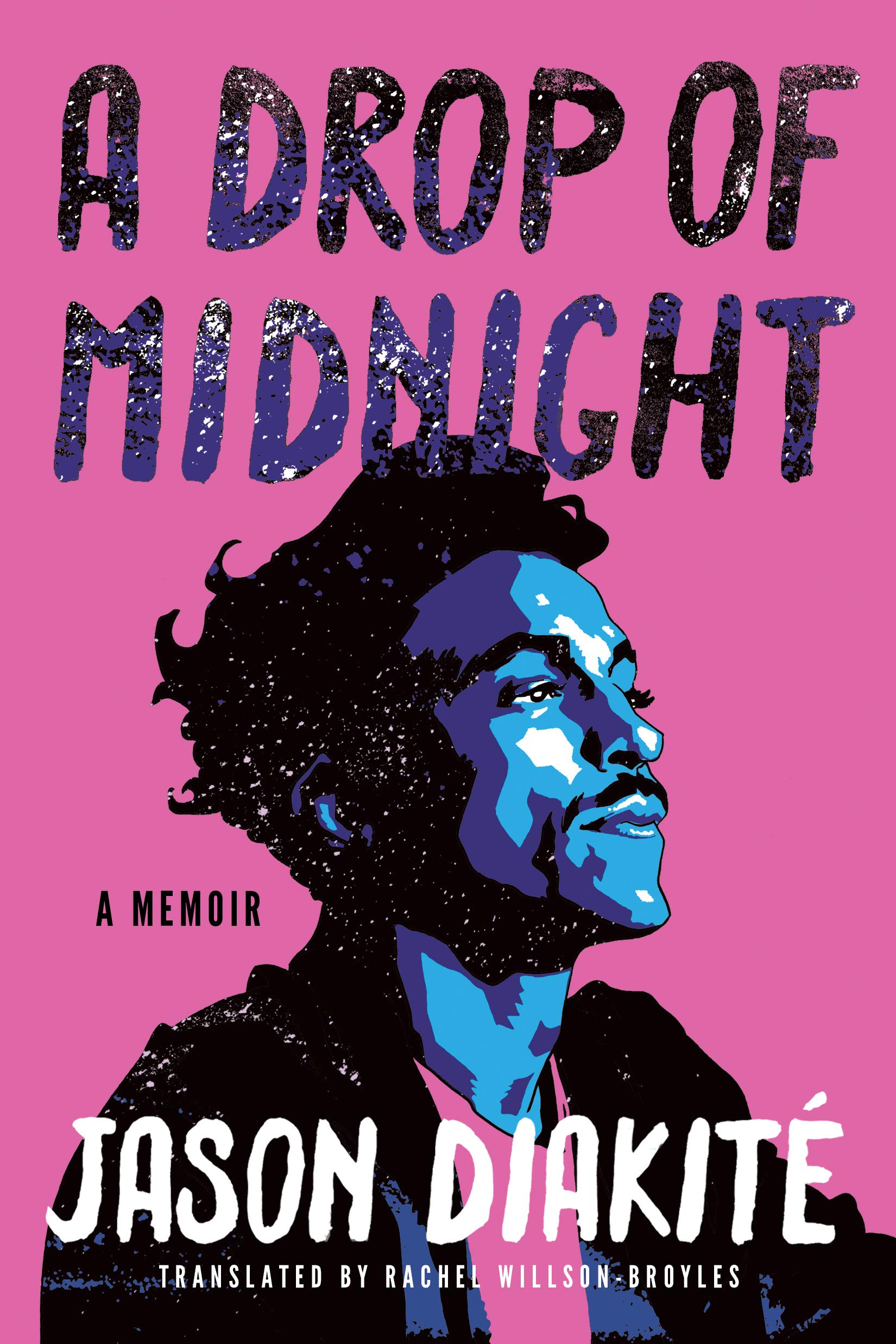
  • A Drop of Midnight: A Memoir

    Amazon Crossing
    2020-03-01
    304 pages
    5.5 x 1 x 8.25 inches
    Hardcover ISBN-13: 978-1542017077
    Paperback ISBN-13: 978-1542016704
    Audio CD ISBN: 978-1799726296

    Jason Diakité

    Rachel Willson-Broyles (Translator)

    World-renowned hip-hop artist Jason “Timbuktu” Diakité’s vivid and intimate journey through his own and his family’s history―from South Carolina slavery to twenty-first-century Sweden.

    Born to interracial American parents in Sweden, Jason Diakité grew up between worlds―part Swedish, American, black, white, Cherokee, Slovak, and German, riding a delicate cultural and racial divide. It was a no-man’s-land that left him in constant search of self. Even after his hip-hop career took off, Jason fought to unify a complex system of family roots that branched across continents, ethnicities, classes, colors, and eras to find a sense of belonging.

    In A Drop of Midnight, Jason draws on conversations with his parents, personal experiences, long-lost letters, and pilgrimages to South Carolina and New York to paint a vivid picture of race, discrimination, family, and ambition. His ancestors’ origins as slaves in the antebellum South, his parents’ struggles as an interracial couple, and his own world-expanding connection to hip-hop helped him fashion a strong black identity in Sweden.

    What unfolds in Jason’s remarkable voyage of discovery is a complex and unflinching look at not only his own history but also that of generations affected by the trauma of the African diaspora, then and now.

  • Sociology of Multiracial Identity in the Late 1980s and Early 1990s: The Failure of a Perspective

    Journal of Ethnic and Cultural Studies
    Volume 8, Number 2 (2021)
    pages 106-125
    DOI: 10.29333/ejecs/643

    Reginald Daniel, Professor of Sociology
    University of California, Santa Barbara

    Sociologists largely failed to comprehend the emergence of multiracial identities in the United States during the late 1980s and early 1990s. This was due, in part, to hypodescent and the monoracial imperative. These social devices, respectively, categorize offspring of interracial unions between Whites and people of color based exclusively on the background of color, and necessitate single-racial identification. This has prohibited the articulation and recognition of multiracial identities. Hypodescent and the monoracial imperative are so normative that they have been taken for granted by sociologists across the monoracial spectrum, much as the larger society. Sociology’s espoused objectivity blinded sociologists to the standpoint of their own monoracial subjectivity. They provided little critical examination of hypodescent and the monoracial imperative in terms of their impact on multiracial identity formations. Some sociologists challenged theories of marginality, which stressed the psychological dysfunction of multiracials. Yet multiracial identities were considered symptomatic of mainly isolated psychological concerns with personal identity. Sociologists were absent from analyses of collective identity and agency speaking to mixed-race concerns. Consequently, they remained on the periphery of social scientific theorizing of multiracial identities in terms of their wider-ranging implications.

    Read the entire article in here.

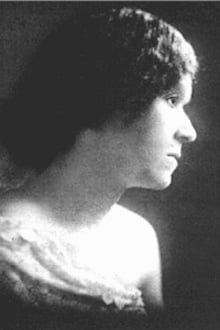
  • Georgia Douglas Johnson, Harlem Renaissance Poet & Playwright

    Literary Ladies Guide: Inspiration for Readers and Writers from Classic Women Authors
    2018-03-29

    Nava Atlas

    Georgia Douglas Johnson (September 10, 1880 – May 14, 1966) was an American poet and playwright associated with the Harlem Renaissance.

    Born Georgia Douglas Camp in Atlanta, Georgia, she grew up in a mixed-race family with African American, Native American, and English roots.

    Her poetry addressed issues of race as well as intensely personal yet ultimately universal themes including love, motherhood, and being a woman in a male-dominated world.

    Four collections of her poetry were published: The Heart of a Woman (1918), Bronze (1922), An Autumn Love Cycle (1928), and Share My World (1962). She wrote nearly thirty plays and numerous other works, some of which have been lost…

    Read the entire article here.
  • Half ‘Asian’/Half ‘Arab’: Reconciling with my Palestinianness

    Medium
    2021-05-20

    Sarah Barzak

    “Oh, your dad’s Palestinian? I have so much respect for you now!” said the Arab girl who sat in front of me in Arabic school.

    Disgusted. Small. was how I felt.

    She sat in front of me every Saturday and only acknowledged my existence on the last day of Arabic school.

    We were 17. Which, frankly, was too old to behave this way under my tiger mom’s standards.
    Kurang ajar, I thought. Who raised you?

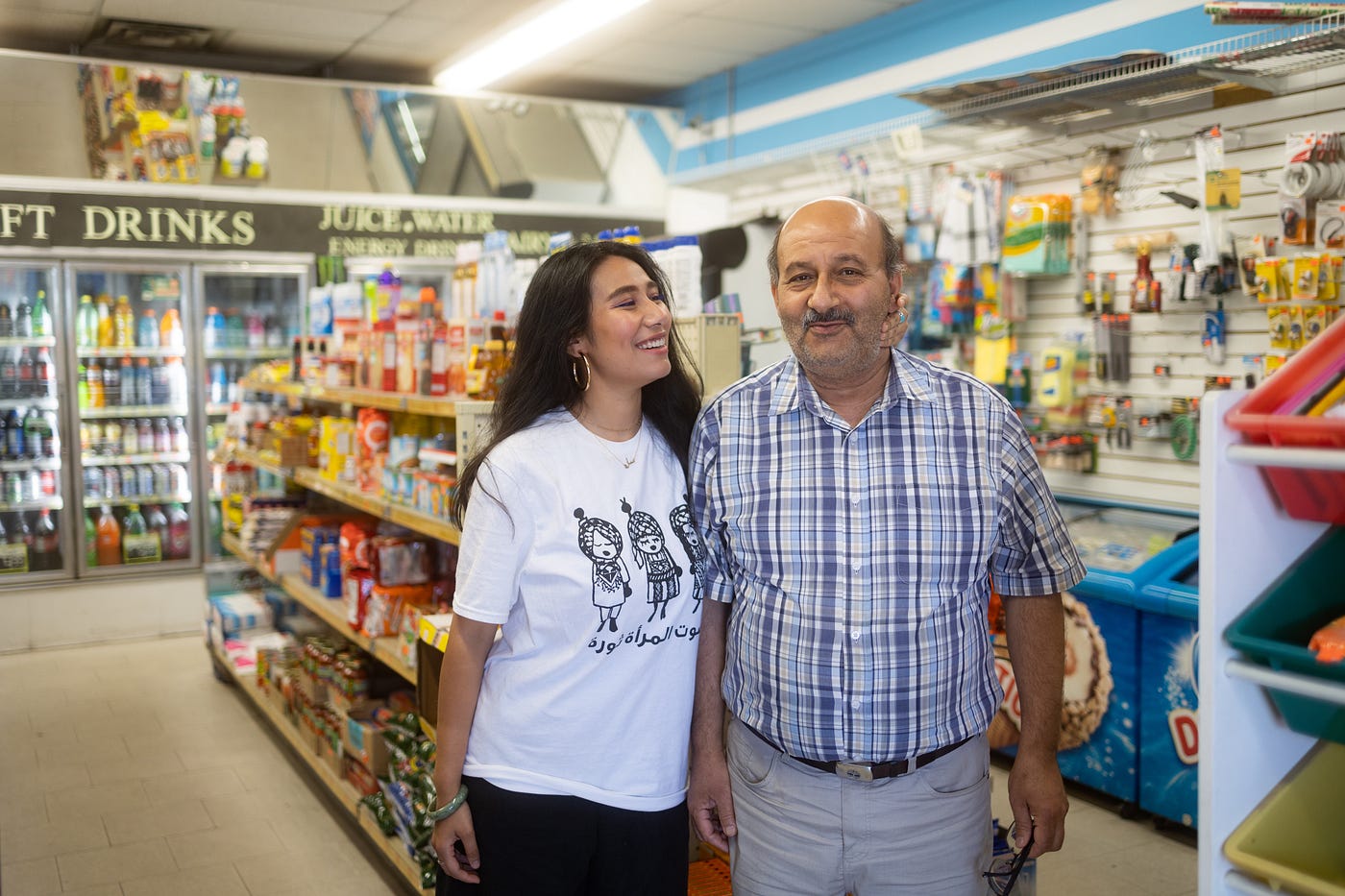
    These interactions didn’t stop in my teens. While working at Baba’s convenience store, an Amtu came in and made small talk as we completed the transaction.

    “Oh, you know, the man who works here is Palestinian,” she said.

    “Yes, I know. He’s my dad,” I responded calmly, “My mother is Malay”…

    Read the entire article here.

  • “Black is Polish”: young black Poles create platform to discuss race in Poland

    Notes From Poland
    2021-06-23

    Zula Rabikowska

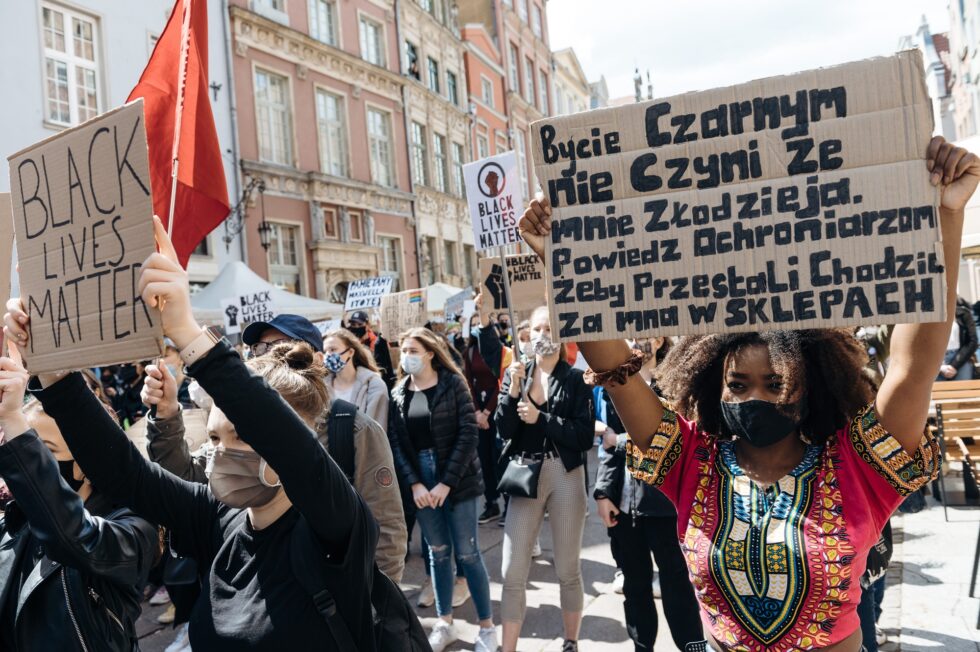
    A year ago, an image of a black Polish girl protesting at a Black Lives Matter demonstration in Warsaw helped to rekindle a long-running debate about language, racial identity and stereotypes in Poland. “Stop calling me Murzyn”, read her placard, referring to a Polish term for a black person that many say has come to hold pejorative meaning.

    The Council for the Polish Language agreed with them in a recent declaration, saying that the word “Murzyn” “should be avoided in the media, official administration and at schools,” as it is no longer neutral, but “burdened with negative connotations”.

    The #dontcallmemurzyn campaign, set up to fight against racial discrimination in the aftermath of the controversy, received domestic and international attention. To continue and broaden the movement’s work, its creators have now set up an educational platform called “Black is Polish”.

    They say they hope to make racism a topic people understand and care about, to fight against what they see as deeply entrenched racism and inequality, and to bring about a long-needed transformation of Polish society…

    Read the entire article here.