• What It’s Like To Be Biracial And Arguing With Your White Family Right Now

    The Huffington Post
    2020-07-13
    Brittany Wong


    KLAUS VEDFELT VIA GETTY IMAGES
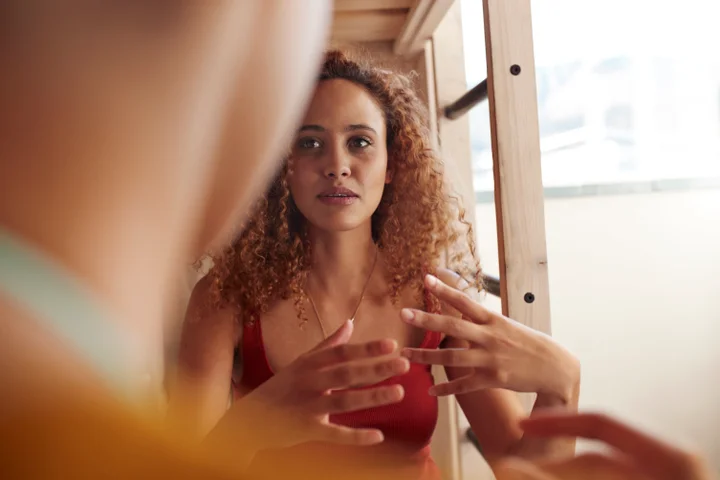
    When you’ve been vulnerable with your white relatives and shared your experiences with racism and they still deny it exists, it’s exhausting.

    For multiracial Americans, having conversations with white relatives about the Black Lives Matter movement and racial injustice is often an uphill battle.

    Rachel Elizabeth Weissler, a Ph.D. student at the University of Michigan, has the kind of close-knit relationship with her dad most people would envy. He lives in Southern California, where Weissler spent most of her childhood, but the two talk frequently. She calls him her “biggest cheerleader.”

    But there’s one topic they always seem to dance around: race.

    Weissler is biracial: Her dad is white and her mom is Black. Though her dad loves Black culture (“Black TV especially,” Weissler said) and clearly, Black women, he tenses up when his daughter wants to talk about what it’s like to be Black in America.

    “He avoids the subject, and when he does bring it up, it’s often in an extremely superficial way,” Weissler said…

    Read the entire article here.

  • On the Borders of Love and Power: Families and Kinship in the Intercultural American

    University of California Press
    July 2012
    366 pages
    Illustrations: 19 b/w photographs, 1 map, 1 table
    Trim Size: 6 x 9
    Hardcover ISBN: 9780520272385
    Paperback ISBN: 9780520272392
    eBook ISBN: 9780520951341

    Edited by:

    David Wallace Adams, Professor of History
    Cleveland State University, Cleveland, Ohio

    Crista DeLuzio, Associate Professor and Altshuler Distinguished Teaching Professor of History
    Southern Methodist University, Dallas, Texas

    Embracing the crossroads that made the region distinctive this book reveals how American families have always been characterized by greater diversity than idealizations of the traditional family have allowed. The essays show how family life figured prominently in relations to larger struggles for conquest and control.

    Table of Contents

    • List of Illustrations
    • Acknowledgments
    • Introduction / David Wallace Adams and Crista DeLuzio
    • PART ONE. DIVERSE FAMILIES AND RACIAL HIERARCHY
      • 1. Breaking and Remaking Families: The Fostering and Adoption of Native American Children in Non-Native Families in the American West, 1880–1940 / Margaret Jacobs
      • 2. Becoming Comanches: Patterns of Captive Incorporation into Comanche Kinship Networks, 1820–1875 / Joaquín Rivaya-Martínez
      • 3. “Seeking the Incalculable Benefit of a Faithful, Patient Man and Wife”: Families in the Federal Indian Service, 1880–1925 / Cathleen D. Cahill
      • 4. Hard Choices: Mixed-Race Families and Strategies of Acculturation in the U.S. West after 1848 / Anne F. Hyde
    • PART TWO. LAW, ORDER, AND THE REGULATION OF FAMILY LIFE
      • 5. Family and Kinship in the Spanish and Mexican Borderlands: A Cultural Account / Ramón A. Gutiérrez
      • 6. Love, Honor, and the Power of Law: Probating the Ávila Estate in Frontier California / Donna C. Schuele
      • 7. “Who has a greater job than a mother?” Defining Mexican Motherhood on the U.S.-Mexico Border in the Early Twentieth Century / Monica Perales
      • 8. Borderlands/La Familia: Mexicans, Homes, and Colonialism in the Early Twentieth-Century Southwest / Pablo Mitchell
    • PART THREE. BORDERLAND CULTURES AND FAMILY RELATIONSHIPS
      • 9. Intimate Ties: Marriage, Families, and Kinship in Eighteenth-Century Pueblo Communities / Tracy Brown
      • 10. The Paradox of Kinship: Native-Catholic Communities in Alta California, 1769–1840s / Erika Pérez
      • 11. Territorial Bonds: Indenture and Affection in Intercultural Arizona, 1864–1894 / Katrina Jagodinsky
      • 12. Writing Kit Carson in the Cold War: “The Family,” “The West,” and Their Chroniclers / Susan Lee Johnson
    • Selected Bibliography
    • List of Contributors
    • Index
  • Today, one in four Latin Americans self-identify as having African ancestry, according to a recent World Bank report (approximately 645 million people live in Latin America and the Caribbean). But, as the report explains, Afro-descendants are “underrepresented in decision-making positions, both in the private and the public sector,” and they “are 2.5 times more likely to live in chronic poverty than whites or mestizos.”

    Jorge Ramos, “A Hard Conversation for the Latino Community,” The New York Times, July 3, 2020. https://www.nytimes.com/2020/07/03/opinion/ramos-afro-latinos-racism.html.

  • Robert De Niro gets candid about raising biracial children: It’s ‘scary’

    Good Morning America
    2020-06-12

    Danielle Long

    As people around the world continue to protest in support of black lives, parents are forced to have difficult discussions with their children about what’s happening — including Robert De Niro.

    During an appearance on “The Tonight Show Starring Jimmy Fallon,” the 76-year-old actor, who has six biracial children, was asked, “Have you had the conversation about race with your kids?”

    “My children are all half black and I don’t have … even me, I take certain things for granted,” he admitted.

    The “Irishman” star said the topic is not one they discuss often but “they know” and shared how he can relate to other parents…

    Read the story and watch the video here.

  • Chiefs’ Patrick Mahomes makes his voice heard. He should talk about the Tomahawk Chop

    The Kansas City Star
    2020-06-15

    Dave Helling

    Kansas City Chiefs quarterback Patrick Mahomes recently joined with other NFL players in condemning racism and demanding that the league recognize the players’ right to protest injustice.

    “I am Tamir Rice,” Mahomes says in the viral Black Lives Matter video, referring to the 12-year-old African American killed by the Cleveland police.

    Mahomes’ willingness to take a stand sent a potent message that resonated far beyond Kansas City. “He has been the MVP of this league. He has won a Super Bowl,” said Doug Williams, a former NFL quarterback who’s African American. “It says a lot that he wanted to be involved in pushing for … change. It was very powerful.”…

    Read the entire article here.

  • A Hard Conversation for the Latino Community

    The New York Times
    2020-07-03

    Jorge Ramos, Television Anchor
    Univision


    Ilia Calderón onstage during Univision’s Premio Lo Nuestro 2020 at Miami’s American Airlines Arena, in February. Jason Koerner/Getty Images

    Racism is deeply rooted in America’s social system, putting Afro-Latinos at a constant disadvantage.

    MIAMI — Every weeknight, I sit down next to my co-anchor Ilia Calderón to host the Spanish-language news program “Noticiero Univision.” Although our many viewers have come to know Ms. Calderón’s face, not many know how much she has had to overcome to sit in that chair. Her story, like that of many Latinos with African ancestry in the United States, is one of tremendous personal achievement, as well as astonishing perseverance in the face of deep-seated racism.

    Ms. Calderón was born in the Chocó region of Colombia, a place she describes as “our little Black paradise.” When Ilia was 10, she left home to study in a Catholic school in Medellín, where one of the white students was so disgusted by the color of Ilia’s skin — and so proud of her own fair complexion — that she told Ilia, “You’re Black? Not even my horse is black!” That first encounter with racism in Latin America left a mark on Ilia — one she never forgot.

    When she moved to Miami in 2001 to pursue a career in journalism, things weren’t much different. “I had to endure racism in Colombia,” she told me recently, “and it turns out that here I have to face the same thing. It’s how they look at you, how they behave when you are around. …It’s like you have to go through that experience twice: For being Hispanic and also for being Black.”

    According to a 2014 survey by the Pew Research Center, 24 percent of the roughly 54 million Hispanics living in the United States at the time self-identified as Afro-Latino, Afro-Caribbean or as another, more specific Afro-Latino identity, such as Afro-Colombian. At the same time, 34 percent identified as “mestizo, mulatto or some other mixed race.”…

    Read the entire article here.

  • Between Two Worlds

    Toronto Life
    2018-05-22

    Anais Granofsky

    I grew up in ​subsidized housing​ with my mom, ​and spent weekends with my wealthy grandparents at their Bridle Path mansion. If I wanted to be loved, I’d have to learn to live two lives

    My mother, Jean Walker, was the 13th of 15 children, born in 1949 to a church-going black family on a farm in Ohio. The house had only two bedrooms, so her parents slept on a pull-out bed on the porch in the summer and in the living room in winter. Her seven brothers slept in one bedroom, while the eight sisters shared the other. They attended a small school where the white kids sat up front and the black students at the back, separated by a row of empty desks. When she wasn’t studying, she did chores around the farm. The girls planted the vegetable gardens with corn and green beans, churned butter, did laundry, and took care of the younger children. The boys helped with the heavy work and looked after the animals. “With 14 siblings,” my mother used to say, “you’d better get to the table quick, or you weren’t going to eat that day.” There was never enough food or money to go around, but the family didn’t feel poor. Everyone around them was in the same situation.

    Jean was a sensitive girl who used to lie in the fields and watch the clouds scuttle by. Her parents were always quick with a whipping, and the casual violence wore on her soul. She found a cubbyhole in the back of a closet, where she’d hide out and devour books by the light of a bare bulb. Desperate to get away from her chaotic, rural home life, she worked tirelessly in high school to earn a scholarship to Antioch in Yellow Springs, Ohio, a liberal arts college and one of the first post-secondary schools to integrate. As a nascent feminist, she was drawn to Antioch’s progressive vibe. In 1971, she enrolled in women’s studies and journalism…

    Read the entire article here.

  • Colin Kaepernick’s Life to Become Netflix Series From Ava DuVernay

    The Hollywood Reporter
    2020-06-29

    Lesley Goldberg, West Coast TV Editor

    ‘Colin in Black & White’ will tell the story of the athlete and activist’s adolescent life.

    Colin Kaepernick’s formative years are becoming a Netflix series.

    The athlete and activist is teaming with Ava DuVernay for Colin in Black & White, a scripted limited drama that has been picked up straight to series at the streaming giant.

    The six-episode series will examine Kaepernick’s adolescent life, focusing on his high school years and the acts and experiences that led him to become the activist he is today. Kaepernick will appear as himself as the narrator of the series, which will cast an actor to play the younger version of the star quarterback.

    Kaepernick in 2016 protested racial injustice, police brutality and systematic oppression when he kneeled during the national anthem ahead of a San Francisco 49ers game. His act of protest was, at the time, considered polarizing with both NFL officials and fans, eventually drawing the ire of President Trump, who urged team owners to fire players who protest during the national anthem. Kaepernick became a free agent in 2017 and filed a lawsuit against the NFL and its owners, alleging that they colluded to keep him out of the league. He remains a free agent. More recently, in the wake of George Floyd’s killing at the hands of Minnesota police, Kaepernick has become another face of the Black Lives Matter movement.

    Read the entire article here.

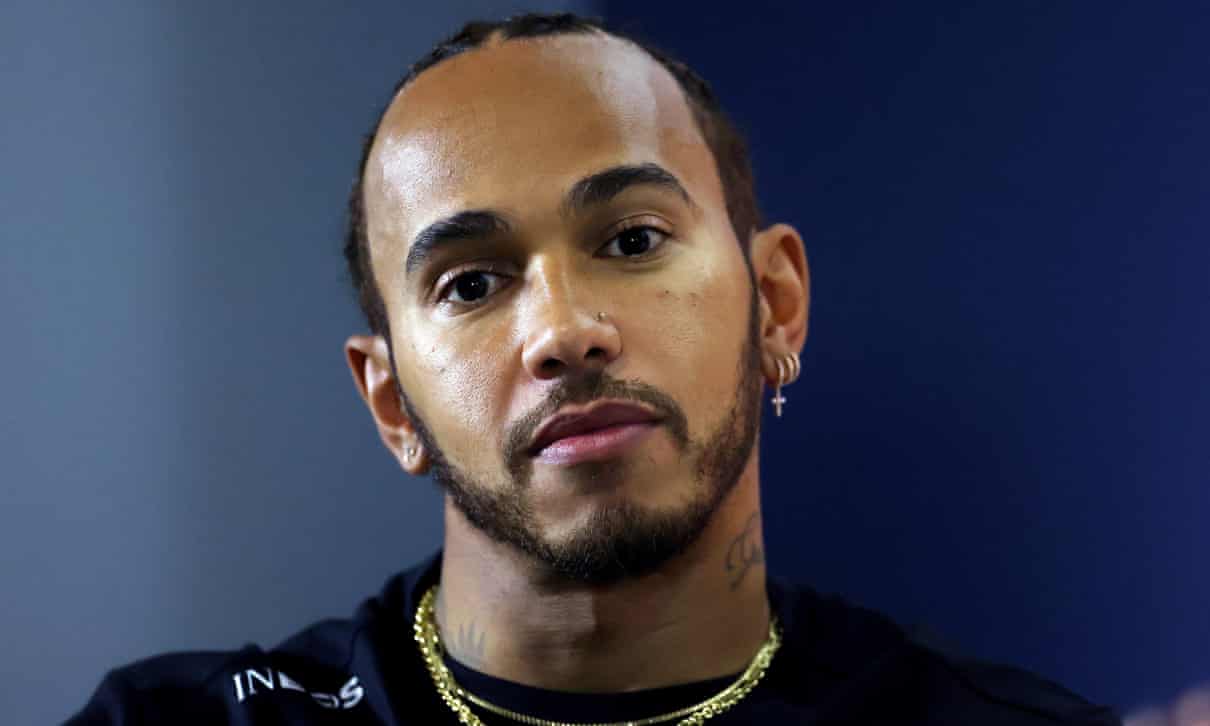
  • Lewis Hamilton attacks silence from F1 paddock over George Floyd killing

    The Guardian
    2020-05-31

    Giles Richards


    Lewis Hamilton has accused ‘some of the biggest stars’ in his sport of ‘staying silent in the midst of injustice’ after the killing of George Floyd by Minneapolis police. Photograph: David Davies/PA
    • Hamilton: ‘I see those of you who are staying silent’
    • Driver condemns response from ‘white-dominated sport’

    Lewis Hamilton has spoken out about the killing of George Floyd and offered a damning condemnation of the silence from others in Formula One, including his fellow drivers.

    “I see those of you who are staying silent, some of you the biggest of stars yet you stay silent in the midst of injustice,” he wrote on Instagram. “Not a sign from anybody in my industry which of course is a white-dominated sport.

    “I’m one of the only people of colour there yet I stand alone. I would have thought by now you would see why this happens and say something about it but you can’t stand alongside us. Just know I know who you are, and I see you.”

    Hamilton is the only black driver in Formula One and has been outspoken on the sport’s need for greater diversity in the past. “There’s barely any diversity in F1,” Hamilton said in 2018. “Still nothing’s changed in 11 years I’ve been here.”…

    Read the entire article here.

  • “My Kids Are Getting The Message Loud And Clear: Being Black Is A Burden”

    Vogue UK
    2020-07-05

    Christabel Nsiah-Buadi


    ©Misan Harriman

    Unable to shield her children from the global conversation on anti-Black racism, Christabel Nsiah-Buadi is leaning in to celebrating her kids’ #BlackBoyJoy and #BlackGirlMagic. But, she writes, real change takes time.

    A few weeks ago, my daughter handed me one of her final pieces of first-grade homework. It was a memory book. On the front page, she had coloured all of the kids with brown skin. Inside, she drew a picture of herself hugging her teacher, who is Asian American. She coloured both of them with pink skin.

    I found that strange, because it was the first time my kid had done that in her nearly eight years. As a child with a white father and a black mother, she is used to seeing people of different skin colours in her life. Indeed, my husband and I have made a conscious effort to make sure she could see the power in being a brown-skinned girl, because we knew that by being a Black kid living in the US or the UK, it was only a matter of time before she’d be told – by someone in her life, or something she heard, saw or watched – that she was less valued than her white friends…

    Read the entire article here.