• Pacific children of US servicemen for study

    Otago Daily Times
    University of Otago, New Zealand
    2010-01-05

    Allison Rudd

    World War 2 brought two million United States servicemen to New Zealand and many Pacific Islands. Inevitably, many formed liaisons with local women and fathered possibly several thousand children. What happened to those babies, and, more than 60 years later, where are they now? Allison Rudd talks to University of Otago historian Prof Judith Bennett, who has won funding to try and trace the all-but forgotten offspring.

    Judith Bennett was doing some research when she got sidetracked.

    She was compiling information for a book on the environmental effect of the war on Pacific Island countries when she came across references to the mixed-race children of local women and United States servicemen.

    Her interest was piqued.

    “I was very curious because I could find very little on this topic.

    “So it seemed to me there were questions that needed to be answered: How were these children accepted?

    “Did their parentage affect their land rights?

    “Did it affect their marriage prospects?

    “How were their mothers characterised in their own societies?

    “How did the US Government view marriage?

    “How did the indigenous people view these relationships?

    “Were they profitable, were they shameful, or were they a mixture?

    “What have been the long-term effects of mixed parentage?

    “These children would have looked different – their fathers were white or African American.

    “What impact did that have on them as they were growing up and when they were adults?”

    Now Prof Bennett hopes to satisfy her curiosity, having secured a $917,000 Marsden grant to embark on a three-year research project…

    Read the entire article here.

  • Families on the color-line: patrolling borders and crossing boundaries

    Race and Society
    Volume 5, Issue 2, 2002
    Pages 139-161
    DOI: 10.1016/j.racsoc.2004.01.001

    Erica Chito-Childs, Associate Professor of Sociology
    Hunter College, City University of New York

    Multiracial couples and families are becoming increasingly more common, yet opposition to these relationships still exists even if it is often hidden in color-blind language. In this lingering societal opposition to black-white unions, the strongest opposition often comes from the couples’ families. The social institution of the family plays an integral role in reproducing the dominant ideologies of race that exist in society, and more specifically a racialized discourse that actively discourages interracial unions. Families reproduce racial boundaries, by patrolling who their members can and cannot become involved with. In our society where group membership is all-important and identity is based primarily on one’s racial group, families object to individuals from different “racial” groups redefining themselves apart from their racial identities. Drawing from in-depth interviews with black-white couples, the responses of their white and black families will be explored to illustrate how families express opposition to black-white interracial relationships. In both white and black families, certain discourses are used when discussing black-white relationships that reproduce the image of these unions as different, deviant, even dangerous. Interracial relationships and marriage often bring forth certain racialized attitudes and beliefs about family and identity which otherwise are not expressed.

    Article Outline

    • 1. The role of family in societal opposition
    • 2. Theorizing black–white couples and their families
    • 3. Racialized discourses and color-blindness
    • 4. Methods
    • 5. Findings
    • 6. Color-blind or blinded by color?
    • 7. Family responses: from ambivalence to opposition
    • 8. “But what about the children?”
    • 9. Black–white differences in familial opposition
    • 10. Black, white, and shades of grey
    • References

    Read or purchase the article here.

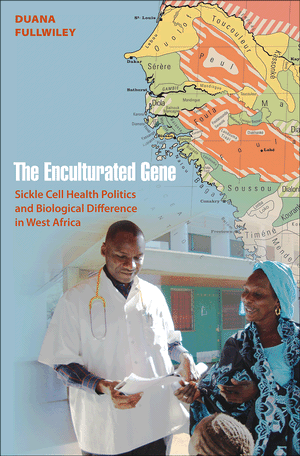
  • The Enculturated Gene: Sickle Cell Health Politics and Biological Difference in West Africa

    Princeton University Press
    2011
    368 pages
    6 x 9; 7 halftones. 1 line illus. 4 maps
    Paper ISBN: 9780691123172
    Cloth ISBN: 9780691123165
    eBook ISBN: 9781400840410

    Duana Fullwiley, Associate Professor of African and African American studies and of Medical Anthropology
    Harvard University

    In the 1980s, a research team led by Parisian scientists identified several unique DNA sequences, or haplotypes, linked to sickle cell anemia in African populations. After casual observations of how patients managed this painful blood disorder, the researchers in question postulated that the Senegalese type was less severe. The Enculturated Gene traces how this genetic discourse has blotted from view the roles that Senegalese patients and doctors have played in making sickle cell “mild” in a social setting where public health priorities and economic austerity programs have forced people to improvise informal strategies of care.

    Duana Fullwiley shows how geneticists, who were fixated on population differences, never investigated the various modalities of self-care that people developed in this context of biomedical scarcity, and how local doctors, confronted with dire cuts in Senegal’s health sector, wittingly accepted the genetic prognosis of better-than-expected health outcomes. Unlike most genetic determinisms that highlight the absoluteness of disease, DNA haplotypes for sickle cell in Senegal did the opposite. As Fullwiley demonstrates, they allowed the condition to remain officially invisible, never to materialize as a health priority. At the same time, scientists’ attribution of a less severe form of Senegalese sickle cell to isolated DNA sequences closed off other explanations of this population’s measured biological success.

    The Enculturated Gene reveals how the notion of an advantageous form of sickle cell in this part of West Africa has defined–and obscured–the nature of this illness in Senegal today.

    Table of Contents

    • List of Illustrations
    • Preface
    • Acknowledgments
    • Chapter One: Introduction: The Powers of Association
    • Chapter Two: Healthy Sicklers with “Mild” Disease: Local Illness Affects and Population-Level Effects
    • Chapter Three: The Biosocial Politics of Plants and People
    • Chapter Four: Attitudes of Care
    • Chapter Five: Localized Biologies: Mapping Race and Sickle Cell Difference in French West Africa
    • Chapter Six: Ordering Illness: Heterozygous “Trait” Suff ering in the Land of the Mild Disease
    • Chapter Seven: The Work of Patient Advocacy
    • Conclusion: Economic and Health Futures amid Hope and Despair
    • Notes
    • References
    • Index
  • Racial identity and the spatial assimilation of Mexicans in the United States

    Social Science Research
    Volume 21, Issue 3 (September 1992)
    pages 235-260
    DOI: 10.1016/0049-089X(92)90007-4

    Douglas S. Massey, Henry G. Bryant Professor of Sociology and Public Affairs
    Princeton University

    Nancy A. Denton, Professor of Sociology
    Center for Social and Demographic Analysis
    State University of New York, Albany

    Mexico’s national ideology holds that Mexicans are mestizos, a racially mixed group created by the union of Europeans and Indians. When Mexicans migrate to the United States, this mixed racial identity comes into conflict with Anglo-American norms that view race dichotomously, as Indian or white but not both. In this paper we examine the process of ideological assimilation by which Mexicans in the United States shift their identities from mestizo to white, and then measure the effect that race has on the level of residential segregation from non-Hispanic whites. Although residential barriers are not as severe for mestizos as for Hispanics of African heritage, we find that mestizos are significantly less likely than white Mexicans to achieve suburban residence and that this fact, in turn, lowers their probability of contact with non-Hispanic whites.

    Read or purchase the article here.

  • I wouldn’t, But You Can: Attitudes toward Interracial Relationships

    Social Science Research
    Published online: 2011-11-18
    DOI: 10.1016/j.ssresearch.2011.11.007

    Melissa R. Herman, Visiting Researcher of the Research Unit
    Wissenschaftszentrum Berlin für Sozialforschung
    also Assistant Professor, Sociology, Dartmouth College, Hanover, New Hampshire

    Mary E. Campbell, Associate Professor of Sociology
    University of Iowa

    Using the 2008 Cooperative Congressional Election Study (CCES), we study Whites’ attitudes towards dating, cohabiting with, marrying, and having children with African Americans and Asian Americans. We find that 29% of White respondents reject all types of relationships with both groups whereas 31% endorse all types. Second, Whites are somewhat less willing to marry and bear children interracially than to date interracially. These attitudes and behaviors are related to warmth toward racial outgroups, political conservatism, age, gender, education, and region. Third, White women are likely to approve of interracial relationships for others but not themselves, while White men express more willingness to engage in such relationships personally, particularly with Asians. However, neither White men nor White women are very likely to actually engage in interracial relationships. Thus, positive global attitudes toward interracial relationships do not translate into high rates of actual interracial cohabitation or marriage.

    Highlights

    • Whites are more willing date interracially than to intermarry or bear multiracial children.
    • These attitudes are related to outgroup warmth, conservatism, age, gender, education & region.
    • White women generally approve of interracial relationships for others but not themselves.
    • White men generally approve of interracial relationships both personally and globally.
    • Neither White men nor White women are very likely to actually engage in one.
  • Exploring Gloria Anzaldúa’s Methodology in Borderlands/La Frontera—The New Mestiza

    Human Architecture: Journal of the Sociology of Self-Knowledge
    Volume IV, Special Issue, Summer 2006
    pages 87-94
    ISSN: 1540-5699

    Jorge Capetillo-Ponce, Associate Professor of Sociology
    University of Massachusetts, Boston

    Gloria Anzaldúa’s Borderlands/La Frontera—The New Mestiza does not fit into the usual critical categories simply because she follows inclination of interest, as opposed to working at achieving systematization. Not only does she shift continually from analysis to meditation, and refuse to recognize disciplinary barriers, but she speaks poetically even when dealing with cultural, political, and social issues. Indeed her method, like Simmel’s, is more akin to “style” in art than it is to “analysis” or “inquiry” in the social sciences. A critic proclaims her/his own incompetence, however, if the mere fact that a text has a certain interdisciplinary quality scares him/her away from her/his rightful task of elucidating its various historical, philosophical, sociological, psychological, and literary elements. In this article, I herewith take up that pleasant task, via this brief sketch pointing us toward a deeper comprehension of Anzaldúa’s Borderlands.

    Read the entire article here.

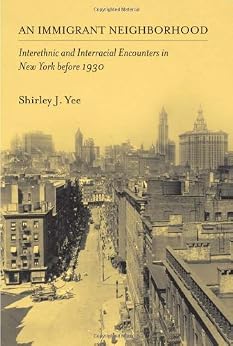
  • An Immigrant Neighborhood: Interethnic and Interracial Encounters in New York before 1930

    Temple University Press
    December 2011
    256 pages
    5.5 x 8.25
    1 map, 6 halftones
    Paper ISBN: 978-1-59213-128-0
    Cloth ISBN: 978-1-59213-127-3
    E-Book ISBN: 978-1-59213-129-7

    Shirley Yee, Associate Professor of Women Studies; Adjunct Associate Professor of History; Adjunct Associate Professor of American Ethnic Studies
    University of Washington

    How the crowded neighborhoods of New York’s Lower East Side gave rise to cross-racial and cross ethnic bonds before 1930

    Examining race and ethnic relations through an intersectional lens, Shirley J. Yee’s An Immigrant Neighborhood investigates the ways that race, class, and gender together shaped concepts of integration and assimilation as well as concepts of whiteness and citizenship in lower Manhattan during the late nineteenth and early twentieth centuries.

    In contrast to accounts of insulated neighborhoods and ethnic enclaves, Yee’s study unearths the story of working-class urban dwellers of various ethnic groups—Chinese, Jews, Italians, and Irish—routinely interacting in social and economic settings.

    Recounting the lived experiences in these neighborhoods, Yee’s numerous, fascinating anecdotes—such as the story of an Irishman who served for many years as the only funeral director for Chinese residents—detail friendships, business relationships, and sexual relationships that vividly counter the prevailing idea that ethnic groups mixed only in ways that were marked by violence and hostility.

    Contents

    • Acknowledgements
    • Introduction
    • 1. Forming Households, Families, and Communities
    • 2. Building Commercial Relations
    • 3. Sustaining Life and Caring for the Dead
    • 4. Mixing with the Sinners: The Anti-vice Movement
    • 5. On (Un)Common Ground: Religious Politics in Settlements and Missions
    • Conclusion
    • Notes
    • Bibliography
    • Index

    From the Introduction:

    In the winter of 1877, a group of mourners gathered in a dimly lit funeral parlor on Pearl Street in lower Manhattan to pay their last respects to Ah Fung (sometimes referred to as Ah Lung), a Chinese man who had been brutally murdered in his Lower East Side apartment. He had died of “ghastly wounds” at Bellevue Hospital after living for eighty hours with his brain exposed. Both Irish and Chinese people attended the funeral, including Mrs. Ah Fung, a woman of Irish ancestry. The New York World described the mixed gathering as “something unprecedented . . . [that gave] a good idea of the cosmopolitan character of the city” Given the well-publicized history of anti-Chinese hostility among the Irish working class, it is not surprising that the editors viewed the Ah Fung funeral as an anomaly.

    The details of Ah Fung’s life are murky. The World described him as a laundry worker, while the New York Times reported that he had eked out a living making cigars and cigarettes with a Chinese man, Tung Ha, also known as “Peter Johnson,” and his white wife, Theresa. The three lived at 17 Forsyth Street, located in an ethnically mixed neighborhood across from the future site of the Manhattan Bridge. For unknown reasons, the household had not included Ah Fung’s wife; the two apparently had been living apart for several months before the attack.

    Like other working-class immigrant communities, the Chinese called on their local mutual aid societies to help cover the funeral costs. Members of the Ene E. Jong, a Chinese burial society, raised $200 for the funeral and burial expenses. But the dead man’s friends and relatives had to look outside the Chinese community for an undertaker, for it would not be until the 1930s that the Chinese could hire a licensed Chinese funeral director. They hired William H. Kennedy, who placed Ah Fung’s coffin in his carriage house “amidst numerous hacks, coffins of several sorts, and a dreary looking hearse.” The forty-five-year-old Irish immigrant was a former carpenter and stable and livery keeper known for having “buried all the Chinese that [had] died in the down-town settlement for a number of years past.” Readers of the World caught a glimpse of Chinese customs from Kennedy, who provided a lengthy description of Chinese funeral and burial rituals, information he had acquired after many years of serving the local Chinese community. He also provided details of the Ah Fung funeral, noting that Mrs. Ah Fung, whom he described as “bright and intelligent,” was apparently unmoved by her husband’s violent death. In the undertaker’s view, the young woman was “not in the least crushed by affliction, for having left a tidy sum to his widow, she [was] not left in poverty by the demise of her husband.” Kennedy’s perception that Mrs. Ah Fung was not aggrieved but satisfied at her newly acquired financial state reinscribed popular racial stereotypes of the time—that she could never have entered the marriage out of love, but only for economic gain.

    The newspaper reports of Ah Fung’s murder and the funeral that followed were no different from other tales of interracial love, sex, and violence that had become standard fodder in an increasingly sensationalist press by the late nineteenth century. But once we sift through the lurid details of the crime and the “colorful” descriptions Kennedy provides, a layer of interracial/interethnic social and economic relations that operated beneath the radar of popular depictions of urban life begins to surface. Ah Fung’s community in 1877 consisted of both Chinese and non-Chinese people who in various ways provided friendship, kinship ties, social services, and financial as well as emotional support.

    Ah Fung’s situation was not unusual. Interrracial/interethnic relations were a common feature of daily life among working-class New Yorkers even as the ethnic composition of working-class neighborhoods in lower Manhattan changed over time. Nearly fifty years after Ah Fung’s funeral, a few blocks north of Forsyth Street, Johanna Hurley sat with Ching Yeng and her four-year-old daughter, Lung Som Moy, as Ching’s husband, Lung Lin, lay dying. Hurley, a widowed German immigrant, lived in the same apartment building and had summoned the ambulance. The building on Division Street, where Hurley’s and Ching’s families resided, housed an ethnically mixed population of old and new immigrants, the latter being mostly Russian and Polish Jews who worked in the city’s garment factories, ran small shops, or peddled wares in the densely populated neighborhoods of lower Manhattan. Moy’s father worked as a store manager several blocks over on Pell Street in the area popularly known as “Chinatown.”…

    …The language and politics of difference have undergone significant changes over the past two centuries, encoded in the categories “nationality,” “race,” “ethnicity,” “gender,” “culture,” and “class.” Such terms can denote group identities as well as official designations for enumeration and the development of public policy. Popular, legal and social-science definitions of race and ethnicity have been fluid and often inconsistent. In 1911, the Immigration Commission, headed by William P. Dillingham, departed from the practice of classifying people according to country of origin, opting instead to categorize people according to race. The commission defined race broadly rather than adopting the accepted notion that five distinct races existed—Caucasian, Mongolian, African, Malay, and Indian—which, its report argued, confined itself to only physical characteristics and color. According to the report, widening the definition of race to include what social scientists of the time would have referred to as “culture” was, the commission believed, more statistically accurate and practical in its effort to identify diverse groups coming from particular countries of origin. Thus, the commission retained the desire to classify, coming up with forty categories that it believed more accurately represented the identity of immigrant groups.

    The terminology of race remained inconsistent in “objective” government documents, as well as in the courts. The social construction of race as an official classification shaped the ways in which government documents, such as the census, have categorized immigrants and their descendants into specific “racial” groups and reported their country of origin, or nationality. Even though federal census reports added more detail in terms of the numbers of categories, race remained an ambiguous category. Once classified as simply “colored” along with African Americans, the Chinese, for example, were classified as “Ch” for Chinese by 1890, but their children could be classified as either “Chinese” or “white,” especially if they had been born of marriages between Chinese and women of European ancestry. People of African descent were categorized alternatively as “colored,” “Negro,” “Black,” or “mulatto.” Such inconsistencies reflected the continued confusion among census takers about what race “really” was. At the root of the race problem were shifting meanings of whiteness.

    Between the late nineteenth century and the 1930s, popular understandings of “race” had undergone important changes. As the nation moved steadily toward the narrow “one-drop” rule that signified “blackness,” the meaning of “whiteness” expanded to include the Irish and, later, all Europeans of Caucasian ancestry. By 1920, concerns about how to define “white” and, hence, “non-white” made its way into the U.S. Census guidelines. For the first time, the introduction to the census articulated the notion of racial purity as a way to resolve the problem of classifying mixed-race people and provided guidelines for census takers (who, as it turned out, used their own discretion when classifying people anyway). While previous census reports had simply declared “whiteness” to mean people of European ancestry, in the 1920 guidelines, the government added the terms “purity” and “blood” to further specify the meanings of “white,” “non-white,” and mixed-white: “The term ‘white’ as used in the census reports refers to persons understood to be pureblooded whites. A person of mixed blood is classified according to the nonwhite racial strain or, if the nonwhite blood itself is mixed, according to his racial status as adjudged by the community in which he resides.”…
  • We argue that evidence of America’s biracial heritage exists in discursive clues that always almost remind Americans that race was never as pure a distinction as the lexicographers and teachers of official language and histories once inculcated. Though recent scholarship has recovered some of this heritage, we argue that this knowledge has haunted Americans, who have always almost known about their biracial past. Double meanings, oral histories, “fictions,” fantasies, and epithets perpetuated an almost awareness of this heritage even as successive discursive formations obscured its memory.

    Greg Goodale and Jeremy Engles, “Black and White: Vestiges of Biracialism in American Discourse,” Communication and Critical/Cultural Studies, Volume 7, Issue 1 (March 2010): 70-89.

  • Only Skin Deep? The Harm of Being Born a Different Colour to One’s Parents: A (a minor) and B (a minor) by C (their mother and next friend) v A Health and Social Services Trust [2010] NIQB 108; [2011] NICA 28

    Medical Law Review
    Volume 19, Issue 4 (Autumn 2011)
    pages 657-668
    DOI: 10.1093/medlaw/fwr029

    Sally Sheldon, Professor of Medical Law and Ethics
    University of Kent

    The complainants, A and B, were twins born as a result of IVF treatment involving donated sperm provided by the Defendant Trust to their mother. While the children’s parents were white, the twins had darker skin than either of them and different skin colour to each other, a difference that had become more marked as they had grown older. It transpired that while the Trust’s normal practice would be to request only sperm from ‘Caucasian’ or ‘white’ donors for a white couple, in this instance sperm from a ‘Caucasian (Cape Coloured)’ donor had mistakenly been used. The implication of this error was that while the sperm donor was white, there was no guarantee that his genetic children would also be so. By the time the action reached the courts, the twins were eleven years old.

    The Trust admitted liability to the parents. However, it opposed the action brought on behalf of the twins, in which they alleged three broad kinds of harm. First, because of their colour, the twins had become ‘the subject of derogatory comment and hurtful name calling from other children, causing emotional upset’. Secondly, they had been the subject of adverse and hurtful comment about the colour of their skin and their physical dissimilarity from each other, on the one hand, and between themselves and their parents on the other. This had led them to question their parents about whether they were adopted. Thirdly, should either twin go on to have a child with a partner of mixed race, any child born to them was likely to have a different skin colour from either parent.

    The court proceedings raised, by common agreement of the parties, a number of legal issues: first, the existence and nature of a duty of care owed to A …

    Read or purchase the article here.

  • Commentary: Debating Coloured Identity in the Western Cape

    African Security Review
    Volume 14, Number 4 (2005)
    pages 118-119

    Cheryl Hendricks, Senior Research Fellow
    Security Sector Governance Programme
    Institute of Security Studies, (Tshwane) Pretoria

    The nature and form of coloured identity in the Western Cape has been vociferously debated. Coloured identity became a particular concern after the 1994 general elections when the coloured vote returned the National Party to the Western Cape provincial government. More recently, a spate of incidents in the Western Cape have propelled the group into the national spotlight.
     
    Many coloureds have indicated that they feel marginalised in the post-apartheid dispensation, and are especially resentful at what they perceive to be a preferential allocation of resources to Africans in the Western Cape, when their needs are just as great. These tensions were highlighted when a group of coloureds protested against the relocation of Africans, whose informal housing had been destroyed in a fire, to a hostel in the coloured township of Bokmakkierie…

    …The typical response has been to debate coloured identity. The underlying assumption is that there is something fundamentally wrong with this identity and that some ideological transformation of the bearers of the identity will resolve the problems. This type of response draws on the dominant discourse that has portrayed that identity as bureaucratically constructed and therefore deviant. The onus is then placed on coloureds to change. This is a limited response that forecloses debate on the identity, does not grapple with the larger context of identity constructions in South Africa, and does not adequately address the issues that generate conflict in the Western Cape.
     
    We cannot have a meaningful discussion on coloured identity in isolation from other identities that shape its expression. When discussing the identity we need to take into account conceptual issues (Whom are we speaking about?), discursive issues (How has the identity been constructed? By whom? In which contexts?), and perceived power relations in South Africa…

    …Who are the coloureds?

    Coloureds are often identified as South Africans who are of mixed race. Since everyone is of mixed race (as there is no such thing as a pure race), the identity is ipso facto meaningless (but then so are all other racial identities presumed on the basis of authenticity or purity). However, we do not dismiss these identities because they have social meaning and material consequences. Coloureds are descendants of the sexual liaisons between colonialists, slaves and the indigenous Khoisan. This ‘mixing’ took place centuries ago and state-enforced self-reproduction has largely been the means through which the group multiplied.

    However, coloureds are not simply the offspring of inter-racial liaisons. And, conversely, children of ‘mixed marriages’ do not automatically lay claim to a coloured identity. This is a complex historically located identity that stems from the processes of slavery, genocide, rape and perceived miscegenation. The identity construction has been cloaked by the perceived shame of ‘illegitimacy’ and lack of authenticity that has to a large extent psychologically disempowered the bearers of the identity. For most of the history of this community, steeped in oppression and struggles for liberation, had been erased and/or silenced by successive regimes and the group members themselves…

    Read the entire article here.