• Somewhere between Jim Crow & Post-Racialism: Reflections on the Racial Divide in America Today

    Dædalus, the Journal of the American Academy of Arts & Sciences
    Volume 140, Number 2, Spring 2011, Race, Inequality & Culture, Volume 2
    pages 11-36

    Lawrence D. Bobo, W. E. B. Du Bois Professor of the Social Sciences
    Harvard University

    In assessing the results of the Negro revolution so far, it can be concluded that Negroes have established a foothsold, no more. We have written a Declaration of Independence, itself an accomplishment, but the effort to transform the words into a life experience still lies ahead.
    Martin Luther King, Jr., Where Do We Go From Here? (1968)

    By the middle of the twentieth century, the color line was as well defined and as firmly entrenched as any institution in the land. After all, it was older than most institutions, including the federal government itself. More important, it informed the content and shaped the lives of those institutions and the people who lived under them.
    John Hope Franklin, The Color Line (1993)

    This is where we are right now. It’s a racial stalemate we’ve been stuck in for years. Contrary to the claims of some of my critics, black and white, I have never been so naive as to believe that we can get beyond our racial divisions in a single election cycle, or with a single candidacy–particularly a candidacy as imperfect as my own.
    Barack H. Obama, “A More Perfect Union” (May 18, 2008)

    The year 1965 marked an important inflection point in the struggle for racial justice in the United States, underscoring two fundamental points about race in America. First, that racial inequality and division were not only Southern problems attached to Jim Crow segregation. Second, that the nature of those inequalities and divisions was a matter not merely of formal civil status and law, but also of deeply etched economic arrangements, social and political conditions, and cultural outlooks and practices. Viewed in full, the racial divide was a challenge of truly national reach, multilayered in its complexity and depth. Therefore, the achievement of basic citizenship rights in the South was a pivotal but far from exhaustive stage of the struggle…

    …A second and no less controversial view of post-racialism takes the position that the level and pace of change in the demographic makeup and the identity choices and politics of Americans are rendering the traditional black-white divide irrelevant. Accordingly, Americans increasingly revere mixture and hybridity and are rushing to embrace a decidedly “beige” view of themselves and what is good for the body politic. Old-fashioned racial dichotomies pale against the surge toward flexible, deracialized, and mixed ethnoracial identities and outlooks.

    A third, and perhaps the most controversial, view of post-racialism has the most in common with the well-rehearsed rhetoric of color blindness. To wit, American society, or at least a large and steadily growing fraction of it, has genuinely moved beyond race–so much so that we as a nation are now ready to transcend the disabling racial divisions of the past. From this perspective, nothing symbolizes better the moment of transcendence than Obama’s election as president. This transcendence is said to be especially true of a younger generation, what New Yorker editor David Remnick has referred to as “the Joshua Generation.” More than any other, this generation is ready to cross the great river of racial identity, division, and acrimony that has for so long defined American culture and politics…

    …Consider first the matter of group boundaries. The 2000 Census broke new ground by allowing individuals to mark more than one box in designating racial background. Indeed, great political pressure and tumult led to the decision to move the Census in a direction that more formally and institutionally acknowledged the presence of increasing mixture and heterogeneity in the American population with regard to racial background. Nearly seven million people exercised that option in 2000. The successful rise of Obama to the office of president, the first African American to do so, as a child of a white American mother and a black Kenyan father, has only accelerated the sense of the newfound latitude and recognition granted to those who claim more than one racial heritage.

    Despite Obama’s electoral success and the press attention given to the phenomenon, some will no doubt find it surprising that the overwhelming majority of Americans identify with only one race. As Figure 1 shows, less than 2 percent of the population marked more than one box on the 2000 Census in designating their racial background. Fully 98 percent marked just one. I claim no deep-rootedness or profound personal salience for these identities. Rather, my point is that we should be mindful that the level of “discussion” and contention around mixture is far out of proportion to the extent to which most Americans actually designate and see themselves in these terms. Moreover, even if we restrict attention to just those who marked more than one box, two-thirds of these respondents designated two groups other than blacks (namely, Hispanic-white, Asian-white, or Hispanic and Asian mixtures), as Figure 2 shows. Some degree of mixture with black constituted just under a third of mixed race identifiers in 2000. Given the historic size of the black population and the extended length of contact with white Americans, this remarkable result says something powerful about the potency and durability of the historic black-white divide.

    It is worth recalling that sexual relations and childbearing across the racial divide are not recent phenomena. The 1890 U.S. Census contained categories for not only “Negro” but also “Mulatto,” “Quadroon,” and even “Octoroon”; these were clear signs of the extent of “mixing” that had taken place in the United States. Indeed, well over one million individuals fell into one of the mixed race categories at that time. In order to protect the institution of slavery and to prevent the offspring of white slave masters and exploited black slave women from having a claim on freedom as well as on the property of the master, slave status, as defined by law, followed the mother’s status, not the father’s. For most of its history, the United States legally barred or discouraged racial mixing and intermarriage. At the time of the Loving v. Virginia case in 1967, seventeen states still banned racial intermarriage…

    …Does that pressure for change foretell the ultimate undoing of the black-white divide? At least three lines of research raise doubts about such a forecast. First, studies of the perceptions of and identities among those of mixed racial backgrounds point to strong evidence of the cultural persistence of the one-drop rule. Systematic experiments by sociologists and social psychologists are intriguing in this regard. For example, sociologist Melissa Herman’s recent research concluded that “others’ perceptions shape a person’s identity and social understandings of race. My study found that partblack multiracial youth are more likely to be seen as black by observers and to define themselves as black when forced to choose one race.”…

    …Third, some key synthetic works argue for an evolving racial scheme in the United States, but a scheme that nonetheless preserves a heavily stigmatized black category. A decade ago, sociologist Herbert Gans offered the provocative but wellgrounded speculation that the United States would witness a transition from a society defined by a great white–nonwhite divide to one increasingly defined by a black–non-black fissure, with an in-between or residual category for those granted provisional or “honorary white” status. As Gans explained: “If current trends persist, today’s multiracial hierarchy could be replaced by what I think of as a dual or bimodal one consisting of ‘nonblack’ and ‘black’ population categories, with a third ‘residual’ category for the groups that do not, or do not yet, fit into the basic dualism.” Most troubling, this new dualism would, in Gans’s expectations, continue to bring a profound sense of undeservingness and stigma for those assigned its bottom rung.

    Gans’s remarks have recently received substantial support from demographer Frank Bean and his colleagues. Based on their extensive analyses of population trends across a variety of indicators, Bean and colleagues write: “A black-nonblack divide appears to be taking shape in the United States, in which Asians and Latinos are closer to whites. Hence, America’s color lines are moving toward a new demarcation that places many blacks in a position of disadvantage similar to that resulting from the traditional black-white divide.”…

    Read the entire article here.
  • Race in America: Restructuring Inequality: Intergroup Race Relation

    Center on Race & Social Problems
    School of Social Work
    The University of Pittsburgh
    2010
    29 pages

    Editors:

    Larry E. Davis, Dean and Donald M. Henderson Professor of Social Work and Director of the Center on Race and Social Problems
    University of Pittsburgh

    Ralph Bangs, Associate Director
    Center on Race and Social Problems
    University of Pittsburgh

    The Third of Seven Reports on the Race in America Conference (June 3-6, 2010)

    Despite significant progress in America’s stride toward racial equality, there remains much to be done. Some problems are worse today than they were during the turbulent times of the 1960s. Indeed, racial disparities across a number of areas are blatant—family formation, employment levels, community violence, incarceration rates, educational attainment, and health and mental health outcomes.

    As part of an attempt to redress these race-related problems, the University of Pittsburgh School of Social Work and Center on Race and Social Problems organized the conference Race in America: Restructuring Inequality, which was held at the University of Pittsburgh June 3–6, 2010. The goal of the conference was to promote greater racial equality for all Americans. As our entire society has struggled to recover from a major economic crisis, we believed it was an ideal time to restructure existing systems rather than merely rebuilding them as they once were. Our present crisis afforded us the opportunity to start anew to produce a society that promotes greater equality of life outcomes for all of its citizens.

    The conference had two parts: 20 daytime sessions for registered attendees and three free public evening events. The daytime conference sessions had seven foci: economics, education, criminal justice, race relations, health, mental health, and families/youth/elderly. Each session consisted of a 45-minute presentation by two national experts followed by one hour of questions and comments by the audience. The evening events consisted of an opening lecture by Julian Bond, a lecture on economics by Julianne Malveaux, and a panel discussion on postracial America hosted by Alex Castellanos of CNN.

    This report provides access to the extensive and detailed information disseminated during the intergroup race relations sessions at the conference. This information will be particularly helpful to community and policy leaders interested in gaining a better understanding of race relations and finding effective strategies for improving these conditions.

    Table of Contents

    • Introduction
    • In the Mix: Multiracial Demographics and Social Definitions of Race
    • Coming Together: Promoting Harmony among Racial Groups
      • Obama and the Durable Racialization of American Politics Lawrence D. Bobo
      • Somewhere Over the Rainbow?: Postracial and Panracial Politics in the Age of Obama Taeku Lee
    • The White Way?: Discussing Racial Privilege and White Advantage
      • Where and Why Whites Still Do Blatant Racism: White Racist Actions and Framing in the Backstage and Frontstage Joe Feagin
      • The Future of White Privilege in Post-Race, Post-Civil Rights, Colorblind America Charles Gallagher

    Race: Changing Composition, Changing Definition

    Presenter: Howard Hogan, Associate Director for Demographic Programs, U.S. Census Bureau

    Moderator: Pat Chew, Professor of Law, University of Pittsburgh

    America’s categorization of race is more of a definition of how America chooses to see individuals and less the result of how people categorize themselves. Our concept of race in the United States has evolved over the country’s history. In America’s first census in 1790, the country viewed itself racially as comprising only three groups: Whites, slaves, and others. American Indians were not identified as a distinct group for this census. As immigration increased, our racial composition changed rapidly, and it was for this reason that in 1850 and 1860, the United States felt that it was necessary to gather information on the birthplaces of individuals. The term “Black” was first used as a census race category in the census of 1850, and the term “Negro” did not appear as a census race category until 1930…

    …The concept of race and identification of racial origin continue to serve a role in the United States with regard to monitoring and enforcing civil rights legislation for employment, educational opportunities, and housing. It was for this reason the U.S. Supreme Court, in the 1980s, declared Judaism to be a race for purposes of antidiscrimination. Data on race also are used to study changes in the social, economic, and demographic characteristics and changes in our population. But there is no reason to assume that it will get easier for OMB and the U.S. Census Bureau to make the kind of distinctions they need to be able to collect this information…

    Obama and the Durable Racialization of American Politics

    Presenter: Lawrence D. Bobo, W.E.B. Du Bois Professor of the Social Sciences, Harvard University

    Moderator: Lu-in Wang, Associate Dean for Academic Affairs and Professor of Law, University of Pittsburgh

    There are some in American society who are unable to assess issues of racial discord because they accept the concept that the United States has become a postracial nation. There are others who consider postracialism to be a politically neutralizing falsehood that veils how the racial divide is constructed and maintained in American society. The prevalence of racial dissonance has waned over time in comparison to the racial conflicts America faced in the past. However, in order for this recuperation to continue, American society has to be forthright about current race relations conditions and open to developing new ways to improve relations in the future. The United States has adopted a new contemporary form of racism, because the blatant Jim Crow discrimination of years past is not as socially acceptable. The characteristics of this contemporary form, called laissez-faire racism, are the widespread and consequential harboring of negative stereotypes and the collective racial resentment of African Americans. Laissez-faire racism is very prevalent in today’s society despite the belief by many that the United States has transitioned into postracialism, spearheaded by Barack Obama’s presidential election. However, the majority of White voters chose not to vote for Barack Obama for president. An overwhelming majority of minority voters chose to vote for him.

    There are several reasons why America has not reached the point where the color line between Blacks and Whites has become blurred beyond recognition. First, only 14.6 percent of U.S. marriages in 2008 were between spouses of a different race or ethnicity, and only 11 percent of these mixed marriages were White-Black. Second, only 7 million (2 percent) of the U.S. population in 2000 marked more than one race on the census. One-quarter of these were Black. Third, Black-White wealth gaps have grown, even among educated Blacks.

    In order to relieve some of the racial discord in society, progressive dialogue on the current realities of race relations in the United States is needed, as well as structural and cultural change…

    …The anti-Black cultural project of “erasing Blackness” has not destabilized the core racial binary. Although many believe that miscegenation—the mixing of races through marriage, cohabitation, sexual relations, and procreation—an overwhelming majority of Whites, Blacks, Hispanics, and Asians still marry within their racial group.

    Miscegenation

    Many Americans buy into the notion that miscegenation is causing the end of the Black and White races and that eventually the color line between Whites and Blacks will become blurred beyond recognition. The data show:

    • African Americans are the least likely of all races to marry Whites.
    • Although the pace of interracial marriage increased more rapidly in the 1990s than it did in other periods, the social boundaries between Blacks and Whites remained highly rigid and resistant to change.
    • Although interracial marriages have increased greatly in recent years, they still only account for 15 percent of marriages in the U.S.
    • Only 7 million Americans (2 percent) identified more than one race when given the option to do so on the 2000 Census. Of those 7 million, one-quarter identified having any mixture with African Americans.
    • Biracial African American-White individuals have historically identified themselves as Black and typically married other African
      Americans…

    Read the entire report here.

  • Science must not invent new myths about race

    London Evening Standard
    2009-11-16

    Lindsay Johns

    Science and race have never been easy bedfellows. Since Victorian times, when Western scientific advancement was used as an intellectual and moral justification for European colonial expansion, science or pseudo-science has occupied an uncomfortable place in our understanding of race.

    Yet today, as Professor Steve Jones will argue at a debate tonight, it is commonly held by scientists that, genetically, there is no such thing as race.

    It has been proven that there is a negligible amount of difference between the DNA of different “races”. Rather, race is a social construct, a fluid and malleable entity.

    In America, the “one drop” rule of black blood still effectively renders anyone with any in them, even if they are quite light skinned, as “black”.

    Elsewhere, race being such a nebulous entity, it can often be confusing. For example, many mixed-race people, myself included, are often mistaken for Arabs…

    …Yet it would be naive to deny that race, although biologically inconsequential, is still very much a social reality.

    Many social and economic disparities still arise from it: people use race to define themselves.

    Scientists of all backgrounds have a duty to interpret data responsibly: their pronouncements on race have ethical, legal and social implications…

    Read the entire article here.

  • Reactions in the Field: Interviews with Helping Professionals Who Work with Biracial Children and Adolescents

    University of Cincinnati
    2002
    277 pages

    Michele Neace Page

    A dissertation submitted to the University of Cincinnati in partial fulfillment of the requirements for the degree of DOCTORATE OF EDUCATION (Ed.D.)

    The number of interracial couples and marriages are growing in the United States, and it is expected that the number of biracial children will also increase. It is estimated that within five years, a third of America’s youth will be the offspring of an interracial relationship (Synder, 1996). The future design of support services to meet the needs of the biracial population is obviously crucial.

    The literature review has revealed a lack of training of helping professionals and a framework for identifying and understanding biracial populations. Counseling professionals have recognized the need to increase research in the area of working with biracial children, but no previous study has gathered information from helping professionals in the field.

    This study was designed to explore the knowledge, skills, attitudes and expectations of professionals who work with biracial children. Twenty male and female participants were interviewed from various helping professions including social work, mental health and school counseling. Each participant was required to have two years work experience with biracial children. Data was collected through a structured interview. Years of experience for helping professionals ranged from two to twenty-five with 85% of the respondents being Caucasian.

    Helping professional’s top concerns for working with biracial adolescents and children were a lack of training, real-life experiences, awareness or comfort with identity, and acceptance of biracial children by others. The expectation for the future professional development and growth included the desire for more interaction of all people within their community.

    This study supported the identified area of need in previous literature regarding a lack of training and experience. Long range sociopolitical issues appear to be upcoming issues for biracial individuals as well as the desire of helping professionals to be better prepared and supportive to biracial children and adolescents.

    Table of Contents

    • List of Tables
    • CHAPTER I Introduction and Review of the Literature
      • Introduction
        • Statement of Problem
      • Review of the Literature
        • Characteristics of Biracial Children
        • Commonalities and Differences for Adolescent Biracial and Monoracial Children
          • Developmental stages
          • Physical Characteristics, language and socioeconomic status
      • Identity
        • Cultural influence on identity
        • Family influence on identity
        • Peer influence on identity
        • Counselor Education and Training Issues
          • Helping professionals working with biracial children and adolescents
          • Counselors education and training with biracial children and adolescents
          • Multiculturalism in counseling
          • Multicultural competency training
        • Challenges of Counseling and Working with Biracial Children
          • Knowledge
          • Skills
          • Attitudes
        • Summary
        • Research Questions
        • Significance of the Study
          • Increasing Biracial Population
          • New Issues in the Helping Professions
          • Recognizing the Need to Act
    • CHAPTER II Methods
      • Population and Sample
      • Design of the Questionnaire
      • Procedures
      • Approaches to Recruitment
      • Securing Permission to Conduct the Study
      • Recruiting Participants
      • Data Storage
      • Conducting the Interviews
      • Data Analysis
    • CHAPTER III Results
      • Initial Analysis
      • Data Analysis Steps
      • Sample Demographics
      • Experience Working with Biracial Children
        • How Do You Get Ready to Work with Biracial Children?
        • What Special Training has the Counselor Obtained
        • Attitudes Regarding Working with Biracial Children
        • Expectations for the Future
      • Summary
    • Chapter IV: Summary, Discussion, Future Implications
      • Summary
      • Discussion
        • Basic of Problems and Issues for Biracial Adolescents and Children
        • Factors most Important When Working With Biracial Adolescents and Children
        • Comfort With Biracial Children and Adolescents
      • Limitations of the Study
      • Helping professional perspectives
        • Sample Size
        • Sample Selection
        • Survey methodology
      • Future Implications
        • Implications for research
        • Implications for Training Counselor Education Programs
        • Implications for Practice
    • REFERENCES
    • APPENDIXES
      • Appendix A: Informed Consent Letter
      • Appendix B: Interview Questionnaire (Part I)
      • Appendix C: Interview Data

    List of Tables

    • 3.1: Degrees Held by Helping Professionals
    • 3.2: Helping Professionals’ Customary Practices When Working with Any Child or Student
    • 3.3: Helping Professionals’ Customary Practices Working with Biracial Child or Student
    • 3.4: Difficult Issues when Working with Biracial Children
    • 3.5: Special Training Obtained by the Helping Professional for Work with Biracial Children
    • 3.6: Areas Where More Knowledge or Information Is Needed
    • 3.7: Of the Sorts of Biracial Children Who Come to Your School/Community Center, Which Do You Think You Understand the Least Well and Have (Or Would Have) the Most Difficulty Working With?
    • 3.8: Biracial Children’s Needs Versus Monoracial Children’s Needs Regarding Their Passage Through Puberty
    • 3.9 In the Next Ten Years, What Trends Do You See in the Your Community Regarding the Prevalence of Biracial Children?

    Read the entire dissertation here.

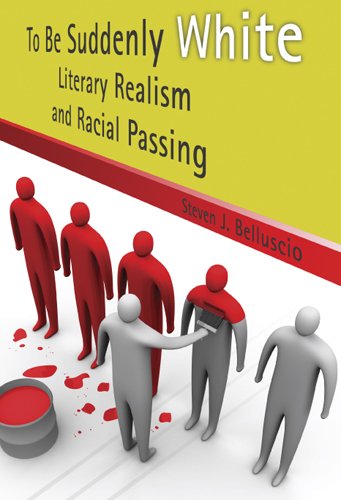
  • To Be Suddenly White: Literary Realism and Racial Passing

    University of Missouri Press
    2006
    296 pages
    6 1/8 x 9 1/4
    ISBN: 978-0-8262-1619-9

    Steven J. Belluscio, Associate Professor of English
    Borough of Manhattan Community College, City University of New York

    To Be Suddenly White explores the troubled relationship between literary passing and literary realism, the dominant aesthetic motivation behind the late-nineteenth and early-twentieth-century ethnic texts considered in this study. Steven J. Belluscio uses the passing narrative to provide insight into how the representation of ethnic and racial subjectivity served, in part, to counter dominant narratives of difference.

    To Be Suddenly White offers new readings of traditional passing narratives from the African American literary tradition, such as James Weldon Johnson’s The Autobiography of an Ex-Coloured Man, Nella Larsen’s Passing, and George Schuyler’s Black No More. It is also the first full-length work to consider a number of Jewish American and Italian American prose texts, such as Mary Antin’s The Promised Land, Anzia Yezierska’s Bread Givers, and Guido d’Agostino’s Olives on the Apple Tree, as racial passing narratives in their own right. Belluscio also demonstrates the contradictions that result from the passing narrative’s exploration of racial subjectivity, racial difference, and race itself.

    When they are seen in comparison, ideological differences begin to emerge between African American passing narratives and “white ethnic” (Jewish American and Italian American) passing narratives. According to Belluscio, the former are more likely to engage in a direct critique of ideas of race, while the latter have a tendency to become more simplistic acculturation narratives in which a character moves from a position of ethnic difference to one of full American identity.

    The desire “to be suddenly white” serves as a continual point of reference for Belluscio, enabling him to analyze how writers, even when overtly aware of the problematic nature of race (especially African American writers), are also aware of the conditions it creates, the transformations it provokes, and the consequences of both. By examining the content and context of these works, Belluscio elucidates their engagement with discourses of racial and ethnic differences, assimilation, passing, and identity, an approach that has profound implications for the understanding of American literary history.

  • Racial Socialization of Biracial Adolescents

    Kent State University
    May 2006
    158 pages

    Ja’Nitta Marbury
    Marbury & Associates, University Heights, Ohio

    A dissertation submitted to the Kent State University Graduate School of Education, Health and Human Services in partial fulfillment of the requirements for the degree of Doctor of Philosophy

    The purpose in conducting this research was to develop grounded theory regarding the racial socialization process of Biracial adolescents who were the offspring of an African American father and a European American mother. The participants in the study were eight European American mothers of Biracial adolescents ranging in age from 10 to 17 years old. This study was conducted in a qualitative format using individual and focus group interviews to gather data. The study was conducted to lay the foundation for the development of grounded theory on the Biracial socialization process. The grounded theory foundation developed from the results was the Biracial Socialization Spectrum. The Biracial Socialization Spectrum is a tetrahedron with the dynamic process as the base, side one representing the Black/African American parent spectrum, Side two representing the White/European American parent spectrum, and side three representing the Biracial Socialization Spectrum.

    Table of Contents

    • ACKNOWLEDMENTS
    • LIST OF FIGURES
    • LIST OF TABLES
    • I. INTRODUCTION AND LITERATURE REVIEW
      • History of Biracial People in America
      • Politics of a Biracial Identity
      • Biracial Childhood and Adolescence
      • The Development and Socialization of White Adolescents
      • Racial Socialization
        • Black Racial Socialization
        • Biracial Socialization
      • Parental Racial Socialization Messages
        • White Racial Identity
    • II. METHODOLOGY
      • Purpose of the Study
      • Researcher Description
      • Research Design
      • Participants
      • Procedures
        • Individual Interviews
        • Focus Groups
      • Data Analysis
      • Limitations
    • III. RESULTS
      • Recruitment
      • Participants
        • Gayl
        • Ananda
        • Kalpana
        • Bridgette
        • Patricia
        • Sandy
        • Ella
        • Sharon
      • Demographics
      • Individual Interviews
      • RQ1: Research Question 1
        • IQ1: What does the term Biracial mean to you?
        • IQ2: What do you think being Biracial means to your child?
      • RQ2: Research Question 2
        • IQ3: What strategies, if any, of parenting a Biracial child are you using?
        • SQ3: How do you process both negative and positive cross-racial encounters with them?
        • IQ4: How does your child respond to the socialization methods you have tried?
        • IQ6: How does your family aid in the socialization of your child?
      • RQ3: Research Question 3
        • IQ5: What impact does the difference in physical characteristics between you and your child have on how you socialize your child?
      • Focus Group Interview
        • Member Checking
      • Emerging Themes
      • Data Triangulation
        • Peer Reviewers and Researcher
        • Peer Reviewers’ Perceptions
        • Researcher’s Perceptions
      • Delimitations
    • IV. DISCUSSION
      • Convergent & Divergent Socialization Process
      • Grounded Theory
        • Biracial Socialization Spectrum
      • Conclusions
        • White Racial Identity
        • Acceptance
        • Family of Origin and Immediate Family Acceptance
        • Social Political Environment
        • Implications For Counselors and Counselor Educators
      • Recommendations
      • The Intention Behind the Study
    • APPENDICES
      • APPENDIX A: WHITE RACIAL IDENTITY EGO STATUSES
      • APPENDIX B: DIVERSEGRAD-L LIST-SERV POSTING
      • APPENDIX C: INTRODUCTORY LETTER
      • APPENDIX D: DEMOGRAPHIC QUESTIONNAIRE
      • APPENDIX E: INFORMATION INDEX CARD
      • APPENDIX F: PEER REVIEWING CONSENT FORM (PARTICIPANT)
      • APPENDIX G: PARTICIPANT CONSENT FORM
      • APPENDIX H: AUDIO AND VIDEO TAPE CONSENT FORM
      • APPENDIX I: STRUCTURED INTERVIEW QUESTIONS
      • APPENDIX J: PEER REVIEWING CONSENT FORM (PEER REVIEWER)
      • APPENDIX K: RESEARCH QUESTION 1: INDIVIDUAL INTERVIEW
      • APPENDIX L: RESEARCH QUESTION 1: FOCUS GROUP
      • APPENDIX M: RESEARCH QUESTION 2: INDIVIDUAL INTERVIEW
      • APPENDIX N: RESEARCH QUESTION 2: FOCUS GROUP
      • APPENDIX O: RESEARCH QUESTION 3: INDIVIDUAL INTERVIEW
      • APPENDIX P: TREE NODE DIAGRAM FOR RESEARCH QUESTION 1
      • APPENDIX Q: TREE NODE DIAGRAM FOR RESEARCH QUESTION 2
      • APPENDIX R: TREE NODE DIAGRAM FOR RESEARCH QUESTION 3
    • REFERENCES

    List of Figures

    1. Methodology flow chart
    2. Biracial Socialization Spectrum
    3. Parental Spectrums (Side 1 & Side 2 Tetrahedron)
    4. Dynamic process

    List of Tables

    1. Participant Education Level
    2. Participant Marital Status
    3. Participant Annual Household Income
    4. Demographic Information Listed by Participant

    Read the entire dissertation here.

  • Charles Waddell Chesnutt and the Solution to the Race Problem

    Negro American Literature Forum
    Volume 3, Number 2 (Summer, 1969)
    pagess 52-56

    June Socken

    Charles Waddell Chesnutt, the first American Negro short story writer and novelist of recognized professional quality, squarely faced the problem of Negro-White relations in America.   Although his short story “The Wife of His Youth” (1898) and his novel The Marrow of Tradition (1901) have been credited as bold treatments of the race issue, particularly miscegenation, all of the implications of Chesnutt’s fiction have not been explored. The Negro’s acceptance of the white man’s culture as well as the identity crisis of the mulatto are two crucial themes that have not received adequate attention. Chesnutt’s non-fictional writings, in which he stated quite forthrightly that total assimilation was the only solution to the race problem, have not been studied at all.   The following pages will attempt to describe and explore some of the perceptive, and still relevant, ideas put forth by Charles Chesnutt.

    Born in Cleveland in 1858, but raised and educated in North Carolina, Chesnutt was the prototype of the self-made man. Fair skinned, he consciously identified himself as a Negro and became a teacher and then principal of a colored school in North Carolina. Later, he trained himself to become a stenographerand lawyer; at the age of twenty-five, he moved back to Cleveland. His hometown, he believed, judged men according to their merit ana not their color. Chesnutt always wanted to become a writer but practiced stenography and law so as to earn a living, thus providing himself with the means to write.   His plan worked, and by 1900, Chesnutt was devoting himself largely to writing. However, the novels he produced during the 1900-1905 period did not sell sufficient copies to allow him to remain a full-time writer.   He had to return to stenography after 1905 in order to earn a living.

    Miscegenationwas the dominant theme in Chesnutt’s fiction. However, white audiences and critics who repeatedly discussed this fact failed to appreciate that Chesnutt was satirizing the mulattoes, his major characters, as well as the intolerant whites.He mocked the light-skinned Negroes’ aping of white man’s habits; he poked fun at the mulattoes who imitated all of the white American’s fashions and prejudice The protagonists in Chesnutt’s stories “A Matter of Principle” and “The Wife of His Youth,” for example, formed an exclusive society called the Blue Vein society (the members being so light that you could see the blue veins in their faces.); the purpose of the group was to remove themselves from the mass of black men and to create a mulatto aristocracy. This first group of assimilated Americans, Chesnutt seemed to be saying, still believed in the superiority of the white man’s value system; they had not broken out of the cultural restraints sufficiently to recognize that the white man’s value; were not American or human values. The mulattoes lauded whiteness and deplored blackness because they lived in a white society that did so.   They believed, based upon their experience, that the only way to advance was to become whiter; the thought that two races, one black and one white, could live side by side harmoniously was beyond their vision of possibilities.

    Chesnutt’s reproof of his mulatto characters was often gentle, but nevertheless, firm.   The rich mulatto restaurateur in “A Matter of Principle” lost the opportunity to marry his daughter to a substantial Negro Congressman who was light skinned (and therefore an appropriate match) because of a case of mistaken identity; the restaurateur thought that a black-skinned Negro bishop was the Congressman, and thus hurriedly prevented the meeting between the suitor and his…

    Login to read the entire article here.

  • Comparing Biracials And Monoracials: Psychological Well-Being And Attitudes Toward Multiracial People

    Ohio State University
    2008
    108 pages

    Peter J. Adams

    DISSERTATION Presented in Partial Fulfillment of the Requirements for the Degree Doctor of Philosophy in the Graduate School of The Ohio State University

    The study of biracial individuals and their unique experience has been limited. As biracial individuals increase in number, understanding their experiences will become more important to psychologists and mental health professionals.

    The purpose of the study was to compare biracial individuals and monoracial individuals on measures of psychological well being, ethnic identity, and attitudes towards biracial people. The present study examined one general research question and
    three hypotheses:

    • General Research Question & Hypotheses
      • Will scores on measures of ethnic identity, individual self-esteem, collective self-esteem, subjective well being, and attitudes toward biracial children significantly differ between biracial and monoracial groups?
      • Bracey, Bamara, and Umana-Taylor’s (2004) results on self-esteem and ethnic identity will be replicated in this study on adults.
      • When compared to monoracial individuals, biracial individuals will have significantly more positive attitudes towards biracials
      • A positive relationship exists between psychological well being and attitudes towards biracials for biracial individuals.

    Participants completed a web-based survey from an undisclosed location of their choosing. Participants were solicited from various multicultural and professional psychology list serves and through Ohio State University’s Research Experience Program.

    Results indicated that biracial adults appear to be as psychologically well adjusted as their monoracial counterparts. Results even suggested that biracial adults have more realized ethnic identities than their monoracial counterparts. Bracey et al.’s (2004) results were replicated in the present study (biracials were found to be as psychologically well adjusted as monoracials). Also, a positive relationship was found between biracial individuals’ psychological well being and their attitudes towards multiracial children. Support for the second hypothesis was not found – biracial individuals in the study did not have more positive attitudes toward biracials than their monoracial counterparts.

    Implications of the findings along with the limitations of the study are discussed. Recommendations of future research are also given.

    Table of Contents

    • Abstract
    • Dedication
    • Acknowledgments
    • Vita
    • List of Tables
    • 1. Introduction
    • 2. Literature Review
      • 2.1 Ethnic Identity
      • 2.1.1 Biracial Ethnic Identity
      • 2.2 Psychological Well Being
      • 2.3 Attitudes Towards Biracial Individuals in America
      • 2.4 Summary, Hypotheses, and Research Questions
    • 3. Method
      • 3.1 Participants
      • 3.2 Instruments
        • 3.2.1 Demographic Questionnaire
        • 3.2.2 Multigroup Ethnic Identity Measure (MEIM)
        • 3.2.3 Collective Self-Esteem Scale (CSES)
        • 3.2.4 Rosenberg Self-Esteem Scale (RSE)
        • 3.2.5 Satisfaction With Life Scale (SWLS)
        • 3.2.6 Attitudes Toward Multiracial Children Scale (AMCS)
        • 3.2.7 Balanced Inventory of Desirable Responding (BIDR)
      • 3.3 Procedure
      • 3.4 Data Analysis
    • 4. Results
      • 4.1 Descriptive Statistics
      • 4.2 Correlations
        • 4.2.1 MEIM and the AMCS
        • 4.2.2 CSE and the AMCS
        • 4.2.3 RSE and the AMCS
        • 4.2.4 SWLS and the AMCS
        • 4.2.5 BIRD and the AMCS
      • 4.3 MANOVA
    • 5. Discussion
      • 5.1 General Research Question
      • 5.2 Hypotheses
      • 5.3 Other Finding of Interest – Correlational Findings
      • 5.4 Limitations
      • 5.5 Conclusion and Future Directions
    • List of references
    • APPENDICES:
      • A. Survey Solicitation Letter
      • B. REP Solicitation Letter
      • C. Debriefing Page
      • D. Survey Introduction
      • E. Consent for Participation
      • F. Demographic Questionnaire
      • G. Multigroup Ethnic Identity Measure
      • H. Collective Self-esteem Scale
      • I. Rosenberg Self-esteem Scale
      • J. Satisfaction With Life Scale
      • K. Attitudes Toward Multiracial Children Scale
      • L. Balanced Inventory of Desirable Responding

    List of Tables

    • 4.1 Breakdown of Participants Based on Sex, Age, Racial Categorization, and Interracial Romantic Relationships
    • 4.2 Breakdown of Caucasian Participants Based on Sex, Age, and Interracial Romantic Relationships
    • 4.3 Breakdown of Monoracial Minority Participants Based on Sex, Age, and Interracial Romantic Relationships
    • 4.4 Breakdown of Biracial Participants Based on Sex, Age, and Interracial Romantic Relationships
    • 4.5 Descriptive Statistics for Measures and Age

    Read the entire dissertation here.

  • My Long Trip Home: A Family Memoir

    Simon and Schuster
    October 2011
    368 pages
    Hardcover ISBN-10: 1451627548; ISBN-13: 9781451627541
    eBook ISBN-10: 1451627564; ISBN-13: 9781451627565

    Mark Whitaker

    In a dramatic, moving work of historical reporting and personal discovery, Mark Whitaker, award-winning journalist, sets out to trace the story of what happened to his parents, a fascinating but star-crossed interracial couple, and arrives at a new understanding of the family dramas that shaped their lives—and his own.

    His father, “Syl” Whitaker, was the charismatic grandson of slaves who grew up the child of black undertakers from Pittsburgh and went on to become a groundbreaking scholar of Africa. His mother, Jeanne Theis, was a shy World War II refugee from France whose father, a Huguenot pastor, helped hide thousands of Jews from the Nazis and Vichy police. They met in the mid-1950s, when he was a college student and she was his professor, and they carried on a secret romance for more than a year before marrying and having two boys. Eventually they split in a bitter divorce that was followed by decades of unhappiness as his mother coped with self-recrimination and depression while trying to raise her sons by herself, and his father spiraled into an alcoholic descent that destroyed his once meteoric career.

    Based on extensive interviews and documentary research as well as his own personal recollections and insights, My Long Trip Home is a reporter’s search for the factual and emotional truth about a complicated and compelling family, a successful adult’s exploration of how he rose from a turbulent childhood to a groundbreaking career, and, ultimately, a son’s haunting meditation on the nature of love, loss, identity, and forgiveness.

  • The Effects of Race Intermingling

    Proceedings of the American Philosophical Society
    Volume 56, Number 4 (1917)
    pages 364-368

    Charles B. Davenport, Director
    Department of Experimental Evolution
    (Carnegie Institution of Washington)
    Cold Spring Harbor, Long Island, New York

    Read on April 13, 1917

    The problem of the effects of race intermingling may well interest us of America, when a single state, like New York, of 9,000,000 inhabitants contains 840,000 Russians and Finns, 720,000 Italians, 1,ooo,ooo Germans, 880,000 Irish, 470,000 Austro-Hungarians, 310,000 of Great Britain, 125,000 Canadians (largely French), and 9o,ooo Scandinavians. All figures include those born abroad or born of two foreign-born parents. Nearly two thirds of the population of New York State is foreign-born or of foreign or mixed parentage. Even in a state like Connecticut it is doubtful if 2 per cent of the population are of pure Anglo-Saxon stock for six generations of ancestors in all lines. Clearly a mixture of European races is going on in America on a colossal scale.

    Before proceeding further let us inquire into the meaning of “race.” The modern geneticists’ definition differs from that of the systematist or old fashioned breeder. A race is a more or less pure bred “group” of individuals that differs from other groups by at least one character, or, strictly, a genetically connected group whose germ plasm is characterized by a difference, in one or more genes, from other groups. Thus a blue-eyed Scotchman belongs to a different race from some of the dark Scotch. Strictly, as the term is employed by geneticists they may be said to belong to different elementary species.

    Defining race in this sense of elementary species we have to consider our problem: What are the results of race intermingling, or miscegenation? To this question no general answer can be given. A specific answer can, however, be given to questions involving specific characters. For example, if the question be framed: what are the results of hybridization between a blue-eyed race (say Swede) and a brown-eyed race (say South Italian)? The answer is that, since brown eye is dominant over blue eye, all the children will have brown eyes; and if two such children inter-marry brown and blue eyes will appear among their children in the ratio of 3 to 1. Again, if one parent be white and the other a full-blooded negro then the skin color of the children will be about half as dark as that of the darker parent; and the progeny of two such mulattoes will be white, 1/4, 1/2, 3/4 and full black in the ratio of 1:4:6:4:1…

    …Not only physical but also mental and temperamental incompatibilities may be a consequence of hybridization. For example, one often sees in mulattoes an ambition and push combined with intellectual inadequacy which makes the unhappy hybrid dissatisfied with his lot and a nuisance to others.

    To sum up, then, miscegenation commonly spells disharmony—disharmony of physical, mental and temperamental qualities and this means also disharmony with environment. A hybridized people are a badly put together people and a dissatisfied, restless, ineffective people. One wonders how much of the exceptionally high death rate in middle life in this country is due to such bodily maladjustments; and how much of our crime and insanity is due to mental and temperamental friction.

    This country is in for hybridization on the greatest scale that the world has ever seen…

    Read the entire article here.