• Choosing Racial Identity in the United States, 1880-1940

    National Bureau of Economic Research
    NBER Working Paper No. 26465
    November 2019
    76 pages
    DOI: 10.3386/w26465

    Ricardo Dahis, Ph.D. Candidate in Economics
    Northwestern University, Evanston, Illinois

    Emily Nix, Assistant Professor of Finance and Business Economics
    University of Southern California

    Nancy Qian, James J. O’Connor Professor of Managerial Economics & Decision Sciences
    Kellogg School of Management, Northwestern University, Evanston, Illinois

    This paper documents that many black males experienced a change in racial classification to white in the United States, 1880–1940, while changes in racial classification were negligible for other races. We provide a rich set of descriptive evidence on the lives of black men “passing” for white, such as marriage, children, the passing of spouses and children, migration and income.

    Read the entire paper here.

  • A Painter Resurrects Louisiana’s Vanished Creole Culture

    The New York Times
    2020-01-16

    Elizabeth Pochoda, Editor-in-Chief
    The Magazine ANTIQUES


    Andrew LaMar Hopkins portrays the significant role Creoles played in the civic life of New Orleans. “Edmond Dédé Piano Recital” (2019) shows the freeborn Creole musician and composer in his elegant salon. Andrew LaMar Hopkins

    Andrew LaMar Hopkins celebrates the rich contributions of 19th-Century New Orleans in his folk art style (and drag).

    NEW ORLEANS — Dressed as his alter ego, the modish matron Désirée Joséphine Duplantier, the artist Andrew LaMar Hopkins is a familiar presence on this city’s arts scene. His paintings, faux naïf renderings of 19th-century life in the city — particularly the vanished culture of New Orleans’s free Creoles of color — also keep good company. You can see these works in Nadine Blake’s gallery on Royal Street in the French Quarter, on the art-filled walls of Dooky Chase’s Restaurant in Treme, and in the rooms of collectors like the designer Thomas Jayne and the food stylist Rick Ellis.

    When a dozen of Mr. Hopkins’s paintings appear at the Winter Show at the Park Avenue Armory on Jan. 24 they will be making their first foray north. Placed alongside 18th- and 19th -century portrait miniatures in the booth of Elle Shushan near the entrance of the show, these small works portraying daily life in New Orleans, circa 1830, will enact their own sly magic, inserting themselves into the stream of art history as if the visual record of people and places in antebellum Creole culture had not been lost. “This is what these lives looked like, and no one else was doing it,” Mr. Hopkins, 42, says of both white Creoles and Creoles of color in his work. “I wanted to do them justice.”

    Creole is a long-embattled term, perhaps best defined now as a person whose background and identity is traceable to colonial French Louisiana and/or its Franco-African culture. William Rudolph, the chief curator at the San Antonio Museum of Art and an early enthusiast about the work of Mr. Hopkins, says this artist “has used his work to interrogate Creole history.” He added, “He has deconstructed the past.”…

    Read the entire article here.

  • Why Harry and Meghan’s ‘Megxit’ is a crossroads for the UK on race

    PBS NewsHour
    2020-01-20

    Courtney Vinopal, Digital Reporter

    When Prince Harry and Meghan, the duke and duchess of Sussex, first announced that they intended to “step back” from their duties as “senior UK royals,” palace officials were reportedly taken aback by the decision.

    But it came as no surprise to close watchers of the young royals — particularly among the United Kingdom’s communities of color — that the couple made the historic decision to renounce their “Royal Highness” titles and spend most of their time in North America.

    “Minority communities expected this to some degree,” said Nels Abbey, a London-based media executive and author of the novel “Think Like a White Man.” With “the level of hostility and racism that Meghan has been on the receiving end of, it’s no surprise that she’s chosen to leave,” he added…

    Read the entire article here.

  • UVA and the History of Race: Eugenics, the Racial Integrity Act, Health Disparities

    UVA Today
    2020-01-09

    P. Preston Reynolds, Professor of Medicine and Nursing
    University of Virginia
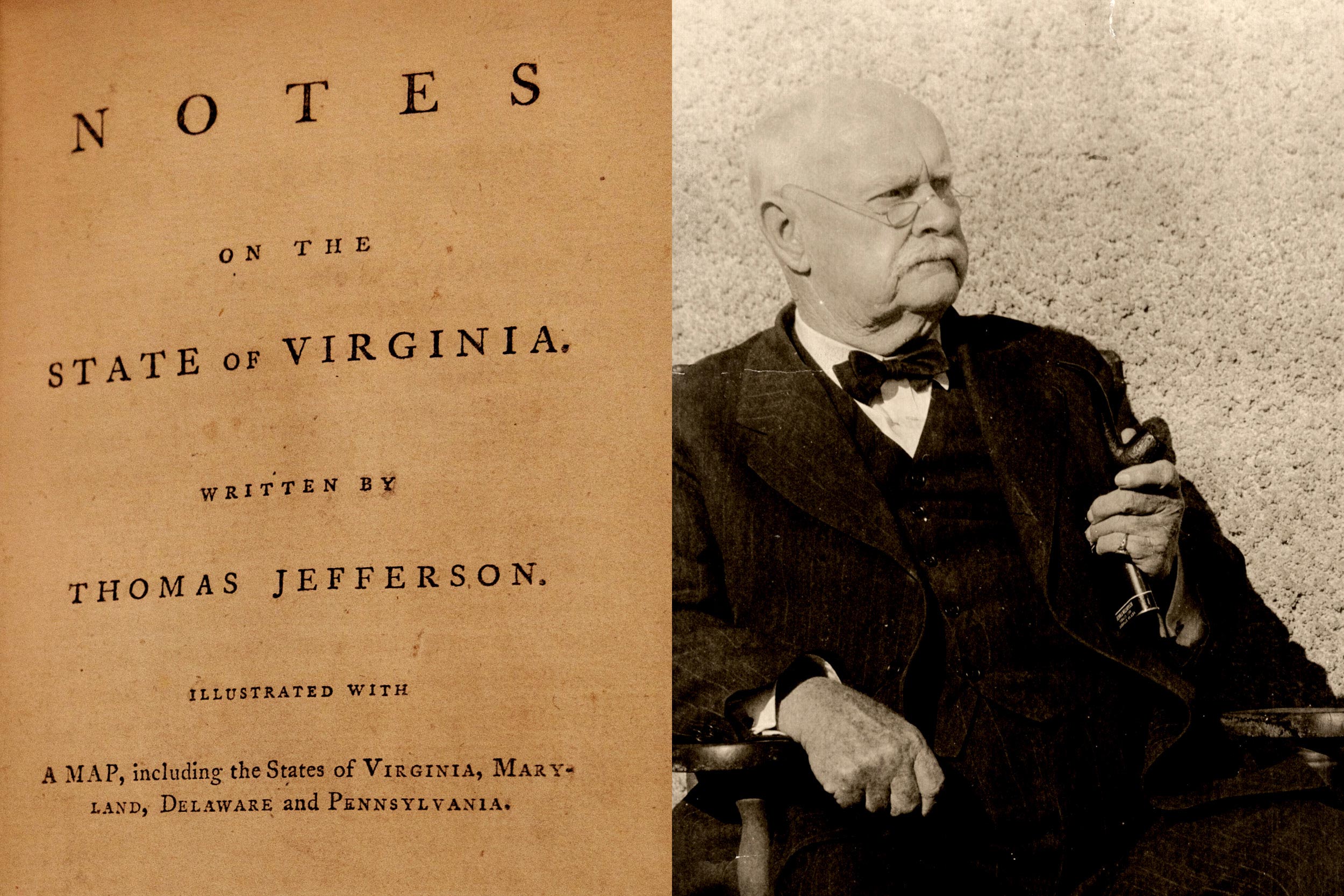

    Thomas Jefferson’s writings included observations about race that aligned with later eugenicists. Under the medical school deanship of Paul Brandon Barringer, right, UVA built its first hospital in 1901, but also continued to advance eugenic science.

    Editor’s note: Even an institution as historic as the University of Virginia – now entering its third century – has stories yet to be told. Some are inspiring, while the truths of others are painful, but necessary for a fuller accounting of the past. The President’s Commissions on Slavery and on the University in the Age of Segregation were established to find and tell those stories. Here are some of them, written by those who did the research. One in an occasional series:

    By the start of the 20th century, the University of Virginia had become a center of an emerging new strain of racism – eugenics – that would create and perpetuate myths created under the guise of scientific research, but ultimately was intended to demonstrate white racial superiority.

    The goal of eugenic science was knowledge of how various traits – emotional, physical, intellectual – were inherited, so that such information could be applied in order to advance the human race and preserve imagined racial superiority. Eugenic scientists used the census, genealogy, measurement of physiological functions and human anatomy, as well as intelligence testing, as methods of investigation.

    They believed application of eugenic knowledge, through legislation and community practices, would eliminate mental illness, physical disabilities, moral delinquency, crime and even physical illnesses. They assumed the benefit to society would be a dramatic reduction in the cost of caring for the sick, poor, mentally ill and incarcerated…

    Read the entire article here.

  • I am not ‘non-white’

    Daily Kos
    2020-01-12

    Denise Oliver Velez

    Denise Oliver, Minister of Economic Development of the Young Lords at the office headquarters. - Hiram Maristany, c.1970. Mapping Resistance exhibit
    Denise Oliver, minister of economic development of the Young Lords, pictured at the office headquarters in East Harlem. Photo by Hiram Maristany, c.1970.

    I’m black.

    I’ve been black, and proud to be black, my whole life. My parents raised me like that. They grew up as ‘Negroes.’ They had to drink at water fountains labeled ‘colored.’ They lived long enough to become Afro-Americans, and then African Americans.

    I was, and still am, militantly black. I’ve lived through the “Ungawa Black Power” of Stokely Carmichael and Rap Brown; the clenched, raised fists of the Panthers and Young Lords; and through this decade’s Black Lives Matter and #VoteLikeBlackWomen movements. My mom, who was never seen without her hair hot-comb pressed straight as a board, even accepted my Afro hairdo.

    Though I was raised by a socialist dad and I was a member of revolutionary nationalist socialist movements as a young person, I do not want to hear anyone spouting that it is more important to address class issues before we deal with racism and white supremacy. The two are inextricably intertwined in this country founded on African enslavement. All the money and economic equality in the world won’t wipe away our blackness and potential death by a white-aimed bullet. Racial issues steeped in malevolent anti-blackness do not deserve “back of the bus” status…

    Read the entire article here.

  • We European Jews never passed as white

    The Times of Israel
    2020-01-09

    Rivka Hellendall, Graduate Student of English Literature and Jewish Studies
    University of Amsterdam

    Rivka Hellendall
    Rivka Hellendall

    In the last two decades, American Ashkenazi Jews have returned to the question of their Otherness, or, put more crudely, to the question of whether Ashkenazi Jews are White, “white-passing”, or something else entirely. A quick Google search entry of “are Jews white” yields roughly 89 million results, including news articles, op-eds, and even academic tomes. The fact that Karen Brodkin named her 243-page 1998 study on the topic “How Jews Became White Folks and what that Says about Race in America” speaks volumes. Apparently, there was a large enough body of Jews at the time who never suffered anti-Semitism in person for Brodkin to make this title a viable one. A large enough number of American Jews who had never, for example, been denied housing or religious rights, equal opportunity employment (i.e. suffered job discrimination), or experienced insults, social exclusion, threats, and physical violence because of their Jewishness. Sadly, those times have changed since…

    Read the entire article here.

  • Harry and Meghan were meant to embody post-racial Britain. So much for that

    The Guardian
    2020-01-11

    Amna Saleem


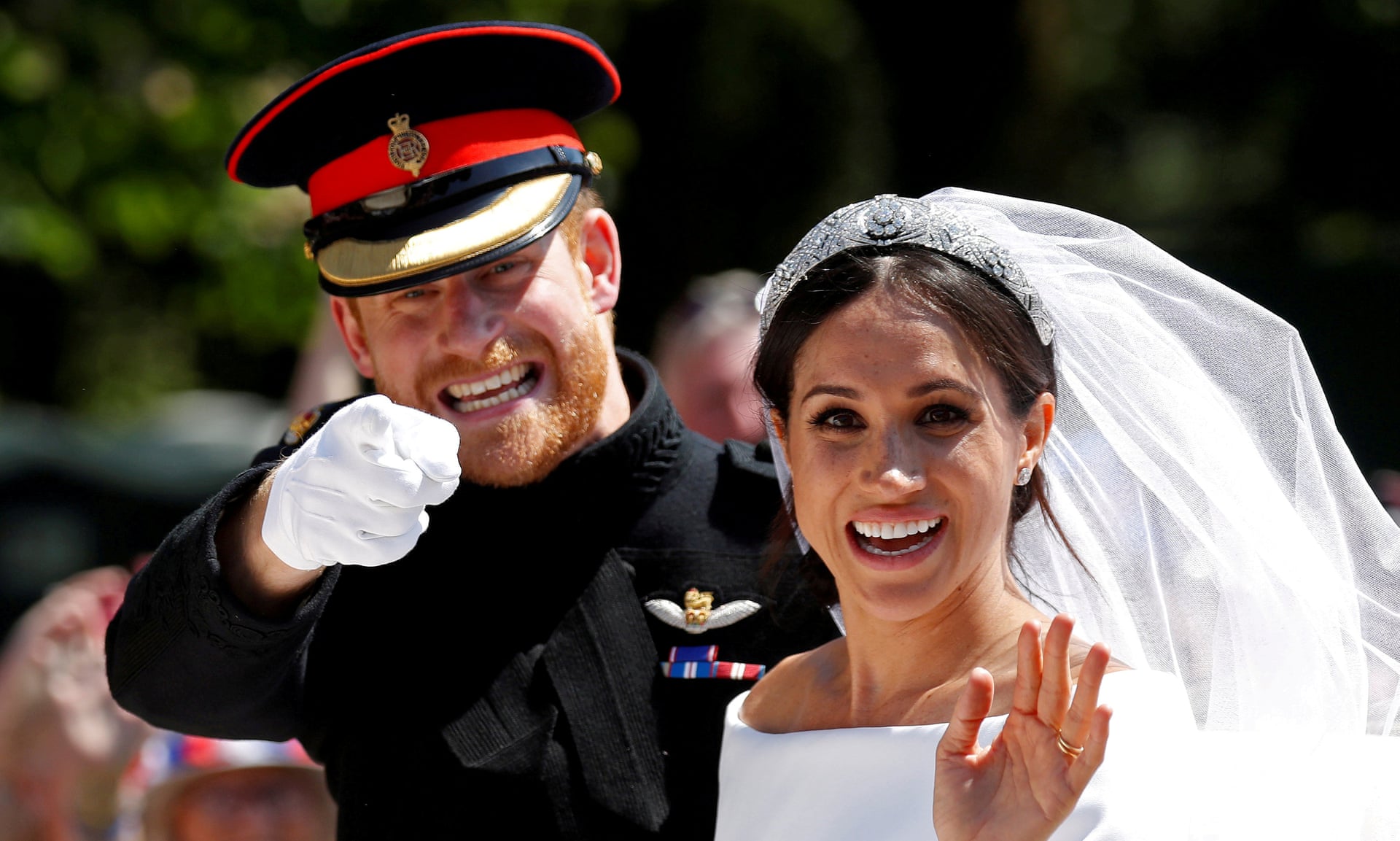
    Prince Harry and Meghan Meghan after their wedding ceremony, May 2018. Photograph: Damir Šagolj/Reuters

    Remember the choir, the preacher? The marriage symbolised a new era – then the tabloid onslaught began

    It’s the stuff romcoms are made of: beautiful young woman meets charming prince and, after a series of mild miscommunications, they live happily ever after. Well, that’s how it’s supposed to go at least. Meghan Markle, the much put upon protagonist of this Nora Ephron-meets-Get Out fairytale, has gone off-script and attempted to create a different happy ending, and with good reason.

    Everything that could have predicted the pair’s joint decision to step back as senior royals can be directly traced back through all the sensationalist and derogatory headlines written about Markle. She couldn’t even enjoy avocados without being framed as a drought- and murder-fuelling traitor, set on bringing down the monarchy. Harry, to his credit, has been by her side every step of the way, challenging traditions by demanding an end to the tabloids’ abuse of her, which sadly had little impact. If anything, it gave the news cycle more to talk about – but his actions were nonetheless commendable…

    Read the entire article here.

  • Beyond the Sunset: The Melungeon Outdoor Drama, 1969-1976

    Mercer University Press
    2019-12-02
    420 pages
    6 x 1 x 8.8 inches
    Paperback ISBN: 9780881467185

    Wayne Winkler, Director WETS-FM
    East Tennessee State University, Johnson City, Tennessee

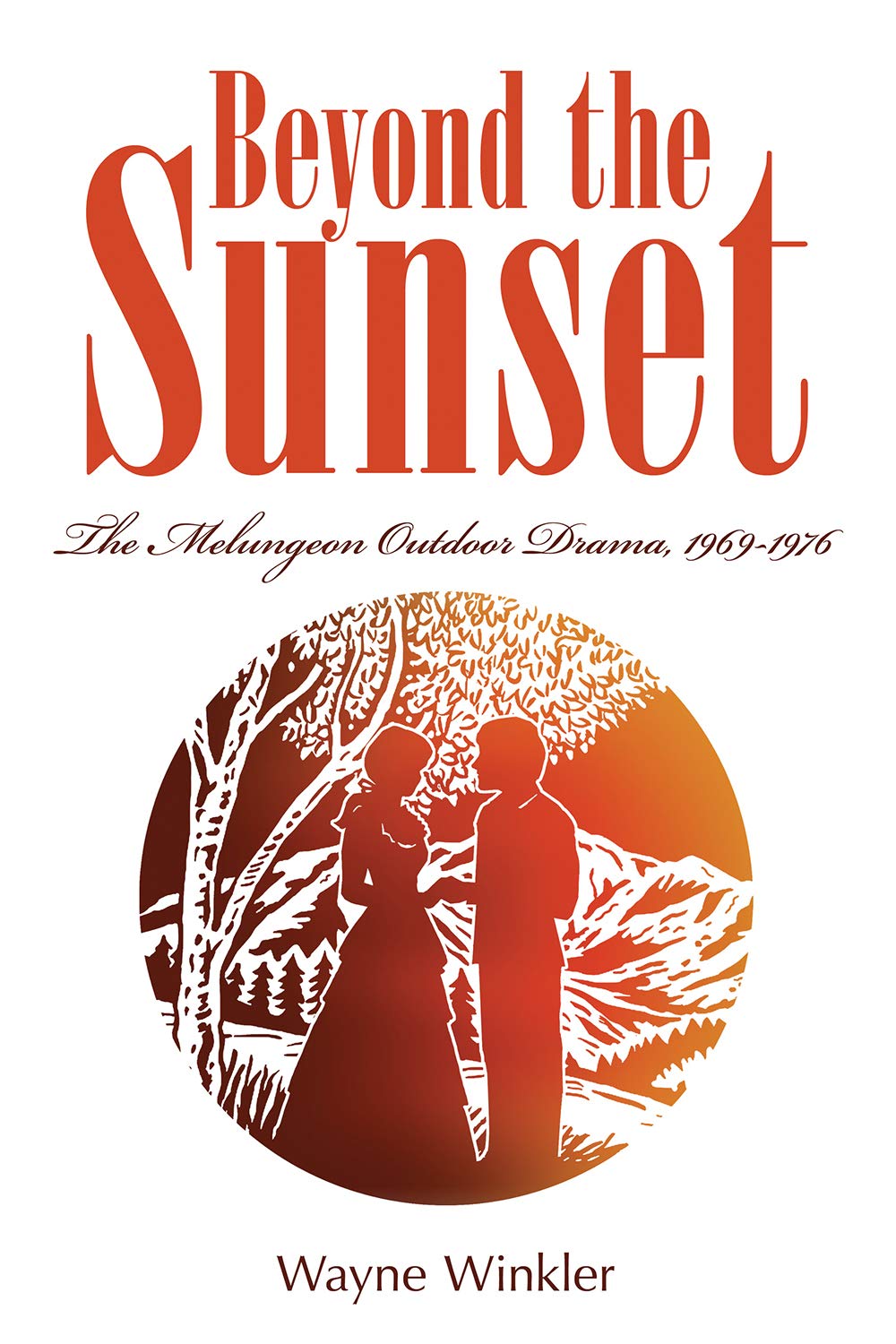
    In 1969, Hancock County, Tennessee was the eighth poorest county in the United States. Isolated by rugged mountains and far from population centers or major highways, the county had few natural resources, couldn’t attract industry, and had lost half its population in just a few decades. Hoping to develop a tourist industry, county leaders decided to stage an outdoor drama about the Melungeons, a mysterious, racially-mixed people that had attracted newspaper and magazine writers to Hancock County for more than a century. To stage the drama, the organizers had to overcome long-standing local prejudice against the dark-skinned Melungeons, the reluctance of the Melungeons to call attention to themselves, the physical isolation of the county, and their own lack of experience in any aspect of this project. In Beyond the Sunset, Wayne Winkler uses contemporary press reports, long-forgotten documents, and interviews with participants to chronicle the struggles of an impoverished rural Appalachian county to maintain its viability in the modern world–and the unexpected consequences of that effort. For those interested in Appalachian history in general and in Melungeon heritage specifically, this is a book that is an essential addition to your reading list.

  • Black Britons Wonder What Took Harry and Meghan so Long

    The New York Times
    2020-01-10

    Ceylan Yeginsu

    Prince Harry and Meghan, Duchess of Sussex, leaving St. George’s Chapel in Windsor Castle after their wedding last year.
    Prince Harry and Meghan, Duchess of Sussex, leaving St. George’s Chapel in Windsor Castle after their wedding last year.
    Pool photo by Ben Birchall

    “Thank God they are free,” one Londoner said. “All of this is about her race, I know it because as a Caribbean woman who did not grow up here, I have experienced it myself.”

    LONDON — When Prince Harry and Meghan announced this week that they would be stepping back from their royal duties and spending extensive time in North America, many of Britain’s minority residents said they felt a burst of relief.

    At long last, many said in interviews, the couple might finally escape the abuse, much of it racially tinged, that has been heaped upon them by the British press, particularly the country’s raucous tabloids.

    “Thank God they are free,” said Sanaa Edness, lifting her arms to the sky as she walked through Fordham Park in southeast London. “Nobody should tolerate bullying and abusive behavior because of the color of their skin. All of this is about her race, I know it because as a Caribbean woman who did not grow up here, I have experienced it myself.”…

    Read the entire article here.

  • ENGL 205 Focus on: Passing and Performing Identity

    Xavier University
    Cincinnati, Ohio
    Spring 2020

    Xavier University

    Section 25 Online MCFARLANE HARRIS
    Section 26 Online MCFARLANE HARRIS
    CRN 13054 and 11004

    EOAs part of the Core Curriculum’s Ethics / Religion and Society Requirement, Literature and the Moral Imagination is required for all undergraduate students. In broad terms, ENGL 205: Literature and the Moral Imagination focuses on personal and social ethical issues in literature. Individual sections feature specific topics.

    In this course, we will read fiction and graphic novels that investigate the phenomenon of racial passing in the United States, whereby “black” persons light-skinned enough to appear “white” cross the color line to live as white people. Along the way, we will read a smattering of historical sources and cultural theory on the social construction of race, gender, sexuality, socioeconomic class, religion, etc.

    For more information, click here.