• The Influences Affecting and the Influential Effects of Multiracials: Multiracialism and Stratification

    Sociology Compass
    Volume 8, Issue 1 (January 2014)
    Pages 63–77
    DOI: 10.1111/soc4.12100

    Hephzibah V. Strmic-Pawl, Assistant Professor of Sociology
    Manhattanville College, Harrison, New York

    Publication cover image

    Early research on multiracials documents the existence of a newly emergent population, those who identify with more than one race or what is commonly now known as multiracials. Contemporary research on multiracialism has a new focus on the stratification that multiracials experience and how multiracials may be influencing a new racial hierarchy. This paper discusses some of the primary issues of multiracialism and stratification including colorism, the racial hierarchy, social class, gender and sexual orientation, and multiracial as a celebrity‐like status. As the multiracial population grows, so must the field of multiracialism grows to include critical issues and questions regarding stratification.

    Read the entire article here.

  • In the End, the NFL Proved Colin Kaepernick Right

    The Atlantic
    2019-12-12

    Jemele Hill, Staff writer

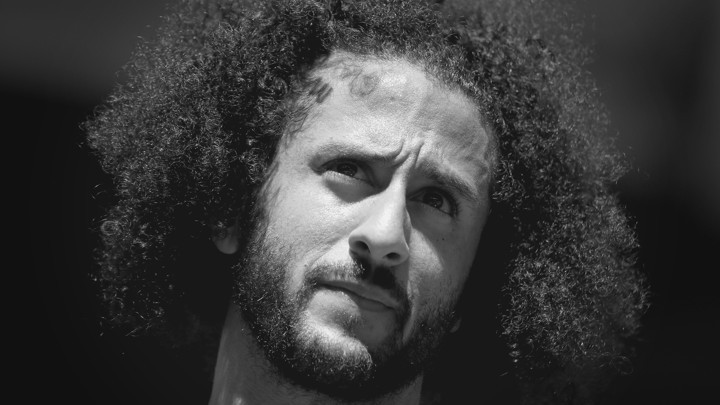
    Colin Kaepernick
    Al Bello / Getty

    In pronouncing the outspoken quarterback’s career dead, the league underscored its own unwillingness to let players exercise their own power.

    When the NFL commissioner, Roger Goodell, declared yesterday that the league had “moved on” from the embattled quarterback Colin Kaepernick, the finality of Goodell’s tone answered the question about whether Kaepernick would ever play professional football again.

    Kaepernick became persona non grata in the National Football League after the 2016 season, during which he protested police violence against African Americans by kneeling during the national anthem. The league then spent more than two years trying to make him go away, but seemed to relent by scheduling a workout for him last month in Atlanta. But that proposed session didn’t happen on the NFL’s terms, and Goodell, in his first public comments about the matter, implied yesterday that Kaepernick had blown his last chance.

    “It was a unique opportunity—an incredible opportunity—and he chose not to take it. And we’ve moved on here,” Goodell said at an owners’ meeting in Irving, Texas.

    But if Goodell believes that the Atlanta fiasco provided closure to this situation, he’s being horribly naive. The league’s clumsy treatment of Kaepernick only showed what the quarterback’s supporters have been saying all along: The NFL is unwilling to tolerate black athletes’ outrage, outspokenness, and desire to exercise their power—even though all three are entirely justified…

    Read the entire article here.

  • Doing hair, doing race: the influence of hairstyle on racial perception across the US

    Ethnic and Racial Studies
    Published online: 2019-12-11
    DOI: 10.1080/01419870.2019.1700296

    Jennifer Patrice Sims, Assistant Professor of Sociology
    University of Alabama, Huntsville

    Whitney Laster Pirtle, Assistant Professor of Sociology
    University of California, Merced

    Iris Johnson-Arnold, Associate Professor
    Department of Speech Pathology and Audiology
    Tennessee State University

    Publication Cover

    Hair is an easily changeable “racial marker” feature. Although growing interdisciplinary research suggests that hairstyle influences how one is racially perceived, extant methodological practices in racial perception research reduce external validity. This study introduces new experimental and analytical procedures to test the effect of hairstyle on racial perception across racial contexts. Over 1,000 participants from primarily white, black and multiracial test sites racially categorized a diverse group of women from matched pairs of pictures in which the women have different hairstyles. Results from multilevel regression show that altering hairstyle significantly alters how participants perceive mixed-race women, Latinas, most black and some white women and that this varies by racial context with perceptions of race being less swayed by hairstyle in the multiracial context. Our research thus demonstrates that doing hair is a context-dependent part of “doing race” that has theoretical, methodological, and legal implications.

    Read or purchase the article here.

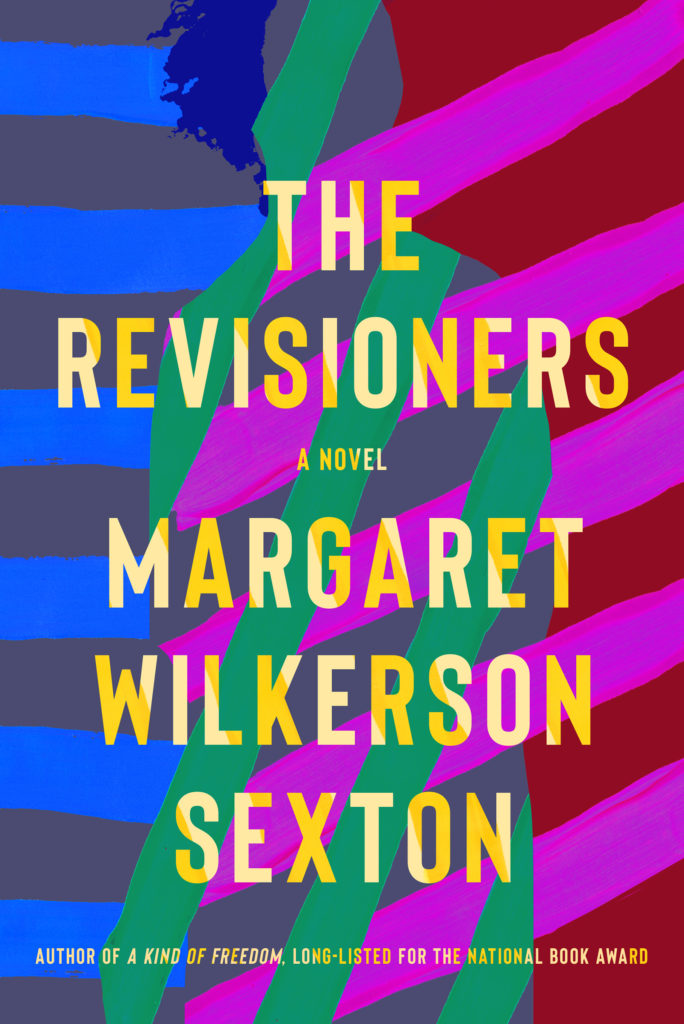
  • The Revisioners, A Novel

    Counterpoint Press
    2019-11-05
    288 pages
    5.5 x 8.25
    Hardcover ISBN: 9781640092587

    Margaret Wilkerson Sexton

    Following her National Book Award– nominated debut novel, A Kind of Freedom, Margaret Wilkerson Sexton returns with this equally elegant and historically inspired story of survivors and healers, of black women and their black sons, set in the American South

    In 1924, Josephine is the proud owner of a thriving farm. As a child, she channeled otherworldly power to free herself from slavery. Now her new neighbor, a white woman named Charlotte, seeks her company, and an uneasy friendship grows between them. But Charlotte has also sought solace in the Ku Klux Klan, a relationship that jeopardizes Josephine’s family.

    Nearly one hundred years later, Josephine’s descendant, Ava, is a single mother who has just lost her job. She moves in with her white grandmother, Martha, a wealthy but lonely woman who pays Ava to be her companion. But Martha’s behavior soon becomes erratic, then threatening, and Ava must escape before her story and Josephine’s converge.

    The Revisioners explores the depths of women’s relationships—powerful women and marginalized women, healers and survivors. It is a novel about the bonds between mothers and their children, the dangers that upend those bonds. At its core, The Revisioners ponders generational legacies, the endurance of hope, and the undying promise of freedom.

  • Who is Hispanic?

    Fact Tank: News in the Numbers
    Pew Research Center
    2019-11-11

    Mark Hugo Lopez, Director, Global Migration and Demography Research

    Jens Manuel Krogstad, Senior Writer/Editor

    Jeffrey S. Passel, Senior Demographer

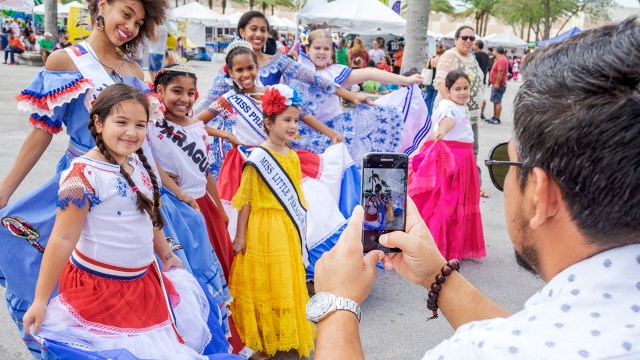
    Miami, Junta Hispania Hispanic Festival, beauty pageant contestants
    Beauty pageant contestants at the Junta Hispana Hispanic cultural festival in Miami. (Jeffrey Greenberg/Universal Images Group via Getty Images)

    Debates over who is Hispanic and who is not have fueled conversations about identity among Americans who trace their heritage to Latin America or Spain. The question surfaced during U.S. presidential debates and the confirmation of Sonia Sotomayor to the U.S. Supreme Court. More recently, it bubbled up after a singer from Spain won the “Best Latin” award at the 2019 Video Music Awards.

    So, who is considered Hispanic in the United States? And how are they counted in public opinion surveys, voter exit polls and government surveys like the upcoming 2020 census?…

    Read the entire article here.

  • Possessing Polynesians: The Science of Settler Colonial Whiteness in Hawai`i and Oceania

    Duke University Press
    November 2019
    320 pages
    Illustrations: 19 illustrations
    Paper ISBN: 978-1-4780-0633-6
    Cloth ISBN: 978-1-4780-0502-5

    Maile Arvin, Assistant Professor of History and Gender Studies
    University of Utah

    Possessing Polynesians

    From their earliest encounters with indigenous Pacific Islanders, white Europeans and Americans asserted an identification with the racial origins of Polynesians, declaring them to be, racially, almost white and speculating that they were of Mediterranean or Aryan descent. In Possessing Polynesians Maile Arvin analyzes this racializing history within the context of settler colonialism across Polynesia, especially in Hawai‘i. Arvin argues that a logic of possession through whiteness animates settler colonialism, through which both Polynesia (the place) and Polynesians (the people) become exotic, feminized belongings of whiteness. Seeing whiteness as indigenous to Polynesia provided white settlers with the justification needed to claim Polynesian lands and resources. Understood as possessions, Polynesians were and continue to be denied the privileges of whiteness. Yet Polynesians have long contested these classifications, claims, and cultural representations, and Arvin shows how their resistance to and refusal of white settler logic have regenerated Indigenous forms of recognition.

    Table of Contents

    • Acknowledgments
    • Introduction: Polynesia Is a Project, Not a Place
    • Part I. The Polynesian Problem: Scientific Production of the “Almost White” Polynesian Race
      • 1. Heirlooms of the Aryan Race: Nineteenth-Century Studies of Polynesian Origins
      • 2. Conditionally Caucasian: Polynesian Racial Classification in Early Twentieth-Century Eugenics and Physical Anthropology
      • 3. hating Hawaiians, Celebrating Hybrid Hawaiian Girls: Sociology and the Fictions of Racial Mixture
    • Part II. Regenerative Refusals: Confronting Contemporary Legacies of the Polynesian Problem in Hawai’i and Oceania
      • 4. Still in the Blood: Blood Quantum and Self-Determination in Day v. Apoliona and Federal Recognition
      • 5. The Value of Polynesian DNA: Genomic Solutions to the Polynesian Problems
      • 6. Regenerating Indigeneity: Challenging Possessive Whiteness in Contemporary Pacific Art
    • Conclusion. Regenerating an Oceanic Future in Indigenous Space-Time
    • Notes
    • Bibliography
    • Index
  • Mixed-Race in the US and UK: Comparing the Past, Present, and Future

    Emerald Publishing Limited
    2019-11-23
    193 pages
    152 x 229mm
    Hardback ISBN: 9781787695542
    Ebook ISBN: 9781787695559

    Jennifer Patrice Sims, Assistant Professor of Sociology
    University of Alabama, Huntsville

    Chinelo L. Njaka, Independent Social Researcher
    Peckham Rights! United Kingdom

    Jacket Image

    Contributing to an emerging literature on mixed-race people in the United States and United Kingdom, this book draws on racial formation theory and the performativity (i.e. “doing”) of race to explore the social construction of mixedness on both sides of the Atlantic Ocean.

    In addition to macro- and micro-level theoretical frameworks, the authors use comparative and relational analytical approaches to reveal similarities and differences between the two nations, explaining them in terms of both common historical roots as well as ongoing contemporary interrelationships.

    Focusing on the census, racial identity, civil society, and everyday experiences at the intersection of race, gender, class, and sexuality, Mixed-Race in the US and UK: Comparing the Past, Present, and Future offers academics and students an intriguing look into how mixed-race is constructed and experienced within these two nations. A final in-depth discussion on the authors’ research methodologies makes the book a useful resource on the processes, challenges, and benefits of conducting qualitative research in two nations.

    Contents

    • List of Tables and Figures
    • Acknowledgements
    • Chapter 1. Introduction: The Past, Present, and Future of Mixed-Race People in the United States and United Kingdom
    • Chapter 2. Creating Mixed-Race: The Census in the US and the UK
    • Chapter 3. Black, British Asian, Mixed-Race, or Jedi: Mixed-Race Identity in the US and UK
    • Chapter 4. Mixed-Race Civil Society: Racial Paradigms and Mixed-Race (Re)production in the US and UK
    • Chapter 5. “Sometimes it’s the first thing people ask:” Daily Experiences of Mixedness in the US and UK
    • Chapter 6. “Yes, girl, yes. I want to have babies:” Mixed-Race Families Generation after Generation
    • Chapter 7. Queering Critical Mixed Race Studies
    • Chapter 8. Conclusion: Creating and Comparing a Mixed-Race Future
    • Methodological Appendix: Conducting Qualitative Research on Both Sides of the Atlantic
    • References
    • Index
  • The Color of Love: A Story of a Mixed-Race Jewish Girl

    Agate Bolden (an imprint of Agate Publishing)
    2019-11-12
    256 pages
    5.25 x 0.5 x 8 inches
    Paperback ISBN-13: 9781572842755

    Marra B. Gad, Inde­pen­dent Film and Tele­vi­sion Producer
    Los Angeles, California

    9781572842755.jpg

    An unforgettable memoir about a mixed-race Jewish woman who, after fifteen years of estrangement from her racist great-aunt, helps bring her home when Alzheimer’s strikes

    In 1970, three-day-old Marra B. Gad was adopted by a white Jewish family in Chicago. For her parents, it was love at first sight—but they quickly realized the world wasn’t ready for a family like theirs.

    Marra’s biological mother was unwed, white, and Jewish, and her biological father was black. While still a child, Marra came to realize that she was “a mixed-race, Jewish unicorn.” In black spaces, she was not “black enough” or told that it was OK to be Christian or Muslim, but not Jewish. In Jewish spaces, she was mistaken for the help, asked to leave, or worse. Even in her own extended family, racism bubbled to the surface.

    Marra’s family cut out those relatives who could not tolerate the color of her skin—including her once beloved, glamorous, worldly Great-Aunt Nette. After they had been estranged for fifteen years, Marra discovers that Nette has Alzheimer’s, and that only she is in a position to get Nette back to the only family she has left. Instead of revenge, Marra chooses love, and watches as the disease erases her aunt’s racism, making space for a relationship that was never possible before.

    The Color of Love explores the idea of yerusha, which means “inheritance” in Yiddish. At turns heart-wrenching and heartwarming, this is a story about what you inherit from your family—identity, disease, melanin, hate, and most powerful of all, love. With honesty, insight, and warmth, Marra B. Gad has written an inspirational, moving chronicle proving that when all else is stripped away, love is where we return, and love is always our greatest inheritance.

  • Separated at birth: Was my mother given away because she looked white?

    Stories
    BBC News
    2019-12-01

    Vibeke Venema, Senior Broadcast Journalist

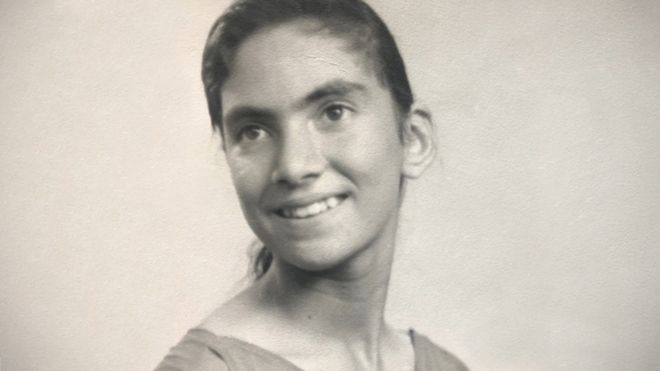
    Margaret as a young woman
    Nathan Romburgh

    When a health emergency prompted Nathan Romburgh and his sisters to look into their family history, decades after the end of apartheid, they uncovered a closely guarded secret that made them question their own identity.

    Cape Town, 29 September 1969 – at 10pm the city is rocked by a huge earthquake. Margaret Buirski is working as a First Aid nurse in the Alhambra cinema and, for once, her medical skills are really needed. A woman has fallen from the balcony and Margaret is tending to her injuries in the chaos.

    A young man walks past, very drunk, and notices the nurse’s shapely legs. Despite his inebriation, he offers to drive the women to hospital. This is the start of the romance between Margaret and Derek Romburgh…

    …”Then there was this big question – what would make someone give away only one of her twins? It just didn’t make sense,” says Nathan.

    He soon formed a theory – it was based on photographs Alan had shared, which showed that Margaret was fairer than her sister Norma.

    “My mother had olive skin, but she passed for white in apartheid South Africa,” says Nathan. “I don’t think Norma could have.”

    Although Mary Francis, Nathan’s grandmother, was registered as “European”, she was in fact mixed-race. Mary’s father, James Francis, was British, and her mother, Christina, was of Malaysian origin, from the island of St Helena. Mary was the youngest of their six children…

    Read the entire article here.

  • All at Sea

    4th Estate (an imprint of HarperCollins)
    2016-04-07
    240 pages
    Paperback ISBN: 978-0008142162

    Decca Aitkenhead

    In May 2014, on a hot still morning on a beautiful beach in Jamaica, Decca Aikenhead’s life changed irrevocably. First her four year old son Jake, pootling by the water’s edge in his pyjamas, was dragged out to sea on a riptide. Then Tony, her partner and Jake’s father, dived in to save him, but drowned in the process.

    Tony – a Northern, mixed race former prisoner, drug dealer and crack addict – “Black” and “Decca” – a prize-winning Guardian journalist from the West Country – had always made an improbable couple. For years they tried to find a way to come together from very different starting places. Tony reformed himself, got an education, and then a job. Decca bore him two sons and they bought a medieval farmhouse in Kent and set about transforming it. A decade on, lying in the sand in their favourite place in the world, young, strong, fit and with their children playing at their feet, they were congratulating themselves on their achievements when everything was ripped away.

    Bookended by the deaths of her mother in childhood, and Tony this year, All at Sea looks at class, race, privilege and prejudice through the prism of Decca’s life and these deaths. It stares into the dark chasm of our worst nightmare – a random accidental tragedy – and somehow finds the light on the other side.