Mixed Race Studies

Scholarly perspectives on the mixed race experience.

    • About This Site
    • Bibliography
    • Contact Information
    • Date and Time Formats
    • Forthcoming… (Updated 2021-09-01)
    • Likely Asked Questions
    • List of Book Publishers
    • List of Definitions and Terms
    • My Favorite Articles and Papers
    • My Favorite Posts
    • My Recent Activities
    • Praise for Mixed Race Studies
    • Tag Listing
      • Tag Listing (Ordered by Count)
    • US Census Race Categories, 1790-2010
    • 1661: The First ‘Mixed-Race’ Milestone
    • 2010 U.S. Census – Some Thoughts

recent posts

  • The Routledge International Handbook of Interracial and Intercultural Relationships and Mental Health
  • Loving Across Racial and Cultural Boundaries: Interracial and Intercultural Relationships and Mental Health Conference
  • Call for Proposals: 2026 Critical Mixed Race Studies Conference at UCLA
  • Participants Needed for a Paid Research Study: Up to $100
  • You were either Black or white. To claim whiteness as a mixed child was to deny and hide Blackness. Our families understood that the world we were growing into would seek to denigrate this part of us and we would need a community that was made up, always and already, of all shades of Blackness.

about

  • Twitter
  • Facebook
  • Instagram
  • Plecker claimed that when the English, Dutch and Scottish landed on the shores of North America, they came “to found a civilization of the highest type, not to mix their blood with the savages of the land, not to originate a mongrel population.”

    2019-09-01

    [Walter] Plecker was obsessed with white racial purity, a cause he clearly connected to his belief that the United States was a white man’s country. In a 1924 speech before the American Public Health Association, Plecker claimed that when the English, Dutch and Scottish landed on the shores of North America, they came “to found a civilization of the highest type, not to mix their blood with the savages of the land, not to originate a mongrel population.” The fatal error, he believed, was made in 1619 when the Dutch introduced African slaves to North America. “The problem was not slavery,” he told his audience, “but the presence of the negro in what should be a white man’s land.”

    Susan Pearson, “Birth certificates have always been a weapon for white supremacists,” The Washington Post, September 11, 2018. https://www.washingtonpost.com/outlook/2018/09/11/birth-certificates-have-always-been-weapon-white-supremacists/.

  • The Tale of Hollywood’s Most Curious Career Imposter

    2019-09-01

    The Tale of Hollywood’s Most Curious Career Imposter

    Messy Nessy: Cabinet of Chic Curiosities
    2019-07-11

    Francky Knapp

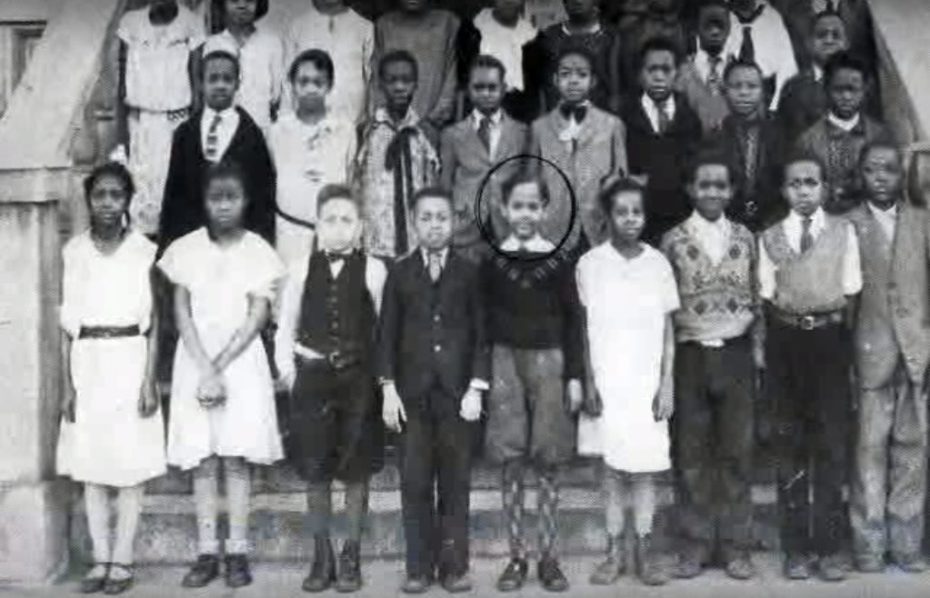
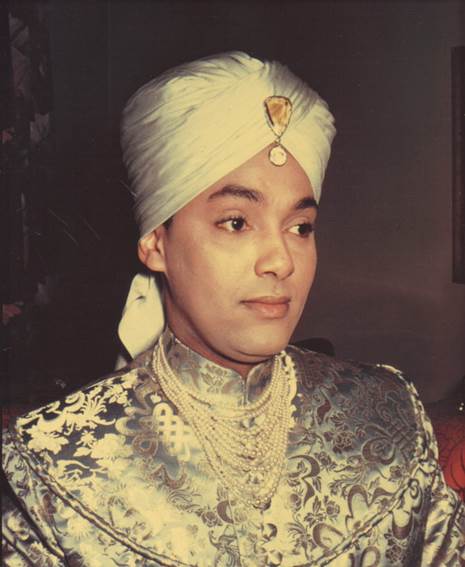
    Korla Pandit (John Roland Redd)

    Sex sells, and it sells even better with a dash of mystery. For every housewife in mid-century America, the enigmatic charm of Indian performer Korla Pandit was the ticket to getting weak in the knees before the kids came home from school. In the 15 minutes allotted to The Korla Pandit Program, the performer brought a scintillating new rhythm to suburbia’s ho-hum beat. Every week, he’d grace the small screen and play the sultry sounds of Miserlou with a coy smile, wearing a bejewelled turban, and flashing those soul-searching bedroom eyes. It was all part of his schtick, of course, and one of the most strangest in Hollywood history, given that Pandit wasn’t Indian, but African American. Today, the persona he created opens up a dialogue about race, fame, and surprising flexibility of truth…

    Korla Pandit (John Roland Redd) as a child

    Read the entire article here.

  • Hachimura, Japan’s mixed-race basketball star who once ‘hid from the world’

    2019-09-01

    Hachimura, Japan’s mixed-race basketball star who once ‘hid from the world’

    Japan Today
    2019-08-26

    Natsuko Fukue


    Japan’s Rui Hachimura is set to star at the basketball World Cup. Photo: AFP

    TOKYO — Rui Hachimura says he gets his height from his Beninese father and his work ethic from his Japanese mother — a combination that has propelled him to basketball stardom.

    The 21-year-old made history in June when he became the first Japanese to be selected in the first round of the NBA draft, picked up by the Washington Wizards.

    And like tennis superstar Naomi Osaka, Hachimura’s fast-growing fame is raising the profile of biracial sportspeople in a homogeneous country where mixed-race children still face prejudice.

    Hachimura, who is 203 cms tall, will lead Japan’s challenge at the basketball World Cup in China, which begins on Saturday. He is also poised to be a poster boy the hosts at the Tokyo 2020 Olympics. Big pressure for one so young.

    As a child Hachimura stood out in Japan — and not just because of his height. “I inherited my body from my father and my diligence from my mother,” he said in a recent interview with the Mainichi Shimbun daily.

    He now feels a sense of pride at being biracial but admits to feeling self-conscious about it when he was a child…

    Read the entire article here.

  • Birth certificates have always been a weapon for white supremacists

    2019-08-31

    Birth certificates have always been a weapon for white supremacists

    The Washington Post
    2018-09-11

    Susan Pearson, Associate Professor of History
    Northwestern University, Evanston, Illinois


    (Bigstock) (ziimmytws/Bigstock)

    Policing the color line through vital documents.

    The Trump administration’s decision to revive and expand the Bush and Obama-era practice of denying U.S. passports to Latinos born in South Texas should come as no surprise. From his assault on Barack Obama’s citizenship to his allegations that Mexican immigrants are criminals and rapists to his promise to institute a Muslim ban, Donald Trump has made it abundantly clear that he believes the only true Americans are white.

    But long before Trump rode to prominence promoting birtherism, birth certificates were an important instrument for policing the racial boundaries of citizenship. In the Jim Crow era, states used these seemingly innocuous public records to ensure that the rights of citizenship were accessible to white Americans — and no one else.

    The best example of this comes from the career of Walter Plecker. Plecker, the state registrar of vital statistics in Virginia from 1912 to 1946, worked with the white-supremacist Anglo-Saxon Clubs of America to persuade the state legislature to pass the 1924 Racial Integrity Act…

    Read the entire article here.

  • Racial Passing in Twenty-First Century Literature: Complicating Color in the African-American Fin-de-Siècle Novel

    2019-08-31

    Racial Passing in Twenty-First Century Literature: Complicating Color in the African-American Fin-de-Siècle Novel

    Indiana University of Pennsylvania
    December 2014

    Pamela S. Richardson, Chief of Staff & Assistant to the President for Strategic Initiatives
    Edward Waters College, Jacksonville, Florida

    A Dissertation Submitted to the School of Graduate Studies and Research in Partial Fulfillment of the Requirements for the Degree Doctor of Philosophy

    This dissertation focuses on how racial passing can be a critical strategy for defining and validating a nuanced conceptualization of blackness in twenty-first century African-American Literature. Specifically in the works of Sapphire, Danzy Senna, and Colson Whitehead, the historical moment of passing yet endures into the future. Scholars have thoroughly analyzed racial passing in African American literature according to a standard definition of narratives written primarily in the early twentieth-century. These texts are steeped in sentimentality and tragedy about the abandonment of the black body and social identity. However, the popularity of post-racial discourse at the turn of the twenty-first century marks a shift in racial passing as a millennial concept, creating a space for the expansion of what constitutes a passing narrative. These millennial narratives address and parallel the changing social-political American racial climate. This research is an attempt to trace the shifts of the racial passing construct that allow for questions of representation, resistance, agency, and power relative to race and race relations in an ever increasingly, but arguably, post-racial society. Furthermore, passing narratives at the turn of the century critique the importance of maintaining fixed racial identities in order to empower the individual through redefining, reconnecting, and reclaiming one’s blackness.

    Read the introduction here.

  • Allyson Hobbs, A Chosen Exile: A History of Racial Passing in American Life. Cambridge, MA: Harvard University Press, 2014. 382 pp.

    2019-08-31

    Allyson Hobbs, A Chosen Exile: A History of Racial Passing in American Life. Cambridge, MA: Harvard University Press, 2014. 382 pp.

    49th Parallel: an interdisciplinary journal of North American Studies
    Issue 37 (2015)
    pages 66-68

    Christopher Allen Varlack, Lecturer
    University of Maryland, Baltimore County

    Popularized in part during the Harlem Renaissance of the early to midtwentieth century, the passing novel, including James Weldon Johnson’s 1912 The Autobiography of an Ex-Colored Man, Walter White’s 1926 Flight, and Jessie Redmon Fauset’s 1928 Plum Bun: A Novel Without a Moral, has received a wide range of scholarship. Elaine K. Ginsberg’s 1996 study, Passing and the Fictions of Identity explores the politics of passing from the early experiences of African slaves through the present day while Gayle Wald’s 2000 Crossing the Line: Racial Passing in Twentieth-Century U.S. Literature and Culture explores cinematic and literary representations of passing produced in the United States. Together, these works reveal the struggle of an African-American community marginalized and disenfranchised within an American society defined by its Jim Crow culture and racial hierarchy. Under these circumstances, racial passing is most often an attempt to obtain what Cheryl L. Harris terms “whiteness as property” as a result of the very limited opportunities and restricted social mobility afforded to blacks. Such scholarship provides insight into the historical function of passing and the ways in which the passing novel brings to the forefront of the American consciousness an increased awareness of its changing socio-racial landscape.

    In her critical work, appropriately titled, A Chosen Exile: A History of Racial Passing in American Life, Allyson Hobbs seeks to add a new dimension to this existing conversation, her book is “an effort to recover those lives” lost in the late nineteenth and early twentieth centuries as “countless African Americans [knowingly] passed as white, leaving behind families, friends, and communities without any available avenue for return” (4). Hobbs‟ work, a welcomed addition to the field, thus uses the lives of the everyday participants of passing to show not only what they gained from assuming their white identities—economic opportunity, social mobility, increased acceptance, etc.—but also what they lost along the way—the all-important connection to family and community that had long sustained the African-American people in the midst of cultural oppression. Because racialization exists all around us and “[r]ace is reproduced . . . at every level of society, including in our everyday lives”, the concerns that Hobbs advances in what proves a vital study of racial passing in American life will certainly remain, even despite the growing number of claims (which Hobbes disputes) that America has transitioned into a post-racial society (277).

    Read the entire review here.

  • Racial Reassignment Surgery and the Dissolution of the Color Line: Afrofuturist Satire in George Schuyler’s Black No More and Jess Row’s Your Face in Mine

    2019-08-30

    Racial Reassignment Surgery and the Dissolution of the Color Line: Afrofuturist Satire in George Schuyler’s Black No More and Jess Row’s Your Face in Mine

    Third Stone: devoted to Afrofuturism and other modes of the Black Fantastic
    Volume 1, Issue 1 (2019)
    Article 17
    12 pages

    Christopher A. Varlack, Lecturer
    University of Maryland, Baltimore County

    Racial passing, during the antebellum period, was a way in which African-American peoples sought to escape the throes of slavery and the physical and psychological abuse associated with the plantation tradition. In time, racial passing became a way of obtaining the social, economic, and political opportunities denied people of color in the discriminatory and racially-biased United States. This study, however, examines a specific form of racial passing–that of racial reassignment surgery–as explored in George Schuyler’s Black No More and Jess Row’s Your Face in Mine as a way to test the theory that assimilation and miscegenation would one day resolve the color line that had left generations of African-American peoples disenfranchised and dispossessed. At the same time, this study examines the Afrofuturist sensibilities in these two key works of the Harlem Renaissance era and present day to understand how such authors not only counter the troubling histories of their time but also propose counter-futures that would otherwise have been buried beneath the cultural oppression of Jim Crow and other more modern forms of racism.

    Read the entire article here.

  • The Fiction of Race

    2019-08-30

    The Fiction of Race

    The American Scholar
    2019-08-07

    Thomas Chatterton Williams

    Flickr/lyonora
    Flickr/lyonora

    When will we recognize it as such?

    Almost every summer, my wife and I, now with two kids in tow, spend a couple of weeks in Italy. We first fell in love with the Ligurian coast just beyond France and Monaco, then with the Tuscan countryside around Florence, and for the past several summers, the islands off Naples. This year, we went farther south, into the instep of the boot, and are staying at a family-run agriturismo on the Mediterranean coast of Calabria. Along with several other friends, my brother and his blond-haired, tan-skinned half-Russian five-year-old daughter have joined us. This morning, the two of us drove into the small seaside village down the hill from where we’re staying to pick up some pizzas. I went inside and fumbled my way through the somewhat complicated order that demanded anchovies, artichokes, and for one picky eater, a tomato-less pizza…

    Read the entire article here.

  • Blackness and Whiteness

    2019-08-29

    Blackness and Whiteness

    Our Human Family: Conversations on achieving equality
    2019-05-07

    Emily Cashour
    Oakland, California


    The author and her mother

    Growing up as mixed-race alongside my white mother

    Growing up, I was unaccustomed to discussions about race. For most of my life, the color of my skin was something simple, a fact that became more or less apparent alongside the changing seasons. When it started to become impossible to ignore, as a young child, I pushed to downplay my color difference. I sat in the shade with my white cousins at the beach to prevent the sun from reaching me, complained with a gentle fierceness each time my mother took me to get my hair braided, said quiet “thank-yous” with no further explanation to people who gleefully oohed and ahhed at my beautiful tan.

    As a teenager, I embraced wholeheartedly the idea of tan equaling beautiful, at least so far as in the context of tan being simply a new shade of whiteness, rather than brownness. I was a tan white person. At least, that is what everyone in my town assumed me to be, and rather than fight the simplicity of that label, I allowed it to begin defining me.

    My mom, a white woman and single mother, was quiet during these years. If I had questions, she would answer them willingly, but quite honestly, I rarely ever asked her anything. Sometimes, when she took me to Baltimore, we drove home the long way, observing dilapidated neighborhoods and houses with wooden boards with holes in them where windows should’ve been. The sidewalks and the weeds in the place of gardens made these communities look tired, winded. It was clear that places like this were worlds away from where my mom and I lived; yet we were both keen outsiders, desperate for a deeper understanding. There’s something funny about an obviously white woman and an obviously brown child alone together, trying to find a community. On those trips to Baltimore, my mother and I had not quite identified our community yet…

    Read the entire article here.
  • What Does It Mean to Be “Black Enough”?

    2019-08-28

    What Does It Mean to Be “Black Enough”?

    Electric Lit
    2019-08-15

    Brian Gresko

    Chris L. Terry’s “Black Card” grapples with biracial identity

    Chris L. Terry’s Black Card is a fascinating meditation on race, with a head-nodding soundtrack that moves from funk LPs to punk CDs, Guns N’ Roses to Outkast. The novel follows an unnamed protagonist, a college drop-out who works as a barista in Richmond, Virginia, and plays bass in a punk band. His bandmates are white, along with the majority of the punks he encounters at house parties and shows, but he’s mixed-race, with a white mother and Black father.

    All his life he’s been unsure of his Black identity due to his light skin tone and red hair, attributes that read to white people as “racially ambiguous.” His father tells him not to doubt his Blackness, yet this confirmation comes off more as a warning not to get too comfortable around white people, and, like most kids when receiving advice from a parent, he doesn’t really take it to heart…

    Read the entire interview here.

Previous Page
1 … 139 140 141 142 143 … 1,428
Next Page

Designed with WordPress