Mixed Race Studies

Scholarly perspectives on the mixed race experience.

    • About This Site
    • Bibliography
    • Contact Information
    • Date and Time Formats
    • Forthcoming… (Updated 2021-09-01)
    • Likely Asked Questions
    • List of Book Publishers
    • List of Definitions and Terms
    • My Favorite Articles and Papers
    • My Favorite Posts
    • My Recent Activities
    • Praise for Mixed Race Studies
    • Tag Listing
      • Tag Listing (Ordered by Count)
    • US Census Race Categories, 1790-2010
    • 1661: The First ‘Mixed-Race’ Milestone
    • 2010 U.S. Census – Some Thoughts

recent posts

  • The Routledge International Handbook of Interracial and Intercultural Relationships and Mental Health
  • Loving Across Racial and Cultural Boundaries: Interracial and Intercultural Relationships and Mental Health Conference
  • Call for Proposals: 2026 Critical Mixed Race Studies Conference at UCLA
  • Participants Needed for a Paid Research Study: Up to $100
  • You were either Black or white. To claim whiteness as a mixed child was to deny and hide Blackness. Our families understood that the world we were growing into would seek to denigrate this part of us and we would need a community that was made up, always and already, of all shades of Blackness.

about

  • Twitter
  • Facebook
  • Instagram
  • Black success—in the skillful work of passing itself as well as in endeavors passers pursue once they access opportunities they had been denied—disrupts the ideological backbone of racial injustice, enacting a reductio of white superiority and revealing whites to be easily fooled. Successful acts of fugitivity achieved by passing also serve to undermine the hegemony of oppression, disrupting its ideological functioning as a natural or inescapable condition.

    2022-05-17

    Conversely, it is essential to recognize that [racial] passing can take on an ethical and political significance by exposing the internal contradictions and contingency of seemingly totalizing systems of oppression, revealing gaps and openings for liberation and working to create and exploit them. Black success—in the skillful work of passing itself as well as in endeavors passers pursue once they access opportunities they had been denied—disrupts the ideological backbone of racial injustice, enacting a reductio of white superiority and revealing whites to be easily fooled. Successful acts of fugitivity achieved by passing also serve to undermine the hegemony of oppression, disrupting its ideological functioning as a natural or inescapable condition.

    Meena Krishnamurthy, “The Burdened Virtue of Racial Passing,” The Boston Review, May 13, 2022. https://bostonreview.net/articles/the-burdened-virtue-of-racial-passing/.

  • Podcast Season 2 Episode 8: Centering Garifuna in the African Diaspora

    2022-05-16

    Podcast Season 2 Episode 8: Centering Garifuna in the African Diaspora

    Dialogues in Afrolatinidad
    2022-05-04

    Michele Reid-Vazquez, Host and Associate Professor
    Department of Africana Studies
    University of Pittsburgh

    In this episode of Dialogues in Afrolatinidad, Dr. Paul Joseph López Oro, Assistant Professor of Africana Studies at Smith College talks with our host Dr. Michele Reid-Vazquez about his research on Garifuna migration and different meanings of Black identity. The conversation also touches upon Afro-Latinx communities in the United States, their relations with African-Americans, and issues of queer identity in these communities.

  • Markle’s frankness should be applauded as brave in a nation that still fails to fully acknowledge the roughly 7% of us who claim multiple races.

    2022-05-16

    [Meghan] Markle’s frankness should be applauded as brave in a nation that still fails to fully acknowledge the roughly 7% of us who claim multiple races. Indeed, either through erasure or denial, American media—both social and traditional—seem to insist that biracial folks like myself simply do not exist.

    David Kaufman, “Meghan Markle is the biracial hero I’ve always wanted,” Quartz, November 28, 2017. https://qz.com/quartzy/1138712/is-meghan-markle-black-no-shes-biracial/.

  • The Burdened Virtue of Racial Passing

    2022-05-16

    The Burdened Virtue of Racial Passing

    The Boston Review
    2022-05-13

    Meena Krishnamurthy, Assistant Professor of Philosophy
    Queen’s University, Kingston, Ontario, Canada

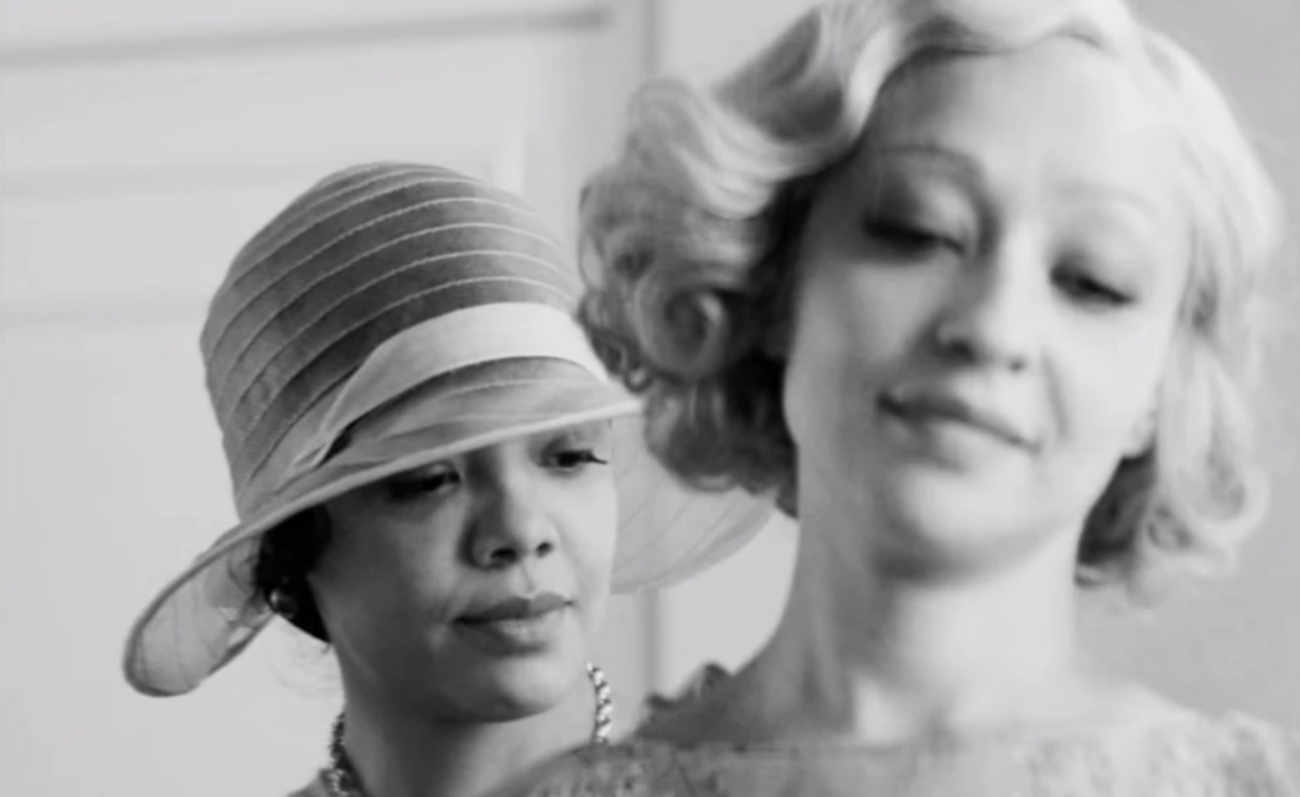
    A still from Rebecca Hall’s film Passing, based on the 1929 novel by Nella Larsen. Image: Netflix

    Though a means of escaping and undermining racial injustice, the practice comes with own set of costs and sacrifices.

    In Nella Larsen’s 1929 novel Passing, adapted by Rebecca Hall and distributed on Netfli­x last fall, Clare Kendry—a light-skinned Black woman—decides to pass as white. Clare grows up poor in Chicago; after her alcoholic father dies, she is taken in by her racist white aunts. When she turns eighteen she marries a rich white man who assumes she is white. Clare makes a clean escape until, some years later, she runs into her childhood friend, Irene Redfield, at a whites-only hotel; Irene, it turns out, sometimes passes herself, in this case to escape the summer heat. The storyline traces their complex relationship after this reunion and ends in tragedy for Clare.

    Hall’s film adaptation joins several other recent representations that dramatize the lived experience of passing. The protagonist of Brit Bennett’s best-selling novel The Vanishing Half (2020), for example, decides to start passing as white in the 1950s at age sixteen after responding to a listing in the newspaper for secretarial work in a New Orleans department store. Much to her surprise, after excelling at the typing test, Stella is offered the position; her boss assumes she is white. Initially Stella keeps up the ruse just to support her and her sister, but passing also becomes a way for her to escape the trauma of her father’s lynching and the prospect of her own…

    Read the entire article here.

  • Blackness in Mestizo America: The Cases of Mexico and Peru

    2022-05-16

    Blackness in Mestizo America: The Cases of Mexico and Peru

    Latino(a) Research Review
    Volume 7, Number 1 (2008)
    pages 30-58

    Tanya Golash-Boza, Professor of Sociology
    University of California, Merced

    Christina A. Sue, Associate Professor of Sociology
    University of Colorado, Boulder

    In the PBS film series, Black in Latin America, Henry Louis Gates, Jr. takes on the ambitious task of depicting blackness in six countries – the Dominican Republic, Haiti, Cuba, Brazil, Mexico, and Peru – to a primarily “American” audience. Given that Latin America and the Caribbean have the largest concentration of persons of African descent outside of Africa, the documentary is an important one. Gates’ coverage of “blackness”1 in these countries is comprehensive, spanning from the time of slavery to the present, with a primary focus on the cultural contributions, social experiences, and identities of individuals of African descent in these regions. However, Gates’ research traditionally has not focused on race in Latin America and, as scholars positioned more centrally in this field, we found some of his characterizations and treatment of the topic to be problematic. In this and the following commentary articles, scholars of race in the featured countries engage in a critical analysis of the documentary.

    We begin with an examination of Gates’ presentation of blackness in Mexico and Peru. In contrast to the other countries featured in the series, Mexico and Peru fall within mestizo America; their populations are mainly comprised of mestizos2 and Indigenous peoples and they have relatively small populations of African descent. Moreover, blackness is marginalized in the historical narratives and national ideologies (state-sponsored belief systems) of these countries. Consequently, many people are unaware of the nations’ African heritage. The film endeavors to expose this hidden history…

    Read the entire article here.

  • Intermarriage and the Friendship of Peoples: Ethnic Mixing in Soviet Central Asia

    2022-05-16

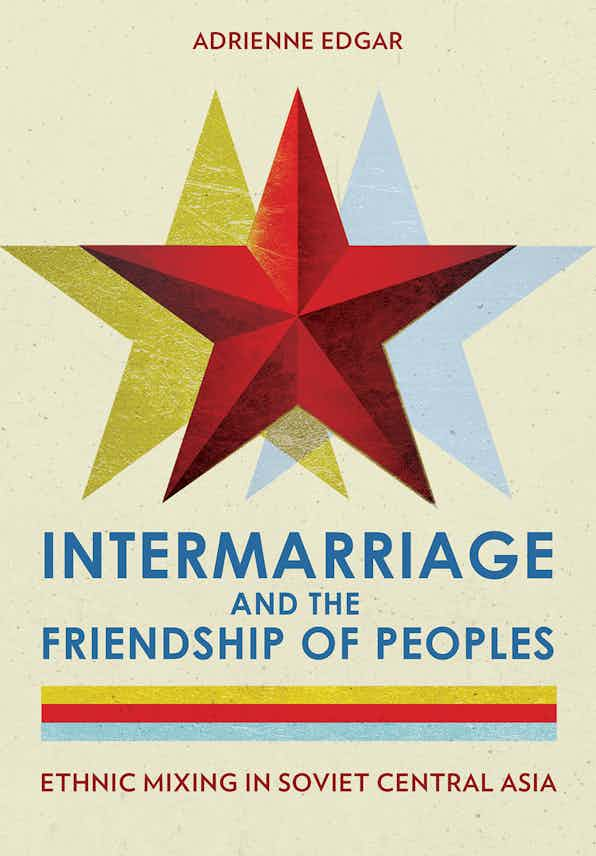
    Intermarriage and the Friendship of Peoples: Ethnic Mixing in Soviet Central Asia

    Cornell University Press
    2022-05-15
    300 pages
    6 x 9
    Hardcover ISBN13: 9781501762949
    Hardcover ISBN10: 150176294X

    Adrienne Edgar, Professor of History
    University of California, Santa Barbara

    Intermarriage and the Friendship of Peoples examines the racialization of identities and its impact on mixed couples and families in Soviet Central Asia. In marked contrast to its Cold War rivals, the Soviet Union celebrated mixed marriages among its diverse ethnic groups as a sign of the unbreakable friendship of peoples and the imminent emergence of a single “Soviet people.” Yet the official Soviet view of ethnic nationality became increasingly primordial and even racialized in the USSR’s final decades. In this context, Adrienne Edgar argues, mixed families and individuals found it impossible to transcend ethnicity, fully embrace their complex identities, and become simply “Soviet.”

    Looking back on their lives in the Soviet Union, ethnically mixed people often reported that the “official” nationality in their identity documents did not match their subjective feelings of identity, that they were unable to speak “their own” native language, and that their ambiguous physical appearance prevented them from claiming the nationality with which they most identified. In all these ways, mixed couples and families were acutely and painfully affected by the growth of ethnic primordialism and by the tensions between the national and supranational projects in the Soviet Union.

    Intermarriage and the Friendship of Peoples is based on more than eighty in-depth oral history interviews with members of mixed families in Kazakhstan and Tajikistan, along with published and unpublished Soviet documents, scholarly and popular articles from the Soviet press, memoirs and films, and interviews with Soviet-era sociologists and ethnographers.

  • Racism, Not Race: Answers to Frequently Asked Questions

    2022-05-15

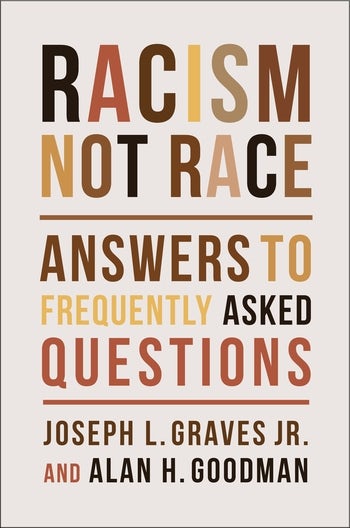
    Racism, Not Race: Answers to Frequently Asked Questions

    Columbia University Press
    December 2021
    320 pages
    Hardcover ISBN: 9780231200660
    Paperback ISBN: 9780231200677
    E-book ISBN: 9780231553735

    Joseph L. Graves Jr., is a professor in the Department of Biology at
    North Carolina A&T State University

    Alan H. Goodman, Professor of Biological Anthropology
    Hampshire College

    The science on race is clear. Common categories like “Black,” “white,” and “Asian” do not represent genetic differences among groups. But if race is a pernicious fiction according to natural science, it is all too significant in the day-to-day lives of racialized people across the globe. Inequities in health, wealth, and an array of other life outcomes cannot be explained without referring to “race”—but their true source is racism. What do we need to know about the pseudoscience of race in order to fight racism and fulfill human potential?

    In this book, two distinguished scientists tackle common misconceptions about race, human biology, and racism. Using an accessible question-and-answer format, Joseph L. Graves Jr. and Alan H. Goodman explain the differences between social and biological notions of race. Although there are many meaningful human genetic variations, they do not map onto socially constructed racial categories. Drawing on evidence from both natural and social science, Graves and Goodman dismantle the malignant myth of gene-based racial difference. They demonstrate that the ideology of racism created races and show why the inequalities ascribed to race are in fact caused by racism.

    Graves and Goodman provide persuasive and timely answers to key questions about race and racism for a moment when people of all backgrounds are striving for social justice. Racism, Not Race shows readers why antiracist principles are both just and backed by sound science.

    Contents

    • List of Questions
    • Preface
    • Introduction: What Are Race, Racism, and Human Variation?
    • 1. How Did Race Become Biological?
    • 2. Everything You Wanted to Know About Genetics and Race
    • 3. Everything You Wanted to Know About Racism
    • 4. Why Do Races Differ in Disease Incidence?
    • 5. Life History, Aging, and Mortality
    • 6. Athletics, Bodies, and Abilities
    • 7. Intelligence, Brains, and Behaviors
    • 8. Driving While Black and Other Deadly Realities of Institutional and Systemic Racism
    • 9. DNA and Ancestry Testing
    • 10. Race Names and “Race Mixing”
    • 11. A World Without Racism?
    • Conclusions
    • Notes
    • Index
  • Reclamation: Sally Hemings, Thomas Jefferson, and a Descendant’s Search for Her Family’s Lasting Legacy

    2022-05-15

    Reclamation: Sally Hemings, Thomas Jefferson, and a Descendant’s Search for Her Family’s Lasting Legacy

    Amistad (an imprint of HarperCollins)
    2021-11-16
    288 pages
    6x9in
    Hardcover ISBN: 9780063028654
    E-book ISBN: 9780063028678
    Paperback ISBN: 9780063028661
    Digital Audio, MP3 ISBN: 9780063028685

    Gayle Jessup White

    A Black descendant of Thomas Jefferson and Sally Hemings’ family explores America’s racial reckoning through the prism of her ancestors—both the enslaver and the enslaved.

    Gayle Jessup White had long heard the stories passed down from her father’s family, that they were direct descendants of Thomas Jefferson—lore she firmly believed, though others did not. For four decades the acclaimed journalist and genealogy enthusiast researched her connection to Thomas Jefferson, to confirm its truth once and for all.

    After she was named a Jefferson Studies Fellow, Jessup White discovered her family lore was correct. Poring through photos and documents and pursuing DNA evidence, she learned that not only was she a descendant of Jefferson on his father’s side; she was also the great-great-great-granddaughter of Peter Hemings, Sally Hemings’s brother.

    In Reclamation she chronicles her remarkable journey to definitively understand her heritage and reclaim it, and offers a compelling portrait of what it means to be a black woman in America, to pursue the American dream, to reconcile the legacy of racism, and to ensure the nation lives up to the ideals advocated by her legendary ancestor.

  • Tao Leigh Goffe Is On A Mission To Uncover ‘Afro-Asian Intimacies’

    2022-05-13

    Tao Leigh Goffe Is On A Mission To Uncover ‘Afro-Asian Intimacies’

    Sweet July
    2022-05-09

    Nylah Burton

    “I am the sedimented sum of four islands. The Caribbean, Hong Kong, the British Isles, New York City; all of them seas and stretches of water containing many islands.”

    “My parents named me Tao,” Dr. Tao Leigh Goffe narrates as she approaches an intricately carved, dark wood chest in season two, episode seven of the Hulu series Your Attention Please: Initiative 29.

    Directed by Carmen LoBue, the short film is focused on Goffe—who was born in London and lives in New York City—and her Afro-Asian heritage. Opening the chest, Goffe’s hand grazes family photos and mementos: Black Caribbean men in smart suits, her Jamaican Chinese mother, and red envelopes gilded with gold, containing one word: Legacy…

    Read the entire article here.

  • Amnesia of June Bugs, A Novel

    2022-05-13

    Amnesia of June Bugs

    7.13 Books
    2022-04-25
    354 pages
    Paperback ISBN-13: 979-8985376203
    5.5 x 0.89 x 8.5 inches

    Jackson Bliss

    Jackson Bliss’s brilliant and moving debut novel redefines what a novel can be. Hurricane Sandy has just smashed into the Eastern Seaboard, trapping four passengers on the C train: a Chinese American graffiti artist grieving his father’s death, a mixed-race graphic designer struggling to become a mom, a Moroccan French translator escaping his heartache in Paris, and an Indian American traveler leaving Chicago to regain control of her life. Amnesia of June Bugs is an ambitious, infatuated, and furious book about the time we lost and the people we could have loved.

Previous Page
1 … 13 14 15 16 17 … 1,428
Next Page

Designed with WordPress