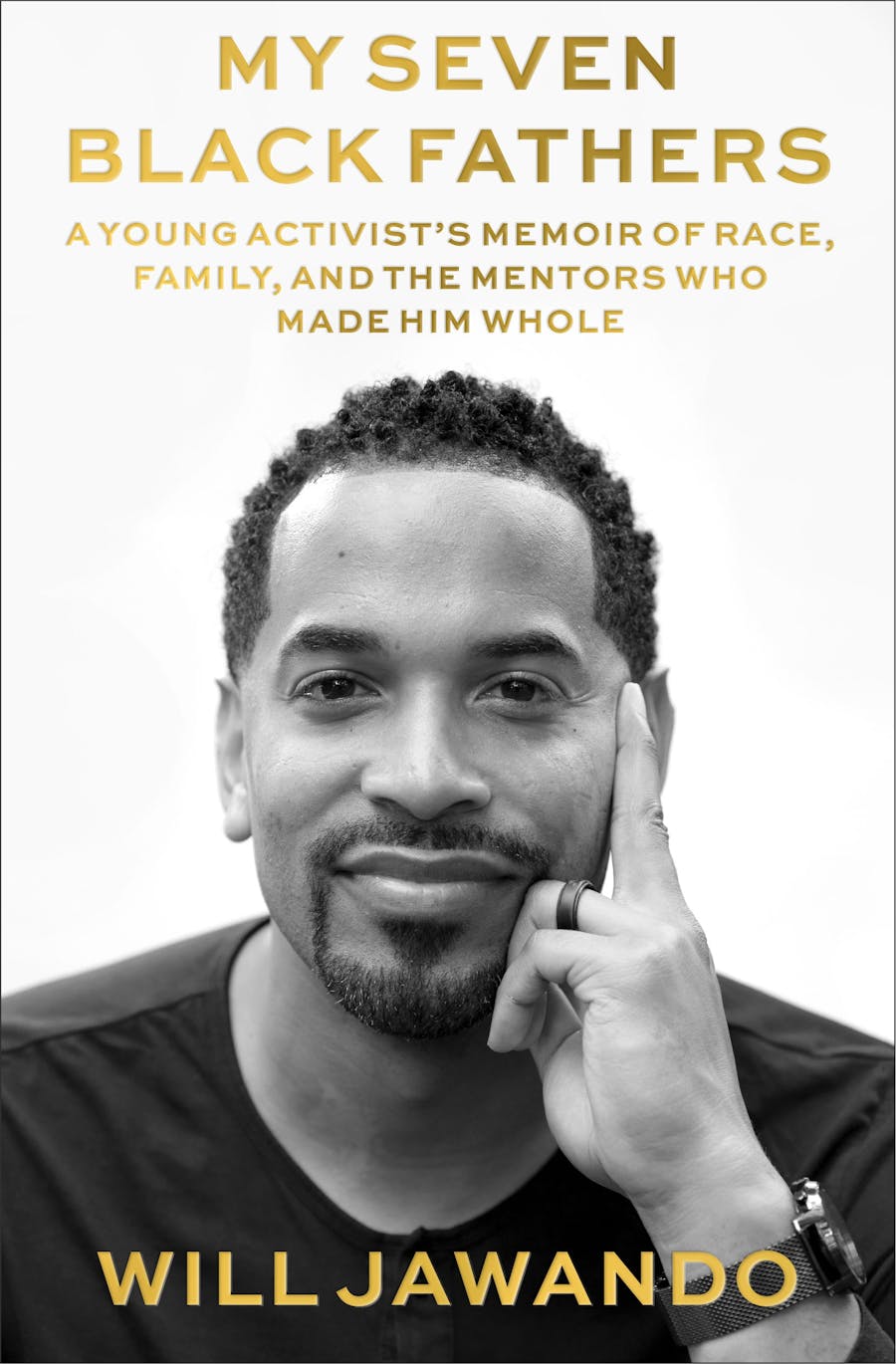
• My Seven Black Fathers: A Young Activist’s Memoir of Race, Family, and the Mentors Who Made Him Whole

    Farrar, Straus and Giroux (an imprint of Macmillan Publishers)
    2022-05-03
    240 pages
    Hardcover ISBN: 9780374604875
    Audio ISBN: 9781250856319
    Digital Audio ISBN: 9781250856326
    e-Book ISBN: 9780374604882

    Will Jawando, Councilmember
    Montgomery County, Maryland

    Will Jawando tells a deeply affirmative story of hope and respect for men of color at a time when Black men are routinely stigmatized. As a boy growing up outside DC, Will, who went by his Nigerian name, Yemi, was shunted from school to school, never quite fitting in. He was a Black kid with a divorced white mother, a frayed relationship with his biological father, and teachers who scolded him for being disruptive in class and on the playground. Eventually, he became close to Kalfani, a kid he looked up to on the basketball court. Years after he got the call telling him that Kalfani was dead, another sickening casualty of gun violence, Will looks back on the relationships with an extraordinary series of mentors that enabled him to thrive.

    Among them were Mr. Williams, the rare Black male grade school teacher, who found a way to bolster Will’s self-esteem when he discovered he was being bullied; Jay Fletcher, the openly gay colleague of his mother who got him off junk food and took him to his first play; Mr. Holmes, the high school coach and chorus director who saw him through a crushing disappointment; Deen Sanwoola, the businessman who helped him bridge the gap between his American upbringing and his Nigerian heritage, eventually leading to a dramatic reconciliation with his biological father; and President Barack Obama, who made Will his associate director of public engagement at the White House—and who invited him to play basketball on more than one occasion. Without the influence of these men, Will knows he would not be who he is today: a civil rights and education policy attorney, a civic leader, a husband, and a father.

    Drawing on Will’s inspiring personal story and involvement in My Brother’s Keeper, President Obama’s national initiative to address persistent opportunity gaps facing boys and young men of color, My Seven Black Fathers offers a transformative way for Black men to shape the next generation.

  • Race, Monogamy, and Other Lies They Told You, Second Edition: Busting Myths about Human Nature

    University of California Press
    May 2022
    352 pages
    Illustrations: 10 b/w illustrations
    Trim Size: 6 x 9
    Paperback ISBN: 9780520379602
    eBook ISBN: 9780520976818

    Agustín Fuentes, Professor of Anthropology
    Princeton University, Princeton, New Jersey

    A compelling takedown of prevailing myths about human behavior, updated and expanded to meet the current moment.

    There are three major myths of human nature: humans are divided into biological races; humans are naturally aggressive; and men and women are wholly different in behavior, desires, and wiring. Race, Monogamy, and Other Lies They Told You counters these pervasive and pernicious myths about human behavior. Agustín Fuentes tackles misconceptions about what race, aggression, and sex really mean for humans, and incorporates an accessible understanding of culture, genetics, and evolution that requires us to dispose of notions of “nature or nurture.”

    Presenting scientific evidence from diverse fields, including anthropology, biology, and psychology, Fuentes devises a myth-busting toolkit to dismantle persistent fallacies about the validity of biological races, the innateness of aggression and violence, and the nature of monogamy, sex, and gender. This revised and expanded edition provides up-to-date references, data, and analyses, and addresses new topics, including the popularity of home DNA testing kits and the rise of ‘”incel” culture; the resurgence of racist, nativist thinking and the internet’s influence in promoting bad science; and a broader understanding of the diversity of sex and gender.

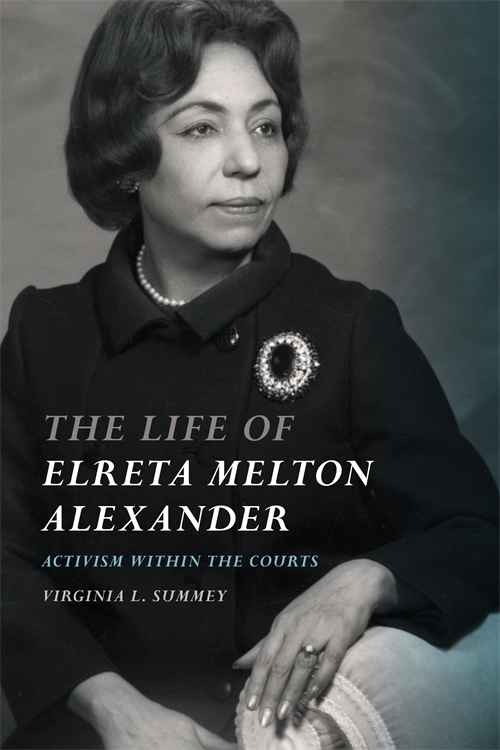
  • The Life of Elreta Melton Alexander: Activism within the Courts

    University of Georgia Press
    2022-05-01
    224 pages
    Illustrations: 11 b&w
    Trim size: 6.000in x 9.000in
    Hardcover ISBN: 9-780-8203-6192-5
    Paperback ISBN: 9-780-8203-6193-2

    Virginia L. Summey, Historian, Author, and Faculty Fellow
    Lloyd International Honors College, University of North Carolina at Greensboro

    This book explores the life and contributions of groundbreaking attorney, Elreta Melton Alexander Ralston (1919-98). In 1945 Alexander became the first African American woman to graduate from Columbia Law School. In 1947 she was the first African American woman to practice law in the state of North Carolina, and in 1968 she became the first African American woman to become an elected district court judge. Despite her accomplishments, Alexander is little known to scholars outside of her hometown of Greensboro, North Carolina. Her life and career deserve recognition, however, not just because of her impressive lists of “firsts,” but also owing to her accomplishments during the civil rights movement in the U.S. South.

    While Alexander did not actively participate in civil rights marches and demonstrations, she used her professional achievements and middle-class status to advocate for individuals who lacked a voice in the southern legal system. Virginia L. Summey argues that Alexander was integral to the civil rights movement in North Carolina as she, and women like her, worked to change discriminatory laws while opening professional doors for other minority women. Using her professional status, Alexander combatted segregation by demonstrating that Black women were worthy and capable of achieving careers alongside white men, thereby creating environments in which other African Americans could succeed. Her legal expertise and ability to reach across racial boundaries made her an important figure in Greensboro history.

  • Researchers Should Understand and Adapt Race and Ethnicity Data That Change Over Time

    Child Trends
    2022-03-31

    Alaina Flannigan, Research Scientist II
    Bethesda, Maryland

    Rachel Rosenberg, Research Scientist II
    Bethesda, Maryland

    Alyssa Liehr, Research Scientist
    Bethesda, Maryland

    Reva Dalela, Research Assistant
    Bethesda, Maryland

    Mya’ Sanders, Senior Research Assistant
    Bethesda, Maryland

    Embedding race equity principles into supports provided for young people who age out of foster care can better prepare them for a successful transition into adulthood. Child welfare practitioners and policymakers must consider how race and racism affect a young person’s child welfare experience and the services and supports they receive. For example, practitioners and policymakers should understand how employment program outcomes vary by race/ethnicity, or the ways in which access to culturally competent sexual and reproductive health care varies by race/ethnicity. This focus on race equity principles ensures that all young people have access to services tailored to their needs.

    For practitioners and policymakers to accurately interpret data and make decisions about programming for all racial and ethnic groups, researchers must be able to capture someone’s racial and ethnic identity alongside their outcomes. One common resource available to researchers who want to examine outcomes over time is panel, or longitudinal, data, for which the same people are repeatedly and regularly surveyed over an extended period of time. However, researchers should carefully consider how they use these data in analysis because individuals’ responses to race/ethnicity and other demographic variables may change over time. When researchers treat race/ethnicity as an unchanging variable they potentially miss important equity considerations.

    Reviews of panel data show that responses to questions on racial and ethnic identity can and do change over time. While this is a fairly common occurrence in longitudinal data for respondents of all ages (adolescence through adulthood), such changes may be particularly meaningful for young people aging out of foster care. These young people’s child welfare experiences (e.g., frequent moves, lack of information about family history, placement in foster homes with parents of a different racial and ethnic identity) may leave them without the information needed to form a healthy racial and ethnic identity. During the transition to adulthood, implicit and explicit biases around racial and ethnic identity from both individuals and systems can create opportunities and barriers at key moments in life, such as pursing postsecondary education or attaining first jobs. Despite the potential fluidity of racial and ethnic identity, however, this variable is commonly treated as static and unchanging in analysis. To date, there are few resources to guide researchers in designing and conducting analyses that both honor the racial and ethnic identities of young people and maximize the reliability of the data…

    Read the entire article here.

  • Betty Reid Soskin: The extraordinary life of the nation’s oldest park ranger

    Berkeleyside
    Berkeley, California
    2022-04-01

    Daphne White

    Betty Soskin in her living room. Photo: Daphne White

    In this 2018 interview with Soskin who retired Thursday at the age of 100, the nation’s oldest park ranger said she considers herself “an absolutely ordinary extraordinary person.”

    Editor’s note: This story was originally published in February 2018. We’re resharing it because Betty Reid Soskin, the nation’s oldest active park ranger, retired Thursday at the age of 100.

    Betty Reid Soskin, 96, considers herself “an absolutely ordinary extraordinary person.”

    Soskin has dated Jackie Robinson, co-founded Reid’s Records in Berkeley with her first husband, served as a “bag lady” (delivering cash) for the Black Panthers, and hobnobbed with the leaders of the human potential movement as a faculty wife with her second husband.

    She also served in a Jim Crow segregated union hall in Richmond during World War II, experienced redlining in Berkeley when she tried to build her first house, moved to a racially-hostile Walnut Creek in the 1950s, and accidentally catapulted to fame in her 80s, as she brought her lived experience as a non-Rosie to the Rosie the Riveter/World War II Home Front National Historical Park

    Read the entire article here.

  • James Monroe Trotter

    Thought Co.
    2020-11-18

    Femi Lewis

    James Monroe Trotter was the first Black person to be employed by the U.S. Postal Service. Public Domain

    Overview

    James Monroe Trotter was an educator, Civil War veteran, musical historian and Recorder of Deeds. A man of many talents, Trotter was patriotic and believed in ending racism in American society. Described as a “genteel militant,” Trotter promoted and encouraged other African Americans to work hard regardless of racism…

    Read the entire article here.

  • How one Civil Rights activist posed as a white man in order to investigate lynchings

    Fresh Air
    National Public Radio
    2022-03-30

    Dave Davies, Guest Host

    White Lies author A.J. Baime tells the story of Walter White, a light-skinned Black man whose ancestors had been enslaved. For years White risked his life investigating racial violence in the South.

    Listen to the story (00:42:04) and read the transcript here.

  • Ethnic Positioning in Southwestern Mixed Heritage Writing

    Lexington Books (an imprint of Rowman & Littlefield)
    April 2022
    228 pages
    Trim: 6½ x 9
    Hardback ISBN: 978-1-7936-0790-4
    eBook ISBN: 978-1-7936-0791-1

    Judit Ágnes Kádár, Director of International Relations
    Hungarian University of Sport Science, Budapest, Hungary

    Ethnic Positioning in Southwestern Mixed Heritage Writing explores how Southwestern writers and visual artists provide an opportunity to turn a stigmatized identity into a self-conscious holder of valuable assets, cultural attitudes, and memories. The problem of mixed ethno-cultural heritage is a relevant feature of North American populations, faced by millions. Narratives on blended heritage show how mixed-race authors utilize their multiple ethnic experiences, knowledge archives, and sensibilities. They explore how individuals attempt to cope with the cognitive anxiety, stigmas, and perceptions that are intertwined in their blended ethnic heritage, family and social dynamics, and the renegotiation of their ethnic identity. The Southwest is a region riddled by Eurocentric and Colonial concepts of identity, yet at the same time highly treasured in the Frontier experiences of physical mobility and mental and spiritual journeys and transformations. Judit Ágnes Kádár argues that the process of ethnic positioning is a choice made by mixed heritage people that results in renegotiated identities, leading to more complex and engaging concepts of themselves.

    • Preface
    • Chapter 1: Introduction
    • Chapter 2 Multiracial Identity and the Southwest
      • 2.1 “Core and Confluence”: The Geo-Cultural Context of Mixedblood Writing
      • 2.2 From “Halfbreed” to “Crossblood”
      • 2.3 Southwestern Authors and Artists of Mixed Heritage: An Overview
    • Chapter 3: Identity Negotiation in Southwestern Mixedblood Poetry: A Complementary Scope
    • Chapter 4: “Blood Trails,” Hidden Histories
      • 4.1 The Beginning of Mixed Heritage Fictional Biographies: From Memoir to Postcolonial Storytelling
      • 4.2 Laguna Pueblo Postcolonial Life-Writing and The Followers: Southwestern Mixed Heritage Autobiographies
    • Chapter 5: Multiracial Identity and its Narrative Formulation
      • 5.1 Four Decades of Mixed-Race Writing: Altering Visions in Selected Prose Texts
      • 5.2 A Psychological Insight into Blended Heritage Identity Construction
      • 5.3 Cultural Identity Formulation in Multiracial Narratives
      • 5.4 Narrative Identity: From Object to Subject
      • 5.5 Nanabush’s “Pandora’s Box of Possibilities”: Humor in Contemporary Multiracial Writing
    • Chapter 6: Some Interesting Cognitive Patterns
      • 6.1 Grave Concerns and Nightwalkers
      • 6.2 Sharpening Sights
      • 6.3 “Restore me!”
      • 6.4 “Indigenous Shapes of Water” in Mixedblood Writing
    • Chapter 7: Conclusion
    • Bibliography
      • 8.1 Primary Sources
      • 8.2 Secondary Sources
  • The Capital of Free Women: Race, Legitimacy, and Liberty in Colonial Mexico

    Yale University Press
    2022-04-12
    296 pages, 5 1/2 x 8 1/2
    9 b/w illustrations
    Hardcover ISBN: 9780300258066

    Danielle Terrazas Williams, Lecturer in the School of History
    University of Leeds, Leeds, United Kingdom

    A restoration of the agency and influence of free African-descended women in colonial Mexico through their traces in archives

    The Capital of Free Women examines how African-descended women strove for dignity in seventeenth-century Mexico. Free women in central Veracruz, sometimes just one generation removed from slavery, purchased land, ran businesses, managed intergenerational wealth, and owned slaves of African descent. Drawing from archives in Mexico, Spain, and Italy, Danielle Terrazas Williams explores the lives of African-descended women across the economic spectrum, evaluates their elite sensibilities, and challenges notions of race and class in the colonial period.

  • The White Indians of Mexican Cinema: Racial Masquerade throughout the Golden Age

    State University of New York Press
    April 2022
    326 pages
    Hardcover ISBN: 9781438488035

    Mónica García Blizzard, Assistant Professor of Spanish and Portuguese
    Emory University, Atlantic, Georgia

    The White Indians of Mexican Cinema theorizes the development of a unique form of racial masquerade—the representation of Whiteness as Indigeneity—during the Golden Age of Mexican cinema, from the 1930s to the 1950s. Adopting a broad decolonial perspective while remaining grounded in the history of local racial categories, Mónica García Blizzard argues that this trope works to reconcile two divergent discourses about race in postrevolutionary Mexico: the government-sponsored celebration of Indigeneity and mestizaje (or the process of interracial and intercultural mixing), on the one hand, and the idealization of Whiteness, on the other. Close readings of twenty films and primary source material illustrate how Mexican cinema has mediated race, especially in relation to gender, in ways that project national specificity, but also reproduce racist tendencies with respect to beauty, desire, and protagonism that survive to this day. This sweeping survey illuminates how Golden Age films produced diverse, even contradictory messages about the place of Indigeneity in the national culture.