• Episode 205: Understanding our Multiple Identities

    Shifting Our Schools
    2022-04-11

    Jeff Utecht, Host

    Sarah Gaither, Ph.D., Assistant Professor of Psychology and Neuroscience
    Duke University, Durham, North Carolina

    Dr. Gaither is a social & developmental psychologist studying social identities. She runs the Duke University Identity and Diversity Lab.

    Listen to the episode (00:18:53) here.

  • Colin Kaepernick’s New Children’s Book Encourages Black Children To Embrace Their Identities

    Mademenoire
    2022-04-11

    Natasha Decker

    Source: Kevin Winter / Getty

    Colin Kaepernick’s I Color Myself Different is a new children’s book based on the football player’s true and inspiring journey as a child learning the value of embracing and celebrating their Black identity “through the power of radical self-love” and knowing their inherent worth.

    In the book, illustrated by Eric Wilkerson, a young, adopted Colin goes on a journey of unpacking his identity and its uniqueness.

    “When I was 5-years-old, I was given an assignment in school: ‘draw a picture of yourself and your family.’ I drew my white adoptive family with a yellow crayon and then picked up a brown crayon to draw myself,” the former San Franciso 49ers player told PEOPLE.

    Highlighting that assignment’s impact, the 34-year-old athlete said the “revelatory moment taught me an important lesson about embracing my Black identity through the power of self-love and eventually helped me to understand how my brown skin was connected to my Blackness.”

    “Above all, I hope that I Color Myself Different can inspire young people to embrace their power, love themselves and walk in the truth of their own path,” the activist continued…

    Read the entire article here.

  • June Shagaloff Alexander, School Desegregation Leader, Dies at 93

    The New York Times
    2022-04-06

    Clay Risen

    June Shagaloff in 1953. Thurgood Marshall hired her out of college to work for the N.A.A.C.P. on school desegregation cases. Bill Sullivan/Newsday RM via Getty Images

    She helped Thurgood Marshall prepare for his Supreme Court fight and later took on de facto school segregation across the North and West.

    June Shagaloff Alexander, whose work for the N.A.A.C.P. and its legal arm in the 1950s and ’60s put her at the forefront of the nationwide fight for school integration and made her a close confidante of civil rights figures like Thurgood Marshall and James Baldwin, died on March 29 at her home in Tel Aviv. She was 93…

    …Although she was white, her dark complexion sometimes led people to assume she was Black, to the point of barring her from certain whites-only public spaces, an experience that she said shaped her early commitment to civil rights.

    But this ambiguity proved to be an asset in her work. When investigating a segregated school district, she would visit a white school pretending to be a prospective white parent, then do the same at a Black school, pretending to be a prospective Black parent — a ruse that gave her a unique, unvarnished view of the district’s education inequities…

    Read the entire obituary here.

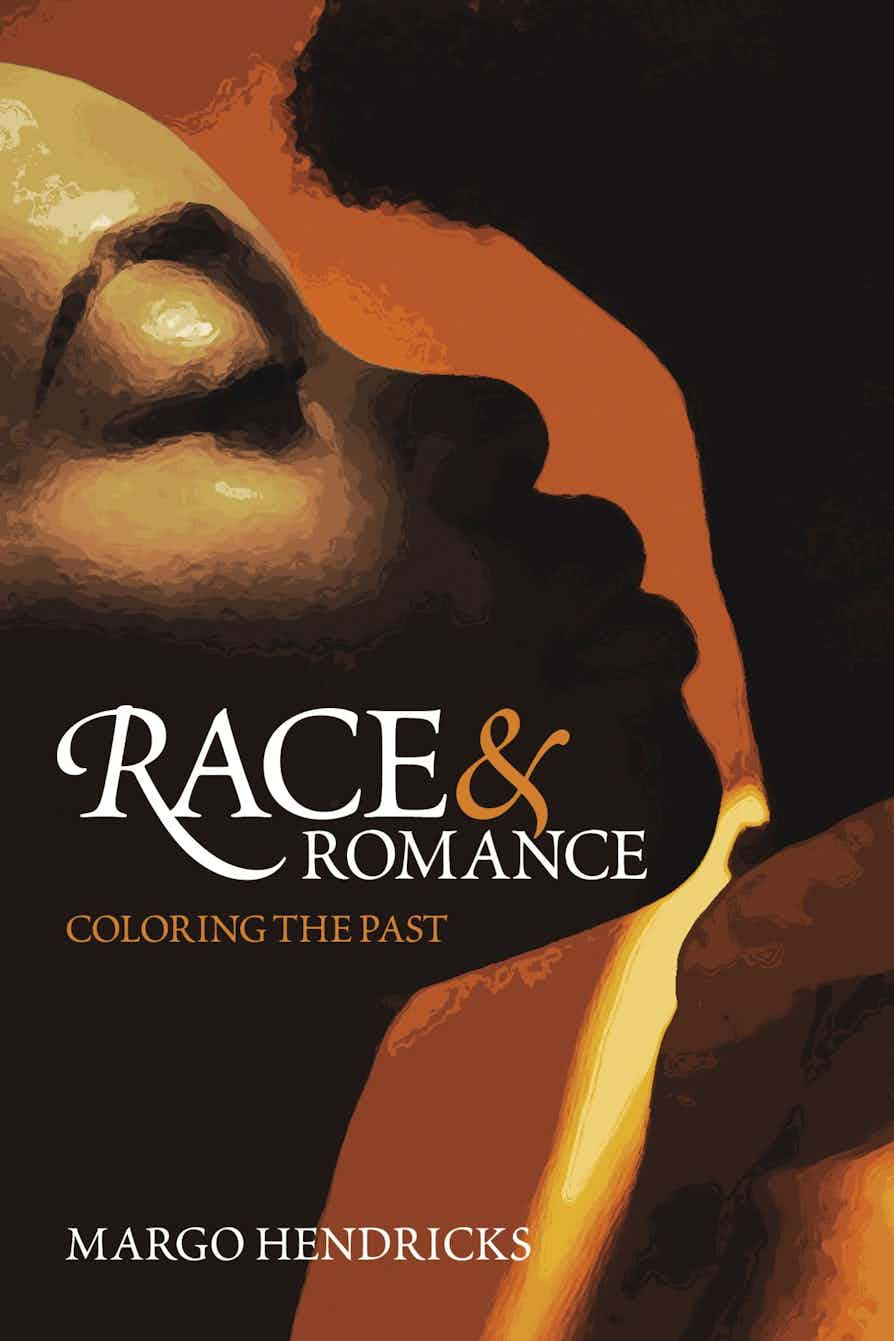
  • Romance and Race: Coloring the Past

    ACMRS Press
    April 2022
    160 pages
    6″ x 9″
    Hardcover ISBN: 9780866986946
    Paperback ISBN: 9780866986595

    Margo Hendricks, Professor Emerita
    University of California, Santa Cruz

    This study brings race and the literary tradition of romance into dialogue.

    Romance and Race: Coloring the Past explores the literary and cultural genealogy of colorism, white passing, and white presenting in the romance genre. The scope of the study ranges from Heliodorus’ Aithiopika to the short novels of Aphra Behn, to the modern romance novel Forbidden by Beverly Jenkins. This analysis engages with the troublesome racecraft of “passing” and the instability of racial identity and its formation from the premodern to the present. The study also looks at the significance of white settler colonialism to early modern romance narratives. A bridge between studies of early modern romance and scholarship on twenty-first-century romance novels, this book is well-suited for those interested in the romance genre.

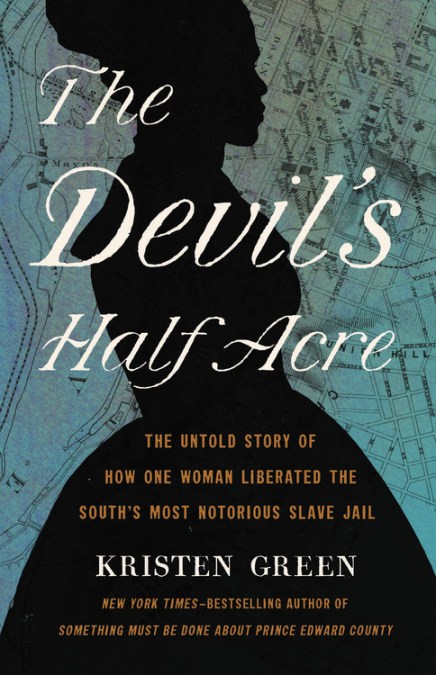
  • The Devil’s Half Acre: The Untold Story of How One Woman Liberated the South’s Most Notorious Slave Jail

    Seal Press (an imprint of Basic Books)
    2022-04-12
    352 pages
    Hardcover ISBN-13: 9781541675636
    eBook ISBN-13: 9781541675629
    Audiobook ISBN-13: 9781549193354

    Kristen Green

    The inspiring true story of an enslaved woman who liberated an infamous slave jail and transformed it into one of the nation’s first HBCUs

    In The Devil’s Half Acre, New York Times bestselling author Kristen Green draws on years of research to tell the extraordinary and little-known story of young Mary Lumpkin, an enslaved woman who blazed a path of liberation for thousands. She was forced to have the children of a brutal slave trader and live on the premises of his slave jail, known as the “Devil’s Half Acre.” When she inherited the jail after the death of her slaveholder, she transformed it into “God’s Half Acre,” a school where Black men could fulfill their dreams. It still exists today as Virginia Union University, one of America’s first Historically Black Colleges and Universities.

    A sweeping narrative of a life in the margins of the American slave trade, The Devil’s Half Acre brings Mary Lumpkin into the light. This is the story of the resilience of a woman on the path to freedom, her historic contributions, and her enduring legacy.

  • Woman, Eating: A Literary Vampire Novel

    HarperVia (an imprint of HarperCollins)
    2022-04-12
    240 pages
    5.5 x 0.85 x 8.25 inches
    Hardcover ISBN: 9780063140882
    E-book ISBN: 9780063140905
    Digital Audio, MP3 ISBN: 9780063140912

    Claire Kohda

    A young, mixed-race vampire must find a way to balance her deep-seated desire to live amongst humans with her incessant hunger in this stunning debut novel from a writer-to-watch.

    Lydia is hungry. She’s always wanted to try Japanese food. Sashimi, ramen, onigiri with sour plum stuffed inside – the food her Japanese father liked to eat. And then there is bubble tea and iced-coffee, ice cream and cake, and foraged herbs and plants, and the vegetables grown by the other young artists at the London studio space she is secretly squatting in. But, Lydia can’t eat any of these things. Her body doesn’t work like those of other people. The only thing she can digest is blood, and it turns out that sourcing fresh pigs’ blood in London – where she is living away from her vampire mother for the first time – is much more difficult than she’d anticipated.

    Then there are the humans – the other artists at the studio space, the people at the gallery she interns at, the strange men that follow her after dark, and Ben, a boyish, goofy-grinned artist she is developing feelings for. Lydia knows that they are her natural prey, but she can’t bring herself to feed on them. In her windowless studio, where she paints and studies the work of other artists, binge-watches Buffy the Vampire Slayer and videos of people eating food on YouTube and Instagram, Lydia considers her place in the world. She has many of the things humans wish for – perpetual youth, near-invulnerability, immortality – but she is miserable; she is lonely; and she is hungry – always hungry.

    As Lydia develops as a woman and an artist, she will learn that she must reconcile the conflicts within her – between her demon and human sides, her mixed ethnic heritage, and her relationship with food, and, in turn, humans – if she is to find a way to exist in the world. Before any of this, however, she must eat.

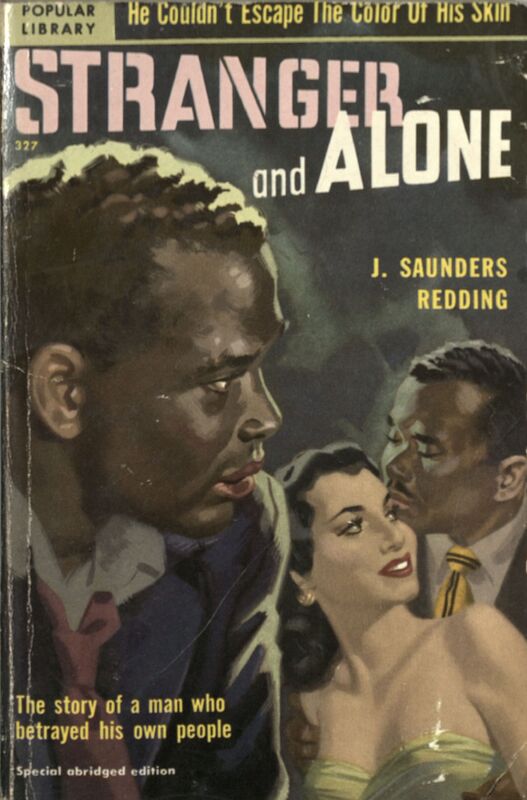
  • Stranger and Alone: The Story of a Man Who Betrayed His Own People

    Harcourt, Brace and Company
    1951
    308 pages

    J. Saunders Redding (1906–1988)

    Stranger and Alone dramatizes the psychological and moral costs of denying one’s racial identity and allowing one’s “white face” to predominate. Striving for individual success through rejection of one’s people, the novel implies, amounts to a betrayal of oneself, as well as a futile striving against history, “the time on the clock of the world.

  • For Colin Kaepernick, Writing Is Another Form of Activism

    Publishers Weekly
    2022-03-29

    Nathalie op de Beeck, Associate Professor of English
    Pacific Lutheran University, Tacoma, Washington

    Colin Kaepernick, at 34, presides over a multimedia platform for Black and brown people’s empowerment. In 2016, inspired by civil rights heroes, the then-San Francisco 49ers quarterback rocked the NFL by taking a knee during the national anthem to protest police brutality, sparking protests and backlash. That fall, he and his partner Nessa (known by her first name only) established Know Your Rights Camp, a youth-focused organization with principles that echo the Black Panthers’ Ten-Point Program for communities, along with a downloadable set of educational resources, Colin in Black & White: The Kaepernick Curriculum. He went on to found Kaepernick Publishing, for which he edited a collection of essays by social justice leaders, Abolition for the People: The Movement for a Future Without Policing or Prisons.

    Kaepernick Publishing and Scholastic have teamed up to publish Kaepernick’s debut picture book (as part of a multibook deal), the autobiographical I Color Myself Different, with illustrations by Eric Wilkerson, an artist known for his high-energy fantasy illustrations. Wilkerson’s paintings grace the covers of Nic Stone’s Shuri books and Kwame Mbalia’s Tristan Strong series, and Kaepernick was familiar with his work; the author and illustrator spoke back and forth to fine-tune the images of a young Colin in I Color Myself Different. Kaepernick corresponded with PW about writing as a form of activism, recognizing the many elements that make up our identities, and finding strength in the history of social justice movements…

    Read the entire interview here.

  • I Color Myself Different

    Scholastic
    2022-04-05
    40 pages
    Hardcover ISBN: 978-1338789621

    Colin Kaepernick, Eric Wilkerson (Illustrator)

    An inspiring story of identity and self-esteem from celebrated athlete and activist Colin Kaepernick.

    When Colin Kaepernick was five years old, he was given a simple school assignment: draw a picture of yourself and your family. What young Colin does next with his brown crayon changes his whole world and worldview, providing a valuable lesson on embracing and celebrating his Black identity through the power of radical self-love and knowing your inherent worth.

    I Color Myself Different is a joyful ode to Black and Brown lives based on real events in young Colin’s life that is perfect for every reader’s bookshelf. It’s a story of self-discovery, staying true to one’s self, and advocating for change… even when you’re very little!

  • Special Issue “Multiracial Identities and Experiences in/under White Supremacy”

    Social Sciences
    Volume 11, Number 2, Special Issue “Multiracial Identities and Experiences in/under White Supremacy”
    Published 2022-02-21

    Guest Editors:

    David L. Brunsma, Professor of Sociology
    Virginia Tech, Blacksburg, Virginia

    Jennifer Sims, Assistant Professor of Sociology
    University of Alabama, Huntsville

    Dear Colleagues,

    Social scientific scholarship on Multiracial experiences and processes of identity development have been the subject of social scientific scholarship for over three decades. During this time, scholars from a wide variety disciplines, such as sociology, psychology, geography, history, political science, and the humanities, along with the critical interdisciplinary work of women’s and gender studies, queer studies, Black studies, and others, have contributed to the present state of knowledge.

    We now know that multiracial identities are dynamic and intersectional. We also know that mixed-race experiences are embedded within social institutions, social structures, political movements, histories, and stories. Processes like racialization and microaggressions, family and peer dynamics, and other important social, cultural, economic, historical, collective, and political realities are known to manifest in unique ways for mixed-race populations. Far from heralding an end to race and racism, we know that multiraciality is woven within structures of white supremacy across a broad range of social, political, and national contexts…

    Read all of the nine (9) papers here.