Mixed Race Studies

Scholarly perspectives on the mixed race experience.

    • About This Site
    • Bibliography
    • Contact Information
    • Date and Time Formats
    • Forthcoming… (Updated 2021-09-01)
    • Likely Asked Questions
    • List of Book Publishers
    • List of Definitions and Terms
    • My Favorite Articles and Papers
    • My Favorite Posts
    • My Recent Activities
    • Praise for Mixed Race Studies
    • Tag Listing
      • Tag Listing (Ordered by Count)
    • US Census Race Categories, 1790-2010
    • 1661: The First ‘Mixed-Race’ Milestone
    • 2010 U.S. Census – Some Thoughts

recent posts

  • The Routledge International Handbook of Interracial and Intercultural Relationships and Mental Health
  • Loving Across Racial and Cultural Boundaries: Interracial and Intercultural Relationships and Mental Health Conference
  • Call for Proposals: 2026 Critical Mixed Race Studies Conference at UCLA
  • Participants Needed for a Paid Research Study: Up to $100
  • You were either Black or white. To claim whiteness as a mixed child was to deny and hide Blackness. Our families understood that the world we were growing into would seek to denigrate this part of us and we would need a community that was made up, always and already, of all shades of Blackness.

about

  • Twitter
  • Facebook
  • Instagram
  • This is the problem with using biracial identity as an excuse to be racially neutral. Doing so often results in ignoring both black suffering and the racist political, economic, and social structures which produce black suffering.

    2022-04-21

    This is the problem with using biracial identity as an excuse to be racially neutral. Doing so often results in ignoring both black suffering and the racist political, economic, and social structures which produce black suffering. Dak Prescott claimed that being biracial helped him in being a leader for the Dallas Cowboys because he can relate to both his black teammates and his white teammates. Yet, when it comes to the issue of kneeling during the national anthem to protest police brutality, Prescott opposed doing so. It turns out that Prescott’s views on the NFL protests are more in line with how the majority of white Americans feel about the protests, so on a very serious political matter which is black and white, Prescott is comfortably on the white side.

    Dwayne Wong (Omowale), “Being Biracial Shouldn’t Be An Excuse To Be Racially Neutral,” Medium, January 26, 2020. https://dwomowale.medium.com/being-biracial-shouldnt-be-an-excuse-to-be-racially-neutral-a0e04242d5fc.

  • From Multiracial to Monoracial: The Formation of Mexican American Identities in the U.S. Southwest

    2022-04-21

    From Multiracial to Monoracial: The Formation of Mexican American Identities in the U.S. Southwest

    Genealogy
    Volume 6, Issue 2 (2022) (Special Issue: Beyond the Frontiers of Mixedness: New Approaches to Intermarriage, Multiethnicity, and Multiracialism)
    DOI: 10.3390/genealogy6020028
    21 pages

    G. Reginald Daniel, Professor of Sociology
    University of California, Santa Barbara

    The racialization of Mexican Americans in northern Mexico, that is, the U.S. Southwest, following the Anglo-Americanization during the second half of the nineteenth century, is an excellent case study of the historical formations of Anglo-American and Spanish American racial orders. Both racial orders were based on a hierarchy that privileged Whiteness and stigmatized Blackness. Yet Spanish America’s high levels of miscegenation resulted in ternary orders allowing for gradation in and fluidity within racial categories, in addition to the formation of multiracial identities, including those of individuals with African ancestry. Anglo-America was characterized by restrictions on miscegenation and more precise definitions of and restrictions on racial categories. This prohibited the formation of multiracial identities while buttressing a binary racial order that broadly necessitated single-race (monoracial) identification as either White or non-White, and more specifically, as White or Black, given their polar extremes in racial hierarchy. Within this order, hypodescent applies most stringently to those with African ancestry through the one-drop rule, which designates as Black all such individuals. This article examines monoracialization through historical processes of Mexican–American identity formations. Over the twentieth century, this shifted from White to Brown, but without any acknowledgment of African ancestry.

    Read the entire article in HTML or PDF format.

  • Patchwork Freedoms: Law, Slavery, and Race beyond Cuba’s Plantations

    2022-04-21

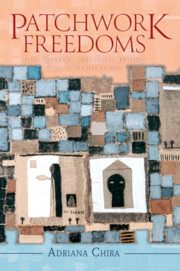
    Patchwork Freedoms: Law, Slavery, and Race beyond Cuba’s Plantations

    Cambridge University Press
    February 2022
    320 pages
    236 x 156 x 25 mm
    0.64kg
    Hardback ISBN: 9781108499545
    Paperback ISBN: 9781108730808

    Adriana Chira, Assistant Professor of Atlantic World History
    Emory University, Atlanta, Georgia

    In nineteenth-century Santiago de Cuba, the island of Cuba’s radical cradle, Afro-descendant peasants forged freedom and devised their own formative path to emancipation. Drawing on understudied archives, this pathbreaking work unearths a new history of Black rural geography and popular legalism, and offers a new framework for thinking about nineteenth-century Black freedom. Santiago de Cuba’s Afro-descendant peasantries did not rely on liberal-abolitionist ideologies as a primary reference point in their struggle for rights. Instead, they negotiated their freedom and land piecemeal, through colonial legal frameworks that allowed for local custom and manumission. While gradually wearing down the institution of slavery through litigation and self-purchase, they reimagined colonial racial systems before Cuba’s intellectuals had their say. Long before residents of Cuba protested for national independence and island-wide emancipation in 1868, it was Santiago’s Afro-descendant peasants who, gradually and invisibly, laid the groundwork for emancipation.

    Table of Contents

    • Introduction
    • 1. Unenclosed people, unenclosed lands: Santiago de Cuba to 1800
    • 2. Foreign implants: The Saint-Domingue refugees and the limits of plantation development, 1791–1808
    • 3. Keeping people put: Enslaved families, policing, and the re-emergence of coffee planting, 1810s–1830s
    • 4. Manumission’s legalities: From need-based prerogatives to merit-based entitlements
    • 5. ‘A freedom with further bonds’: Free people of African descent, property ownership, and color status
    • 6. ‘Para levantar los negros y proclamar la República’: The beginnings of the Cuban wars of independence in Santiago de Cuba
    • Conclusion
    • Appendices
    • Bibliography
  • Merle Oberon: India’s forgotten Hollywood star

    2022-04-21

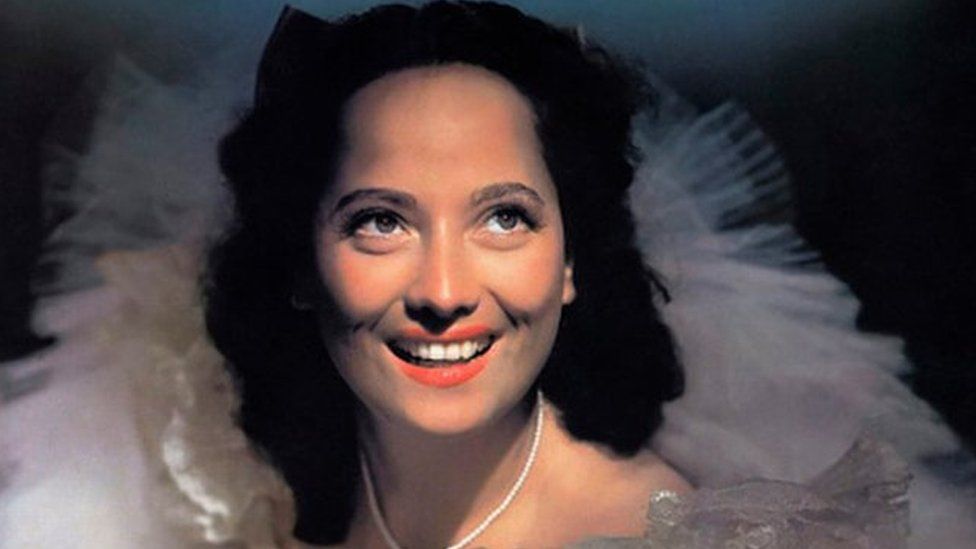
    Merle Oberon: India’s forgotten Hollywood star

    BBC News
    2022-04-16

    Meryl Sebastian, BBC News, Delhi

    Merle Oberon was born in Bombay

    Merle Oberon, a Hollywood star of the black and white era, is a forgotten icon in India, the country of her birth.

    Best-known for playing the lead in the classic Wuthering Heights, Oberon was an Anglo-Indian born in Bombay in 1911. But as a star in Hollywood’s Golden Age, she kept her background a secret – passing herself off as white – throughout her life.

    Mayukh Sen, a US-based writer and academic, first stumbled across her name in 2009 when he found out that Oberon was the first actor of South Asian origin to be nominated for an Oscar.

    His fascination grew as he saw her films and dug deeper into her past. “As a queer person, I empathise with this feeling that you must hide a part of your identity to survive in a hostile society that isn’t really ready to accept who you are,” he says. Sen is now working on a biography to tell Oberon’s story from a South Asian perspective…

    Read the entire article here.

  • Robin Thede Teases ‘Epic’ Return of ‘A Black Lady Sketch Show’ on Variety’s ‘Through Our Lens’

    2022-04-21

    Robin Thede Teases ‘Epic’ Return of ‘A Black Lady Sketch Show’ on Variety’s ‘Through Our Lens’

    Variety
    2022-04-02

    Robin Thede, writer, comedian and creator of ‘A Black Lady Sketch Show’, joins Variety’s Angelique Jackson on ‘Through Our Lens’ to discuss how her perspective as a Black woman has shaped her comedy career and outlook as a creator and showrunner.

    Watch the interview here. Read the article here.

  • Being Biracial Shouldn’t Be An Excuse To Be Racially Neutral

    2022-04-20

    Being Biracial Shouldn’t Be An Excuse To Be Racially Neutral

    Medium
    2020-01-26

    Dwayne Wong (Omowale)

    Whenever Meghan Markle comes up in the news, my mind immediately always comes back to this quote from her:

    On the heels of the racial unrest in Ferguson and Baltimore, the tensions that have long been percolating under the surface in the US have boiled over in the most deeply saddening way. And as a biracial woman, I watch in horror as both sides of a culture I define as my own become victims of spin in the media, perpetuating stereotypes and reminding us that the States has perhaps only placed bandages over the problems that have never healed at the root.

    I, on the other hand, have healed from the base. While my mixed heritage may have created a grey area surrounding my self-identification, keeping me with a foot on both sides of the fence, I have come to embrace that. To say who I am, to share where I’m from, to voice my pride in being a strong, confident mixed-race woman.

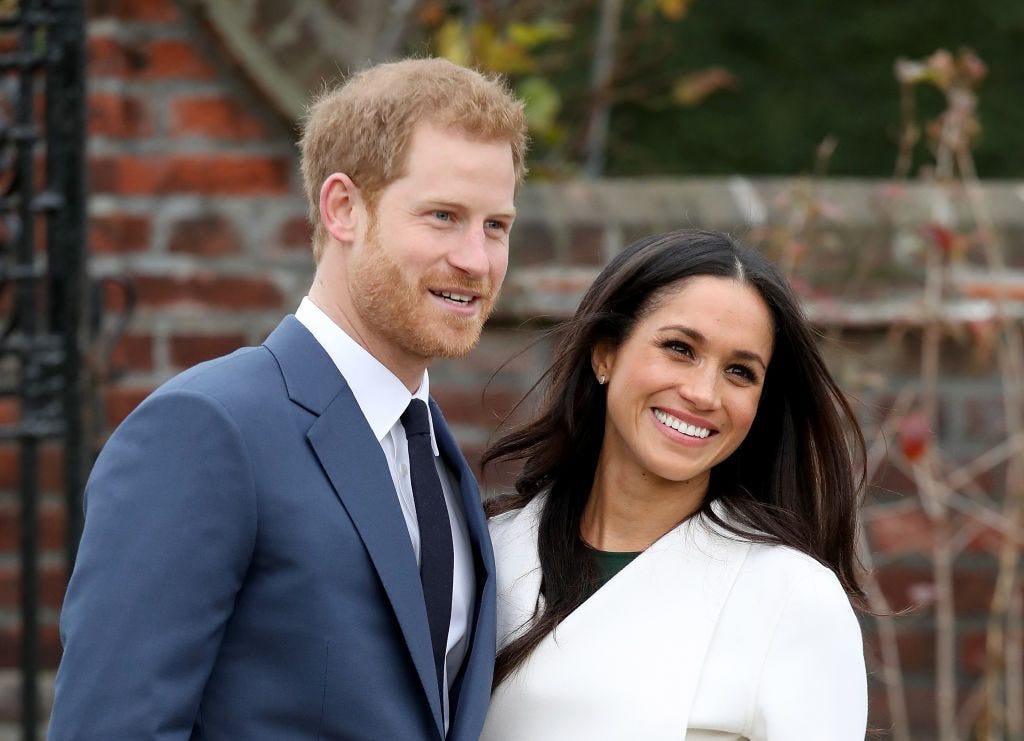
    The reason for this is that Markle’s fame is largely based on her racial identity. Not only has she received a great deal of attention for her marriage to Prince Harry, but this attention comes largely from the fact that she is not white. As Funmi Olutoye wrote: “We’ve made it. I say ‘we’ because even though she’s mixed race, the world still looks at her as black.” The notion that the elevation of a single black individual represents black progress is misguided. This is a topic that I addressed when I wrote The Black African Crisis in the Age of a Black President to help dispel the idea that Barack Obama’s presidency in of itself represented collective advancement for black people. But beyond that, Olutoye invokes the one-drop rule to claim Markle for black people, despite the fact that Markle’s remarks demonstrate that Markle clearly regards herself as a biracial woman who stands on the fence between black and white. Markle does not profess to be a black woman…

    Read the entire article here.

  • “I see the ways in which the media has sold me, and other light-skinned actors in general, as monolithic representations of a Blackness. It is so damaging and gross – honestly, it’s nasty.”

    2022-04-20

    “I see the ways in which the media has sold me, and other light-skinned actors in general, as monolithic representations of a Blackness. It is so damaging and gross – honestly, it’s nasty.” The anger in her voice is palpable. “It’s just like sneaky racism.” She says that she is now very wary when people try to position her as representative of all Black people’s experiences. “I have only one sliver of experience, and that sliver is also drenched in light-skin privilege.”

    Micha Frazer-Carroll, “Trailblazer with Amandla Stenberg,” Net-a-Porter, February 8, 2022. https://www.net-a-porter.com/en-gb/porter/article-9e95acbdd72f91f5/cover-stories/cover-stories/amandla-stenberg.

  • Mixed-race Britons – we are of multiple heritages. Claim them all

    2022-04-20

    Mixed-race Britons – we are of multiple heritages. Claim them all

    The Guardian
    2022-04-19

    Natalie Morris

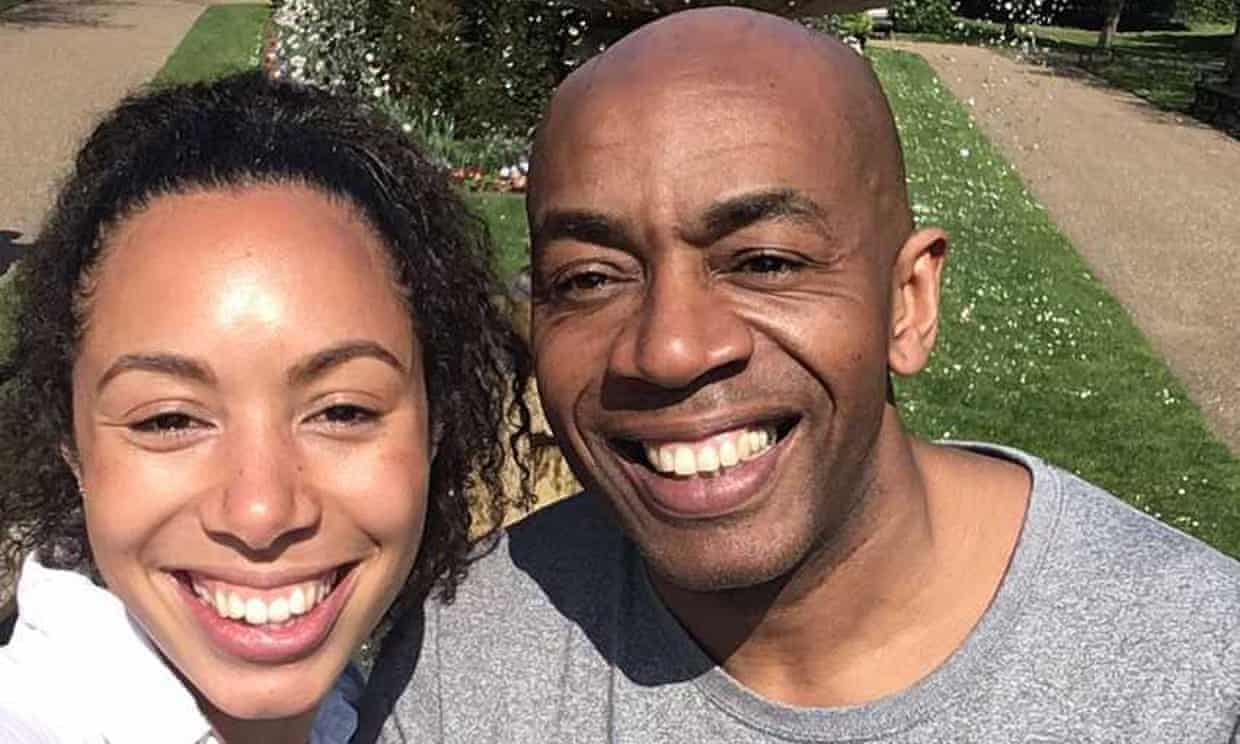
    Natalie Morris with her father, Tony Photograph: Natalie Morris

    With my father’s death I lost the link to my Jamaican lineage, and I needed to address that. It is vital to embrace all sides of yourself

    Losing a parent is profoundly destabilising. It takes the world as you knew it – the certainties, the constants, the safety nets – and whips it out from under you. In addition, as I have discovered over the past two years, there is an extra layer of complexity that comes with being mixed-race and losing the person who connects you to half your heritage.

    My dad, Tony, was Black. He was a quite well-known figure here from his work as a journalist with ITV and the BBC, particularly in northern England. And in the months after he died one sunny day in August 2020, I began to question everything about myself…

    Read the entire article here.

  • Changing from Visibility to Invisibility—An Intersectional Perspective on Mixedness in Switzerland and Morocco

    2022-04-20

    Changing from Visibility to Invisibility—An Intersectional Perspective on Mixedness in Switzerland and Morocco

    Genealogy
    Volume 6, Issue 2 (2022) (Special Issue: Beyond the Frontiers of Mixedness: New Approaches to Intermarriage, Multiethnicity, and Multiracialism)
    DOI: 10.3390/genealogy6020030
    17 pages

    Gwendolyn Gilliéron, Associate Research Fellow
    University of Strasbourg, Strasbourg, Grand Est, France

    In the context of intermarriage, mixedness can take different forms. Most often, it refers to a mix of class, religion, nationality, ethnicity or race in a couple. In this article, I go beyond a separate analysis of categories, analyzing the interrelation of these factors. The article discusses how and under which circumstances mixed children become visible in Switzerland and Morocco using a comparative and intersectional approach to mixedness. Based on 23 biographical narrative interviews, I analyze three situations of stigmatization: racialization, language practices and othering due to religious affiliation. Stigmatization processes due to mixedness, it is argued, are a relational phenomenon depending not only on markers such as ‘race’, ethnicity and religion but also on their interplay with gender, class, language and biographical experiences. The results suggest that mixed individuals have found creative ways to navigate their visibility: they normalize their binational origin, look for alternative spaces of belonging, emphasize their ‘Swiss-ness’ or ‘Moroccan-ness’, use languages to influence their social positioning or acquire knowledge about their binational origin in order to confront stigmatizations. The study reveals further that processes of othering due to mixedness are not only an issue in ‘Western’ societies that look back on a long history of immigration and have pronounced migration discourses. Even in Morocco, a country where immigration has so far been a marginal phenomenon, the importance of social hierarchies for the positioning of people of binational origin is evident.

    Read the entire article in HTML or PDF format.

  • Bleach in the Rainbow: Latin Ethnicity and Preference for Whiteness

    2022-04-15

    Bleach in the Rainbow: Latin Ethnicity and Preference for Whiteness

    Transforming Anthropology
    Volume 13, Issue 2 (October 2005)
    Pages 103-109
    DOI: 10.1525/tran.2005.13.2.103

    William A. Darity, Jr., Samuel DuBois Cook Distinguished Professor of Public Policy
    Duke University, Durham, North Carolina

    Jason Dietrich, Section Chief, Compliance Analytics and Policy
    Consumer Financial Protection Bureau, Washington, D.C.

    Darrick Hamilton, Henry Cohen Professor of Economics and Urban Policy
    Milano School of Policy, Management, and Environment
    The New School, New York, New York

    The conventional wisdom is that race is constructed in vastly different ways in the United States and throughout Latin America. Race is ostensibly understood as genotypical in the United States, while race ostensibly is understood as phenotypical in Latin America. Furthermore, the conventional wisdom, represented by the rainbow people metaphor, characterizes racial identity as far less a source of stigma in Latin America than in the United States. In contrast, research reported in this article indicates strong similarities in the construction and the operation race the entire Americas. Genotype, or African ancestry, is shown to matter in Latin America; phenotype, or appearance, is shown to matter in the United States. Race is strongly associated with social exclusion and inequality throughout all of the Americas, with Latinos demonstrating a strong preference for Whiteness and an aversion toward a Black identity. African Americans’ tendency to be Black identified may be the result of the social selection effects the phenomenon “passing.”

    Read or purchase the article here.

Previous Page
1 … 18 19 20 21 22 … 1,428
Next Page

Designed with WordPress