• From Color Line to Color Chart: Racism and Colorism in the New Century

    Berkeley Journal of African-American Law & Policy
    Volume 10, Issue 1 (January 2008)
    pages 52-69
    DOI: 10.15779/Z380C9X

    Angela P. Harris, Distinguished Professor of Law
    University of California, Davis

    When my sister graduated from college in the mid-1980s with a degree in musical theater she moved to Chicago with her new husband in search of work in television commercials and the performing arts. To her frustration and dismay, however, despite her good looks, acting ability, and musical talent, she was rejected in audition after audition. Getting rejected for arbitrary reasons or for no reason, of course, is just life in the entertainment industry. After a while, though, my sister began to hear some repetition in the rejections she received. “You don’t look black enough,” is the apology she would get.

    My sister is very fair-skinned, with hair that streaks blonde in the summer. Yet, at least to discerning eyes, she can’t “pass” for white: her features, her creamy skin, and her “African booty” distinguish her from the Scandinavian descent blondes that populate beer commercials and musical revues. For casting directors, then, she fell into a limbo: too white to play black, but too black to play white.

    Today, my sister has a recurring role on a children’s television show (she’s Prudence the Musical Genie on “Jack’s Big Show,” produced by Nickelodeon, if you want to see her), and fortunes are changing not just for her but for many women and men in the performing arts who “read” as racially ambiguous, or racially “mixed.” To put it bluntly, the ambiguous/mixed look is now “hot.” Celebrities such as Tiger Woods, Mariah Carey, and The Rock discuss their mixed background with pride;’ television, catalog, magazine, and newspaper advertising is full of adorable light-brown children with flowing locks that are not quite nappy, not quite straight; and mixed-race.

    Politician Barack Obama finds himself able to appeal to both white and African-American audiences. A recent essay predicts that in the future the most desirable aesthetic both in the United States and in Latin America will not be to look “white,” but to look café con crema.

    Not only the aesthetics but the ideologies of race are undergoing a shift. Tanya Hernandez, who writes in the field of comparative race and racism, argues that the United States is poised to adopt the “multiracial matrix” that characterizes state and civil society in Cuba, Brazil, and Puerto Rico. Hernandez describes this matrix as composed of four beliefs:

    (1) [R]acial mixture and diverse racial demography will resolve racial problems by transcending race; (2) fluid racial identity is an indicator of a form of racial progress that deconstructs the stability of racial categories and thereby brings society closer to a colorblind utopia; (3) racism is solely a phenomenon of aberrant racist individuals who inappropriately express their prejudice; and (4) discussing race or focusing on race is itself racist because it disrupts the harmony of race neutrality.

    Judging from these indicators, perhaps the dream of finally achieving racial harmony through racial intermixing is about to become real. Hernandez and some other scholars, however, are worried rather than pleased about the emergence of the multiracial matrix. Some worry that despite the emergence of an anti-race public discourse, racism has not disappeared, but instead has retreated into individual cognitive processing systems, where it is inaccessible to legal intent tests (and, often, the individual’s own conscious mind), yet continues to shape the life chances of persons according to race. In this view, what is disappearing is not racism but rather our ability to talk about it. Others argue that in the new millennium traditional racism is indeed disappearing, but only to be slowly supplanted by colorism, in which the color of a person’s skin will take on more importance in determining how she is treated by others than her ancestry. In this Article, I speculate about the implications of this second possibility.

    In Part I, I survey the critical race theory literature addressing colorism. This literature has examined how colorism fits (or doesn’t fit) into the existing apparatus of anti-discrimination law in the United States, and – as in Hernandez’s work – the relationship between colorism in the United States and in other countries. In Part II, I draw on a different strand of critical race theory literature to argue that the work of the performativity school offers a way to conceptually link colorism to more familiar forms of racism. In Part III, I speculate about the possible effects on society and anti-discrimination law of a drift away from ancestry as an important component of assigned race and towards a greater focus on color…

    Read the entire article here.

  • Brass Ankle Blues, A Novel

    Simon & Schuster
    2006
    304 pages
    Paperback ISBN: 9780743296588
    eBook ISBN: 9780743299008

    Rachel M. Harper

    Brass ankle blues 9780743296588 hr

    “When I was seven I told my father that I wanted to grow up to be invisible.”

    As a young woman of mixed race, Nellie Kincaid is about to encounter the strange, unsettling summer of her fifteenth year. Reeling from the recent separation of her parents, Nellie finds herself traveling to the family’s lake house with only her father and her estranged cousin, leaving behind the life and the mother she is trying to forget.

    As the summer progresses, Nellie will have to define herself, navigating the twists and turns of first love. At the same time, her family is becoming more and more divided by the day. Does her newfound identity require her to distance herself from those she loves, or will it draw her closer?

  • Pitch Your Play: Passing

    Masterclass
    Theatre Royal Haymarket
    18 Suffolk Street
    London SW1Y 4HT, United Kingdom
    Friday, 2018-11-23, 14:30Z

    Indigo Griffiths, Playwright
    Gemma Aked-Priestley, Director

    Masterclass presents Pitch Your Play 2018: A series of staged readings.

    Chicago. 1941. Joey, John and Eliza are siblings, but their lives are about to take different paths. Joey is embracing the New Negro Movement, John is breaking barriers at college and Eliza is preparing to pass as white. In a world where everything is determined by race, what can you gain by concealing who you are, and more importantly what can you lose?

    Passing is a new play that exposes the controversial practice of “racial passing” – the use of skin colour as a form of social currency.

    This epic family drama provokes thought on identity, race and feminism through powerful language, live music and unforgettable characters. It is the only script of its kind that gives the mixed-race experience centre stage.

    For more information, click here.

  • New $10 bill featuring Viola Desmond goes into circulation next week

    CP24
    2018-11-12

    Alex Cooke, Reporter
    The Canadian Press

    HALIFAX — A new $10 banknote featuring Viola Desmond’s portrait will go into circulation in a week, just over 72 years after she was ousted from the whites-only section of a movie theatre in New Glasgow, N.S.

    The civil rights pioneer and businesswoman is the first Canadian woman to be featured on a regularly circulating banknote, which will also show a map of Halifax’s historic north end, home to one of Canada’s oldest black communities and the site where Desmond opened her first salon.

    Irvine Carvery, a prominent member of Halifax’s north end and a former school board chair, said he’s excited that the bill will pay tribute to her, describing the inclusion of a black woman on the note as “a historic moment.”…

    Read the entire article here.

  • In visit to Kenyon, author illuminates history of racial passing in America

    Kenyon College
    Gambier, Ohio
    2018-11-09

    Mary Keister, Director of News Media Relations
    Telephone: 740-427-5592

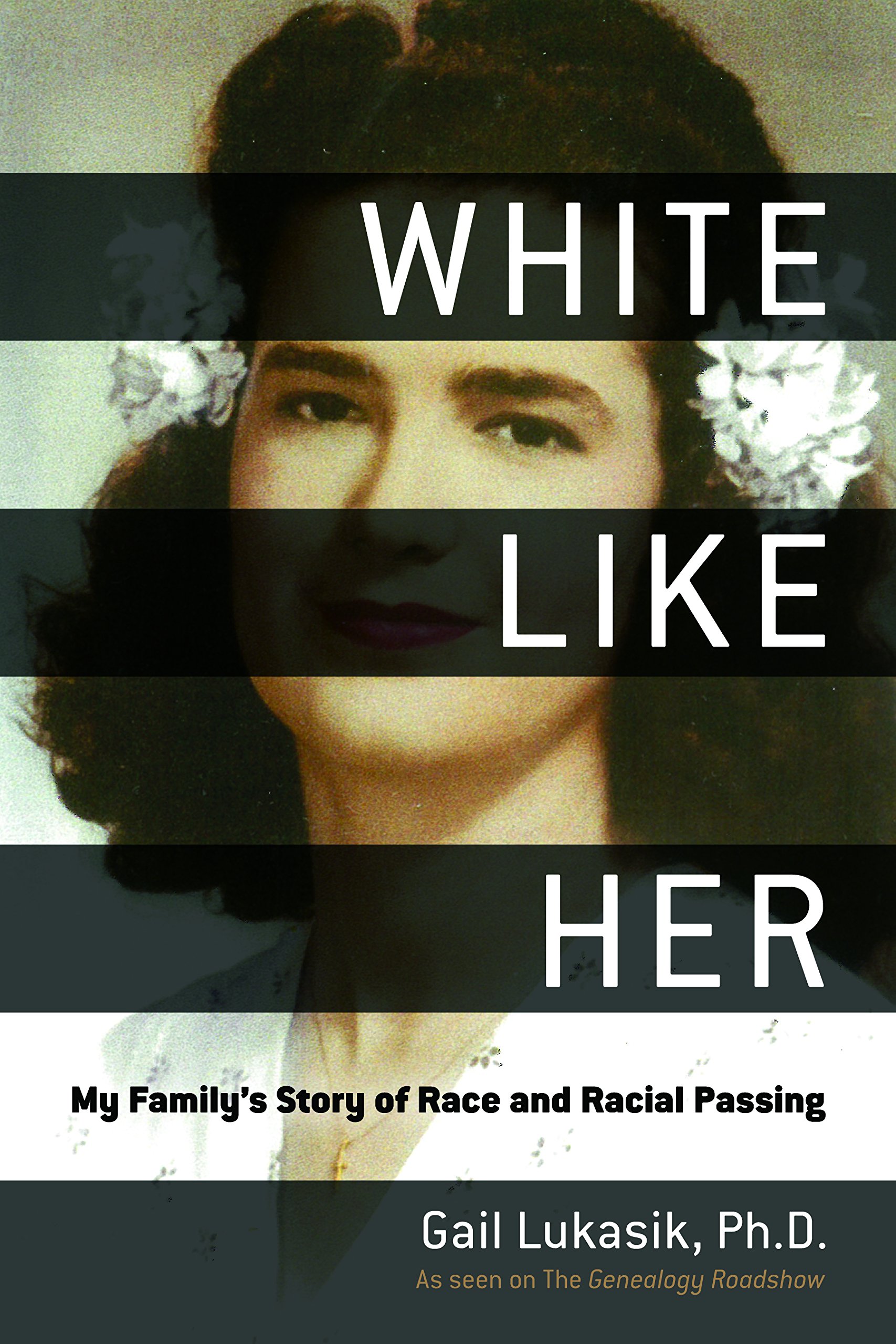
    GAMBIER, Ohio — Award-winning author Gail Lukasik will speak about her book “White Like Her: My Family’s Story of Race and Racial Passing” at Kenyon College on Wednesday, Nov. 14, at 7 p.m. The event, free and open to the public, will be held in the Gund Gallery’s Community Foundation Theater, 101 ½ College Drive.

    Lukasik’s memoir chronicles her journey to uncover her mother’s racial lineage and traces her family back to 18th-century colonial Louisiana. Her mother was born into a black family in New Orleans and eventually left the Jim Crow South, moving north and marrying a white man. She passed as white for the rest of her life.

    In 1995, as Lukasik, who identifies as white, was exploring Louisiana census records, she learned that her mother’s father and his entire family were designated black. The shocking discovery changed her sense and understanding of white identity.

    When Lukasik tried to ask her mother questions about her family’s black heritage, her mother refused to speak about the matter and told her daughter to not share the secret. In the 17 years Lukasik kept her mother’s secret, the author of mystery novels started to retrace her memories in order to better understand her mother, sorting out fiction from truth to solve her own real-life mystery. Was this why, growing up, Lukasik never really visited her mother’s side of the family or saw pictures of her grandfather?…

    Read the entire press release here.

  • Blood & Belonging

    Amazon Digital Services
    2018-11-09
    156 pages
    Paperback ISBN: 978-1730892684

    Sirinda Pairin

    Blood & Belonging by [Pairin, Sirinda]

    Siri Pairin’s poems explore the challenges and triumphs of biracial identity. With an honest and minimalist style, she writes about themes such as duality, belonging, love, home, space, culture, identity, race, ethnicity, heritage, and representation.

  • Mike Reed’s Flesh & Bone

    BIMHUIS
    2018-02-03


    ©Adrienne-Thomas

    Influential bandleader from Chicago presents an evocative mix of music, spoken word and video. ‘With its historical depth and vigorous performance, the music satisfies on its own terms’ (Downbeat).

    Mike Reed’s compositions for Flesh & Bone are both deeply personal and brimming with hope, and represent his expressions of feeling about social unrest, racism and resurgent nationalism. On the eponymous album, the Chicago-based musician recollects harrowing memories of a confrontation with far-right protesters on a train journey with his band through Eastern Europe. For this project, this same four-piece band has been expanded to include a cornet player and a bass clarinet player. Poet and performer Marvin Tate plays an important role on the album as well as on stage, where dramatic tales come together with music and moving images.

    As a drummer, composer and founder of the Constellation club and the influential Pitchfork Music Festival, Mike Reed is a key figure in the Chicago music scene, where he engages in regular collaborations with a variety of young musicians as well as with veterans such as Roscoe Mitchell and Wadada Leo Smith. His relationship with Amsterdam is particularly special, owing to his Indonesian-Dutch ancestry. In 2013, his band People, Places and Things released the album Second Cities: Volume 1, with pieces by Dutch composers such as Guus Janssen, Sean Bergin and Eric Boeren.

  • As a half-white, half-Asian woman I find myself viewed by my white surroundings as a safe and relatable personification of their orientalist fascinations. I theorize that this intercalary role is a convenient tool for white people to mask racial tensions and guilt. By exhibiting acceptance to people of color who embody whiteness, such as in the “lighter is better” advertisement, in the model immigrant trope, as assumed interracial mediators to white people, and as westernized exotic sexual fantasies, white society attempts to maintain its dominance while exhibiting an image of tolerance.

    Sophie Buzak-Achiam, “Stop using mixed race people as symbols of interracial unity to ease your white guilt,” Friktion, May 9, 2018. https://friktionmagasin.dk/stop-using-mixed-race-people-as-symbols-of-interracial-unity-to-ease-your-white-guilt-997208eb420b.

  • According to Alaina Roberts of the University of Pittsburgh, Native American nations “have always had this fear, and a valid fear, that when they accept black people as part of their tribe they are seen as not ‘Indian first’.”

    Caleb Gayle, “The black Americans suing to reclaim their Native American identity,” The Guardian, November 2, 2018. https://www.theguardian.com/us-news/2018/nov/02/black-americans-native-creek-nation.

  • Stop using mixed race people as symbols of interracial unity to ease your white guilt

    Friktion
    2018-05-09

    Sophie Buzak-Achiam


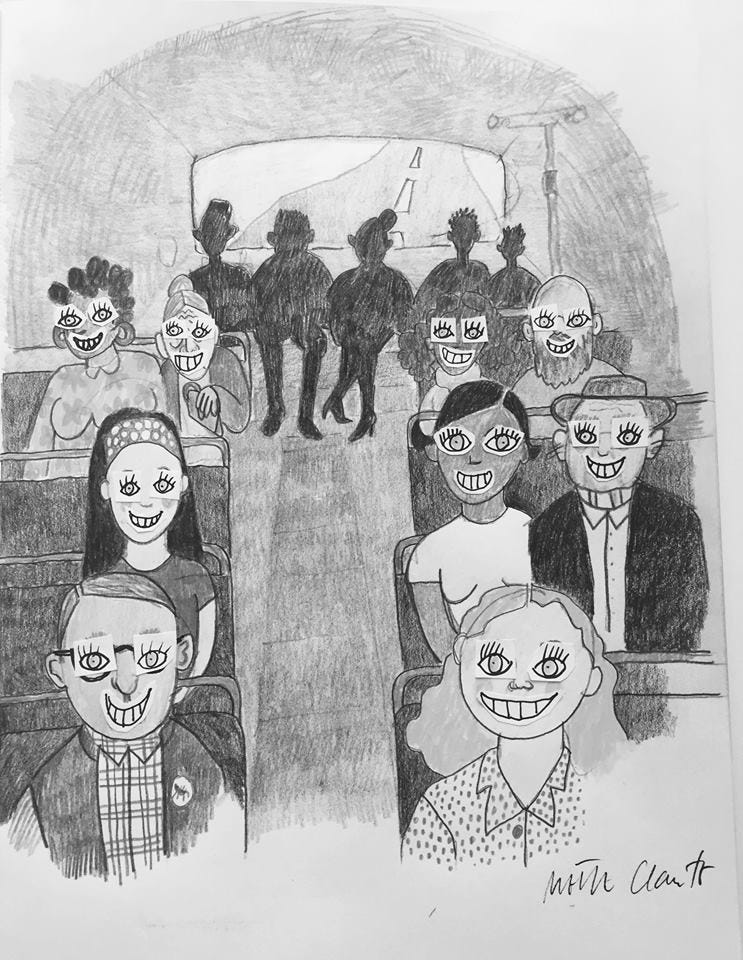
    Illustration: Mette Clante

    Dutch beer company Heineken has recently faced backlash for its “lighter is better” ad, where a bartender with light skinned Latino appearance slides a beer past three dark skinned Black people towards an Eurasian woman, with whom he shares a wink, before the slogan “sometimes lighter is better” appears. As a mixed race person, who might be racialised in a similar way to the exotic yet safely light skinned woman in the ad, this ad struck a well-known chord. Spending a good half of my life in a white Danish environment, I have often found my ambiguous racial appearance used by white people as a symbol of a conforming, non-threatening otherness. Although still seen as a person of color, I also embody a whiteness that can make me come across as safe mediator to ease racial tensions and white guilt.

    Considering the overwhelming whiteness in European advertisement in general, I don’t believe it to be a coincidence that Heineken, as a white owned company, chooses to use people of color and racially ambiguous people as the stars of this ad. In representing the “lighter is better” demographic, the two lighter skinned actors become pawns to the white system which uses them to mask its racism, that becomes perhaps more subtle with the acceptance of some people of color…

    Read the entire article here.