• Her way. The new way.

    The Washington Post
    2018-10-04

    Ann Hornaday, Movie Critic


    Amandla Stenberg, the 19-year-old star of “The Hate U Give.” (Marvin Joseph/The Washington Post)

    Amandla Stenberg is redefining fame for a time when the personal, the professional and the political have never been more fused.

    On a recent visit to the National Museum of African American History and Culture, actress Amandla Stenberg made a beeline for “Watching Oprah,” an exhibit dedicated to the TV-icon-turned-all-of-it-icon.

    Oprah was very integral in my household,” she said, peering at the biographical information on the walls. “My mom used to be a journalist. . . . She worked at Elle magazine and then moved into celebrity journalism. The irony is not lost on me.”…

    …Biracial in ethnic derivation, nonbinary in gender identification, gay in sexual orientation, multi-hyphenate in creative aspiration, Stenberg embodies a similar blurring of boundaries. She grew up in Los Angeles with her African American mother and Danish father, commuting from their modest Leimert Park neighborhood to the far tonier Wildwood School. Her first movie role was in “Colombiana,” as a young version of Zoe Saldana. “The Hunger Games” — just her second film — was seen by tens of millions of people around the world. But it was a video she made for history class in 2015 that became a watershed: Called “Don’t Cash Crop My Cornrows,” the 4-minute-30-second tutorial explained the most offensive dynamics of cultural appropriation. After Stenberg posted the video on Tumblr, it became a viral sensation…

    Read the entire article here.

  • Forwards and Backwards

    Hapa Japan
    2018-09-30

    Fredrick Cloyd

    Whenever I think of living in the world as writer, as thinker, as cultural worker, as identities-in-motion and identities-in-between, I think of the projections we are placed into by others, and by ourselves to ourselves. How others put their own ideas onto us, their assumptions and judgements that follow, align with or compete with the same things we do to ourselves, according to the cultural and language frames we use for ourselves—the labels and concepts of what we learn and think we know. And in addition, there is the reality of a fixed identity or thought that interferes with reality. If we are “hāfu” then we cannot be “pure” or “white” or democrat, republican, woman, man, etc. And then the “human” label also plays its role. “I am human therefore you are wrong in labeling me such-and-such….”

    Read the entire article here.

  • Lynnwood man tried to use a home DNA test to qualify as a minority business owner. He was denied — now he’s suing.

    The Seattle Times
    2018-09-13

    Christine Willmsen, Seattle Times staff reporter

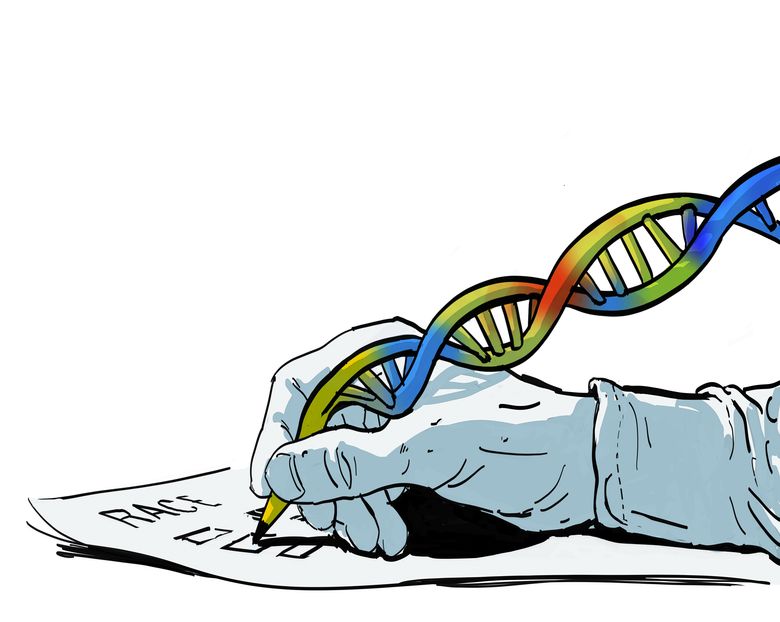
    State and federal programs aim to ensure minority-owned businesses can compete for government contracts after generations of institutional discrimination. A Lynnwood man long identified as white is using DNA ethnicity estimates to claim minority status.

    Ralph Taylor says it doesn’t matter what he looks like. Having lived most of his life as a white man, the 55-year-old now considers himself to be multiracial based on DNA test results.

    The owner of Orion Insurance Group in Lynnwood also wants the U.S. Department of Transportation to recognize him as a minority so he can gain more deals providing liability insurance to contractors.

    Taylor is suing Washington state and the federal government because he was denied a minority-business certification under a program created more than two decades ago to help level the playing field for minority business owners seeking contracts in the transportation industry. He provided no evidence he has suffered socially or economically because of race.

    His case is pending with the 9th U.S. Circuit Court of Appeals.

    In 2010 Taylor began identifying himself as multiracial after a DNA ancestry test estimated he was 90 percent Caucasian, 6 percent indigenous American and 4 percent sub-Saharan African.

    He applied for state certification with the Washington Office of Minority & Women’s Business Enterprises (OMWBE) so Orion Insurance Group would be considered a minority business.

    Ralph Taylor (Steve Ringman/The Seattle Times)
    Ralph Taylor (Steve Ringman/The Seattle Times)

    With no criteria defining a minority race or ethnicity, OMWBE eventually approved Taylor. But that same state agency, which also manages the U.S. Department of Transportation certification, decided he was Caucasian under that program’s procedures and denied his application…

    Read the entire article here.
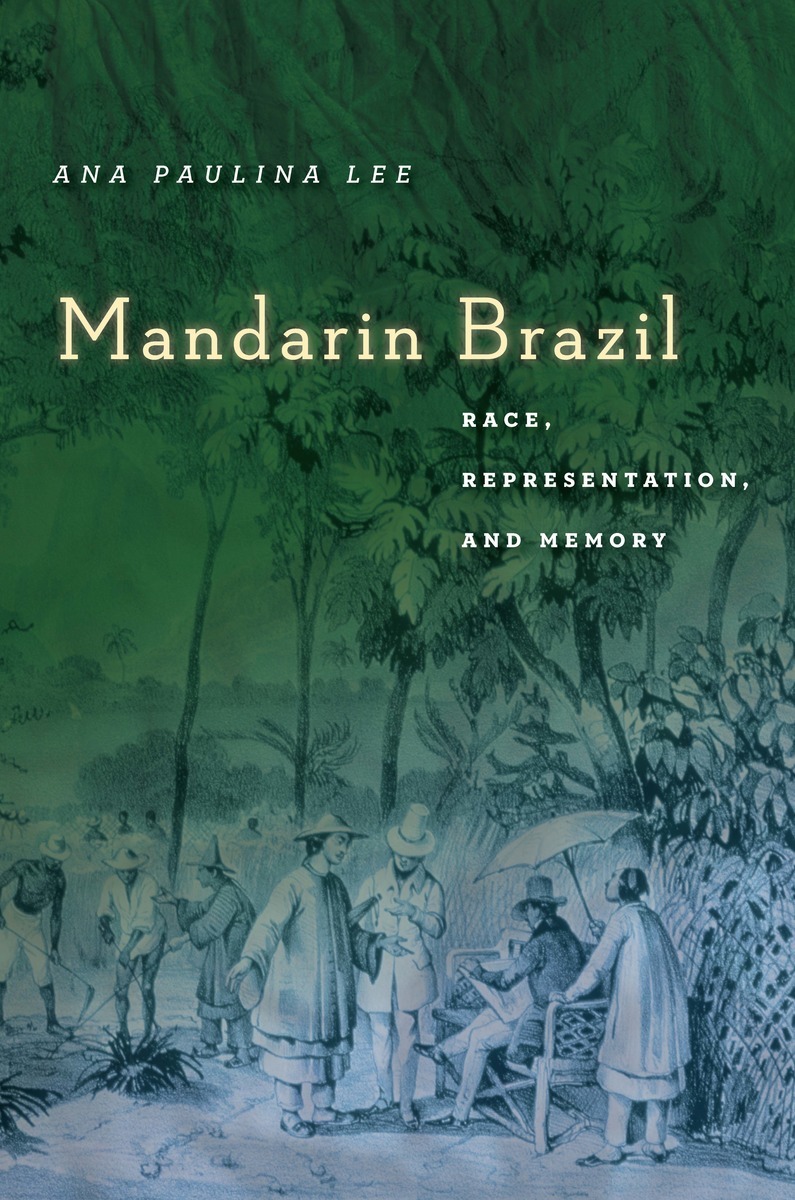
  • Mandarin Brazil: Race, Representation, and Memory

    Stanford University Press
    September 2018
    256 pages
    Cloth ISBN: 9781503605046
    Paper ISBN: 9781503606012

    Ana Paulina Lee, Assistant Professor of Luso-Brazilian Studies
    Columbia University, New York, New York

    In Mandarin Brazil, Ana Paulina Lee explores the centrality of Chinese exclusion to the Brazilian nation-building project, tracing the role of cultural representation in producing racialized national categories. Lee considers depictions of Chineseness in Brazilian popular music, literature, and visual culture, as well as archival documents and Brazilian and Qing dynasty diplomatic correspondence about opening trade and immigration routes between Brazil and China. In so doing, she reveals how Asian racialization helped to shape Brazil’s image as a racial democracy.

    Mandarin Brazil begins during the second half of the nineteenth century, during the transitional period when enslaved labor became unfree labor—an era when black slavery shifted to “yellow labor” and racial anxieties surged. Lee asks how colonial paradigms of racial labor became a part of Brazil’s nation-building project, which prioritized “whitening,” a fundamentally white supremacist ideology that intertwined the colonial racial caste system with new immigration labor schemes. By considering why Chinese laborers were excluded from Brazilian nation-building efforts while Japanese migrants were welcomed, Lee interrogates how Chinese and Japanese imperial ambitions and Asian ethnic supremacy reinforced Brazil’s whitening project. Mandarin Brazil contributes to a new conversation in Latin American and Asian American cultural studies, one that considers Asian diasporic histories and racial formation across the Americas.

  • The Lumbee Indians: An American Struggle

    University of North Carolina Press
    September 2018
    328 pages
    5 maps, notes, index
    6.125 x 9.25
    Hardcover ISBN: 978-1-4696-4637-4
    eBook ISBN: 978-1-4696-4638-1

    Malinda Maynor Lowery, Associate Professor; Director, Center for the Study of the American South
    University of North Carolina

    The Lumbee Indians

    Jamestown, the Lost Colony of Roanoke, and Plymouth Rock are central to America’s mythic origin stories. Then, we are told, the main characters–the “friendly” Native Americans who met the settlers–disappeared. But the history of the Lumbee Tribe of North Carolina demands that we tell a different story. As the largest tribe east of the Mississippi and one of the largest in the country, the Lumbees have survived in their original homelands, maintaining a distinct identity as Indians in a biracial South. In this passionately written, sweeping work of history, Malinda Maynor Lowery narrates the Lumbees’ extraordinary story as never before. The Lumbees’ journey as a people sheds new light on America’s defining moments, from the first encounters with Europeans to the present day. How and why did the Lumbees both fight to establish the United States and resist the encroachments of its government? How have they not just survived, but thrived, through Civil War, Jim Crow, the civil rights movement, and the war on drugs, to ultimately establish their own constitutional government in the twenty-first century? Their fight for full federal acknowledgment continues to this day, while the Lumbee people’s struggle for justice and self-determination continues to transform our view of the American experience. Readers of this book will never see Native American history the same way.

  • Hapa Tales and Other Lies: A Mixed Race Memoir About the Hawai‘i I Never Knew

    Rising Song Press
    2018-09-15
    210 pages
    Paperback ISBN: 978-1-732484702

    Sharon H. Chang

    HapaTales_Cover_0706_2

    In her first work of literary nonfiction, Sharon H. Chang reflects critically on her Asian American, Mixed Race, and activist identity through the prism of returning to Hawai‘i as a tourist. While visiting O‘ahu and Kaua‘i she considers childhood trips to Maua‘i and the Big Island, pop culture and Hollywood movies of her youth that perpetuated Hawaiian stereotypes, and what it means that she has been stereotyped as a “Hawai‘i Girl” her whole life though she has never lived on the islands. But what begins as a journey to unpack the ways she has been perceived and treated as a multiracial woman evolves into much more as Sharon learns the real impacts of colonization and corporate tourism on Hawai‘i and uncovers what her Asian multiracial “mainland” identity actually looks like in relationship to the land, its Indigenous peoples, and the Native Hawaiian Sovereignty Movement.

  • “We Were All Just the Black Kids”: Black Mixed-Race Men and the Importance of Adolescent Peer Groups for Identity Development

    Social Currents
    First Published online 2018-09-19
    DOI: 10.1177/2329496518797840

    Jennifer Patrice Sims, Assistant Professor of Sociology
    University of Alabama, Huntsville

    Remi Joseph-Salisbury, Senior Lecturer in Education Studies
    Leeds Beckett University, Leeds, United Kingdom

    While critical Mixed-Race studies (CMRS) has paid attention to the intersections of race, gender, and sexuality in sampling and analysis, most studies disproportionately focus on women. This means that generalizability of findings and theories to men should not become axiomatic. Regarding black Mixed-Race people, for example, the theory that rejection from black people is influential for many black Mixed-Race individuals’ identity development is derived from interviews with mainly women. Explicitly noting that these processes are not as applicable for men, yet offering no accompanying theorizing as to the influence of gendered interactions on men’s racial identity development, appears to have become the standard. Therefore, bringing together data from two studies that explored black mixedness in the United States and the United Kingdom, this article joins a nascent literature on the gendered experiences of Mixed-Race men. Our analysis shows that, unlike black Mixed-Race women, black Mixed-Race men’s mixedness is often constructed as compatible with the heteronormative gender identities that are constituted in racialized peer groups. As such, black Mixed-Race men are able to cultivate a sense of strategic sameness with same gender black peers. This and other findings are discussed in light of their implications for CMRS’s intersectional theories of identity development.

    Read or purchase the article here.

  • Multiracials and Civil Rights – Book Talk with Professor Tanya Katerí Hernández

    Columbia Law School
    Jerome Greene Hall
    Room TBD
    435 West 116th Street
    New York, New York 10027
    2018-09-12, 12:10-13:15 EDT (Local Time)

    Tanya Katerí Hernández, Archibald R. Murray Professor of Law
    Fordham University School of Law

    A Lunchtime Talk hosted by the Center for Gender & Sexuality Law and the Center for the Study of Law and Culture

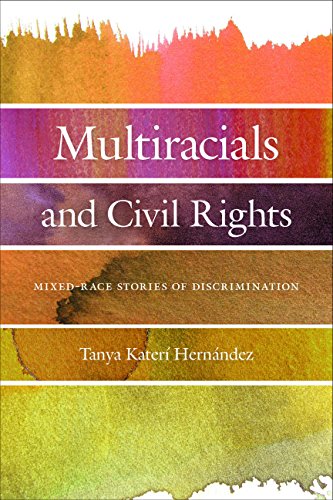
    As the mixed-race population in the United States grows, public fascination with multiracial identity has promoted the belief that racial mixture will destroy racism. However, multiracial people still face discrimination. Many legal scholars hold that this is distinct from the discrimination faced by people of other races, and traditional civil rights laws built on a strict black/white binary need to be reformed to account for cases of discrimination against those identifying as mixed-race. In Multiracials and Civil Rights: Mixed-Race Stories of Discrimination, Tanya Katerí Hernández debunks this idea and draws on a plethora of court cases to demonstrate that multiracials face the same types of discrimination as other racial groups. Hernández argues that multiracial people are primarily targeted for discrimination due to their non-whiteness, and shows how the cases highlight the need to support the existing legal structures instead of a new understanding of civil rights law. The legal and political analysis is enriched with Hernández’s own personal narrative as a mixed-race Afro-Latina. Coming at a time when explicit racism is resurfacing, Hernández’s look at multiracial discrimination cases is essential for fortifying the focus of civil rights law on racial privilege and the lingering legacy of bias against non-whites, and has much to teach us about how to move towards a more egalitarian society.

  • Multiracials and Civil Rights: Mixed-Race Stories of Discrimination [Review]

    new york journal of books
    2018-08-27

    L. Ali Khan, Professor of Law
    Washburn University, Topeka, Kansas

    Tanya Katerí Hernández, Multiracials and Civil Rights: Mixed-Race Stories of Discrimination (New York: New York University Press, 2018)

    “General readers, with no initiation in law, will learn quite a bit about racial discrimination, civil rights laws, and how academics grapple with theoretical difficulties underlying race relations in the realm of law.”

    In Multiracials and Civil Rights, Fordham law professor Tanya Hernández demonstrates that discrimination perpetrated against blacks also targets mixed-race persons, called multiracials. Contrary to popular expectations, multiracialism has not alleviated racism. Deviations from the hundred-percent whiteness (a racial myth) continue to inform social constructions of race, racial awareness, discrimination, and the application of civil rights laws.

    Historically, the one-drop rule has required that a person with any degree of black ancestry must identify solely as black. With diverse immigration and interracial procreation, multiracialism is on the rise. Since 2000, multiracials are free to identify with more than one race. Yet such is the sociology of racism that any fraction of blackness, visible or hidden, reduces multiracials into black persons, discounting their other racial traits.

    The hundred-percent whiteness paradigm formulates and protects the white privilege, a source of unearned advantage, and offers measly concessions to any dilution of whiteness. Therefore, non-whiteness is potentially subject to racial discrimination actionable under law…

    Read the entire review here.

  • A Dark Inheritance: Blood, Race, and Sex in Colonial Jamaica

    Yale University Press
    2018-08-28
    352 pages
    6 1/8 x 9 1/4
    25 b/w illus.
    Hardcover ISBN: 9780300225556

    Brooke N. Newman, Associate Professor of History; Associate Director of the Humanities Research Center
    Virginia Commonwealth University, Richmond, Virginia

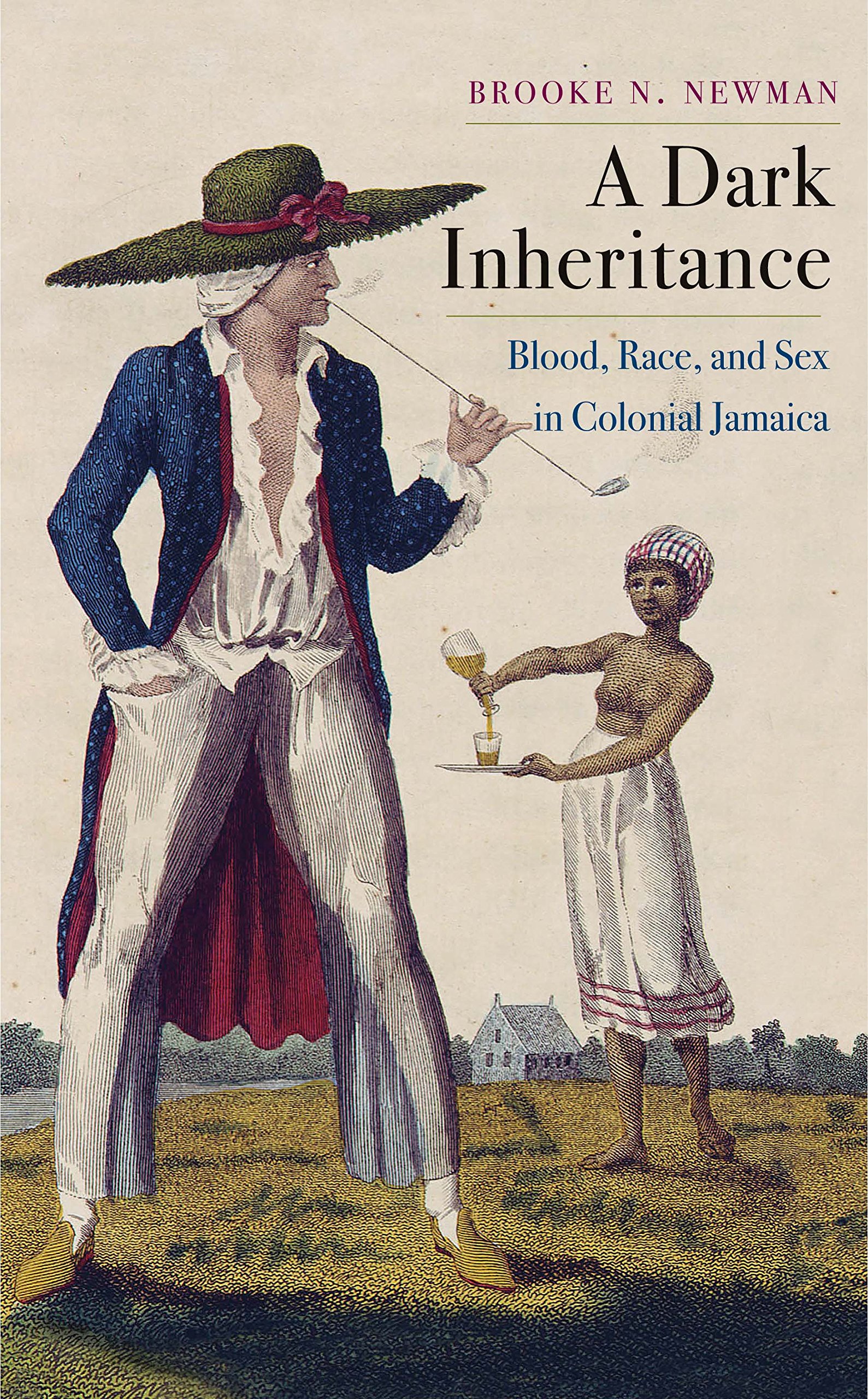
    Focusing on Jamaica, Britain’s most valuable colony in the Americas by the mid-eighteenth century, Brooke Newman explores the relationship between racial classifications and the inherited rights and privileges associated with British subject status. Weaving together a diverse range of sources, she shows how colonial racial ideologies rooted in fictions of blood ancestry at once justified permanent, hereditary slavery for Africans and barred members of certain marginalized groups from laying claim to British liberties on the basis of hereditary status.