• Centering ourselves means using our pain to erase the pain of others. It sends the message that light-skinned suffering—on offshoot of white fragility—is in greater need of addressing than actual anti-Blackness, and the white supremacy that generates it.

    This is why “mixed” is an identifier I do not use. It is a term which privileges those of us who happen to know who some of our non-Black ancestors are, and which fails to acknowledge that most Black people on this planet are mixed—if not racially, then ethnically, culturally, geographically. All our Black identities are layered, and the fact of my having a white parent does little to make my experience of Blackness more nuanced than anyone else’s. We can acknowledge the complexities of our varied roots, without imagining that separate categories of Blackness are needed—especially ones designated for those who are read as something other than Black, a position that always comes with privilege.

    rad fag (Benjamin Hart), “Black People Have Every Right to Distrust You For Being Light Skinned,” Radical Faggot, October 17, 2016. https://radfag.com/2016/10/17/black-people-have-every-right-to-distrust-you-for-being-light-skinned/

  • White Nonsense

    Vice News
    2016-10-09

    Elspeth Reeve

    Alt-right trolls are arguing over genetic tests they think “prove” their whiteness

    Andrew remembers feeling a “tinge of apprehension” when he logged on to 23andMe. Several weeks earlier, he’d spit into a tube and mailed it to the genetic testing company, which analyzes customers’ DNA to estimate where their ancestors came from. But when he clicked on his color-coded ancestry chart, he felt relief: 99.7 percent European. He went to the Reddit page /r/WhiteRights, where he’s a moderator, and posted a screenshot: “Finally got around to checking my privilege,” he wrote. At the bottom of the chart, he’d photoshopped in an extra line: “100% Goy.”

    “There’s kind of a running joke that everyone works for the JIDF [Jewish Internet Defense Force] or is secretly nonwhite,” explained Andrew, who says he’s a 31-year-old lawyer from Washington, D.C. “So when I posted my 23andMe results, I was playing off that.” (Andrew posts on Reddit as slippery_people, but, like quite a few of the white nationalists I’ve spoken to, he doesn’t want his real identity associated with these views.)…

    …23andMe does not test for race. Its main business now is ancestry testing, after some early trouble with the FDA over claims the service could mine your genes to determine risk factors for disease. The company, based in Mountain View, California, received an investment from Google in 2007, a year after its founding. It got another boost in 2012 when PBS began running “Finding Your Roots,” a show where celebrities traced their ancestry with genotyping from 23andMe. By June 2015, the company had analyzed the DNA of 1 million customers, though it has faced some criticism for not having a large enough sample of DNA from people who do not have European heritage…

    Read the entire article here.

  • Racial identity is a biological nonsense, says Reith lecturer

    The Guardian
    2016-10-18

    Hannah Ellis-Petersen, Culture Reporter


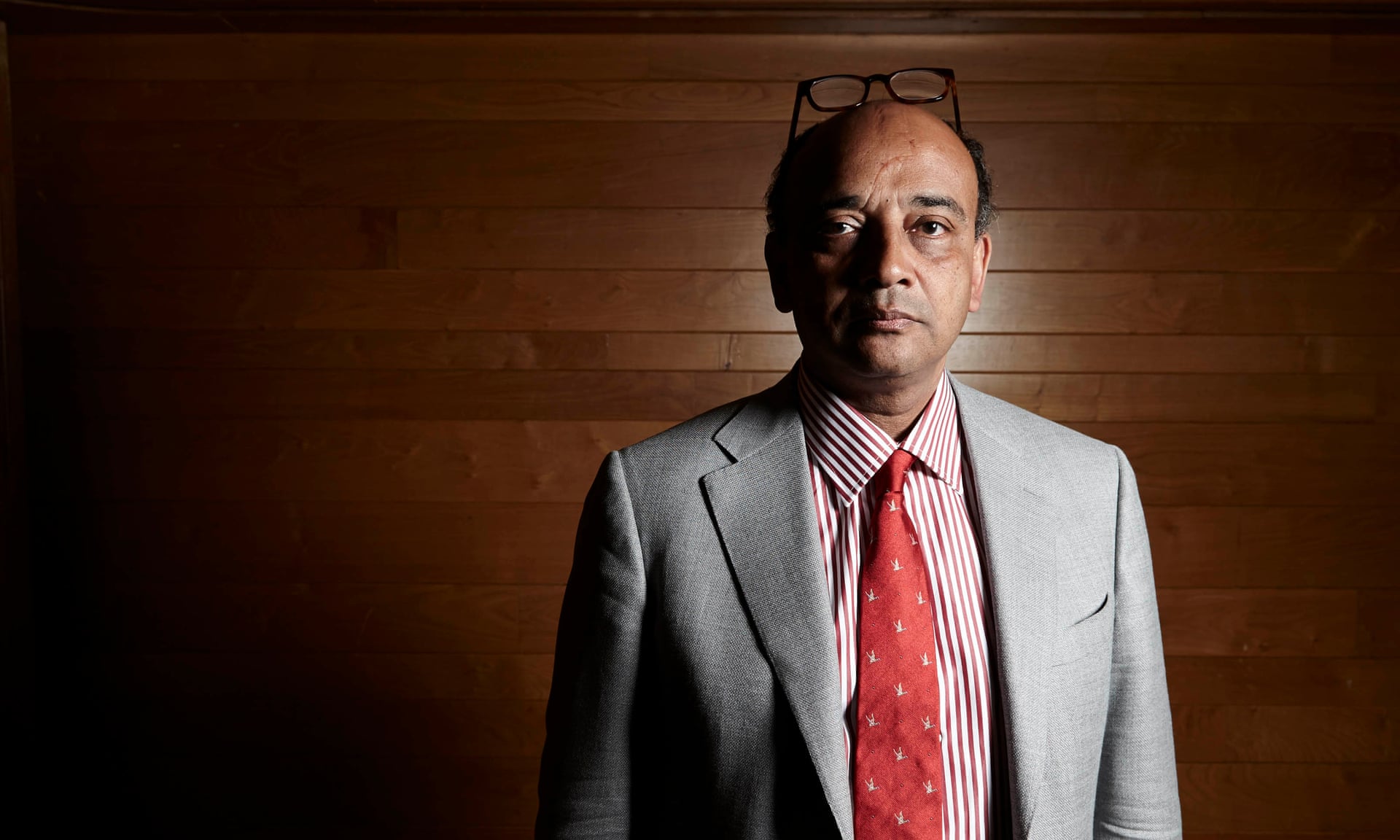
    Kwame Anthony Appiah says ‘race does nothing for us’. Photograph: BBC

    Philosopher Kwame Anthony Appiah says race and nationality are social inventions being used to cause deadly divisions

    Two weeks ago Theresa May made a statement that, for many, trampled on 200 years of enlightenment and cosmopolitan thinking: “If you are a citizen of the world, you are a citizen of nowhere”.

    It was a proclamation blasted by figures from all sides, but for Kwame Anthony Appiah, the philosopher who on Tuesday gave the first of this year’s prestigious BBC Reith lectures, the sentiment stung. His life – he is the son a British aristocratic mother and Ghanian anti-colonial activist father, raised as a strict Christian in Kumasi, then sent to British boarding school, followed by a move to the US in the 1970s; he is gay, married to a Jewish man and explores identity for a living – meant May’s comments were both “insulting and nonsense in every conceivable way”…

    Read the entire article here.

  • Black People Have Every Right to Distrust You For Being Light Skinned

    Radical Faggot
    2016-10-17

    rad fag (Benjamin Hart)

    My dad is Black and from the US. My mom is Scottish-Irish. I came out very light skinned. For most of my early childhood I was universally read as white. It wasn’t until I hit puberty and entered into a largely Puerto Rican middle school that I started being seen as Latino—a shock both because I am not, but also because I had rarely been identified by others as a person of color before.

    Though I grew up in a somewhat racially and economically diverse neighborhood, my family is wealthy. My class status in addition to my light skin called my Blackness into constant question in class, in my after school program, and wherever else I met other Black people. Most of the slang and cultural cues I picked up to help me fit in were learned from friends, neighbors and Black popular culture, because they were not present in my household.

    In Chicago where I currently live, other Black people usually do not acknowledge me. On my way to the train, passing folks on the sidewalk, there is usually no eye contact made, no attempt at a connection. Only when I am walking with my roommate, or another Black friend are the acknowledgements—head nods, handshakes, good afternoons—directed towards me through proximity. The racial context I inhabit changes quickly based on who I’m standing with, talking to, or whose arm is linked in mine.

    In the youth work I do—both professionally and as an independent community member—I often reach out to other light-skinned, half-white and white-passing young people. I see them grappling with identity, self-acceptance, with where they fit into the larger Black community, and the struggles currently renting that community apart. I try my best to hold their pain, make room for their confusion, while also underlining the most important thing I can teach them: Being light skinned is a privilege, not a struggle…

    Read the entire article here.

  • The Pieces of Zadie Smith

    The New York Times Style Magazine
    2016-10-17

    Jeffrey Eugenides

    Briton, Jamaican, mother, writer, female: on becoming whole with one of this generation’s most vital literary voices.

    ZADIE SMITH IS THERE and not there. In the streaming image on my laptop she sits at a desk, backlit in her book-lined office, her right hand holding a goblet filled with liquid of such a dark crimson that it seems to suck all the other colors from the room. In the dim light Zadie’s face looks pale, the scatter of freckles across her cheeks and the bridge of her nose shifting around as if in no fixed position.

    Circumstances have forced us to talk via FaceTime. It’s after midnight in London, where Zadie is; dark too where I am, in the attic of my house in Princeton, N.J. Despite the 3,000 miles of ocean that separate us, the illusion is that we are facing each other across our individual writing desks.

    I don’t like FaceTime. The sudden projection into my presence of a staring, homuncular creature always feels strange and violent. It makes me anxious to have to talk to someone like this and pretend they’re real.

    There’s another reason for my hesitancy to credit what I’m seeing tonight. I’ve just finished Zadie’s new novel, “Swing Time,” and am still living in its shadow world. Like the black-and-white musicals that feature in its pages, the book is a play of light and dark — at once an assertion of physicality and an illusion — in which the main character, a girl born to a black mother and a white father, tries to assemble, from the competing allegiances that claim her, an identity that allows her to join the dance. This narrator is unnamed, as is the African country where much of the action takes place. The novel cloaks existential dread beneath the brightest of intensities.

    I check the digital recorder. It appears to be working. The shadowy figure on my screen appears to be Zadie Smith. And so we begin…

    Read the entire article here.

  • Black Lives Matter

    Wonderland
    2016-10-11

    As the Black Lives Matter conversation continues to unfold the world over (BLM crowds stormed London City Airport as Wonderland went to press), we asked Emma Dabari, a teaching fellow at School of African Studies, to organise a debate between a few of London’s most independently-minded young creatives.

    Emma Dabiri, Fellow, SOAS: What are all of your experiences with Black Lives Matter and the differences between the UK and the US? Capres, you organised the recent London protest [which was meant to be for 30 people, and closer to 3,000 turned up].

    Capres Willow, protester, Black Lives Matter: The reason I organised the protest was because I was online and I came across one of the killings. I was like: “This isn’t the first one, this isn’t the last one. It seems like all people are doing is typing about it online.” Okay, that’s great, show your opinion, but we need some real action. So I just organised a protest, not expecting much from it and then 3,000 people turned up. After that I thought: “Okay, now I’ve got responsibilities.” I’m not an activist and I’ve never been to a protest before, but from that I was like: “Alright, what’s next?” Do you go about it in a political way? Do you approach the government and say: “This needs to change”? Then you look at the fact that it’s an institutional problem within the police. I’m not saying a policeman is racist, but the police as an institution is a racist institution…

    E: Do you think that police brutality is one of the main issues affecting black British people? We know it’s not to the same extent that it is in the US…

    Mischa Notcutt, a stylist who runs the clubnight PDA: That’s because they have guns! That’s the only reason we’re different from America. Brexit proves that we’re not as forward as a country as people think…

    E: I’m not in any way trying to suggest that the UK is better than the US, that’s not what I think. But what do you think some of the differences might be between how racism manifests itself here and there? I actually think British people are a lot more sophisticated in the way racism operates. I think there are issues that are specific to the UK, that are maybe harder to unpick.

    Ronan McKenzie, fashion photographer: Exactly, it’s more undercover.

    M: It’s a lot more insidious here. People are more scared about being called racist.

    E: Precisely. In Brazil they had a policy called “The Whitening”. Unlike in England where there was generally a fear of so-called “race mixing”, in Brazil they had this huge African descent population in the late 1800s/early 1900s. It was this actual policy where they thought if they could just dilute the black population enough, through mixing with the white, they could eventually rid Brazil of the “Negro problem”… Obviously the whole forbidding mixing thing didn’t work here, but we’ve said racism is more insidious here. Have you read those articles that say that the African Caribbean group will be the first group to disappear in the UK? It’s regularly reported and the articles always finish in, I think, a quite gleeful tone. I just feel like: “Oh, is that what you want to happen?” I wonder if the more softly integrative, assimilate approach in the UK is maybe a low-key whitening thing.

    R: You can see that in fashion, for example, where people will be talking about diversity but they won’t cast any dark-skinned girls. That’s not really diversity, if really you only like your black girls light-skinned.

    Mischa: That’s interesting, because when I was younger, me and my sister would aways be like: “But we’re the future! Everyone’s going to be like us eventually!’ The Jamaican side [of my family] always see us as the white cousins, and the white side always sees us as the black cousins. So we always felt in the middle. We always thought: “The more mixed-race people, the better”, because that would give us more things to identify with being mixed race and dual heritage.

    R: I think it depends on where you are, as well. I’m from north east London and if you’re mixed race you’re like, the gods. Everybody wanted to be mixed race, everybody wanted to have lighter skin, curly hair and look mixed race, and all the mixed race boys in my area were so sought after.

    Munroe Bergdorf, model: It’s almost fetishised.

    R: But it wasn’t a celebratory thing… It was more like: “I don’t want to be dark-skinned. I want to be more beautiful. I want to have lightskinned babies, so they look better and be respected more.” It’s not because you thought it would be great mixing… I remember, when I was younger — maybe even up until a few years ago — when I didn’t want to tan, I’d put factor 50 sunscreen on because I didn’t want darker skin. I never looked at my dad thinking: “I don’t like his colour.” I just didn’t want to be darker skinned myself.

    E: I think that’s a difference I’ve experience between white environments and black environments. In addition to the racism that often occurs in white environments, there’s the more liberal, celebratory, “Oh, one day everybody will be brown like you! This is the future!” If you put that in black context, and you see the way colourism operates, and the way there’s all this pressure, and desire to be lighter, and to have more mixed, European features, then that kind of celebratory narrative seems quite perverse! In that context, it gets really gross… What do you see as the role of non-black people?…

    Read the entire article here.
  • Too Black for Mexico — Cécile Smetana Photographs the Afro-Mexicans Stigmatized for the Color of Their Skin

    FotoRoom
    2016-10-10

    Photos by Cécile Smetana Baudier

    31 year-old French-Danish photographer Cécile Smetana Baudier discusses Diaspora: Costa Chica, a subjective reportage from a coastal area of Mexico where Cécile lived with a minority ethnic group: the Mexicans of African descent. Her beautiful portraits and landscape photographs introduce us to this community living at the margins of their society, and sometimes victim of racist stereotypes.

    Hello Cécile, thank you for this interview. What inspired your new series Diaspora: Costa Chica?

    I was living in Oaxaca city in Mexico and was researching on a different project; however when I started working on it I never got a connection with the girls I was photographing. I was not in a very positive state of mind.

    One day I was sitting at the dentist’s office. A lot of his clients where other photographers and therefore he had all these photography books on the table. I started looking through them and I stumbled across one about the Afro-Mexican community in Costa Chica, an area that expands from the state of Oaxaca to the coast of Guerrero. I didn’t know that there were any communities of people of African descent in Mexico and I started researching on the subject. I found the photos of Tony Gleaton, an American photographer who dedicated his life to portray Afro communities and I was very much inspired by him, which becomes very clear when comparing my own images to his…

    Read the entire interview and view the gallery here.

  • In Depth with Gerald Horne

    In Depth
    C-SPAN
    2016-10-02

    Peter Slen, Host

    Gerald Horne, Professor of History and African-American Studies
    University of Houston

    Author Gerald Horne talked about his life and career and responded to viewer comments and questions. His most recent book is Paul Robeson: The Artist as Revolutionary.

    Gerald Horne is the author of numerous books, including Confronting Black Jacobins: The U.S., the Haitian Revolution, and the Origins of the Dominican Republic, Race to Revolution: The United States and Cuba During Slavery and Jim Crow, The Counter-Revolution of 1776: Slave Resistance and the Origins of the United States of America, Black Revolutionary: William Patterson and the Globalization of the African-American Freedom Struggle, Negro Comrades of the Crown: African-Americans and the British Empire Fight the U.S. Before Emancipation, Fighting in Paradise: Labor Unions, Racism and Communists in the Making of Modern Hawaii, and W.E.B. Du Bois: A Biography, among others [including The Color of Fascism: Lawrence Dennis, Racial Passing, and the Rise of Right-Wing Extremism in the United States].

    Watch the interview (03:00:05) here.

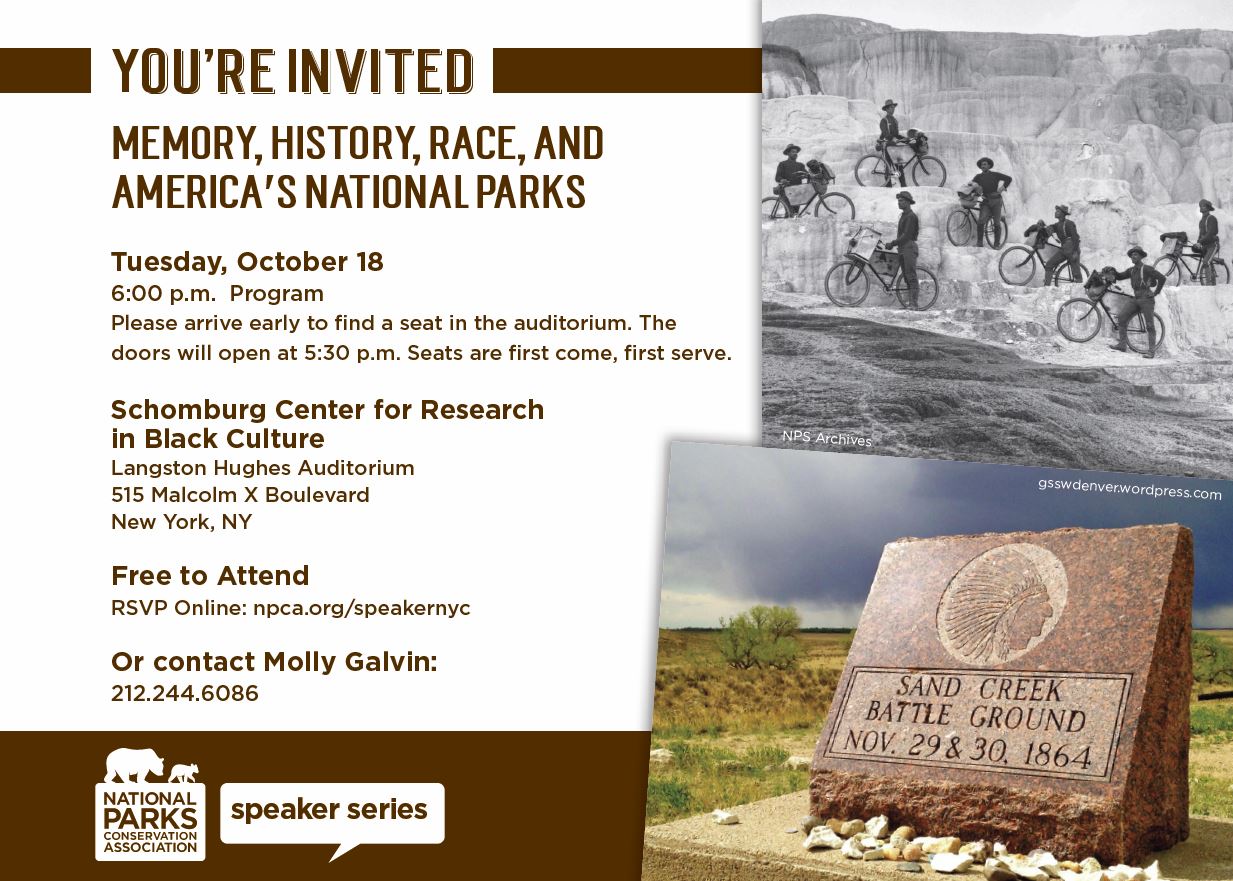
  • Speaker Series: Memory, History, Race, and America’s National Parks

    Schomburg Center for Research in Black Culture
    515 Malcolm X Boulevard
    New York, New York 10037
    Tuesday, 2016-10-18, 18:00-20:00 EDT (Local Time)

    As a young girl Lauret Savoy developed a deeply personal connection to the American land, visiting numerous national parks with her parents. But as she traversed the well-worn paths of Yellowstone, Bryce Canyon and Zion, she began to wonder about the footsteps of her ancestors, and how they marked the very land she walked upon. From the Buffalo Soldiers who safeguarded Yosemite and Sequoia to the painful legacy of Japanese-American internment camps, national parks hold some of the most important yet muted narratives of the American identity.

    In her newest work, Trace: Memory, History, Race, and the American Landscape, Savoy explores how the country’s still unfolding history, and ideas of “race,” mark a person, a people, and the land. In distinctive and illuminating prose, she weaves together human stories of migration, silence, and displacement, as epic as the continent they survey, with uplifted mountains, braided streams, and eroded canyons.

    Join Alan Spears for a conversation with [National Parks Conservation Association] NPCA Trustee Lauret Savoy about her journeys across the American Landscape and the oft forgotten stories of the places we cherish and call our national parks. She will challenge you to redefine current concepts regarding the meaning of public lands and their place in our shared history…

    For more information, click here.

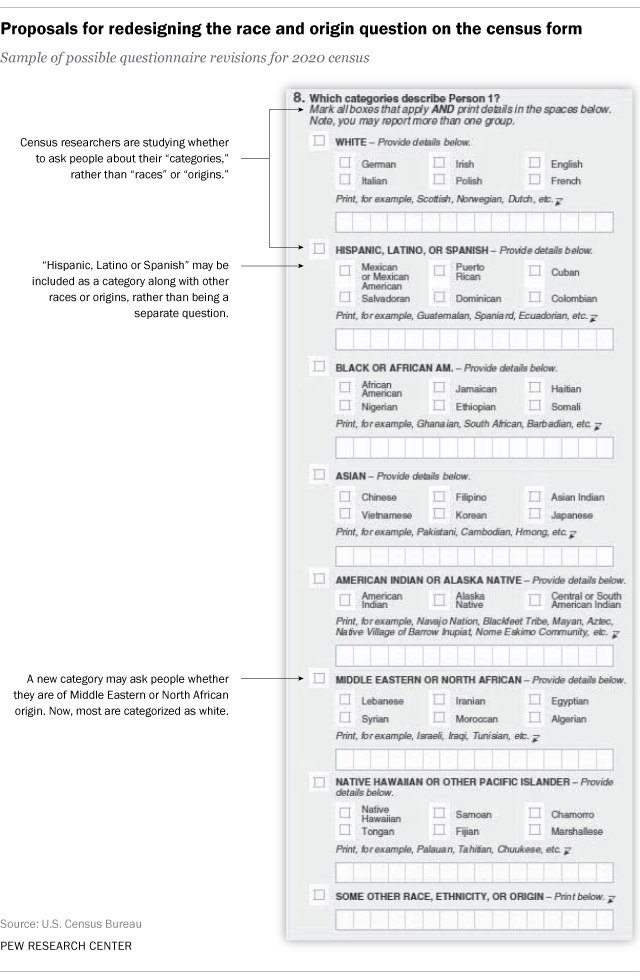
  • Federal officials may revamp how Americans identify race, ethnicity on census and other forms

    Pew Research Center
    2016-10-04

    D’Vera Cohn, Senior Writer/Editor

    Federal officials are moving ahead with the most important potential changes in two decades in how the government asks Americans about their racial and Hispanic identity. They include combining separate race and Hispanic questions into one and adding a new Middle East-North Africa category.

    If approved by the Office of Management and Budget, the revisions would be made on the 2020 census questionnaire and other federal government surveys or forms. Federal statistics about race and Hispanic identity are used to enforce civil rights laws, assist in political redistricting and provide data for research that compares the status of different groups…

    Read the entire article here.