• Obama Gets All In His Blackness At Howard

    Code Switch
    National Public Radio
    2016-05-10

    Leah Donnella

    “Be confident in your heritage. Be confident in your blackness,” President Barack Obama told graduates and their families at Howard University’s 2016 Commencement Ceremony. It was one of many moments in a speech that honored the achievements of black folks — many Howard alumni — and called on graduates to get and stay politically active. His speech was met with laughter, generous applause, and largely positive reviews. Paul Holston, editor-in-chief of Howard’s student newspaper The Hilltop, wrote that Obama’s address was “strong, eloquent, and inspirational,” and would “go down as one of the most significant moments in Howard University’s history.”

    Howard students weren’t the only ones cheering over the speech. Janell Ross at The Washington Post lauded Obama’s call for “empathy and [an] expanded moral imagination” as one of the few surprising and thought-provoking messages that graduates will receive this season. On Twitter, Slate writer Jamelle Bouie called the speech “a great mediation on democracy AND a celebration of black life.” Mathew Rodriguez at Mic described Obama’s speech as “one of the best and blackest he’s given.”

    Melissa Harris-Perry, editor-at-large of Elle, wrote that Obama’s speech was remarkable in its treatment of gender as well as race, and proved “that he is our most black, feminist president to date” by highlighting the genius of black women like Lorraine Hansberry, Harriet Tubman, Fannie Lou Hamer and Zora Neale Hurston:

    “Once again, [Obama] put black women at the very center of the stories he told and the lessons he imparted. As he warmed up, he jokingly referred to ‘Shonda Rhimes owning Thursday night’ and ‘Beyonce running the world.’ They were casual references, not central themes of his talk, but even here he deployed two boss black women as representatives of black excellence and achievement.”…

    Read the entire article here.

  • Why Is There No “Linsanity” Over LA Lakers’ Jordan Clarkson?

    Psychology Today
    2016-05-09

    E. J. R. David Ph.D., Associate Professor of Psychology
    University of Alaska, Anchorage

    Lack of hype on NBA star may reflect larger issues in Asian American community

    May is Asian Pacific American Heritage Month. May is also when the National Basketball Association (NBA) Playoffs begin to heat up. The Golden State Warriors – the defending NBA Champions and perhaps the NBA team with the largest percentage of Asian Pacific American fans – continue to be the hottest team in the league. Therefore, a significant portion of Asians and Pacific Islanders in the United States as well as in the diaspora are likely focused on NBA basketball right now. And when it comes to putting Asian Pacific American people and NBA basketball together, many folks will most likely think of Jeremy Lin.

    Remembering “Linsanity”

    Jeremy Lin – a Taiwanese American basketball player – rose to stardom in 2012 while playing for the New York Knicks. He went from being an unknown, fringe NBA player to infusing hope on a struggling NBA team. After being inserted as the starting point guard for the Knicks as a last resort – the other point guards on the roster were all injured – Lin surprisingly led his team to a decent win-loss record…

    …I am just curious why the same amount of attention is not given Jordan Clarkson

    Read the entire article here.

  • Chris Harper Mercer’s “Mixed Race” Identity and the Umpqua Community College Shooting

    Daily Kos
    2015-10-02

    Chauncey DeVega

    It is a new/old day in America. On Thursday, there was another mass shooting. On Friday, today, and tomorrow, and in the week’s thereafter America’s politicians will do nothing to stop the plague of gun violence. This is a choice. It is cowardice. The weakness is caused by the grip exerted on America’s political elites by the ammosexuals and gun money barons in the National Rifle Association.

    Chris Harper Mercer killed 10 people at Umpqua Community [College] in Oregon. Much will be written about what his murder spree reveals—none of it really new—about toxic aggrieved masculinity, gun culture, ammosexuals, the online Right-wing sewers that gave him aid and comfort, and other matters.

    I would like to call attention to one detail about Mercer’s personhood, a detail that may be overlooked or not discussed by the mainstream news media out of fear of being called “racist”, or alternatively because they lack the conceptual tools (and will not feature experts who possess them) to talk about race and the color line in a nuanced way…

    Read the entire article here.

  • It’s not all black or white: reporter struggles with mixed-race identity

    The Lowell
    Lowell High School, San Francisco, California
    2015-11-24

    Rachael Schmidt


    Reporter Rachael Schmidt is half white and half black. Photo by Kiara Gil.

    I arrived at my cousin Angela’s fourteenth birthday party and was the first one there. Her mom is from Malaysia and her dad is German. I immediately gravitated towards her and for the rest of the evening, we exchanged gossip, played guitars and harmonized together.

    Once my father’s side of the family began to arrive and attempted to interact with us, we retreated to her room. My cousin and I always laugh when we joke and scream, “Run away!” as we make our great escape. But I have always wondered why we feel so inclined to leave when our other relatives, who are mostly white, begin to show up.

    I used to figure it was because of our vast age differences in comparison to our other family members’, but the more I thought about it after the party, the more I realized that I had grown uncomfortable with my father’s family when I was nine years old and my parents divorced. After my mother, who is black, became absent from family gatherings, I felt even more out of place. I am half white and half black. When one side of my background is taken away, I do not feel complete…

    Read the entire article here.

  • Racial Passing in American Life

    The Hill Center
    Washington, D.C.
    2016-05-10

    Lisa Page, Director of Creative Writing at The George Washington University, and co-editor of the forthcoming anthology, #Passing, moderates a discussion with Dr. Allyson Hobbs. Hobbs is an assistant professor of American history at Stanford University. She is the author of A Chosen Exile: A History of Racial Passing in American Life.

  • Who gets to be Native American?

    Fusion
    2016-03-11

    Anna Pulley

    “Inhumane.” “Dishonorable.” “Genocide.” These were just a few of the dozens of Sharpied comments written on the hands of indigenous activists recently, as they launched a grassroots, social-media movement against tribal disenrollment, which is when a tribal government throws out its own members. The campaign, #StopDisenrollment, is aimed at, well, stopping disenrollment, by gathering people’s stories and asking activists to post pictures of what disenrollment means to them.

    In recent years, tribal disenrollment has become increasingly routine. An Indian may be thrown out due to a clan rivalry or political in-fighting, or when a tribe trims members to consolidate casino revenues. Losing one’s tribal enrollment often means losing jobs, housing, educational benefits, and social services. It also means grappling with the identity mindfuck of being told: “You’re no longer an Indian in the eyes of the federal government.”

    Meanwhile, people like Andrea Smith and Rachel Dolezal have claimed a Native identity as their own, echoing generations of white people before them. Even Senator Elizabeth Warren has claimed a Native identity because of “family stories” about her Cherokee roots. A recent Pew Research Center study showed that fully half of all U.S. adults who claimed a multiracial identity said they were white and American Indian. That’s 8.5 million people…

    Read the entire article here

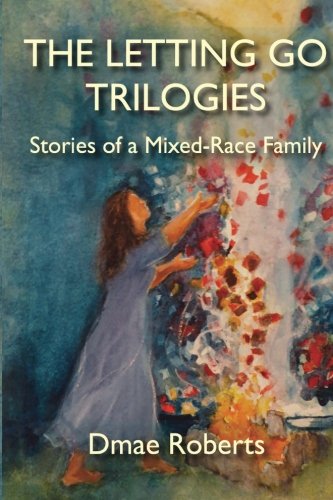
  • The Letting Go Trilogies: Stories of a Mixed-Race Family

    CreateSpace Independent Publishing Platform
    2016-04-06
    222 pages
    ISBN-13: 978-1522998952
    6 x 0.5 x 9 inches

    Dmae Roberts, Writer, Producer, Media and Theatre Artist

    The Letting Go Trilogies: Stories of a Mixed-Race Family traces four decades of what it means to be a mixed-race adult who sometimes called herself “Secret Asian Woman.” With her personal essays written over a ten-year period, Dmae Roberts journeys through biracial identity, Taiwan, sci-fi, and the trials of her interracial Taiwanese and Oklahoman family amid love, loss and letting go of past regrets and pain. Through journeys across America, Japan and Taiwan, this collection of personal stories charts four decades of racial identity. Each essay lends insights into the complexity of cross-cultural family relationships and includes photographs of the author’s family.

  • Stop Turning Mixed Race Girls Into a Fetish

    Consented
    2016-03-04

    Antonia King
    History graduate turned job hunter, currently living between Devon and London, spoken word artist and lover of Nicki Minaj.

    I was in Sainsbury’s and a white woman who helped me reach something on the top shelf decided to ask me my ethnic background. She was well meaning and seemed kind so no immediate alarm bells rang, but she then informed me she wants mixed race kids. She laughed and stated “I’m single right now, but definitely only looking at black guys, mixed race kids are just so beautiful”.

    I smiled, left and then began to despair and worry about her future children. This is nothing I haven’t heard many times before, a quick Twitter search for “mixed race kids” will reveal many people detailing how they want mixed race children to dress up and parade around like a handbag.

    The major issue being that mixed race children are not handbags. Mixed race children, especially girls, are fetishized and even sexualised before they’re born. Comments about how beautiful they’re going to be, or how they’ll be just the right amount of black start disgustingly early, the media commentary on North West is a prime example of this…

    Read the entire article here.

  • Four Questions for Sarah A. Chavez

    Little Myths
    2015-12-09

    Daniel M. Shapiro


    Sarah A. Chavez

    Sarah A. Chavez, a mestiza born and raised in the California Central Valley, is the author of the chapbook All Day, Talking (Dancing Girl Press, 2014). She holds a Ph.D. in English with a focus in poetry and Ethnic Studies from the University of Nebraska – Lincoln. Her work can be found or is forthcoming in the anthologies Bared: An Anthology on Bras and Breasts and Political Punch: The Politics of Identity, as well as the journals North Dakota Quarterly, Pittsburgh Poetry Review, and The Boiler Journal, among others. Her debut full-length collection, Hands That Break & Scar, is forthcoming from Sundress Publications. She is a proud member of the Macondo Writers Workshop.

    DS: Why do you write poetry?

    SC: As a kid growing up in a mobile home on the west side of Fresno, CA, when I was upset or couldn’t sleep, I read. Mostly prose, novels and the occasional short story; they were about upper class people, romance, things that take place in forests, or vampire/horror – always an escape. When I was done with a book, it felt like I was transported back against my will. My brain a little fuzzy, feeling dissatisfied closing the back cover, unhappy to come back to the life I had…

    Read the entire interview here.

  • How My Jewish and Black Grandmothers Found Bernie

    Jewschool: Progressive Jews & Views
    2016-04-30

    Jason Salmon


    Photo above: Jason Salmon (center) and members of Jews for Racial and Economic Justice (JFREJ) at an action in New York City for police accountability. Photo courtesy JFREJ.

    Both of my grandmothers, one a Black woman and the other an Ashkenazi Jewish woman, recently became ardent Bernie Sanders supporters. They don’t articulate their passion like most of the younger supporters by saying, “I feel the Bern,” but they realize that in order for their grandchildren to reap the benefits of their hard work and contributions to society, whether social or economic, systemic change must happen. They grasp that they can’t subscribe to the status quo any longer.

    Like many of the older generation who came from marginalized groups, my grandmothers are weighted down by the past and the oppression they experienced first-hand, while living through the Great Depression and segregated America. We are all, to some extent, prisoners of America’s past, but they feel its impact in ways I cannot…

    Read the entire article here.