• Marvin Rees Becomes UK’s First Elected Black Mayor

    The Voice
    2016-05-14

    Marc Wadsworth

    ‘I’m the descendant of Jamaican slaves. Now I’m mayor of Bristol,’ Rees tells The Voice

    BRISTOL’S NEW mayor has not only changed the face of the city after winning a huge victory but is also promising a new and inclusive way of doing politics.

    Marvin Rees, 44, told The Voice in an exclusive interview: “I’m really honoured and feel the weight of the challenge I’m taking on. It’s also very exciting. I’m pleased so many good people are coming forward, wanting to work collectively, which I think this job requires. It’s not messianic leadership. It’s about fostering collective leadership around shared priorities such as poverty eradication, building homes for people and tackling inequality.”

    Rees, who grew up poor in the St Paul’s area of the city, has pledged to appoint an all-party cabinet that reflects how people voted and the city’s diversity.

    In 2012 Rees unsuccessfully ran for mayor when the post was first created. He amassed a whopping 31,259 votes, losing to independent George Ferguson, a wealthy architect, by less than seven per cent.

    This time Rees notched up just under 70,000 votes, almost 30,000 more than Ferguson…

    Read the entire article here.

  • Passing

    Next Wave Festival 2016
    Northcote Town Hall
    189 High Street
    Northcote, Victoria 3070
    2016-05-12 Through 2016-05-18, Tuesday-Friday 18:30 AEST, Saturday 15:15 and 18:30 AEST (Local Time)

    Presented in association with Darebin Arts’ Speakeasy

    Choreographers/Performers: Amrita Hepi (Bundjalung NSW/Ngāpuhi NZ) and Jahra Wasasala (NZ)

    Using the notion of racial passing as a catalyst for a series of movement monologues, spoken word passages and physical conversations, PASSING maps two bodies under pressure from the responsibility that comes from being of mixed cultural background.

    A trans-pacific partnership of physical force, PASSING combines Amrita Hepi’s hip-hop prowess and background in contemporary dance with Jahra Wasasala’s grounded and ritualistic choreographic style to create a provocative, complex and deeply magnetic work—a physical dialogue that exists between two daughters of diaspora.

    Bringing together some of Australia’s most talented creatives including an original score by Lavern Lee (Guerre, Cassius Select, Black Vanilla) and styling by installation artist Honey Long, PASSING is an evocative portrait of the ‘exotic’, and the exhausting effects the title can bear.

  • Italy Must Confront Its Past to Stave Off the Far-Right

    Diplomatic Courier: A Global Affairs Media Network
    2016-04-13

    Fasil Amdetsion, Senior Policy and International Legal Adviser
    Ministry of Foreign Affairs of Ethiopia

    This year’s seasonal springtime rise in temperatures is expected to deepen Europe’s refugee crisis by bringing about a significant rise in the number of harried migrants approaching its shores. Italy, with its long and porous coastline, remains among the most severely affected countries; 15,000 people have sought refuge in the country in the past three months— a year-upon-year increase of 43%.

    As is the case throughout Europe, increased migration has spurred a resurgence of anti-migrant and racist sentiment. In northern Italy, militant right-wingers have torched Muslim prayer rooms in refugee camps and frequently agitate against foreigners…

    …Despite their best efforts, amorous liaisons between Ethiopians and Italians did not cease. By some estimates, between 1936 and 1940, 10,000 mixed children were born in Italian East Africa. This befuddled Fascist lawmakers who were unclear about how to treat such “illegitimate” offspring— were they to be considered locals or Italians? The solution to the legal limbo in which mixed race children found themselves was found towards the end of the Italian occupation. A law passed in 1940 definitively categorized mixed race children as “black.”…

    Read the entire article here.

  • Dreams of my father’s dreams of Obama

    Ventura County Star
    Camarillo, California
    2008-11-02

    Steven William Thrasher

    Fifty years ago, when my father, Bill Thrasher, (who was black) and my mother Margaret (who was white) decided to get married in Nebraska, it was illegal for them to do so there. They had to go to the “progressive” state next door, (Iowa!) to be allowed to wed. Growing up in Ventura County, I’d laugh with my parents about how our family wouldn’t exist without Iowa, which didn’t seem so progressive compared to our Southern California surroundings.

    And yet, 50 years later, on a cold January night, good old progressive Iowa shocked me once again as it vaulted Barack Obama onto the path to the White House. What would my parents, who once feared raising their children in the Midwest (after all, they had relatives who tried to convince them, in all seriousness, that their children would be striped like zebras), have made of the fact that the child of a union like theirs could have won the Iowa caucuses or, more implausibly, that in less than one week, that man stands to become the 44th president of the United States?…

    Read the entire article here.

  • “Race” and Science

    The Common Reader: A Journal of The Essay
    2016-04-19

    Garland Allen, Professor Emeritus of Biology
    Washington University, St. Louis, Missouri

    A new book traces the complicated legacy of race’s biological conceptions.

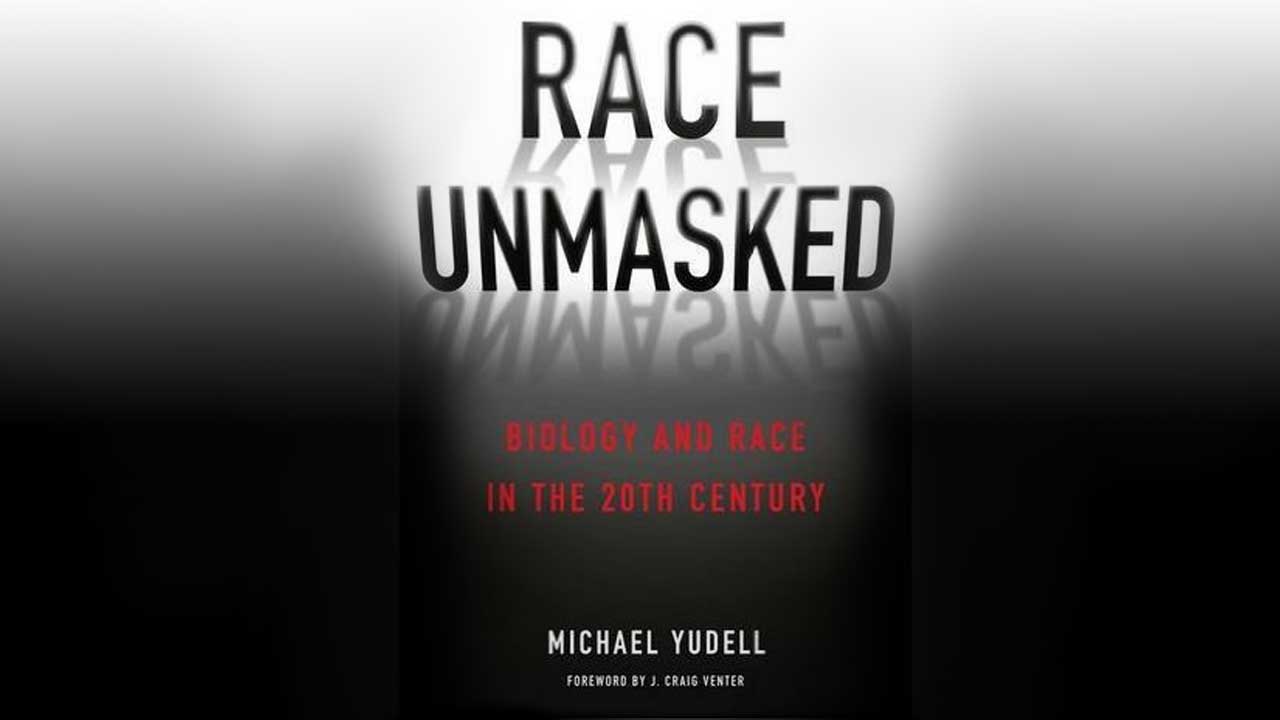
    Michael Yudell; J. Craig Venter (fore.), Race Unmasked: Biology and Race in the Twentieth Century (New York: Columbia University Press, 2014)

    Some years ago, at an elementary school where I was involved in writing and testing a new science curriculum, I was on the playground when a small white boy ran up to the teacher with whom I was talking and said that another boy just hit him. “Which one?” the teacher asked. Pointing to a black boy on the other side of the yard, he said “The one with the red hat.” Brief as it was, that incident had a profound effect on me, leading to the realization that racism—the recognition of race, especially skin color, as a significant, defining difference between people—has to be taught—it is not inborn. Michael Yudell’s new book, Race Unmasked is the story of how race differences have been fashioned and taught, especially with the aid of science, in 20th century America. The book provides an interesting and relevant historical perspective on an issue that recent events in Ferguson, Cleveland, Baltimore and elsewhere have demonstrated is still very much a part of American cultural baggage.

    As the author tells us in the Introduction, “in the 21st century, understanding the way race was constructed within the biological sciences, particularly within genetics and evolutionary biology, is essential to understanding its broader meanings.” Yudell shows how scientists, even with the best intentions of modernizing or modifying the concept to keep up with current evidence, often wound up reinforcing the standard, popular view, helping to insure its survival. Thus, this book is about the paradoxical way in which changing biological conceptions of race, changed between 1700 and 1950 from a fixed and significant taxonomic to an arbitrary and socially-constructed category, nonetheless left a confusing legacy that did not substantially change the common perception of the existence of sharply-defined racial groups. The author’s attempt to trace the history of this paradox and its evolution in the 20th century forms the central thread of the narrative…

    Read the entire review here.

  • Day of Absence 2016: Carolyn Prouty – Race-Based Medicine: What It Is And Why It’s a Problem

    The Evergreen State College Productions
    Olympia, Washington
    2016-04-06

    Carolyn Prouty

    There is no biological basis for race; it is a socially constructed concept. Nonetheless, the structural nature of racism in society manifests itself in different health outcomes for peoples identified as different races, both as the health effect of experiencing racism, and interactions of people of color within the American health care system. Historically, it is clear how biology and anthropology have been misused in explaining differences between groups of humans, and these patterns have helped to reveal unexamined biases of researchers. Yet current uses of genetics in medical practice and research still follow some of these same erroneous paths, for example, confusing ancestry with race, conflating socio-economic conditions with race, and substituting common (and readily recombined) superficial hereditary traits such as skin color and hair shape as proxies for more substantive genetic markers. In this session, we will outline these ideas from biology, medicine, and sociology, beginning with Dorothy Roberts’ TED talk, “The Problem with Race-Based Medicine”, and investigate their applications in current and future practice. We’ll spend time in small group and larger group discussions, as we deconstruct the biology of race, expose some structural biases of American medicine and examine the implications of race-based medicine.

  • Metis and the Medicine Line: Creating a Border and Dividing a People by Michel Hogue (review)

    Labour / Le Travail
    Issue 77, Spring 2016
    pages 297-299
    DOI: 10.1353/llt.2016.0039

    Sterling Evans, Louise Welsh Chair in Southern Plains and Borderlands History
    University of Oklahoma

    Michel Hogue, Metis and the Medicine Line: Creating a Border and Dividing a People (Regina: University of Regina Press 2015)

    It is not an exaggeration to assert that Michel Hogue’s Metis and the Medicine Line is now one of the best studies written about the western Canadian – US borderlands. It is thoroughly researched from a variety of different archival sources from both sides of the 49th parallel, it is very well organized and written, and will be a standard for North American borderlands history for many years to come. Likewise it is a fine addition to the already robust scholarship on Metis history (and note, it was Hogue’s choice to use the word “Metis” without an accent on the “e”). Thus, this combination of themes works to do exactly as the book’s subtitle suggests, relating the history of how creating a border divided a people.

    To do so, Hogue argues that the goal of Metis and the Medicine Line is to reveal “how the process of nation-building and race-making were intertwined and how … the Metis shaped both.” (8) “The experiences of these borderland Metis communities,” he continues, “therefore offer a fresh perspective on the political, economic, and environmental transformations that re-worked the Northern Plains across the nineteenth century.” (9) And finally, he states how the book “offers a (partial) corrective to those who would focus solely on race by drawing attention to the historical circumstances that gave rise to the Metis emergence as an autonomous people … and to the resilience and persistence of such notions.” (19) Those are noble objectives, but it is fair to assess how well they are achieved in this study. Along the way, Hogue gives special attention to how the Metis developed “mobile communities” (7) in the borderlands, how they negotiated “racialized markers of belonging,” and how they created a “hybrid borderland world” (10) and “an interethnic landscape.” (20) And more than theoretical labels here, these kinds of terms help to define Hogue’s message of Metis resilience and agency and set up the book’s themes well in the Introduction.

    At that point Metis and the Medicine Line is divided into five chapters, all with cleverly developed action noun signposts as main title markers. The first chapter, “Emergence: Creating a Metis Borderland” discusses the importance of the Metis bison economy and trade and how the Metis used that for border marking. Chapter 2, “Exchange: Trade, Sovereignty, and the Forty-Ninth Parallel,” explores the Metis role in the “growing salience of the 49th parallel” (55) and how they came to negotiate it for their benefit. Chapter 2, “Exchange: Trade, Sovereignty, and the 49th Parallel,” explores the Metis role in the “growing salience of the 49th parallel” (55) and how they came to negotiate it for their benefit. Chapter 3, “Belonging: Land, Treaties, and the Boundaries of Race,” gets into the more difficult business of trying to explain the complexity of Metis racial identity (and especially with the concept of “racial marking”) and continues to address the bison economy (especially as that came to change with the different degrees of bison decline on opposite sides of the US-Canadian border. In what I consider to be one of the book’s greatest strengths, Hogue provides excellent analyses of the Metis role in Plains geopolitics – not only in their dealings with the US and Canadian governments, but also with other Indigenous groups throughout the Northern Plains. The fourth chapter, “Resistance: Dismantling Plains Borderlands Settlements, 1879-1885,” gets into some comparative discussion of US and Canadian policies on Native peoples, offers more on border diplomacy, and reiterates the role of Louis Riel in all of this history. Likewise, for the Metis on the Canadian side of the line, it provides excellent analysis on “symbols of economic re-orientation.” (172) And finally, Chapter 5, “Exile: Scrip and Enrollment Commissions and the Shifting of Boundaries and Belongings,” is a bit more complicated and perhaps unnecessarily too detailed (the only place in the book I thought so) on the history of the scrip use by Metis peoples in Canada. This chapter seems like more of a stand-alone…

    Read or purchase the review here.
  • Playing Asian: A Review of AATP’s “Yellow Face”

    Standford Arts Review
    2016-05-05

    Loralee Sepsey

    “You don’t have to live as an Asian every day of your life.”

    These words, spoken by the character David Henry Hwang (Newton Cheng) in Stanford’s Asian American Theater Project’s production of Hwang’s “unreliable memoir” Yellow Face, ring clear throughout the small, intimate space of the Elliott Program Center. Hwang has his back to the audience, head tilted upwards as he confronts the character of Marcus (Levi Jennings) over his self-proclaimed “choice” to be Asian– Siberian Jewish American, to be exact. Marcus stands upon a simple podium, lights beaming down on him like some sort of halo. In this moment, Marcus is playing savior, the beacon of whiteness coming to “save” the play’s Asian community, taking the qualities of color that benefit him while remaining free of the struggle that comes from racism. Everyone wants to be Asian, but no one actually wants to be Asian…

    Read the entire review here.

  • Seven days, three speeches: one week in the life of having a black president

    The Guardian
    2016-05-09

    Steven W. Thrasher

    After seven years, Barack Obama is in his last months in the White House. When he leaves, nothing will be the same. For black people, nothing will be resolved

    Like so many people I have unwisely loved, Barack Hussein Obama intrigues and infuriates and enrages and inspires and uplifts and disappoints me all at once. And whether it is politically or psychologically healthy to do so, I have loved President Obama, even as I have known that it’s not healthy and as I have wanted to maintain a certain critical distance since becoming a journalist…

    Read the entire article here.

  • Remarks by the President at Howard University Commencement Ceremony

    The White House
    Washington, D.C.
    2016-05-07

    Office of the Press Secretary

    Howard University
    Washington, D.C.

    11:47 A.M. EDT

    THE PRESIDENT: Thank you! Hello, Howard! (Applause.) H-U!

    AUDIENCE: You know!

    THE PRESIDENT: H-U!

    AUDIENCE: You know!

    THE PRESIDENT: (Laughter.) Thank you so much, everybody. Please, please, have a seat. Oh, I feel important now. Got a degree from Howard. Cicely Tyson said something nice about me. (Laughter.)

    AUDIENCE MEMBER: I love you, President!

    THE PRESIDENT: I love you back.

    To President Frederick, the Board of Trustees, faculty and staff, fellow recipients of honorary degrees, thank you for the honor of spending this day with you. And congratulations to the Class of 2016! (Applause.) Four years ago, back when you were just freshmen, I understand many of you came by my house the night I was reelected. (Laughter.) So I decided to return the favor and come by yours…

    …Now, how you do that, how you meet these challenges, how you bring about change will ultimately be up to you. My generation, like all generations, is too confined by our own experience, too invested in our own biases, too stuck in our ways to provide much of the new thinking that will be required. But us old-heads have learned a few things that might be useful in your journey. So with the rest of my time, I’d like to offer some suggestions for how young leaders like you can fulfill your destiny and shape our collective future — bend it in the direction of justice and equality and freedom.

    First of all — and this should not be a problem for this group — be confident in your heritage. (Applause.) Be confident in your blackness. One of the great changes that’s occurred in our country since I was your age is the realization there’s no one way to be black. Take it from somebody who’s seen both sides of debate about whether I’m black enough. (Laughter.) In the past couple months, I’ve had lunch with the Queen of England and hosted Kendrick Lamar in the Oval Office. There’s no straitjacket, there’s no constraints, there’s no litmus test for authenticity…

    Read the entire transcript here. Download the video in MP4 or MP3 format.