• Rhinelander v Rhinelander: The 1920s Race & Sex Scandal You’ve Never Head Of

    Melina Pendulum
    2021-04-05

    Many people are familiar with Loving v Virginia the Supreme Court case that made interracial relationships legal in the United States. However, there is a much lesser-known court case that dealt with interracial marriage many years before in New York City: Rhinelander v Rhinelander.

    Basically, the anti-Harry and Meghan

  • Speak, Okinawa

    The Asia-Pacific Journal: Japan Focus
    Volume 19, Issue 8, Number 4 (2021-04-15)
    Article ID: 5590

    Elizabeth Miki Brina

    Wedding of Arthur and Kyoko Brina, Elizabeth’s parents, in Okinawa, 1974

    Speak, Okinawa is a book I needed to write for a long time, long before I knew I needed to write it. The book is essentially about healing the relationship between me and my mother, me and my heritage. Both felt very strange and foreign to me, distant from me, for most of my life.

    My mother was born and raised in Okinawa. She was born in 1948, three years after the Battle of Okinawa, which destroyed and devastated the entire island, killing one third of the population and leaving those who survived to wander and scavenge amidst the ash and wreckage. My mother was born into poverty and chaos and grief. As she grew up, she witnessed the militarization of the island, the countless crimes that were committed, the injustice. She became a waitress at a nightclub where soldiers, marines, and sailors came from nearby bases to drink, flirt, and forget about the war. She met and married my father, who was a U.S. soldier stationed on the island after fighting in Vietnam.

    I had not learned this history, my mother’s history, my history, until I was thirty-four years old.

    Perhaps the most direct impetus for writing my book was attending my mother’s baptism. She had recently joined the Rochester Japanese Christian Congregation. The forty or so members were all Japanese, almost all women, almost all middle-aged or older, almost all married to white American men who had served in the military. Seeing all these women together was a revelation. That was when I realized that my family was not utterly unique, not an isolated incident. I began asking questions. I began searching for answers. I wanted to capture this revelation, but in order to render the full impact I had to explain the history that brought these women together, brought my mother and father together. I had to explain my experience of growing up as the only child of two people from such vastly different cultural backgrounds.

    Speak, Okinawa is my attempt to explain myself. Not just my own shame and internalized racism, but the long-standing systems and imperialistic origins that caused me to reject my mother and deny my heritage. Speak, Okinawa is my attempt at reconciliation…

    Read the entire article in HTML or PDF format.

  • The Passing Trailer Highlights That Race Is A Delusion

    Refinery29
    2021-09-24

    Nylah Burton

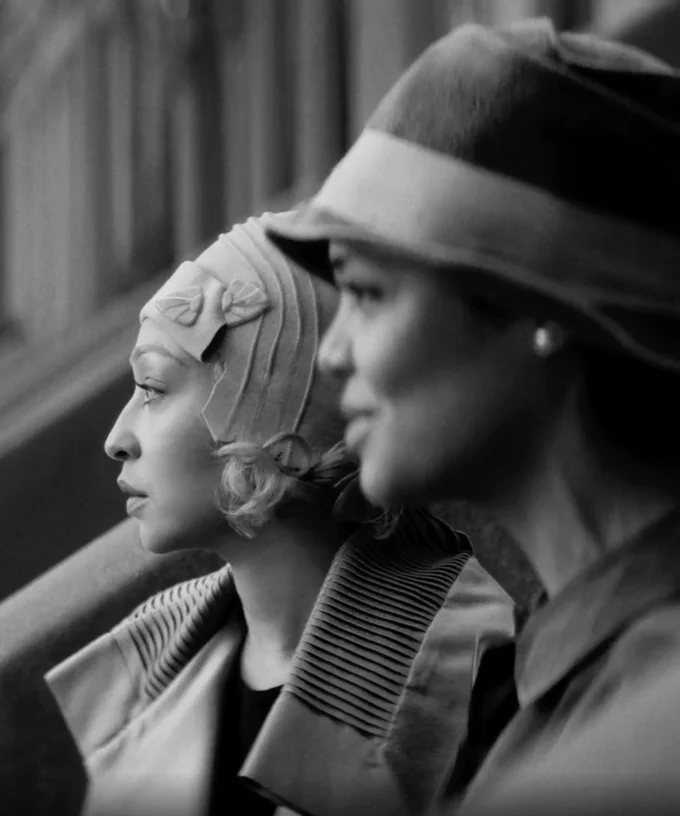
    Photo: Courtesy of Netflix.

    “Race is a delusion,” my friend sighed. We had been discussing passing, the act of someone from one race being accepted or perceived as a member of another, usually a marginalized race to white. After numerous anecdotes about the ridiculous race science-y tactics — gauging the slope of a nose is a popular one — that people employed to categorize others, this was our conclusion.

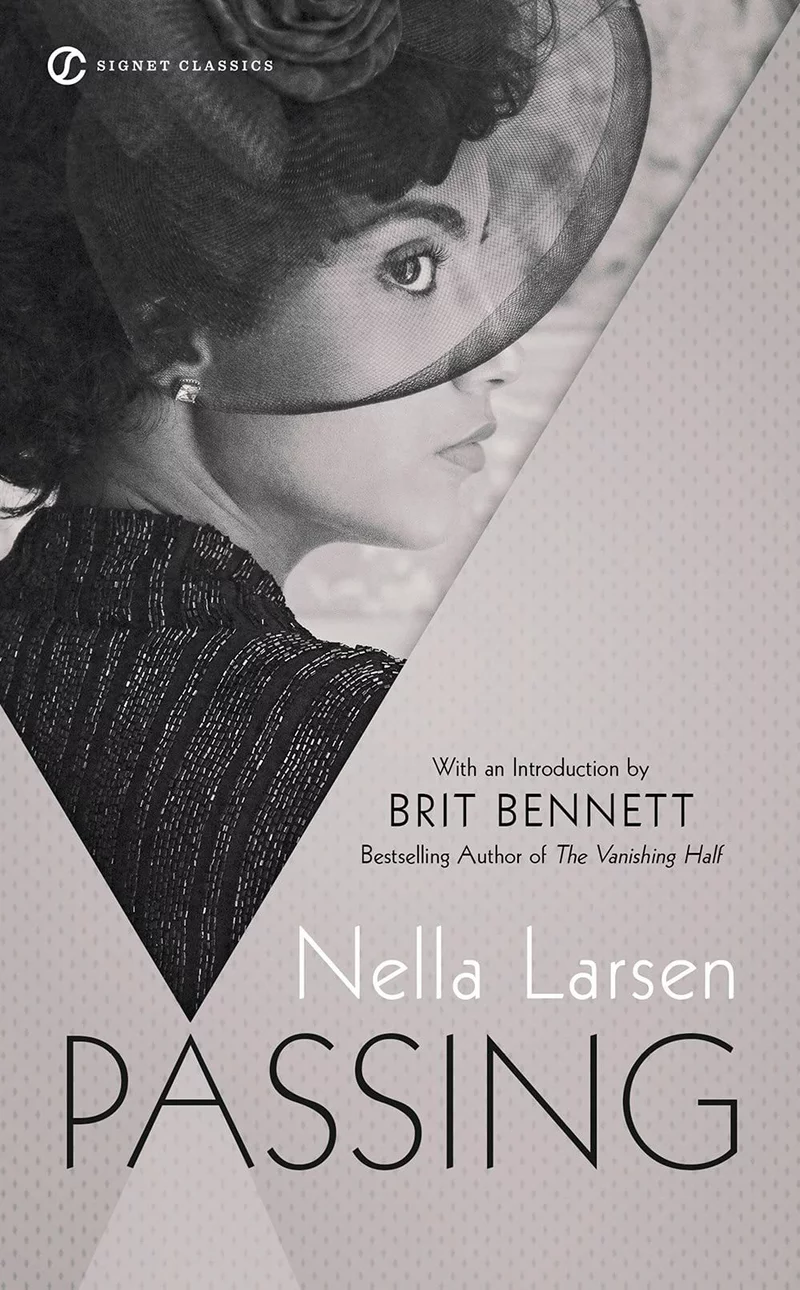
    A week later, our Twitter timelines were scattered with comments on a tantalizing trailer for Passing, a forthcoming Netflix movie based on Nella Larsen’s 1929 novella of the same name. The film, which will be released on November 10, stars Ruth Negga as Clare and Tessa Thompson as Irene. According to Larson’s original story, both Clare and Irene are supposed to be white-passing.

    Still, no matter how good their acting is, Negga and Thompson are not Clare and Irene. They’re not “dark-white” or “olive-skinned” characters on a page onto which we can project our own individual images. They’re flesh and bone people that the public solidly recognizes as Black women. There’s no real chance of delusion because we already feel in the know. Because of that, Twitter debated whether these two women could actually be white-passing. For many, the idea was ridiculous. They pointed out the features of Negga and Thompson’s flesh and bone — their skin, the shape of their noses, the curl of their baby hairs — to say it was impossible that these two women could have passed for white in the 1920s…

    Read the entire article here.

  • Personal Identity Equality and Racial Misrecognition: Review Essay of Multiracials and Civil Rights: Mixed-Race Stories of Discrimination

    Journal of Civil Rights and Economic Development
    Volume 34, Issue 1 (Spring 2021)
    pages 13-37

    Taunya Lovell Banks, Jacob A. France Professor Emeritus of Equality Jurisprudence
    Francis King Carey School of Law
    University of Maryland

    Tanya K. Hernández in her book, Multiracials and Civil Rights, responds to arguments by multiracial legal identity scholars. According to Professor Hernández, these legal scholars who argue that anti-discrimination law fails to protect their right to racial personal identity equality. Specifically, the gravamen of their harm is the misrecognition or non-recognition by law and society of a multiracial person’s chosen identity. Professor Hernández’s book provides an opportunity to consider the extent and degree to which the multiracial identity movement undercuts, not only the right of multiracial individuals to seek legal remedies for race discrimination in various aspects of their lives, but more importantly, the larger project, namely the dismantling of an American hierarchy grounded in an ideology of white dominance. This review essay explores the problems with the multiracial legal identity scholars’ arguments and Hernández’s suggestions for remediation.

    Read the entire essay here.

  • Genetic Race? DNA Ancestry Tests, Racial Identity, and the Law

    Columbia Law Review
    Volume 120, Number 7 (December 2020)
    pages 1929-2014

    Trina Jones, Jerome M. Culp Professor of Law
    Duke University School of Law

    Jessica L. Roberts, Leonard H. Childs Professor of Law and Director of the Health Law & Policy Institute, University of Houston Law Center; Professor of Medicine, University of Houston College of Medicine

    Can genetic tests determine race? Americans are fascinated with DNA ancestry testing services like 23andMe and AncestryDNA. Indeed, in recent years, some people have changed their racial identity based upon DNA ancestry tests and have sought to use test results in lawsuits and for other strategic purposes. Courts may be similarly tempted to use genetic ancestry in determining race. In this Essay, we examine the ways in which DNA ancestry tests may affect contemporary understandings of racial identity. We argue that these tests are poor proxies for race because they fail to reflect the social, cultural, relational, and experiential norms that shape identity. We consider three separate legal contexts in which these issues arise: (1) employment discrimination, (2) race-conscious initiatives, and (3) immigration. Based on this analysis, we strongly caution against defining race in predominantly genetic terms.

    Read the entire essay here.

  • ‘Passing,’ Ruth Negga refuses to be pinned down

    The Los Angeles Times
    2021-11-11

    Sonaiya Kelley, Staff Writer

    Actress Ruth Negga stars in “Passing,” now streaming on Netflix. (Jason Armond / Los Angeles Times)

    Ruth Negga has given the subject of identity a lot of thought.

    And not just because she stars as Clare Kendry, a fair-skinned Black woman who moves through life as a white woman, in “Passing,” Rebecca Hall’s adaptation of Nella Larsen’s 1929 novel. No, Negga’s musings on identity stem back to her childhood in Ireland and England, where she was first introduced to the concept of being othered.

    “To be honest, I’ve never fit in anywhere,” she said over Zoom in October. “I think being Black in Ireland when there wasn’t that many Black people and being Black and Irish in London at an all-white school in the early ’90s wasn’t great for me either.”

    At the same time, being hard to categorize has not always been a bad thing, she says. “I think sometimes there is a pleasure I get in being different. I felt safe being the other in many ways because that’s where I could be my whole, true self.”

    The Ethiopian-Irish actor frequently upends notions of social constructs such as race and identity in her work. In “Passing,” which is set in the 1920s, Clare enjoys the privileges afforded only to white women by day while sneaking off to Harlem to commune with Black folks by night (Tessa Thompson co-stars as Irene, a woman who only flirts with the possibility of passing). And in 2016’s “Loving,” Negga stars as Mildred Jeter, a woman in an interracial marriage who challenges the Supreme Court to end the anti-miscegenation laws that condemn her marriage as unlawful…

    Read the entire interview here.

  • Film Screening with Director in Attendance: “Becoming Black”(2019)

    Black German Heritage & Research Association
    Online Event
    Wednesday, 2021-11-17, 17:30-19:30Z (12:30-14:30 EST)

    As the next segment of our ongoing All Black Lives Matter event series, and in cooperation with the Waterloo Centre for German Studies, The University of Toronto, and Africana Studies at Rutgers University-Camden, the Black German Heritage and Research Association (BGHRA) is pleased to invite you to a film screening of Ines Johnson-Spain’s autobiographical documentary “Becoming Black“(2019).

    SYNOPSIS: Becoming Black (dir. Ines Johnson-Spain, 2019, 91 min.):

    In the 1960s, the East German Sigrid falls in love with Lucien from Togo, one of several African students studying at a trade school on the outskirts of East Berlin. She becomes pregnant, but is already married to Armin. Sigrid and Armin raise their daughter as their own, withholding from her knowledge of her African paternal heritage. That child grows up to become the filmmaker Ines Johnson-Spain. In filmed encounters with her aging stepfather Armin and others from her youth, Johnson-Spain tracks the strategies of denial developed by her parents and the surrounding community. Her intimate but also critical exploration comprising both painful and confusing childhood memories and matter-of-fact accounts testifies to a culture of repression. When blended with movingly warm encounters with her Togolese family, Becoming Black becomes a thought-provoking reflection on identity, social norms and family ties.

    The link to view the film will be posted on Eventbrite for registrants to stream from November 15-18, 2021.

    For more information and to register, click here.

  • From Joseph Boyden To Michelle Latimer – Why Does This Keep Happening?

    Canadaland
    2021-02-15
    Our gatekeepers keep elevating Indigenous artists with tenuous connections to Indigeneity.

    Through most of 2020, Michelle Latimer was the hottest Indigenous filmmaker in Canada. In September, she had two works at TIFF: the feature documentary Inconvenient Indian, which took the top two prizes for which it was eligible at the festival, and the first instalments of Trickster, a prestige CBC drama about growing up on reserve whilst contending with monsters both figurative and literal.

    “Latimer’s young characters are multifaceted, her interplay between score and imagery sets an energetic pace, and, most importantly, her respect for the trickster in Indigenous storytelling is evident,” TIFF’s Geoff Macnaughton wrote in his programme note for Trickster. “If the archetype can truly impact younger generations, that respect is paramount — and Latimer’s version exemplifies why it matters who gets to tell the story.”

    When she appeared on the cover of NOW‘s annual TIFF issue, the magazine proclaimed that she “reclaims Indigenous storytelling.”

    But three months later, the CBC published an investigation that brought forward serious questions about Latimer’s evolving claims of Indigenous identity and heritage — concerns about which had been raised privately since at least the summer.

    In short order, Inconvenient Indian was pulled from the 2021 Sundance Film Festival and its future release thrown into doubt. The CBC chose to not move ahead with a second season of Trickster, following conversations with the cast, crew, and author of the source material.

    And as first reported by Variety, Latimer hired crisis PR firm Navigator to manage the fallout, serving the CBC with a notice of libel.

    There’s a lot to unpack there, and today’s episode of CANADALAND attempts to do so, through interviews with comedian and Thunder Bay host Ryan McMahon, filmmaker Alethea Arnaquq-Baril, and Inuk seal hunter Steven Lonsdale, the latter two of whom were featured in Inconvenient Indian.

    For host Jesse Brown, one of the big questions is: Why does this keep happening? Between Joseph Boyden, once Canada’s hottest Indigenous novelist, and now Michelle Latimer, why do Canada’s white cultural gatekeepers keep elevating Indigenous artists whose actual connections to Indigeneity are tenuous? Brown implicates himself in this, as he and McMahon had recently met with Latimer about helming a potential dramatic television adaption of Thunder Bay.

    Listen to the episode (00:59:49) here.

  • ‘Passing’ — the original 1929 novel — is disturbingly brilliant

    Book Reviews
    National Public Radio
    2021-11-10

    Carole V. Bell

    The one thing most people know about Nella Larsen’s Passing is that it explores a peculiar kind of deception — being born into one marginalized racial category and slipping into another, for privilege, security, or power. But the significance of Passing isn’t found in the surface facts but in the brilliance of its execution: the beauty of the writing, the close character study, and the intense psychological suspense.

    Like a decades-early precursor to a Patricia Highsmith novel, a sense of sensual glamour, frustration and foreboding pervades Larsen’s famed novella. In 1927 Chicago, two light-skinned Black women, childhood friends whose lives took different paths, meet again in a theoretically white space, and a strange friendship is renewed despite the danger that the connection might bring. For Irene Redfield, a proper Black doctor’s wife and a doyenne of Harlem society, passing is a petty indulgence, something she dabbles in on occasion, for “the sake of convenience.” Her racial dexterity gains her “restaurants, theater tickets, and things like that.” But to beautiful, orphaned Clare Kendry, passing is a means of survival. Clare had a home with her white relatives who disdained her race; she wanted something more, and she grabbed it, making a permanent break…

    Read the entire review here.