• Uncloaking a Lost Cause: Decolonizing ancestry estimation in the United States

    American Journal of Biological Anthropology
    Volume 175, Issue 2, June 2021 (Special Issue: Race reconciled II: Interpreting and communicating biological variation and race in 2021)
    pages 422-436
    DOI: 10.1002/ajpa.24212

    Elizabeth A. DiGangi, Associate Professor of Anthropology
    Binghamton University, State University of New York, Binghamton, New York

    Jonathan D. Bethard, Associate Professor of Anthropology
    University of South Florida, Tampa, Florida

    Since the professionalization of US-based forensic anthropology in the 1970s, ancestry estimation has been included as a standard part of the biological profile, because practitioners have assumed it necessary to achieve identifications in medicolegal contexts. Simultaneously, forensic anthropologists have not fully considered the racist context of the criminal justice system in the United States related to the treatment of Black, Indigenous, and People of Color; nor have we considered that ancestry estimation might actually hinder identification efforts because of entrenched racial biases. Despite ongoing criticisms from mainstream biological anthropology that ancestry estimation perpetuates race science, forensic anthropologists have continued the practice. Recent years have seen the prolific development of retooled typological approaches with 21st century statistical prowess to include methods for estimating ancestry from cranial morphoscopic traits, despite no evidence that these traits reflect microevolutionary processes or are suitable genetic proxies for population structure; and such approaches have failed to critically evaluate the societal consequences for perpetuating the biological race concept. Around the country, these methods are enculturated in every aspect of the discipline ranging from university classrooms, to the board-certification examination marking the culmination of training, to standard operating procedures adopted by forensic anthropology laboratories. Here, we use critical race theory to interrogate the approaches utilized to estimate ancestry to include a critique of the continued use of morphoscopic traits, and we assert that the practice of ancestry estimation contributes to white supremacy. Based on the lack of scientific support that these traits reflect evolutionary history, and the inability to disentangle skeletal-based ancestry estimates from supporting the biological validity of race, we urge all forensic anthropologists to abolish the practice of ancestry estimation.


    Read the entire article in PDF or HTML format.

  • Rebecca Hall’s Passing Says The Most In The Silences

    Elle
    2021-11-12

    Christine Jean-Baptiste
    Montréal, Quebec

    Passing opens on a busy street in 1920s New York. A mysterious woman (Tessa Thompson) is roaming through Manhattan. In this part of town, she anxiously hides behind a wide-brimmed hat covering half her face. It’s every bit intentional. When she later settles down in the grand tea room at The Drayton Hotel, she stays camouflaged among a sea of lily-white couples. As she people-watches, her eyes lock on an almost unnoticeable old friend, Clare Kendry (Ruth Negga), who blends in perfectly with the crowd.

    In her directorial debut, Rebecca Hall takes on an ambitious adaptation of Passing, a 1929 novel written by Harlem Renaissance author Nella Larsen about two Black women who live parallel truths: one, Clare, is passing as white, and the other, Thompson’s Irene, envies the privileges that come with the act. When it first premiered at the 2021 Sundance Film Festival, Passing was touted as a “psychological thriller about obsession, repression, and the lies people tell themselves and others to protect their carefully constructed realities.” But the film is less potent than its subject matter. Instead, race identity in America is a soft whisper that is meant to haunt instead of educate.

    Though both of these light-skinned Black women have shared a similar upbringing, Irene and Clare could not have grown further apart. Irene lives in Harlem with her two children and charming husband (André Holland), who is Black. Clare has dyed her hair blonde and lives partially in Europe with her daughter and racist husband (Alexander Skarsgård), who is white. After catching up over champagne in Clare’s suite, the dynamic between the two women tightens, emphasized by the enclosing camera shots. While Clare seems delighted to be reunited with an old friend, Irene appears hesitant and reserved. It doesn’t make Irene any more comfortable when Clare says dating a rich white man is “well worth the price,” implying that she’s comfortable passing as a white woman and benefiting from it. Or when Clare’s husband walks in, expressing his gratitude for Clare’s “whiteness.” Irene soon realizes that her childhood friend was now someone with a secret, because the man who hates Black people so much did not realize his wife was one…

    Read the article here.

  • “What Is The Emotional Legacy Of A Life Lived In Hiding?” Rebecca Hall Honours Her Family’s History In Her New Film Passing

    Vogue UK
    2021-10-29

    Rebecca Hall


    Molly Cranna

    For her directorial debut, the British actor brings to life the novel that helped unlock the meaning of her family’s heritage.

    The elucidation of a family’s history, like the history of a nation, is never straightforward or simple. The truth is stated baldly and then denied, hedged or partially retracted. The same stories somehow become less and less clear with each repetition. Clarity is elusive, and perhaps its pursuit is even unkind – why probe something so delicate as the past? And when it comes to questions of race, what answers could ever be satisfying?

    My mother, Maria Ewing, was born in Detroit in 1950. Her father worked as an engineer at McLouth Steel in the city, and was also an amateur painter and musician. It was in part his love of music that propelled her to leave home at 18 and, in an improbably rapid fashion, transform herself into an international opera star. My father, Peter Hall, was born in Suffolk, the child of the local stationmaster. He went on to found the Royal Shakespeare Company and forge his way as one of the most significant British theatre directors of the late 20th century. Both products of working-class backgrounds, my parents each became part of a global cultural elite, and both of them thoroughly reinvented themselves in order to do it.

    Growing up with my mother – now the former Lady Hall – in the English countryside, there was always some mystery around her background. Within the opera community, she was spoken about as “exotic”. When I looked at my mother, I always, my whole life, thought she looked Black. But there was no factual basis for that, and it was a tricky subject. When I asked questions such as, “Your father, maybe he was African American? Was he Native American? Do you know anything?” she just couldn’t answer with any degree of certainty. Not wouldn’t – she couldn’t. She simply didn’t have any hard information. She knew that things were hidden, that she didn’t know any of his family members, that she just didn’t understand certain things. To an extent, I think she had accepted a degree of vagueness about her own identity. Maybe, for her, that vagueness, that mystery, was simply part of her lineage, something that she had no choice but to accept. And as someone who lived in circumstances that were quite distant from those she grew up in, maybe that vagueness was even useful, an infinitely pliable substance out of which to build a bridge between her old life and her new one…

    Read the entire article here.

  • Race Is Real, But It’s Not Genetic

    Sapiens
    2020-03-13

    Alan Goodman, Professor of Biological Anthropology
    Hampshire College, Amherst, Massachusetts

    For over 300 years, socially defined notions of “race” have shaped human lives around the globe—but the category has no biological foundation.

    A friend of mine with Central American, Southern European, and West African ancestry is lactose intolerant. Drinking milk products upsets her stomach, and so she avoids them. About a decade ago, because of her low dairy intake, she feared that she might not be getting enough calcium, so she asked her doctor for a bone density test. He responded that she didn’t need one because “blacks do not get osteoporosis.”

    My friend is not alone. The view that black people don’t need a bone density test is a longstanding and common myth. A 2006 study in North Carolina found that out of 531 African American and Euro-American women screened for bone mineral density, only 15 percent were African American women—despite the fact that African American women made up almost half of that clinical population. A health fair in Albany, New York, in 2000, turned into a ruckus when black women were refused free osteoporosis screening. The situation hasn’t changed much in more recent years.

    Meanwhile, FRAX, a widely used calculator that estimates one’s risk of osteoporotic fractures, is based on bone density combined with age, sex, and, yes, “race.” Race, even though it is never defined or demarcated, is baked into the fracture risk algorithms.

    Let’s break down the problem…

    Read the entire article here.

  • Film Screening with Director Ines Johnson-Spain in Attendance: “Becoming Black”

    Black Germans
    2021-11-17

    Sponsored by Waterloo Centre for German, German at University of Toronto, and Africana Studies at Rutgers University-Camden
    November 17, 2021

    SYNOPSIS: Becoming Black (dir. Ines Johnson-Spain, 2019, 91 min.):

    In the 1960s, the East German Sigrid falls in love with Lucien from Togo, one of several African students studying at a trade school on the outskirts of East Berlin. She becomes pregnant, but is already married to Armin. Sigrid and Armin raise their daughter as their own, withholding from her knowledge of her African paternal heritage. That child grows up to become the filmmaker Ines Johnson-Spain. In filmed encounters with her aging stepfather Armin and others from her youth, Johnson-Spain tracks the strategies of denial developed by her parents and the surrounding community. Her intimate but also critical exploration comprising both painful and confusing childhood memories and matter-of-fact accounts testifies to a culture of repression. When blended with movingly warm encounters with her Togolese family, Becoming Black becomes a thought-provoking reflection on identity, social norms and family ties.

  • The Balance Tips

    Interlude Press
    2021-10-05
    280 pages
    6″x9″
    ISBN (Print): 978-1-951954-01-7
    ISBN (EPUB): 978-1-951954-02-4

    Joy Huang-Iris

    Fay Wu Goodson is a 25-year-old queer, multiracial woman who documents the identity journeys of other New Yorkers. She finds her videography work meaningful, but more importantly, it distracts her from investigating the challenges of her own life and keeps relationships at a distance. When the family’s Taiwanese patriarch dies, Fay’s Asian grandmother moves to America; and Fay, her mother, and her aunt learn unsettling truths about their family and each other. They must decide to finally confront themselves, or let their pasts destroy everything each woman has dreamed of and worked for.

    An unconventional story of an Asian-American matriarchy, The Balance Tips is a literary exploration of Taiwanese-American female roles in family, sexual identity, racism, and the internal struggles fostered by Confucian patriarchy that would appeal to fans of Celeste Ng’s Everything I Never Told You.

  • Blurring the Lines: James Parker Barnett, Racial Passing, and Invisible Early Black Students at Columbia University

    Columbia University and Slavery
    Columbia University, New York, New York
    2018

    Ciara Keane

    Discussions of racial passing have never been simple, as racial passing involves the traversing of social systems and the manipulation of power structures in a way that is often unsettling. Racial passing, according to Randall Kennedy, is a “deception that enables a person to adopt certain roles or identities from which he would be barred by prevailing social standards in the absence of his misleading conduct”.1 The most typical form of passing that has historically occurred in the United States is that of a black person passing as a white person; in other words, a person who has black ancestry that would societally deem him to be black moving throughout society identifying and performing as a white person. It is important to distinguish between a passer and a person who is not aware of their racial ancestry; while a passer is actively cognizant of their background and intentionally living as another race, many individuals are simply unaware of their race and fully believe themselves to be of the race they are living as, even though the facts of their racial ancestry would classify them as a different race than the one they identify as.2 The reasons for racial passing vary, but individuals usually decide to pass in order to reap the benefits that come with being of the race they are passing as. For example, a person may pass in order to access better job prospects, receive a higher level of education, or to occupy any other space that was typically off limits for their race.3

    In a society like that of the United States which exists as a social hierarchy stratified by race and class, racial passers have been considered a significant threat to the structures that uphold white supremacy. For white people in America, “the core of ‘the American national character’ was a denial of legitimacy and privilege based exclusively on descent”.4 In other words, American society was and is inherently structured based on the hoarding of privilege by the white race and the denial of this privilege to minority groups, which above all applies to African-Americans. Therefore, minorities who pass as white pose a grave threat to the maintenance of this structure, as the act of passing blurs the barrier between the privileged elite and the oppressed. Although the infamous one-drop rule was not formally adopted until the 1920s5, the American South’s desire to hold onto the racial caste created by slavery led the entire nation to spend the years of 1850 to 1915 “turning from a society in which some blackness in a person might be overlooked to one in which no single iota of color was excused”.6 States like North Carolina and Virginia had laws prior to the solidification of the one-drop rule within the 18th and 19th century that defined as white those with less than one-fourth, one-eighth, or one-sixteenth African “blood”, but these rules were always overridden by rules of slavery which could deem even a person with one-sixty-fourth black “blood” to be black if their mother was a slave.7 By time the one-drop rule was written into law, which classified a person as black if they had any hint of African “blood” no matter how small and no matter their phenotypical appearance, any advantage that Mulattos may have enjoyed post-slavery that elevated them slightly above Black people without any white “blood” had long disappeared, and Mulattoes had been solidified as indistinguishable from any other member of the black race.8

    Read the entire article here.

  • Pioneers on the playing field: Bruno’s first Black athletes and coaches

    The Brown Daily Herald
    Providence, Rhode Island
    2021-02-18

    Peter Swope, Senior Staff Writer

    Media by Courtesy Photos | The Brown Daily Herald

    Looking back at Jackie Court, other Black trailblazers in Brown Athletics program

    While today’s Brown Athletics program displays diversity among its coaches and athletes, this has not always been the case. Throughout the history of Brown Athletics, trailblazing Black athletes and coaches have battled racism and adversity to earn athletic achievements while helping to build a more equitable program. This week The Herald will feature baseball player William White, class of 1883, football player Fritz Pollard, class of 1919 and gymnastics coach Jackie Court, who each contributed to the development of Brown Athletics on and off the field.

    “William Edward White was the first African-American to play in the professional baseball ranks,” according to Brown Athletics archivist Peter Mackie ’59. “He played one game for the Providence Grays … (few people know) about him, but if you look at a picture of that 1879 team, there he is.”

    White was born in Milner, Georgia; his mother was a formerly enslaved African-American woman and his father was a wealthy white man. White and his siblings attended Moses Brown School before being accepted to Brown through a connection via a local Baptist church. As a dually-enrolled student, White was a first baseman for the Brown baseball team while still a senior at Moses Brown…

    Read the entire article here.

  • The Shields Family: A Dichotomy of Race in US Society through Two Family Lines

    Methods of Historical Research: Spring 2021
    Texas A&M University, San Antonio
    April 2021
    18 pages

    Joseph C. Platt

    We spent the entirety of our Spring 2021 semester on Zoom, as our communities continued to struggle against the COVID-19 pandemic. With the help of TAMUSA librarian Deirdre McDonald, we added the students’ research papers to the Digital Commons collection on Black San Antonio history we created the previous year.

    The history of the Shields families of North and South Carolina, beginning with William Bryant Shields Sr. and Moses Shields respectively, offer dichotomous responses to American racial hierarchies over the decades. Generations of race mixing within the Shields family has its roots in the sons of Irish immigrants pursuing relationships with enslaved women. The one-sided nature of the power dynamic in these relationships takes on different dimensions in the lives of the mixed-race children of William Bryant Shields Sr. and the lives of Moses’ son, Henry Wells Shields, Henry’s slave Melvinia Shields, and her children. Both family lines take efforts to repress their black ancestry, one primarily through dilution through marriage and the other through a refusal of formal acknowledgement, which ironically enabled some of their children to flourish in African American society. The permeability of race can be gleaned through these two Shields family lines both in how they went about repressing their ties to enslaved black women and how these culminated in the present-day Shields descendants, Roseanne Cash and Michelle Obama.

    Read the entire article here.

  • How Nella Larsen’s Passing deconstructed the question of race

    The New Statesman
    2021-11-12

    Gary Younge, Professor of Sociology
    University of Manchester

    Photo by Pictorial Press Ltd / Alamy Stock Photo

    Larsen’s 1929 novel, now a Netflix film, illustrates the degree to which race is a construct – without lecturing the reader.

    Every year approximately 12,000 white-skinned Negroes disappear,” Walter White, the former head of the National Association for the Advancement of Coloured People, wrote in a 1947 article. “People whose absence cannot be explained by death or emigration… Men and women who have decided that they will be happier and more successful if they flee from the proscription and humiliation which the American colour line imposes on them.”

    White had first-hand experience. The black president of the NAACP had blonde hair and blue eyes. He would “disappear” himself from time to time, so that he could safely investigate lynching in the American South. The piece, published in TIME magazine, was called “Why I Choose to Remain a Negro”.

    The term “passing” relates to those who disappear – pretending to be something, and therefore someone, that they are not, usually in search of a better, safer or easier life. The practice is not limited to race. It could be a Jew posing as a gentile; a Catholic as a Protestant. But the challenges remain the same and lend themselves easily to narrative tension – the need to cut yourself off from your past, the fear of being discovered, the construction of a life that is a lie.

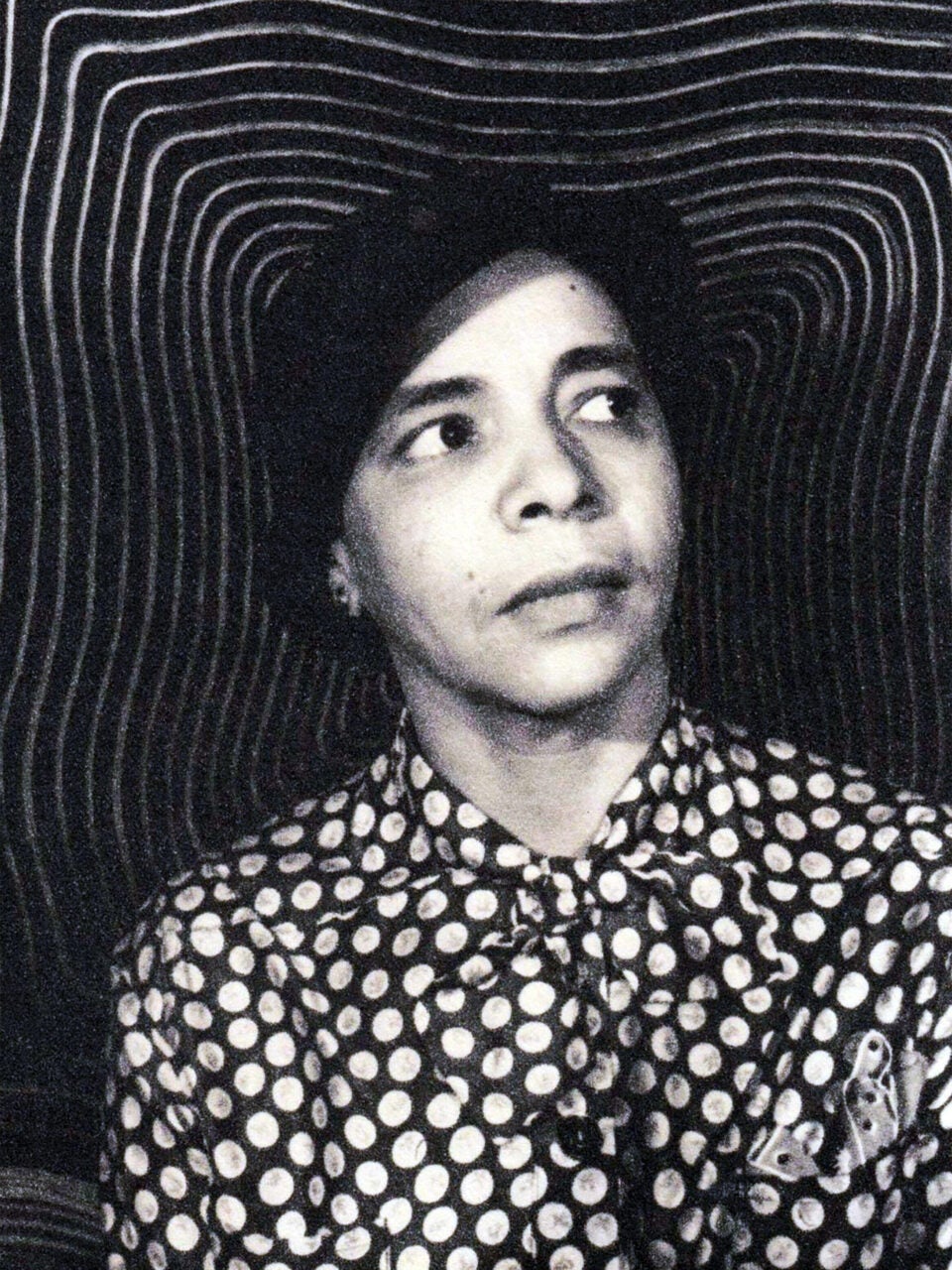
    Nella Larsen’s laconic novella, Passing, draws from the human toll and intrigue that emerges from the transgression, subterfuge and outright deceit involved in an African American woman passing as white in 1920s America. Published in 1929, it has been adapted into a film by the British actor Rebecca Hall, now streaming on Netflix. The novella has long been one of my favourites among the works from the Harlem Renaissance, the literary movement that emerged among black artists and writers in 20th-century New York and saw the likes of Zora Neale Hurston, Langston Hughes and Countee Cullen and Aaron Douglas become prominent. Sparsely written, character-driven and emotionally complex, it illustrates the degree to which black is a political colour, race is a construct, and racism is a system in which colour is a component, not a determinant – without actually lecturing the reader on any of that…

    Read the entire article here.