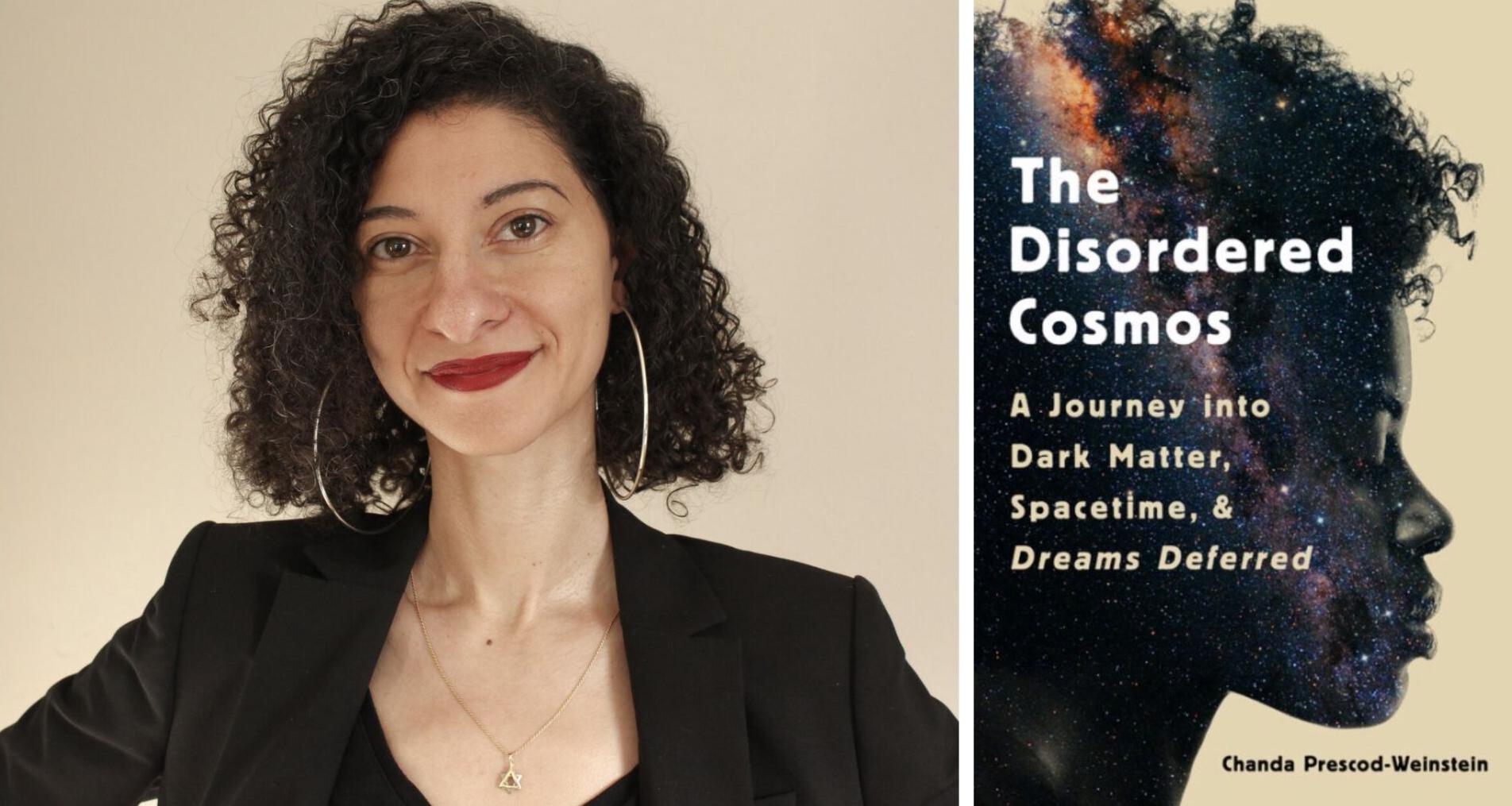
Chanda Prescod-Weinstein’s book “The Disordered Cosmos” was inspired by a collection of essays she wrote addressing how race, gender and bias shape how science is done specifically in physics and astronomy. She said it was based on writing she did online and for some print publications. However, she said the book transformed into what she always dreamed of doing as a teenager, which was to write a book about particle physics and astronomy for people from her community.
Black authors’ works about astronomy, domestic violence featured in Jewish book fest
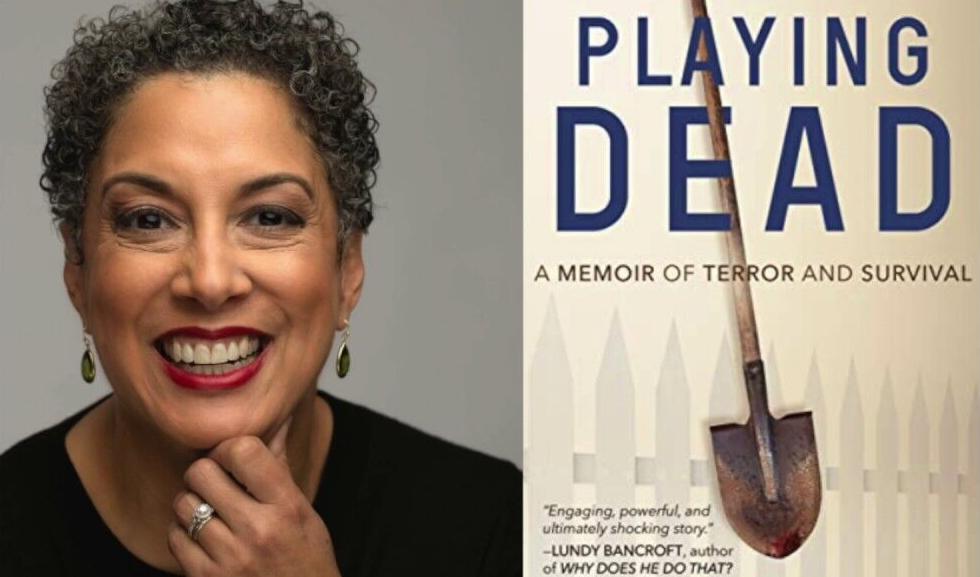
Ross’ book “Playing Dead” narrates how the marriage to her high school sweetheart became a horrific nightmare that resulted in domestic violence, abuse, endless stalking, and a traumatizing near-death experience.
The relationship became so toxic she moved her and their three kids from the house. She thought that was the right move to make for her and her children’s safety. Until one morning her husband Chris kidnapped her in front of their kids. He took her to the woods, raped her, beat her mercilessly in the head with a shovel and left her body in the woods assuming she was dead. She wasn’t, she played dead to get out alive…
Monique Faison Ross’ book “Playing Dead” narrates how the marriage to her high school sweetheart became a horrific nightmare that resulted in domestic violence, abuse, endless stalking, and a traumatizing near-death experience.
…Prescod-Weinstein’s book “The Disordered Cosmos” was inspired by a collection of essays she wrote addressing how race, gender and bias shape how science is done specifically in physics and astronomy. She said the book transformed into what she always dreamed of doing as a teenager, which was to write a book about particle physics and astronomy for people of her community.
“My point of view of the book is a holistic look at the doing of particle physics, the doing of astronomy,” she said. “Not just through the lens of what are the things we’re calculating, what are the ideas that we’re working through on a technical level, but how it works as a culture and a social phenomenon.” she said.
One of Prescod-Weinstein’s themes for her book is having the fundamental right to love the night sky. She said it comes from her mother, Margaret Prescod, a Black feminist with experience in organizing, who said people need to know there’s a universe beyond the bad things that are happening. She said her comment came after protests and unrest occurred following the murder of an African American killed by police…
Four years ago, torch-bearing “Unite the Right” demonstrators, including Ku Klux Klan members and neo-Nazis, marched into Charlottesville, shouting, “Jews will not replace us” and “White lives matter.” The next day, they clashed with counter-protesters, leaving one woman dead and a nation stunned.
Two-dozen participants in the rally are now on trial in a civil case, accused of conspiracy to commit racially motivated violence.
Some of the Charlottesville demonstrators were motivated by an ideology known as the “great replacement theory,” which warns that an increase in the non-White population fueled by immigration will destroy White and Western civilization.
That ideology has inspired a lot of recent violence, including the 2019 Christchurch mosque shootings in New Zealand, where the shooter warned of “White genocide” before pleading guilty to 51 murders, 40 attempted murders and engaging in a terrorist act.
But the great replacement theory isn’t new. More than 70 years ago, a U.S. senator published a book warning of the same destruction of White civilization. And as with the Charlottesville defendants, his incitements to racial violence that gave him a spotlight also got him into serious trouble.
Theodore G. Bilbo had twice been governor of Mississippi before he served in the U.S. Senate from 1935 to 1947, when “the growing intolerance among many whites toward public racism and anti-Semitism” led to his fall, according to an account in the Journal of Mississippi History…
University of Michigan Press
1999 (originally published in 1858)
232 pages
3 drawings.
5-1/2 x 8-1/2
Hardcover ISBN: 978-0-472-09694-7
Paperback ISBN: 978-0-472-06694-0
This remarkable book, written by former slave David F. Dorr, published in the mid-nineteenth century and only recently rediscovered, is an uncommon travel narrative. In the 1850s Dorr accompanied Louisiana plantation owner Cornelius Fellowes on a tour of the world’s major cities, with the promise that when they returned to the United States, Dorr would be given his freedom. When that promise was broken, Dorr escaped to Ohio and wrote of his experiences in A Colored Man Round the World.
Malini Johar Schueller has edited and annotated the 1858 text and added a critical introduction that provides a useful context for understanding and appreciating this important but heretofore neglected document. Her edition of A Colored Man Round the World provides a fascinating account of Dorr’s negotiation of the conflicting roles of slave versus man, taking into account all of the racial complexities that existed at the time. As a traveler abroad, Dorr claimed an American selfhood that allowed him mobility in Europe, and he benefited from the privileges accorded American “Orientalists” venturing in the near East. However, any empowerment that Dorr experienced while a tourist vanished upon his return to America.
The book will be welcomed for the rare perspective it provides of the mid-nineteenth century, through the eyes of an African-American slave and for the light it casts on world and U.S. history as well as on questions of racial and national identity.
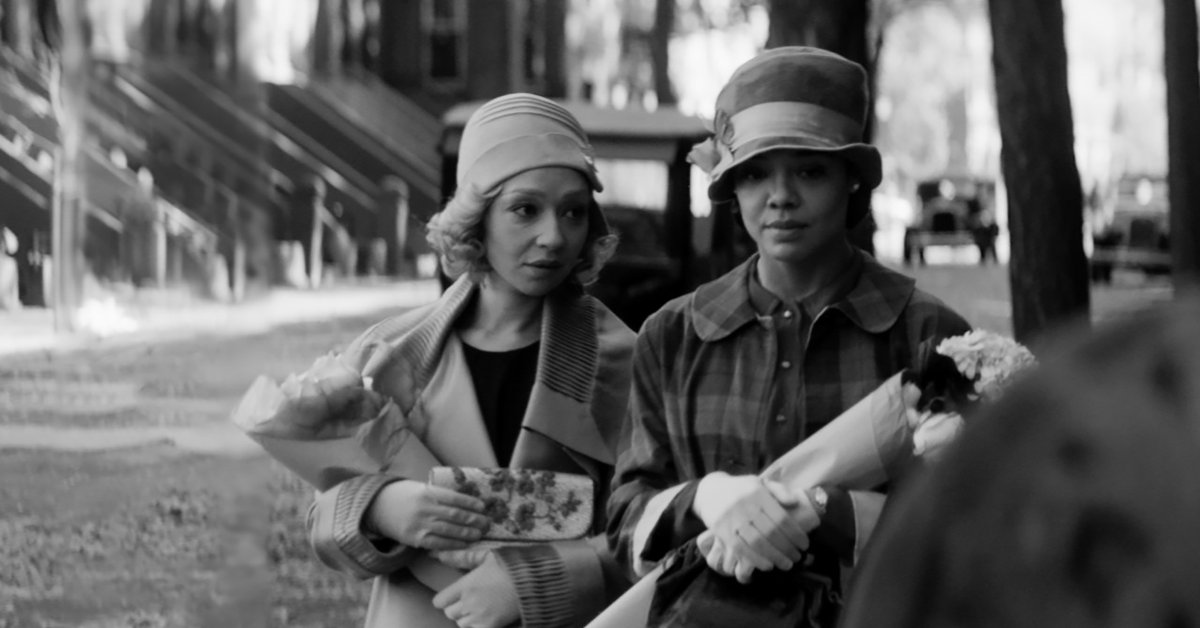
In Passing, the film adaptation of Nella Larsen’s seminal 1929 novel of the same name, two women reckon with who they are and how they identify. Although both are Black, they are light-skinned enough that they can “pass” for white. The film, which premiered at Sundance and hits Netflix this week, takes a nuanced approach to parsing out the complexities of race and its role in our lives—not just the construct of it, but the performance of it. Larsen’s novel centers on two childhood friends whose chance encounter as adults shifts not only how they see themselves, but how they view their places in the world, with dramatic consequences.
This complex friendship is the inspiration for Rebecca Hall’s film adaptation, which is also her directorial debut. Actors Tessa Thompson and Ruth Negga play Irene and Clare, respectively, the two women whose reunion will upheave both their worlds and cause them to reconsider the lives they have chosen and the reasons behind those choices.
Here’s what to know about the Passing movie adaptation and the book it was based on…
Jasmine Mitchell, Associate Professor of American Studies and Media Studies State University of New York, Old Westbury
Can a drop of whiteness or “looking white” save someone from anti-Blackness? Are mixed-race peoples special, and should they be a protected class under the law? Did Loving v. Virginia’s legalization of interracial marriage lead to race becoming insignificant? Tanya Hernández’sMultiracials and Civil Rights: Mixed-Race Stories of Discrimination debunks persistent myths that racial mixture will eradicate racism and heal the racial wounds of the United States. Using cases and other legal sources, Hernández persuasively argues that multiracials are not exempt from racial discrimination. Multiracials and Civil Rights crystalizes the pervasiveness of white supremacy while offering a sociopolitical lens by which to tackle racial injustices.
Hernández’s book hails from legal studies and offers a much needed lens to augment understandings of race, law, and the state. Much of the scholarship on mixed race studies comes from sociology, political science, psychology, history, media studies, and literature. The book accomplishes an important intervention, with an evident dedication to engaged research and scholarship, marking the tangible material realities of multiracials in the legal system. Presenting a valuable archive of legal records, Hernández addresses how multiracials experience discrimination and captures a U.S. landscape of white supremacy and racial discrimination coexisting with ideologies of colorblindness and racial progress. Multiracials and Civil Rights: Mixed-Race Stories of Discrimination converses with literature in several fields and joins a recent plethora of scholarship on mixed-race identities, stories, and experiences.
Like all social constructs, race is real because we have made it so, and it seems immutable because we wish it to be. It’s no less powerful because humans invented it as a means of control. In fact, that may make it even more powerful. In the name of this deeply silly idea, my people have been plundered and enslaved and tortured, raped, incarcerated, shot, and starved. This deeply silly idea is, in fact, the only reason that my people are my people or why I exist in the first place. Race, although it may be a delusion, is one that has entranced the entire world and changed the course of human history forever.
Paula [Patton] knows what it’s like to be misunderstood. Growing up in L.A., the daughter of a white teacher and an African-American defense attorney, it wasn’t easy to fit in. “People judged me because I was light-skinned. [They’d assume] I didn’t want to be part of the black race,” she says. In fact, Paula, who has been referred to as biracial, says it’s a word she doesn’t care for. “I find it offensive. It’s a way for people to separate themselves from African-Americans…a way of saying ‘I’m better than that.’ I’m black because that’s the way the world sees me. People aren’t calling Barack Obama biracial. Most people think there’s a black president.”
Halfway through Nella Larsen’s 1929 novel Passing, the book’s protagonist, Irene Redfield, is feeling uneasy. She has just had a tense argument with her husband. Now, watching him fiddle with his hat, Irene is worrying: “Was she never to be free of it, that fear which crouched, always, deep down within her, stealing away the sense of security, the feeling of permanence, from the life which she had so admirably arranged for them all, and desired so ardently to have remain as it was?”
Larsen’s book is suffused with that sense of unease, the feeling that one wrong move might undo a life entirely, that the structures on which our families, routines, and even identities rest are precarious. And the new Netflix movie based on Larsen’s book, adapted for the screen by Rebecca Hall and starring Tessa Thompson and Ruth Negga, brings Larsen’s prose — unease and all — to vibrant, visual life.
The story transitions seamlessly to the screen in part because the “passing” of the title refers primarily (though not exclusively) to its main characters’ ability, in a segregated society, to “pass” as white. The story centers on Irene (Thompson) and a childhood friend, Clare Kendry (Negga), with whom Irene unexpectedly reconnects one day at a whites-only hotel. Both women are Black, having parents or grandparents who were Black, but both are also light-skinned enough for white people of similar social class to assume otherwise…
Keith Plessy and Phoebe Ferguson, descendants of the principals in the Plessy v. Ferguson court case, in front of a historical marker in New Orleans on June 7, 2011. (Bill Haber/AP)
In the annals of the Supreme Court, the Plessy v. Ferguson case has little competition for the title of Worst Decision in History. Now, 125 years after the shameful decision that codified the Jim Crow-era “separate but equal” fiction, the namesake of that famous case, Homer Plessy, may be pardoned. The Louisiana Board of Pardons unanimously approved a pardon Friday, according to the Associated Press, sending it to Gov. John Bel Edwards (D) for final approval.
Edwards’s press office said the governor was traveling “but looks forward to receiving and reviewing the recommendation of the Board upon his return.”
When Keith Plessy, a descendant of Homer Plessy, heard the news, he felt like his feet “weren’t touching the ground.” He and his friend Phoebe Ferguson, a descendant of the judge in the case, hopped in the car and were driving across New Orleans to the house of another friend — Homer Plessy biographer Keith Weldon Medley — to share the news when they spoke with The Washington Post…


:format(webp)/cdn.vox-cdn.com/uploads/chorus_image/image/70122454/passing7.0.jpeg)
