Mixed Race Studies

Scholarly perspectives on the mixed race experience.

    • About This Site
    • Bibliography
    • Contact Information
    • Date and Time Formats
    • Forthcoming… (Updated 2021-09-01)
    • Likely Asked Questions
    • List of Book Publishers
    • List of Definitions and Terms
    • My Favorite Articles and Papers
    • My Favorite Posts
    • My Recent Activities
    • Praise for Mixed Race Studies
    • Tag Listing
      • Tag Listing (Ordered by Count)
    • US Census Race Categories, 1790-2010
    • 1661: The First ‘Mixed-Race’ Milestone
    • 2010 U.S. Census – Some Thoughts

recent posts

  • The Routledge International Handbook of Interracial and Intercultural Relationships and Mental Health
  • Loving Across Racial and Cultural Boundaries: Interracial and Intercultural Relationships and Mental Health Conference
  • Call for Proposals: 2026 Critical Mixed Race Studies Conference at UCLA
  • Participants Needed for a Paid Research Study: Up to $100
  • You were either Black or white. To claim whiteness as a mixed child was to deny and hide Blackness. Our families understood that the world we were growing into would seek to denigrate this part of us and we would need a community that was made up, always and already, of all shades of Blackness.

about

  • Twitter
  • Facebook
  • Instagram
  • A Long Curving Scar Where the Heart Should Be

    2021-11-03

    A Long Curving Scar Where the Heart Should Be

    Stalking Horse Press
    2017-10-02
    376 pages
    5.5 x 0.88 x 8.5 inches
    Hardback ISBN: 978-0998433974
    Paperback ISBN: 978-0998433981
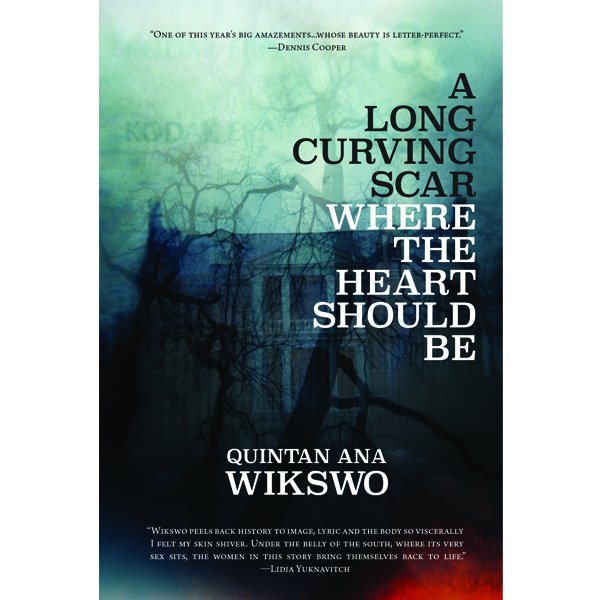
    Quintan Ana Wikswo

    A searing, sensual novel with photographs, A Long Curving Scar Where the Heart Should Be weaves together southern fabulism and gothic fury, pulling at the restless, volatile threads of seditious American iconoclasts Zora Neale Hurston, Patti Smith, Cormac McCarthy, and Toni Morrison. At this devil’s crossroads of the King James Bible and the Egyptian Book of the Dead emerge the ghosts and realities of sex, race, violence, and hauntingly vulnerable emotion. Quintan Ana Wikswo has written an unforgettable and relentless reinvestigation of the American soul.

    A Long Curving Scar Where the Heart Should Be unfolds on the unruly, mixed-race, queer-sexed margins of a conservative 1930s Southern town. In the wake of abandonment by her husband, an impoverished young midwife and her twin daughters create a hospice and sanctuary for the town’s outcasts within a deserted antebellum plantation house. The twins inhabit a fantastical world of ancient resistances, macabre births, glorious deaths, ravenous love affairs, clandestine sorceries, and secret madnesses—a site where the legacies of catastrophic injustice, bigotry, brutality, and grief contend with unquenchable desires for restitution, wholeness, sexual liberty, and lives of freedom outside the chokeholds of racism, misogyny and social constraint. Overshadowed by lingering scandals of miscegenation, the persistence of searing endemic violence, and a troubling secrecy surrounding their father’s disappearance, the women begin to walk into the discomforting limitations of their myths and wounds, and create their own new maps of sexual and personal fulfillment, resilience, and transformation. When the town claims that he is closer than they think, the women must decide whether his reappearance would offer wholeness, or unbearable consequences to their own hardfought, courageous journeys towards existential insurrection.
  • Seaweed Soup (Miyuk Gook 미역국)

    2021-11-03

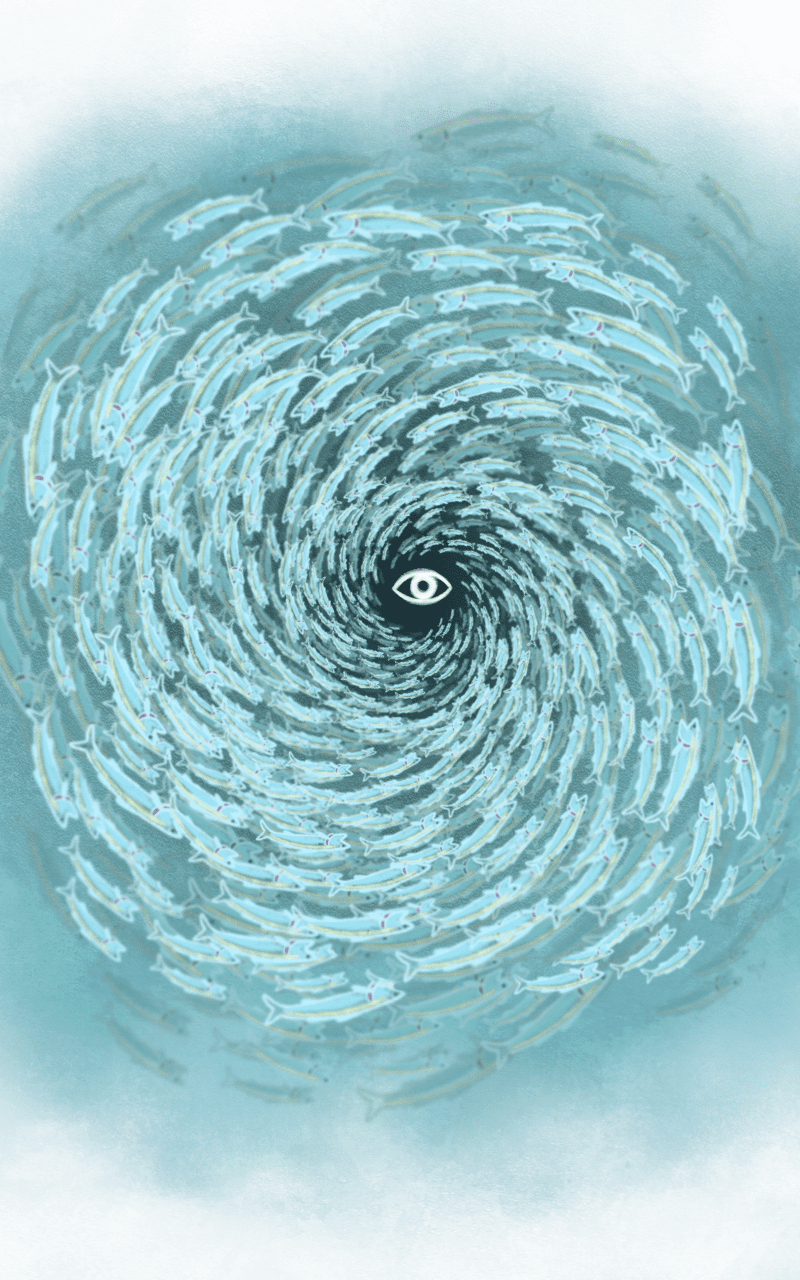
    Seaweed Soup (Miyuk Gook 미역국)

    The Rumpus
    2020-03-10

    Maria T. Alloccoo

    Ingredients:

    • A handful of miyuk (미역) seaweed

    My pregnant grandmother walked through miles of man-made bombs in North Korea to reach the south. Once a wealthy woman, she now wore her remaining possessions. A local South Korean woman allowed my grandmother to enter her empty shed. There, my grandmother gave birth to my mother.

    The woman made my grandmother 미역국. Fed it to her. It is tradition to serve seaweed soup to new mothers. Also, to loved ones on birthdays. Both birth and survival are miracles…

    Read the entire article/recipe here.

  • “She is not Métis. She is the modern-day Grey Owl,” Tait said, referring to the famous British-born conservationist from the early 1900s who fooled the world into believing he was a Native American man.

    2021-11-03

    [Caroline] Tait said genealogical records show that [Carrie] Bourassa’s supposed Indigenous ancestors were of Russian, Polish and Czechoslovakian descent.

    “There was nowhere in that family tree where there was any Indigenous person,” said [Winona] Wheeler.

    Tait was so troubled by what she found that, with the support of Wheeler and others, she compiled the information in a document and submitted formal academic misconduct complaints against Bourassa with the U of S [(University of Saskatchewan)] and the CIHR. In her email to CBC, Bourassa said the U of S complaint was dismissed.

    “She is not Métis. She is the modern-day Grey Owl,” Tait said, referring to the famous British-born conservationist from the early 1900s who fooled the world into believing he was a Native American man.

    Geoff Leo, “Indigenous or pretender?” CBC News, October 27, 2021. https://www.cbc.ca/newsinteractives/features/carrie-bourassa-indigenous.

  • Passing: On crossing the color line

    2021-11-03

    Passing: On crossing the color line

    CBS Sunday Morning
    CBS News
    2021-10-24

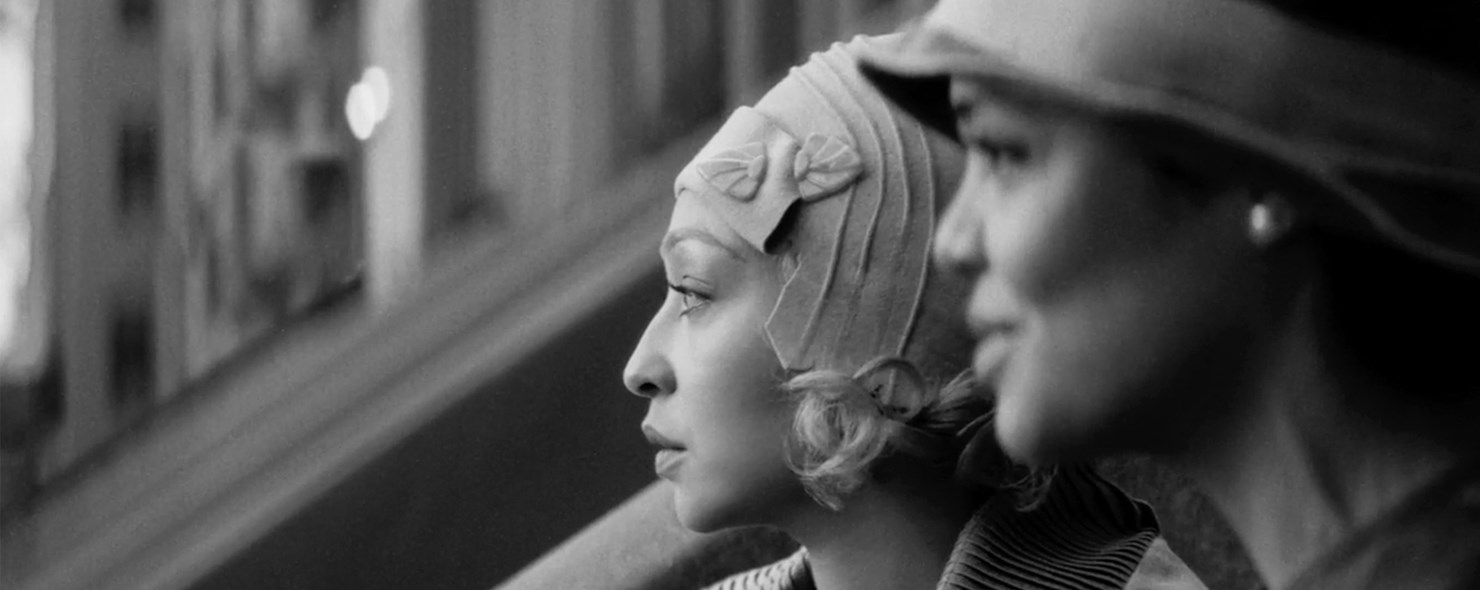
    Passing can be a gray area that some biracial or multiracial Americans face when navigating questions of identity and social acceptance, while defining the story we tell about ourselves. “CBS Saturday Morning” co-host Michelle Miller talks with Rebecca Hall, Tessa Thompson and Ruth Negga, the director and stars of the new film “Passing,” and with writers Lise Funderburg and Allyson Hobbs, about the social history of passing, and its impact upon perception and power.

    It’s been a theme in Hollywood for years, from “Imitation of Life,” to “The Human Stain.” And off-screen, the subject of “passing” – crossing the color line – is just as complex.

    “The world perceives me as White, at least visually,” said Chicago lawyer Martina Hone, who has lived her whole life balancing her Black mother’s identity with her European father’s privilege.

    “CBS Saturday Morning” co-host Michelle Miller asked, “Have you ever passed at any point in your life?”…

    Read the story here.

  • Finding Myself in Nella Larsen

    2021-11-02

    Finding Myself in Nella Larsen

    Paris Theater
    4 West 58th Street
    New York, New York
    2021-10-28

    Rebecca Hall

    Rebecca Hall’s directorial and screenwriting debut Passing is playing at the Paris theater through November 4. The film has been nominated for five Gotham awards, including Breakthrough Director and Best Screenplay for Rebecca Hall.

    The elucidation of a family’s history, like the history of a nation, is never straightforward or simple. History after all is a site of struggle and even a mode of obfuscation-memories are revised, edited, doled out in fragments. The truth is stated baldly and then denied, hedged, or partially retracted. The same stories somehow become less and less clear with each repetition. Clarity is elusive, and perhaps its pursuit is even unkind-why probe something so delicate as the past? And when it comes to questions of race, what answers could ever be satisfying?

    From the moment that this script I’d written in a kind of fever dream started to become something that might turn into an actual film, the first question was always: Why me? Why this story? I have been circling around the answer to that question for nearly 15 years. The shock of recognition that I felt upon reading Nella Larsen’s novella was deeply confusing to me, enough so that I sat down and wrote my adaptation almost immediately after finishing it, as a way of trying to find out why its hooks were in me so deeply. That encounter with Passing not only produced this film, it also set me off on a journey through my family’s collective memory, its history, and the long story of black people in America…

    Read the entire article here.

  • The Fearlessness of Passing

    2021-11-02

    The Fearlessness of Passing

    Dissent
    2021-10-27

    Charles Taylor

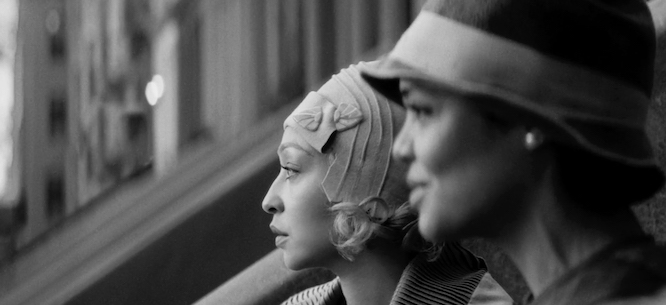
    Ruth Negga’s Clare (left) and Tessa Thompson’s Irene in a still from Passing. (Netflix)

    Rebecca Hall’s adaptation of Nella Larsen’s 1929 novel continues the author’s exploration of the suffocating strictures of the color line.

    Making a movie of Nella Larsen’s 1929 novel Passing, one of the great works of the Harlem Renaissance—and, I’d argue, a great American novel—would be tricky in any era. That the actress Rebecca Hall, making her directing debut, has done a close-to-devastating job of it in this era is a remarkable achievement.

    The novel is the story of two girlhood friends who reencounter each other as young, married women, one passing for white and the other firmly settled into the life of Harlem’s black bourgeoisie. Larsen practically invites the careless reader to fall into well-intentioned sociological clichés—in other words, to believe that this is a novel about the tragedy that befalls those who, driven by racist persecution, cross the color line and betray their own.

    Actually, the novel is about the absurdity of the color line as a concept, about race as “the thing that bound and suffocated.” For Larsen, the idea that you could betray your race was another way of saying that people should stick to their own kind. It’s the passing Clare, a slim, pale-skinned, heedless beauty, who is Larsen’s heroine. Clare, taken in as a maid by her poor white aunts when her alcoholic father dies, doesn’t decide to pass because she’s oppressed but because she’s shunned by the well-heeled black people among whom she grew up. (In one stinging scene, Clare, already passing, approaches an old school friend whom she recognizes while shopping in Marshall Field’s, only to have the woman cut her dead.) Clare is hungry for life and for pleasure, which she takes as it comes to her. The way in which she crosses back and forth between black and white, between the thrill of a Negro Welfare League dance and white upper-middle-class society, makes a hash of the polite segregation—of both race and class—to which the novel’s other protagonist, Irene, pays obeisance…

    Read the entire article here.

  • Colin In Black and White (or For Colored Boys Who Considered Suicide After Cutting Their Braids)

    2021-11-02

    Colin In Black and White (or For Colored Boys Who Considered Suicide After Cutting Their Braids)

    Black Power Media
    2021-11-01

    Jared A. Ball, Ph.D., Professor of Africana and Communication
    Morgan State University, Baltimore

    At 00:36:02, Dr. Ball discusses the new Netflix series “Colin in Black and White” about the early life of Colin Kaepernick.

  • Health scientist Carrie Bourassa on immediate leave after scrutiny of her claim she’s Indigenous

    2021-11-02

    Health scientist Carrie Bourassa on immediate leave after scrutiny of her claim she’s Indigenous

    CBC News
    2021-11-02

    Geoff Leo, Senior Investigative Journalist

    At the 2019 TEDx talk in Saskatoon, Carrie Bourassa claimed publicly that she is Métis and Anishnaabe and has suffered the effects of racism. (YouTube.com)

    University of Saskatchewan, CIHR place Bourassa on leave over lack of evidence

    Carrie Bourassa, a University of Saskatchewan professor and the scientific director of the Indigenous health arm of the Canadian Institutes of Health Research (CIHR), is on leave from both institutions following a weekend of online outrage stemming from CBC’s investigation into her claims to Indigeneity.

    Bourassa, who has headed up an Indigenous research lab at the U of S and the CIHR’s Institute of Indigenous Peoples’ Health, has publicly claimed to be Métis, Anishnaabe and Tlingit.

    CBC found there was no evidence she was Indigenous, despite her claims many times over the past 20 years. When asked, Bourassa hasn’t offered any genealogical evidence to back up her claims, but in a statement she said two years ago she hired a genealogist to help her investigate her ancestry, and that work continues.

    Just last week, after publication of the CBC story, the CIHR issued a statement supporting Bourassa, saying it “values the work of the Institute of Indigenous Peoples’ Health under Dr. Carrie Bourassa’s leadership.” And the U of S also backed her, stating, “The quality of Professor Bourassa’s scholarly work speaks for itself and has greatly benefited the health of communities across Canada.”

    However, on Monday, both institutions announced Bourassa was on immediate leave…

    Read the entire article here.

  • Passing review – Rebecca Hall’s stylish and subtle study of racial identity

    2021-11-02

    Passing review – Rebecca Hall’s stylish and subtle study of racial identity

    The Guardian
    2021-10-28

    Peter Bradshaw, Guardian Film Critic

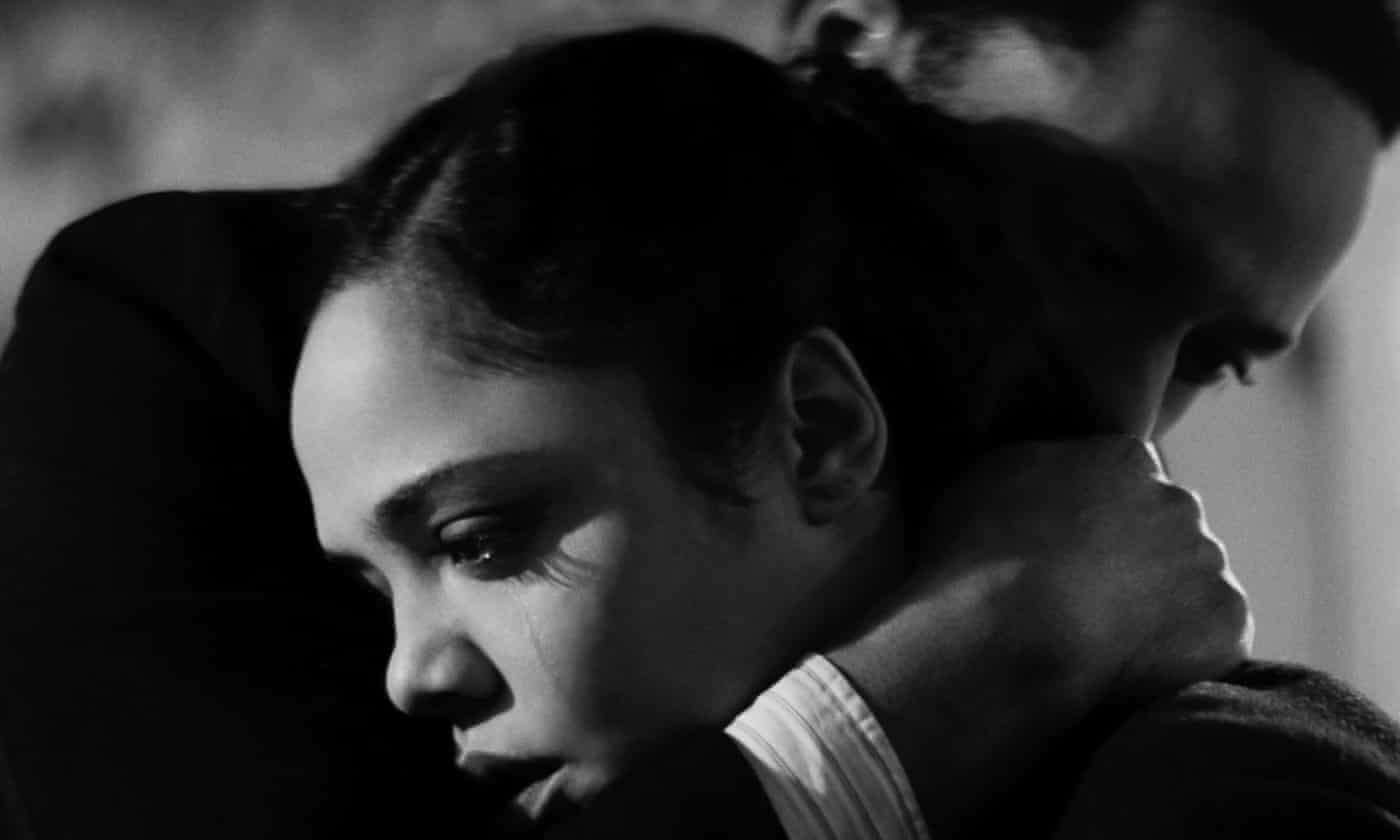
    Hypnotic … Tessa Thompson and André Holland in Passing. Photograph: Netflix

    Hall’s directing debut stars Tessa Thompson and Ruth Negga as friends who are both ‘passing’ for what they are not in an adaptation of Nella Larsen’s 1929 novel

    Rebecca Hall makes her directing debut with this intimately disturbing movie, adapted by her from the 1929 novel by Nella Larsen. Irene (Tessa Thompson) and Clare (Ruth Negga) are two women of colour, former school friends who run into each other by chance in an upscale Manhattan hotel in prohibition-era America. They are both light-skinned, but Irene is stunned to realise that her vivacious and now peroxide blonde friend Clare is “passing” for white these days, and that her odious, wealthy white husband John (Alexander Skarsgård) has no idea. As for sober and respectable Irene, she lives with her black doctor husband Brian (André Holland) in Harlem with their two sons and a black maid that she treats a little high-handedly.

    There is an almost supernatural shiver in Irene and Clare’s meeting: as if the two women are the ghosts of each other’s alternative life choices. Irene is herself passing for middle class, passing for successful: she has an entrée into modish artistic circles through her friendship with the celebrated white novelist Hugh Wentworth (Bill Camp) who is passing for straight. But there is something else. Clare is also passing for happily married. The dangerously transgressive Clare, for whom this chance meeting has triggered a desperate homesickness for her black identity, demands access to Irene’s life and simperingly makes Brian’s acquaintance…

    Read the entire review here.

  • Acculturation of mixed-race people and/or adoptees

    2021-11-02

    Acculturation of mixed-race people and/or adoptees

    MAIF Social Club
    37 Rue de Turenne
    75003 Paris, France
    2021-11-09, 18:30 CET (Local Time)

    For its 4th edition in France, the National Adoption Awareness Month, organized by the director Amandine Gay, offers a comparative view between the experience of transracial adoptees and mixed-race people.

    “Acculturation of mixed-race people and/or adoptees” conference will welcome:

    • Nina Daboussi (podcaster of Le cul entre deux chaises)
    • Jacqueline Ogier (spokeperson for the Fédération des Enfants Déracinés des départements et régions d’outre-mer)
    • Solène Brun (sociologist)
    • Nora el Massioui and Sophie Rakotondrasoa for the 1 Cul 2 Chaises collective

    The event is free, with subscription and in French.

    The conference will be recorded and available later on, at the MAIF online channel.

    For more information, click here.

Previous Page
1 … 57 58 59 60 61 … 1,428
Next Page

Designed with WordPress