Mixed Race Studies

Scholarly perspectives on the mixed race experience.

    • About This Site
    • Bibliography
    • Contact Information
    • Date and Time Formats
    • Forthcoming… (Updated 2021-09-01)
    • Likely Asked Questions
    • List of Book Publishers
    • List of Definitions and Terms
    • My Favorite Articles and Papers
    • My Favorite Posts
    • My Recent Activities
    • Praise for Mixed Race Studies
    • Tag Listing
      • Tag Listing (Ordered by Count)
    • US Census Race Categories, 1790-2010
    • 1661: The First ‘Mixed-Race’ Milestone
    • 2010 U.S. Census – Some Thoughts

recent posts

  • The Routledge International Handbook of Interracial and Intercultural Relationships and Mental Health
  • Loving Across Racial and Cultural Boundaries: Interracial and Intercultural Relationships and Mental Health Conference
  • Call for Proposals: 2026 Critical Mixed Race Studies Conference at UCLA
  • Participants Needed for a Paid Research Study: Up to $100
  • You were either Black or white. To claim whiteness as a mixed child was to deny and hide Blackness. Our families understood that the world we were growing into would seek to denigrate this part of us and we would need a community that was made up, always and already, of all shades of Blackness.

about

  • Twitter
  • Facebook
  • Instagram
  • ‘Black & Jewish Talk Series’ starts with ‘A Conversation’

    2021-10-07

    ‘Black & Jewish Talk Series’ starts with ‘A Conversation’

    The Harvard Gazette
    2021-02-18

    Manisha Aggarwal-Schifellite, Harvard Staff Writer
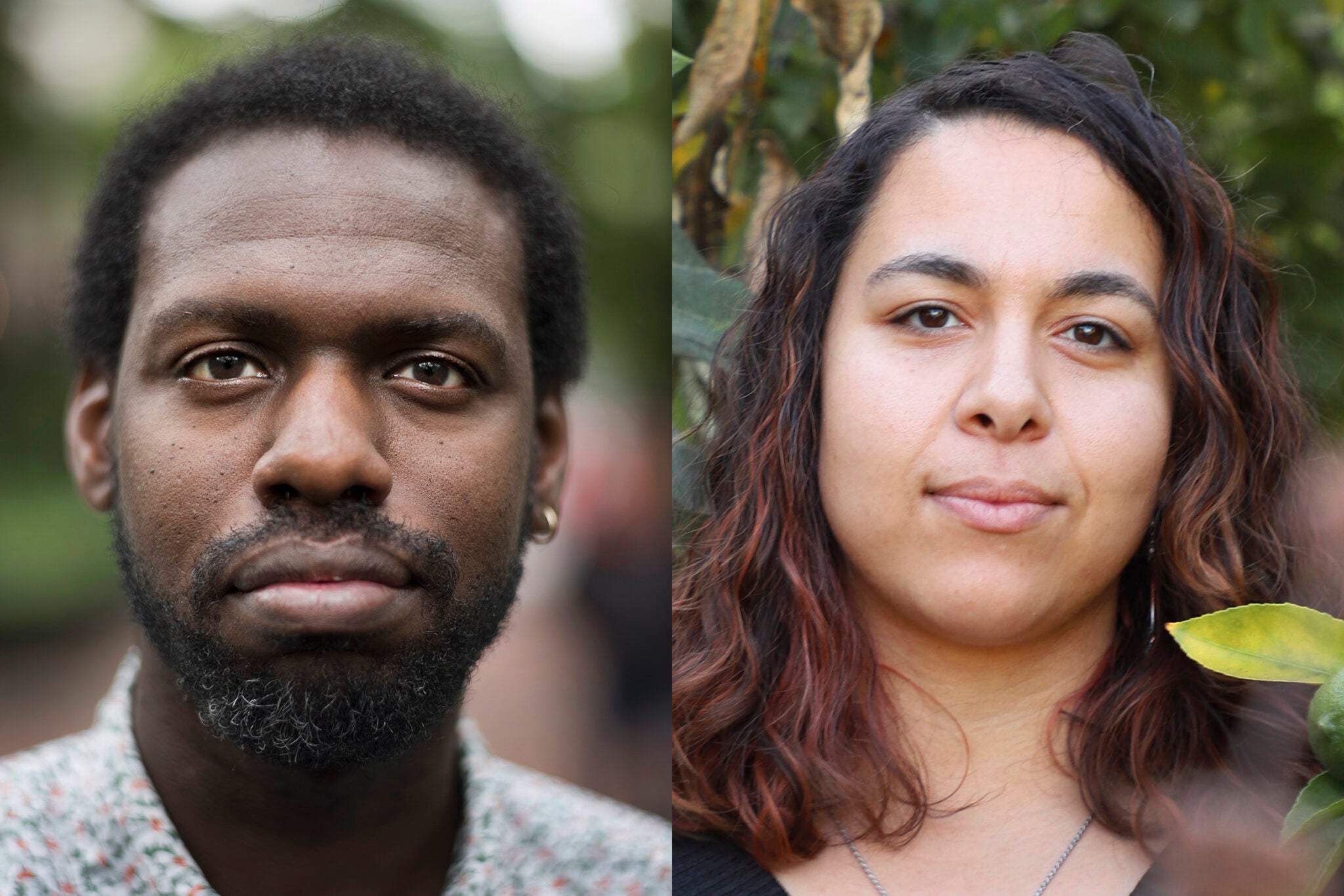
    Exploring their identities through culture, politics, and religion

    The Center for Jewish Studies and the Hutchins Center for African & African American Research debut Monday “Black & Jewish: A Conversation,” the first installment of a new joint venture to shed light on the multifaceted nature of Black and Jewish identities in North America.

    “Black & Jewish” is the first of three scheduled events this semester in the “Black & Jewish Talk Series,” focused on culture, politics, and religion.

    “There is a lot of focus on the relationship between Black communities and Jewish communities in the U.S., but Black and Jewish identity hasn’t received very much scholarly attention,” said Sara Feldman, a preceptor of Yiddish in the Department of Near Eastern Languages and Civilizations and a co-organizer of the series. “There are many people in the United States who identify as both Black and Jewish. It’s time that their voices are amplified here at Harvard.”

    “Black and Jewish: A Conversation,” takes place with vocalist and composer Anthony Russell and Rebecca Pierce, a writer and filmmaker. The discussion will be moderated by Katya Gibel Mevorach, Professor of Anthropology and American Studies at Grinnell College, and will focus on how Jewish diversity is discussed in public life and how it can and should change…

    Read the entire article here.

  • Bubba Wallace Gets a Breakthrough NASCAR Victory at Talladega

    2021-10-07

    Bubba Wallace Gets a Breakthrough NASCAR Victory at Talladega

    The New York Times
    2021-10-04

    Andrew Keh


    Going into Monday’s race at Talladega, Wallace said he believed he would win. Chris Graythen/Getty Images

    Wallace’s NASCAR Cup win was the first by a Black driver since 1963 and also the inaugural victory in the sport’s top series for Michael Jordan, the co-owner of Wallace’s team.

    A little more than a year after almost single-handedly forcing American auto racing to confront the sport’s longstanding issues with racism, Darrell Wallace Jr., known as Bubba, became just the second Black winner in NASCAR’s top series, finishing first at a rain-shortened event at Talladega Superspeedway on Monday afternoon.

    Wallace, 27, rose from relative obscurity to national prominence last year when he added his voice to the widespread national protest movement for racial justice and equality after the murder of George Floyd. It was not unusual to hear an athlete speak on the subject — but it was unusual to hear a NASCAR driver do so.

    It was stirring for many, then, to see Wallace, currently NASCAR’s only Black driver in the Cup Series, wear an “I Can’t Breathe” shirt — referring to the last words of Floyd and of Eric Garner, who died in 2014 after a New York City police officer placed him in a prohibited chokehold — and display the slogan “Black Lives Matter” on his car last year. He spoke out about the racism he experienced on a daily basis as a Black man in an overwhelmingly white sport. His burst of activism, most notably, persuaded NASCAR to ban the display of Confederate flags, long a fixture at American auto races…

    Read the entire article here.

  • Once We Were Slaves: The Extraordinary Journey of a Multi-Racial Jewish Family

    2021-10-07

    Once We Were Slaves: The Extraordinary Journey of a Multi-Racial Jewish Family

    Oxford University Press
    2021-08-30
    320 Pages
    6 1/8 x 9 1/4 inches
    Hardcover ISBN: 9780197530474

    Laura Arnold Leibman, Professor of English and Humanities
    Reed College, Portland, Oregon

    Highlights

    • Provides a rare historical portrait of life as a Jewish American of color
    • Examines the history of racial “passing” in an international context
    • Uses an intersectional lens to untangle a family history

    An obsessive genealogist and descendent of one of the most prominent Jewish families since the American Revolution, Blanche Moses firmly believed her maternal ancestors were Sephardic grandees. Yet she found herself at a dead end when it came to her grandmother’s maternal line. Using family heirlooms to unlock the mystery of Moses’s ancestors, Once We Were Slaves overturns the reclusive heiress’s assumptions about her family history to reveal that her grandmother and great-uncle, Sarah and Isaac Brandon, actually began their lives as poor Christian slaves in Barbados. Tracing the siblings’ extraordinary journey throughout the Atlantic World, Leibman examines artifacts they left behind in Barbados, Suriname, London, Philadelphia, and, finally, New York, to show how Sarah and Isaac were able to transform themselves and their lives, becoming free, wealthy, Jewish, and–at times–white. While their affluence made them unusual, their story mirrors that of the largely forgotten population of mixed African and Jewish ancestry that constituted as much as ten percent of the Jewish communities in which the siblings lived, and sheds new light on the fluidity of race–as well as on the role of religion in racial shift–in the first half of the nineteenth century.

    Table of Contents

    • Illustrations
    • Preface
    • Chapter 1: Origins (Bridgetown, 1793-1798)
    • Chapter 2: From Slave to Free (Bridgetown, 1801)
    • Chapter 3: From Christian to Jew (Suriname, 1811-12)
    • Chapter 4: The Tumultuous Island (Bridgetown, 1812-1817)
    • Chapter 5: Synagogue Seats (New York & Philadelphia, 1793-1818)
    • Chapter 6: The Material of Race (London, 1815-17)
    • Chapter 7: Voices of Rebellion (Bridgetown, 1818-24)
    • Chapter 8: A Woman Valor (New York, 1817-19)
    • Chapter 9: This Liberal City (Philadelphia, 1818-33)
    • Chapter 10: Feverish Love (New York, 1819-1830)
    • Chapter 11: When I am Gone (New York, Barbados, London, 1830-1847)
    • Chapter 12: Legacies (New York and Beyond, 1841-1860)
    • Epilogue
    • Appendix: Family Trees
    • Abbreviations
    • Bibliography
    • Notes
  • It’s Never Too Late to Publish a Debut Book and Score a Netflix Deal

    2021-10-03

    It’s Never Too Late to Publish a Debut Book and Score a Netflix Deal

    The New York Times
    2021-09-28

    Isaac Fitzgerald


    Jocelyn Nicole Johnson, a public school art teacher for 20 years, is the author of “My Monticello,” her debut book. She also has a Netflix film deal. Matt Eich for The New York Times

    Jocelyn Nicole Johnson, at 50, is not the average age of a debut author. But the public school teacher describes herself as a “literary debutante” with the October publication of “My Monticello.”

    Jocelyn Nicole Johnson has been a public school art teacher for 20 years, but she is not in her elementary classroom this fall in Charlottesville, Va. Her debut collection, “My Monticello” — five short stories and the book’s title novella — will be published on Oct. 5. The Pulitzer Prize-winning author Colson Whitehead has called “My Monticello” “nimble, knowing, and electrifying,” and Esquire named “My Monticello,” published by Henry Holt, one of the best books of the fall, writing that it “announces the arrival of an electric new literary voice.”

    To top that off, Netflix plans to turn the book’s title novella into a film. In the novella, which is set in the near future, a young woman who is descended from Thomas Jefferson and Sally Hemings, and a band of largely Black and brown survivors take refuge from marauding white supremacists in Monticello, Jefferson’s homestead…

    Read the entire interview here.

  • Bilal Kawazoe’s film ‘Whole’ tackles the experience of being mixed race in Japan

    2021-10-03

    Bilal Kawazoe’s film ‘Whole’ tackles the experience of being mixed race in Japan

    The Japan Times
    2021-09-30

    Mark Schilling, Film Critic


    In Bilal Kawazoe’s ‘Whole,’ Usman Kawazoe (left) and Kai Sandy (right) play two biracial men who bond over coming to terms with their identity while living in Japan.

    In Japanese, the word “hāfu” — a colloquial term for people who are half-Japanese — is a label that some accept, but others reject, preferring such terms as “daburu” (double) or “mikkusu” (mix).

    So seeing the title of Bilal Kawazoe’s new film “Whole,” which tells the story of two biracial men of radically different backgrounds in Kobe who become friends, my first thought was that Kawazoe, who is of Japanese and Pakistani parentage, had come up with yet another alternative to the hāfu label.

    Not so, as he explains in a video call. The title instead refers to the characters’ quests to become “whole” in terms of their identity. Kawazoe says his brother, Usman, came to him with the idea of “making a film based on the identity crises and the experiences of mixed people in Japan.”

    “We did a lot of research and realized there wasn’t really a narrative film (on that theme),” he continues. Instead, they found films that were “quite stereotypical or just one-sided.”

    “So we kind of felt this sense of responsibility to make an honest film on this whole mixed-race experience,” he says…

    Read the entire review here.

  • Hawai′i Is My Haven: Race and Indigeneity in the Black Pacific

    2021-10-03

    Hawai′i Is My Haven: Race and Indigeneity in the Black Pacific

    Duke University Press
    September 2021
    360 pages
    17 illustrations
    Paper ISBN: 978-1-4780-1437-9
    Cloth ISBN: 978-1-4780-1346-4

    Nitasha Tamar Sharma, Professor of African American Studies and Asian American Studies
    Northwestern University, Evanston, Illinois

    Hawaiʻi Is My Haven maps the context and contours of Black life in the Hawaiian Islands. This ethnography emerges from a decade of fieldwork with both Hawaiʻi-raised Black locals and Black transplants who moved to the Islands from North America, Africa, and the Caribbean. Nitasha Tamar Sharma highlights the paradox of Hawaiʻi as a multiracial paradise and site of unacknowledged anti-Black racism. While Black culture is ubiquitous here, African-descended people seem invisible. In this formerly sovereign nation structured neither by the US Black/White binary nor the one drop rule, non-White multiracials, including Black Hawaiians and Black Koreans, illustrate the coarticulation and limits of race and the native/settler divide. Despite erasure and racism, nonmilitary Black residents consider Hawaiʻi their haven, describing it as a place to “breathe” that offers the possibility of becoming local. Sharma’s analysis of race, indigeneity, and Asian settler colonialism shifts North American debates in Black and Native studies to the Black Pacific. Hawaiʻi Is My Haven illustrates what the Pacific offers members of the African diaspora and how they in turn illuminate race and racism in “paradise.”

    Table of Contents

    • Acknowledgments
    • Introduction: Hawaiʻi Is My Haven
    • 1. Over Two Centuries: The History of Black People in Hawaiʻi
    • 2. “Saltwater Negroes”: Black Locals, Multiracism, and Expansive Blackness
    • 3. “Less Pressure”: Black Transplants, Settler Colonialism, and a Radical Lens
    • 4. Racism in Paradise: AntiBlack Racism and Resistance in Hawaiʻi
    • 5. Embodying Kuleana: Negotiating Black and Native Positionality in Hawaiʻi
    • Conclusion: Identity↔Politics↔Knowledge
    • Notes
    • Bibliography
    • Index
  • Ralston, Elreta Melton Alexander

    2021-10-02

    Ralston, Elreta Melton Alexander

    NCPedia
    State Library of North Carolina
    Raleigh, North Carolina
    2013

    Virginia L. Summey, Historian, Author, and Faculty Fellow
    Lloyd International Honors College, University of North Carolina at Greensboro

    Elreta Melton Alexander was a pioneering African-American attorney from Greensboro, North Carolina. Born in Smithfield, North Carolina, she was the daughter of a Baptist minister and a teacher, and grew up comfortably as a part of the black middle class. Coming of age during the Jim Crow period of the South, she was raised by her educated, middle-class parents to be a leader in the community. The descendant of two white grandparents, her bi-racialism formed her early awareness of colorism within the African-American community…

    Read the entire article here.

  • Part of the expedition involved sketching and describing mixed-race Brazilians. Agassiz saw the rampant miscegenation in Brazil as a “mongrelization” of pure racial types that would ultimately result in sterility.

    2021-10-01

    [Louis Rodolphe] Agassiz applied this penchant for classification to his views on race. Part of the expedition involved sketching and describing mixed-race Brazilians. Agassiz saw the rampant miscegenation in Brazil as a “mongrelization” of pure racial types that would ultimately result in sterility. Agassiz categorized humans into different “species.” In his book on the Brazil trip, Agassiz notes, “the fact that [the races] differ by constant permanent features is in itself sufficient to justify a comparison between the human races and animal species.”

    Michelle Y. Raji, “Retrospection: Agassiz’s Expeditions in Brazil,” The Harvard Crimson, April 21, 2016. https://www.thecrimson.com/article/2016/4/21/agassiz-in-brazil/.

  • De Waal’s ‘extraordinary’ memoir goes to Tinder Press

    2021-10-01

    De Waal’s ‘extraordinary’ memoir goes to Tinder Press

    The Bookseller: At the Heart of Publishing since 1858
    2021-09-28

    Heloise Wood, Deputy News Editor

    Tinder Press has landed Kit de Waal’s memoir about growing up in Birmingham in the Sixties and Seventies, Without Warning and Only Sometimes, which she described as “the story I always wanted to tell”.

    Publisher Mary-Anne Harrington acquired UK and Commonwealth rights from Jo Unwin at JULA. Without Warning and Only Sometimes will be published on 18th August 2022.

    The memoir charts de Waal’s unpredictable childhood, growing up mixed race in Moseley, Birmingham.

    Harrington said: “I have been desperate to work with Kit for years and knew she had the most wonderful story to tell, so it’s both an enormous thrill and an honour to be working with her on Without Warning and Only Sometimes. Kit takes us into the mind and heart of a girl raised to believe the world was going to end in 1975, who was never allowed to celebrate Christmas, and whose father squirreled away every penny he had to build a house in St Kitts that his wife and children were never to see.”…

    Read the entire article here.

  • 1 In 7 People Are ‘Some Other Race’ On The U.S. Census. That’s A Big Data Problem

    2021-10-01

    1 In 7 People Are ‘Some Other Race’ On The U.S. Census. That’s A Big Data Problem

    National Public Radio
    2021-09-30

    Hansi Lo Wang


    Growing numbers of Latinos identifying as “Some other race” for the U.S. census have boosted the category to become the country’s second-largest racial group after “White.” Researchers are concerned the catchall grouping obscures many Latinx people’s identities and does not produce the data needed to address racial inequities.
    Ada daSilva/Getty Images

    For Leani García Torres, none of the boxes really fit.

    In 2010, she answered U.S. census questions for the first time on her own as an adult. Is she of Hispanic, Latino, or Spanish origin? That was easy. She marked, “Yes, Puerto Rican.”

    But then came the stumper: What is her race?

    “Whenever that question is posed, it does raise a little bit of anxiety,” García Torres explains. “I actually remember calling my dad and saying, ‘What race are you putting? I don’t know what to put.’ ”

    The categories the once-a-decade head count uses — “White,” “Black” and “American Indian or Alaska Native,” plus those for Asian and Pacific Islander groups — have never resonated with her.

    “It’s tricky,” the Brooklyn, N.Y., resident by way of Tennessee says. “Both of my parents are from the island of Puerto Rico, and we’re just historically pretty mixed. If you look at anyone in my family, you wouldn’t really be able to guess a race. We just look vaguely tan, I would say.”…

    Read the entire article here.

Previous Page
1 … 65 66 67 68 69 … 1,428
Next Page

Designed with WordPress