• Beyoncé in the World: Making Meaning with Queen Bey in Troubled Times

    Wesleyan University Press
    2021-06-08
    392 pages
    31 color photos
    Hardback ISBN: 9780819579911
    Paperback ISBN: 9780819579928
    eBook ISBN: 9780819579935

    Edited by:

    Christina Baade, Professor, Communication Studies & Media Arts
    McMaster University, Hamilton, Ontario, Canada

    Kristin A. McGee, Associate Professor of Popular Music
    University of Groningen, Groningen, Netherlands

    Essays investigate Beyoncé’s global impact

    From Destiny’s Child to Lemonade, Homecoming, and The Gift, Beyoncé Knowles-Carter has redefined global stardom, feminism, Black representation, and celebrity activism. This book brings together new work from sixteen international scholars to explore Beyonce’s impact as an artist and public figure from the perspectives of critical race studies, gender and women’s studies, queer and cultural studies, music, and fan studies. The authors explore Beyoncé’s musical persona as one that builds upon the lineages of Black female cool, Black southern culture, and Black feminist cultural production. They explore Beyoncé’s reception within and beyond North America, including how a range of performers—from YouTube gospel singers to Brazilian pop artists have drawn inspiration from her performances and image. The authors show how Beyoncé’s music is a source of healing and kinship for many fans, particularly Black women and queer communities of color. Combining cutting edge research, vivid examples, and accessible writing, this collection provides multiple lenses onto the significance of Beyoncé in the United States and around the world.

    Table of Contents

    • Foreword / Janell Hobson
    • Acknowledgments
    • Introduction: Beyoncé Studies / Christina Baade, Marquita Smith, and Kristin McGee
    • Part One “Diva” / Black Feminist Genealogies
      • 1. “I Came to Slay”: The Knowles Sisters, Black Feminism, and the Lineage of Black Female Cool / H. Zahra Caldwell
      • 2. From Colorism to Conjurings: Tracing the Dust in Beyoncé’s Lemonade / Cienna Davis
    • Part Two “Formation” / A Southern Turn
      • 3. Beyoncé’s South and a “Formation” Nation / Riché Richardson
      • 4. Merging Past and Present in Lemonade’s Black Feminist Utopia / J. Brendan Shaw
    • Part Three “XO” / Faith and Fandom
      • 5. At the Digital Cross(roads) with Beyoncé: Gospel Covers That Remix the Risqué into the Religious / Birgitta J. Johnson
      • 6. “She Made Me Understand”: How Lemonade Raised the Intersectional Consciousness of Beyoncé’s International Fans / Rebecca J. Sheehan
    • Part Four “Worldwide Woman” / Beyoncé’s Reception Beyond the United States
      • 7. The Performative Negotiations of Beyoncé in Brazilian Bodies and the Construction of the Pop Diva in Ludmilla’s Funk Carioca and Gaby Amarantos’s Tecnobrega / Simone Pereira de Sá and Thiago Soares
      • 8. A Critical Analysis of White Ignorance Within Beyoncé’s Online Reception in the Spanish Context / Elena Herrera Quintana
    • Part Five “Hold up” / Performing Femme Affinity and Dissent
      • 9. Six-Inch Heels and Queer Black Femmes: Beyoncé and Black Trans Women / Jared Mackley-Crump and Kirsten Zemke
      • 10. From “Say My Name” to “Texas Bamma”: Transgressive Topoi, Oppositional Optics, and Sonic Subversion in Beyoncé’s “Formation” / Byron B Craig and Stephen E. Rahko
    • Part Six “Freedom” / Sounding Protest, Hearing Politics
      • 11. Musical Form in Beyoncé’s Protest Music / Annelot Prins and Taylor Myers
      • 12. Beyoncé’s Black Feminist Critique: Multimodal Intertextuality and Intersectionality in “Sorry” / Rebekah Hutten and Lori Burns
    • Part Seven “Pray You Catch Me” / Healing and Community
      • 13. Beyond “Becky with the Good Hair”: Hair and Beauty in Beyoncé’s “Sorry” / Kristin Denise Rowe
      • 14. The Livable, Surviving, and Healing Poetics of Lemonade: A Black Feminist Futurity in Action / Mary Senyonga
    • About the Contributors
    • Index
  • Lives Like Mine

    Simon & Schuster
    2021-06-10
    384 pages
    Hardcover ISBN: 9781398502826
    Paperback ISBN: 9781398502857
    eBook ISBN: 9781398502840

    Eva Verde

    Mother.
    To three small children, their heritage dual like hers.

    Daughter.
    To a mother who immigrated to make a better life but has been rejected by her chosen country.

    Wife.
    To a man who loves her but who will not defend her to his intolerant family.

    Woman…
    Whose roles now define her and trap her in a life she no longer recognises…

    Meet Monica, the flawed heroine at the heart of Lives Like Mine.

    With her three children in school, Monica finds herself wondering if this is all there is. Despite all the effort and the smiles, in the mirror she sees a woman hollowed out from putting everyone else first, tolerating her in-laws’ intolerance, and wondering if she has a right to complain when she’s living the life that she has created for herself.

    Then along comes Joe, a catalyst for change in the guise of a flirtatious parent on the school run. Though the sudden spark of their affair is hedonistic and oh so cathartic, Joe soon offers a friendship that shows Monica how to resurrect and honour the parts of her identity that she has long suppressed. He is able to do for Monica what Dan has never managed to, enabling her both to face up to a past of guilty secrets and family estrangements, and to redefine her future.

  • What Passes as Love: A Novel

    Lake Union Publishing
    2021-09-01
    335 pages
    Paperback ISBN:‎ 978-1542030601

    Trisha R. Thomas

    A young woman pays a devastating price for freedom in this heartrending and breathtaking novel of the nineteenth-century South.

    1850. I was six years old the day Lewis Holt came to take me away.

    Born into slavery, Dahlia never knew her mother―or what happened to her. When Dahlia’s father, the owner of Vesterville plantation, takes her to work in his home as a servant, she’s desperately lonely. Forced to leave behind her best friend, Bo, she lives in a world between black and white, belonging to neither.

    Ten years later, Dahlia meets Timothy Ross, an Englishman in need of a wife. Reinventing herself as Lily Dove, Dahlia allows Timothy to believe she’s white, with no family to speak of, and agrees to marry him. She knows the danger of being found out. She also knows she’ll never have this chance at freedom again.

    Ensconced in the Ross mansion, Dahlia soon finds herself held captive in a different way―as the dutiful wife of a young man who has set his sights on a political future. But when Bo arrives on the estate in shackles, Dahlia decides to risk everything to save his life. With suspicions of her true identity growing and a bounty hunter not far behind, Dahlia must act fast or pay a devastating price.

  • ‘How is Pauli Murray not a household name?’ The extraordinary life of the US’s most radical activist

    The Guardian
    2021-09-17

    Steve Rose


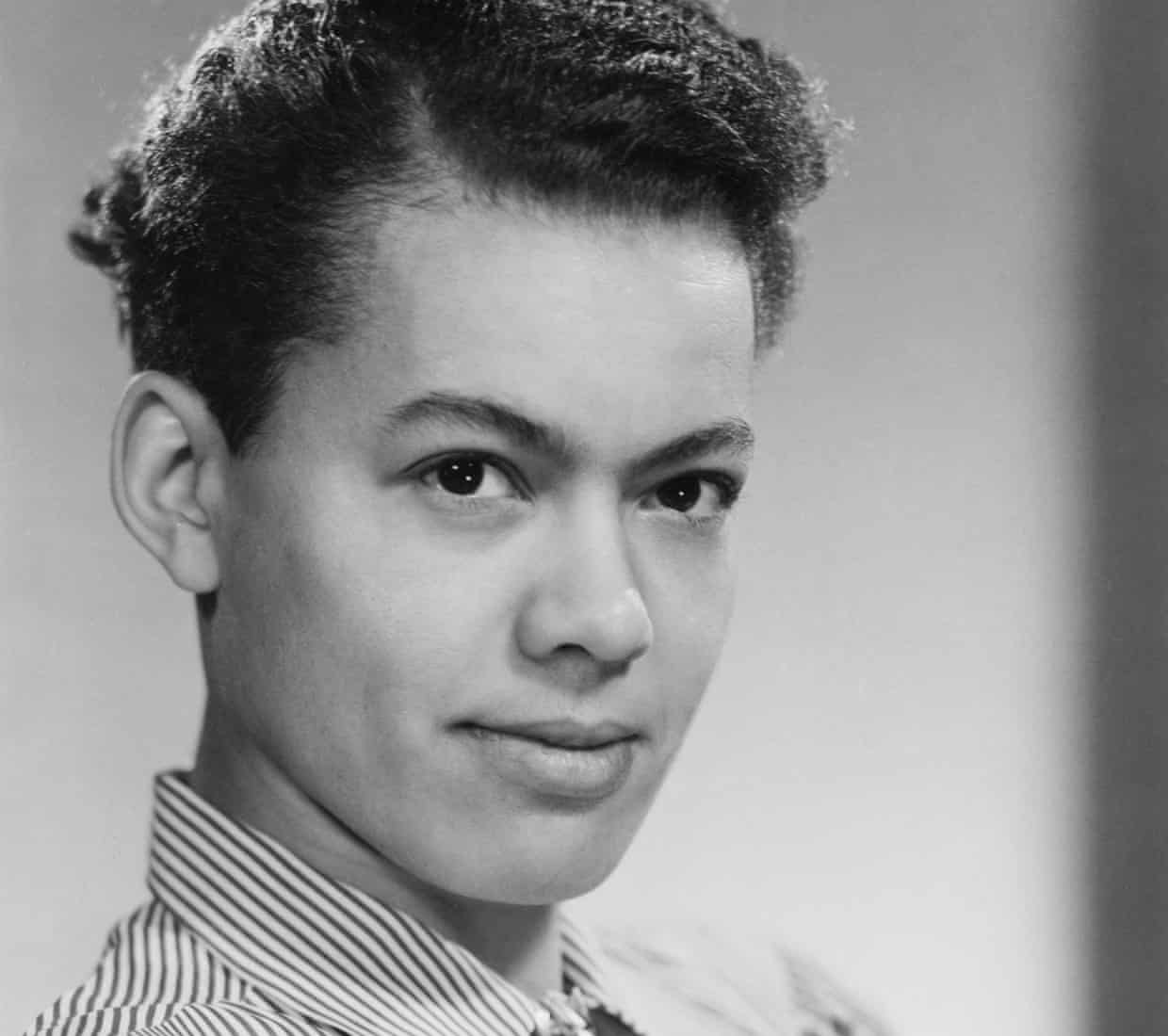
    ‘I lived to see my lost causes found’ … Pauli Murray. Photograph: Everett Collection Historical/Alamy

    She explored her gender and sexuality in the 20s, defied segregation in the 40s and inspired Ruth Bader Ginsburg. Now, a film is bringing her trailblazing achievements to light

    It seems inconceivable that someone like Pauli Murray could have slipped through the cracks of US history. A lawyer, activist, scholar, poet and priest, Murray led a trailblazing life that altered the course of history. She was at the forefront of the battles for racial and gender equality, but often so far out in front that her contributions went unrecognised.

    In 1940, 15 years before Rosa Parks, Murray was jailed for refusing to move to the back of a bus in the Jim Crow south. In 1943, she campaigned successfully to desegregate her local diner, 17 years before the Greensboro lunch counter sit-ins of 1960. Her work paved the way for the landmark supreme court ruling Brown v Board of Education in 1954 – which de-segregated US schools – to the extent that Thurgood Marshall, a lawyer for the NAACP civil rights group, called Murray’s book States’ Laws on Race and Color “the bible for civil rights lawyers”.

    Murray also co-founded the National Organization for Women (NOW), in 1966, alongside Betty Friedan. When Ruth Bader Ginsburg won the Reed v Reed case in 1971, which ruled that discrimination “on the basis of sex” was unconstitutional, her arguments were built on Murray’s work. Ginsburg named Murray as co-author of the brief. “We knew when we wrote that brief that we were standing on her shoulders,” Ginsburg later said.

    Murray ought to be celebrated as an American hero, commemorated in stamps, statuary and street names, not to mention biopics, so why is her name relatively unknown?…

    Read the entire article here.

  • Gibbes Museum’s Film Series to Focus on Racial Passing

    Holy City Sinner
    Charleston, South Carolina
    2021-09-23


    Ruth Negga and Tessa Thompson appear in “Passing” by Rebecca Hall, an official selection of the U.S. Dramatic Competition at the 2021 Sundance Film Festival. Courtesy of Sundance Institute | photo by Edu Grau

    The Gibbes Museum of Art has announced the second installment of its film series, titled “Gibbes Films in Focus: Passing Strange,” which will feature the Lowcountry’s first screening of the 2021 Sundance Film Festival selection, “Passing,” by Rebecca Hall, starring Tessa Thompson, Ruth Negga, Andre Holland, and Alexander Skarsgård and adapted from the groundbreaking novel by Nella Larsen.

    In this series, the Gibbes will explore the tradition of race-passing narratives as represented on the silver screen. From Kate Chopin’s 1893 short story “Désirée’s Baby,” to the 1936 and 1951 adaptations of the musical “Showboat,” America has been enthralled by passing narratives, whereby a person of Black descent, but of ambiguous or white features, slips into white society, destabilizing the strict racial codes that have governed so much of American life. This three-part series will be held at the museum this fall…

    Read the entire article here.

  • Racial Masks and Stereotypes in Imitation of Life and Bamboozled

    Caméra Stylo: The Cinema Studies Undergraduate Student Journal
    University of Toronto
    Volume 13 (2013)
    2013-04-01
    pages 62-74

    Nicole Wong

    Visible signs of difference mark the racialized body only in com-bination with nonvisible social preconceptions and expectations. A racial stereotype is the link, the image, which ties the visible with the nonvisible imagined meanings and values specific to the culture in which they are produced and shared. The process of racial stereotyping therefore requires three components: the marked body, the collective society of meaning and image-makers, and the racial mask through which the latter views and defines the former. My concern in this article is how American1 popular culture and mass media entertainment has become the foremost platform for racial meaning production, perpetuating false racial stereotypes, yet at the same time attempting to expose its own role as image-maker.

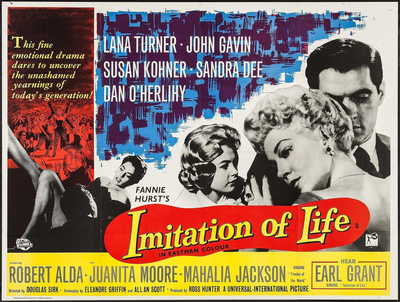
    As forms of popular mass media entertainment, Douglas Sirk’s Imitation of Life (1959) and Spike Lee’s Bamboozled (2000) depict such an exposition of the racial stereotyping process, but with significant differences that come with forty years’ distance. These two films function as tragic allegories of the racial stereotype production process as popular entertainment, wherein central characters mask their marked bodies, their self-identity and essential personhood. Racial stereotypes literally are enacted on stage to entertain an audience, a downsized representation both American media makers and receivers. Through the optic of Sander Gilman’s conceptions of the Other and the Self, I will explore the motives behind, and subsequent futility of, attempts to mask racial self-identities with media-defined projected identities that ultimately turn performers into the slaves of spectators. I will also position the ideologies of both films as reflections of the racial performer/audience relationship of their respective time periods…

    Read the entire article here.

  • Leave Them Wanting More: Douglas Sirk and Imitation of Life

    Steyn Online
    2021-09-18

    Rick McGinnis, Rick’s Flicks

    When Douglas Sirk left Hollywood he was at the zenith of his career, twenty years after he’d arrived there as a refugee from Nazi Germany, unsure if he’d ever make another movie. He had just made his most successful picture, based on what was probably the most controversial topic in America at the time. Maybe he understood that it’s always best to leave when you’re at the top, or maybe he was just tired.

    Imitation of Life was an update of a 1934 film starring Claudette Colbert and Louise Beavers – a drama about miscegenation and racism and the colour caste system that was no less controversial when producer Ross Hunter decided to remake it – as a musical. Thankfully, by the time Sirk started filming, it was a melodrama again, and one starring Lana Turner, just after her daughter Cheryl Crane had been on trial for running a kitchen knife through Turner’s boyfriend, a mobbed-up gigolo thug named Johnny Stompanato.

    Based on a novel by Fanny Hurst, the original film directed by John M. Stahl had Colbert’s Bea create a culinary empire based on a pancake recipe passed down through the family of Delilah (Beavers), her African-American maid. Both women prosper, but Bea’s happiness is threatened when her daughter falls in love with the man she wants to marry. James M. Cain’s 1941 novel Mildred Pierce – later made into a movie with Joan Crawford and a miniseries starring Kate Winslet – is basically a hardboiled rewrite of Hurst’s story, excising the crucial secondary plot involving Delilah and her daughter, a young woman striving to pass for white

    Read the entire article here.

  • Adele Logan Alexander

    Charlie Rose
    1999-10-26

    Charlie Rose, Host

    Adele Logan Alexander discusses the history of identity, race, and class in the United States through her own family story, as she does in her book “Homelands and Waterways: The American Journey of the Bond Family, 1846-1926.”

    Watch the entire interview (00:17:52) here.

  • WTF!? A Few Stories I Don’t Know What To Do With

    Black Power Media
    2021-09-28

    Jared A. Ball, Ph.D., Professor of Africana and Communications
    Morgan State University, Baltimore, MD

    From 00:21:44 through 00:34:01 in the video, Dr. Ball discusses his views on multiraciality within popular culture and how it connects with blackness in the United States.

    Watch the clip here.

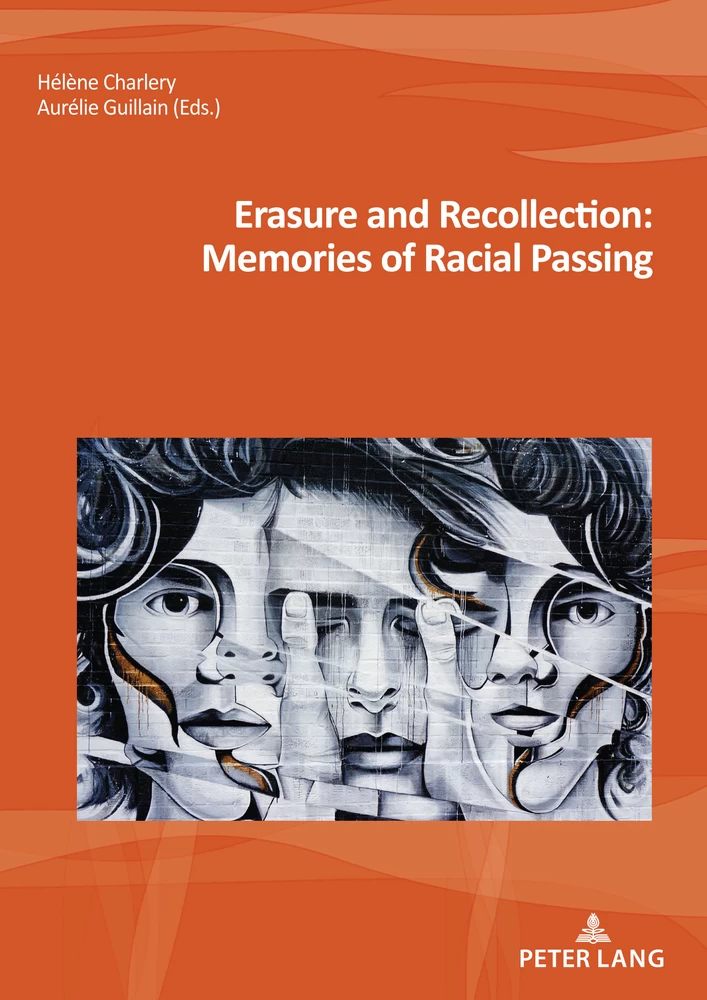
  • Erasure and Recollection: Memories of Racial Passing

    Peter Lang
    September 2021
    366 pages
    13 fig. b/w.
    Paperback ISBN:978-2-8076-1625-7
    ePUB ISBN:978-2-8076-1627-1 (DOI: 10.3726/b18256)

    Edited by:

    Hélène Charlery, Professor of English Literature
    University of Toulouse-Jean Jaurès, Toulouse, France

    Aurélie Guillain, Professor of American Literature
    University of Toulouse-Jean Jaurès, Toulouse, France

    Many recent studies of racial passing have emphasized the continuing, almost haunting power of racial segregation even in the post-segregation period in the US, or in the post-apartheid period in South Africa. This “present-ness” of racial passing, the fact that it has not really become “passé,” is noticeable in the great number of testimonies which have been published in the 2000s and 2010s by descendants of individuals who passed for white in the English-speaking world. The sheer number of publications suggest a continuing interest in the kind of relation to the personal and national past which is at stake in the long-delayed revelation of cases of racial passing.

    This interest in family memoirs or in fictional works re-tracing the erasure of some relative’s racial identity is by no means limited to the United States: for instance, Zoë Wicomb in South Africa or Zadie Smith in the UK both use the passing novel to unravel the complex situation of mixed-race subjects in relation to their family past and to a national past marked by a history of racial inequality.

    Yet, the vast majority of critical approaches to racial passing have so far remained largely focused on the United States and its specific history of race relations. The objective of this volume is twofold: it aims at shedding light on the way texts or films show the work of individual memory and collective recollection as they grapple with a racially divided past, struggling with its legacy or playing with its stereotypes. Our second objective has been to explore the great variety in the forms taken by racial passing depending on the context, which in turn leads to differences in the ways it is remembered. Focusing on how a previously erased racial identity may resurface in the present has enabled us to extend the scope of our study to other countries than the United States, so that this volume hopes to propose some new, transnational directions in the study of racial passing.

    Table of Contents

    • Introduction – Hélène Charlery and Aurélie Guillain
    • Part I: Memories of Racial Passing – Reconstructing Local and Personal Histories – From Homer Plessy to Paul Broyard
      • To Pass or Not to Pass in New Orleans – Nathalie Dessens
      • Racial Passing at New Orleans Mardi Gras; From Reconstruction to the Mid- Twentieth Century: Flight of Fancy or Masked Resistance? – Aurélie Godet
      • Passing through New Orleans, Atlanta, and New York City: The Dynamics of Racial Assignation in Walter White’s Flight (1926) – Aurélie Guillain
      • African American Women Activists and Racial Passing: Personal Journeys and Subversive Strategies (1880s– 1920s) – Élise Vallier-Mathieu
    • Part II: Memory, Consciousness and the Fantasy of Amnesia in Passing Novels
      • “What Irene Redfield Remembered”: Making It New in Nella Larsen’s Passing – M. Giulia Fabi
      • Between Fiction and Reality: Passing for Non- Jewish in Multicultural American Fiction – Ohad Reznick
      • Experiments in Passing: Racial Passing in George Schuyler’s Black No More and Arthur Miller’s Focus – Ochem G.l.a. Riesthuis
      • Passing to Disappearance: The Voice/ Body Dichotomy and the Problem of Identity in Richard Powers’s The Time of Our Singing (2004) – Anne-Catherine Bascoul
    • Part III: Memories of Racial Passing within and beyond the United States: Towards a Transnational Approach
      • “The Topsy-Turviness of Being in the Wrong Hemisphere” Transnationalizing the Racial Passing Narrative – Sinéad Moynihan
      • Passing, National Reconciliation and Adolescence in Beneath Clouds (Ivan Sen, 2002) and The Wooden Camera (Ntshaveni Wa Luruli, 2003) – Delphine David and Annael Le Poullennec
      • Transnational Gendered Subjectivity in Passing across the Black Atlantic: Nella Larsen’s Passing, Michelle Cliff ’s Free Enterprise and Zadie Smith’s Swing Time – Kerry-Jane Wallart
    • About the Authors/ Editors
    • Index