• Mixed race in the UK: am I the future face of this country?

    The Telegraph
    London, United Kingdom
    2014-11-08

    Laura Smith

    With ‘mixed race’ now the fastest-growing ethnic minority in the country, prejudice should be a thing of the past – but as one writer reveals, we’ve still got a long way to go

    Where I grew up, a mixed-race family was something of an anomaly. Families, according to our neighbours – and the pictures on cereal boxes, board games and holiday brochures – meant a white mother and a white father and two children, preferably a boy and a girl, ideally blonde. The father went to work in a suit; the mother stayed home and sang along to Radio 1 while doing the housework.

    My family wasn’t like that. My mother was from Guyana and wore her hair in a short Afro. She liked jumpsuits and jewellery and, shockingly, worked full-time. My father was from Scotland and wore embarrassing checked jackets from the 1960s (he was in his forties when my brother and I were born). Neither had heard of Radio 1.

    My childhood memories of growing up in a mainly white, expensively heeled north London suburb include the following…

    …Reaction to this social change has been contradictory, and peppered with hyperbole. On the one hand, the rise of “beige Britain” is eulogised as evidence of an open, tolerant country that’s moved beyond outdated notions of race and racism. It has become fashionable to shrug and say, “Well, we’ll all be brown soon.” On the other, it is not unusual to see alarmist articles about white people becoming the minority (two recent stories predicting that so-called “indigenous white children” would be “outnumbered” in state schools by 2037 were illustrated with images of mixed children), while in the black press there are reports about the disappearance of the Caribbean presence as increasing numbers “marry out”…

    …Negative ideas around racial mixing have a long history. In Britain, concern about interracial unions reached a peak in the first half of the 20th century, when mixed neighbourhoods such as Toxteth and Tiger Bay were portrayed as immoral and dangerous, mixed children as tragic outcasts. Marie Stopes, then a prominent eugenicist, called for all “half-castes” to be “sterilised at birth”. Caballero says this notion of mixed people as divided and confused – the “marginal man” of early social science – remains. “When I started in this area I got sick of reading about how we were all psychologically traumatised and about all these broken relationships when my own parents have been together for 30 years,” she says…

    Read the entire article here.

  • Legacy: A Story of Racism and Northern Ireland’s Troubles

    Maverick House
    2013
    240 pages
    ISBN-10: 1291529349; ISBN-13: 978-1291529340

    Jayne Olorunda

    Legacy is the true story of the Olorunda family’s struggle against racism and poverty during the Northern Ireland Troubles. In January 1980, Max Olorunda was killed by the IRA in a bomb attack. He left behind a wife and three small children. Legacy is the poignant story of what became of his family after his death. Legacy is no ordinary book. Poignant and thought provoking, Jayne Olorunda’s words describe the brutal reality of racism in Northern Ireland set against a backdrop of the Troubles.

  • Everyday Life in the Early English Caribbean: Irish, Africans, and the Construction of Difference

    University of Georgia Press
    2013-11-15
    256 pages
    18 b&w photos, 1 map
    Trim size: 6 x 9
    Cloth ISBN: 978-0-8203-4505-5
    Paper ISBN: 978-0-8203-4662-5
    Ebook ISBN: 978-0-8203-4634-2

    Jenny Shaw, Assistant Professor of History
    University of Alabama

    A new examination of the experiences of Irish and Africans in the English Caribbean

    Set along both the physical and social margins of the British Empire in the second half of the seventeenth century, Everyday Life in the Early English Caribbean explores the construction of difference through the everyday life of colonial subjects. Jenny Shaw examines how marginalized colonial subjects—Irish and Africans—contributed to these processes. By emphasizing their everyday experiences Shaw makes clear that each group persisted in its own cultural practices; Irish and Africans also worked within—and challenged—the limits of the colonial regime. Shaw’s research demonstrates the extent to which hierarchies were in flux in the early modern Caribbean, allowing even an outcast servant to rise to the position of island planter, and underscores the fallacy that racial categories of black and white were the sole arbiters of difference in the early English Caribbean.

    The everyday lives of Irish and Africans are obscured by sources constructed by elites. Through her research, Jenny Shaw overcomes the constraints such sources impose by pushing methodological boundaries to fill in the gaps, silences, and absences that dominate the historical record. By examining legal statutes, census material, plantation records, travel narratives, depositions, interrogations, and official colonial correspondence, as much for what they omit as for what they include, Everyday Life in the Early English Caribbean uncovers perspectives that would otherwise remain obscured. This book encourages readers to rethink the boundaries of historical research and writing and to think more expansively about questions of race and difference in English slave societies.

  • Barack Obama and the Myth of a Post-Racial America

    Routledge
    2013-10-04
    240 pages
    Paperback ISBN: 978-0-415-81394-5
    Hardback ISBN: 978-0-415-81393-8
    eBook ISBN: 978-0-203-06779-6

    Edited by:

    Mark Ledwidge, Senior Lecturer of History and American Studies
    Canterbury Christ Church University

    Kevern Verney, Professor of American History
    Edge Hill University

    Inderjeet Parmar, Professor of Government
    University of Manchester

    The 2008 presidential election was celebrated around the world as a seminal moment in U.S. political and racial history. White liberals and other progressives framed the election through the prism of change, while previously acknowledged demographic changes were hastily heralded as the dawn of a “post-racial” America. However, by 2011, much of the post-election idealism had dissipated in the wake of an on-going economic and financial crisis, escalating wars in Afghanistan and Libya, and the rise of the right-wing Tea Party movement.

    By placing Obama in the historical context of U.S. race relations, this edited book interrogates the idealized and progressive view of American society advanced by much of the mainstream literature on Obama. Barack Obama and the Myth of a Post-Racial America takes a careful look at the historical, cultural and political dimensions of race in the United States, using an interdisciplinary analysis that incorporates approaches from history, political science, and sociology. Each chapter addresses controversial issues such as whether Obama can be considered an African-American president, whether his presidency actually delivered the kind of deep-rooted changes that were initially prophesised, and whether Obama has abandoned his core African-American constituency in favour of projecting a race-neutral approach designed to maintain centrist support.

    Through cutting edge, critically informed, and cross-disciplinary analyses, this collection directly addresses the dimensions of race in American society through the lens of Obama’s election and presidency.

    Contents

    • Introduction
    • 1. Barack Obama, First African American President: Continuity or Change; Mark Ledwidge
    • 2. The Obama Dilemma: Confronting Race in the 21st Century; Carl Pedersen
    • 3. Republican Mavericks: The Anti-Obama Impulse in the 2008 Election; Robert Busby
    • 4. Obama in the Northeast: The Politics of Race in America’s Bluest Region; Kevin J. McMahon
    • 5. Obama, the Tea Party Movement and Domestic Dissent; Mark Ledwidge
    • 6. The Obama Election and the White Supremacist Movement: How the Rise of America’s First Black President Unleashed a Racist Backlash; Heidi Beirich and Kevin Hicks
    • 7. The Final Frontier: Barack Obama and the Vision of a Post-Racial America; Kevern J. Verney
    • 8. Barack Obama and the Future of American Politics; Rogers M. Smith and Desmond King
    • 9. The Far Side of Jordan: Obama, Civil Rights and the Promised Land Paradox; Jelani Cobb
    • 10. Continuity of Deep Structures: Housing Markets and the Increasing Racial Wealth Gap in Post-Racial America; Melvin Oliver, Thomas Shapiro and Hannah Thomas
    • 11. Prophet without Honor? Perceptions of Barack Obama’s Leadership at Home and Abroad; Andra Gillespie
    • 12. “You Say Obama, I say Osama – Let’s Call the Whole Thing Off”: Race and U.S. Foreign Policy; Lee Marsden
    • 13. The Color of Obama’s World: Race and Diplomacy During the Obama Administration; Michael L. Krenn
    • 14. First Ladies in Africa: A Comparison of Michelle Obama to Laura Bush and Hillary Clinton; Andra Gillespie
    • 15. Postscript: Race and the 2012 U.S. Elections
  • 241F Performances of Passing, Performances of Resistance

    Hamilton College, Clinton, New York
    Spring 2014

    Yumi Pak, Ph.D., Visiting Assistant Professor of Africana Studies

    An examination of the historical practice of passing in the United States. While the practice has most commonly referred to the history of racial passing for light-skinned African Americans in the early 20th century, this course will situate acts of passing as acts of resistance through close readings of literature, film and performance studies. Scholars and authors include Soyica Diggs Colbert, Fred Moten, Dael Orlandersmith and Suzan-Lori Parks. We will consider how performances of passing have the potential to challenge institutional power. (Same as English and Creative Writing 241.)

  • Episode Six: A More Perfect Union

    The African Americans: Many Rivers to Cross (with Henry Louis Gates, Jr.)
    Public Broadcasting Service
    Tuesdays, 2013-10-22 through 2013-11-26, 20:00-21:00 ET

    From Black Power to Black President

    By 1968, the Civil Rights movement had achieved stunning victories, in the courts and in the Congress. But would African Americans finally be allowed to achieve genuine racial equality? Episode Six, A More Perfect Union (1968-2013), looks at the aftermath of the assassination of Martin Luther King, Jr. and the rise of the Black Panthers and Black Power movement.  The decline of cities that African Americans had settled in since the Great Migration, the growth of a black middle class, the vicious beating of Rodney King in Los Angeles and the ascent of Barack Obama from Illinois senator to the presidency of the United States are all addressed in the final episode of The African Americans: Many Rivers to Cross. Revisit images of the Black is Beautiful movement and hear commentary from former Black Panther Party member Kathleen Cleaver, former Secretary of State Colin H. Powell, musician Ahmir “Questlove” Thompson, and many more…

    For more information, click here.

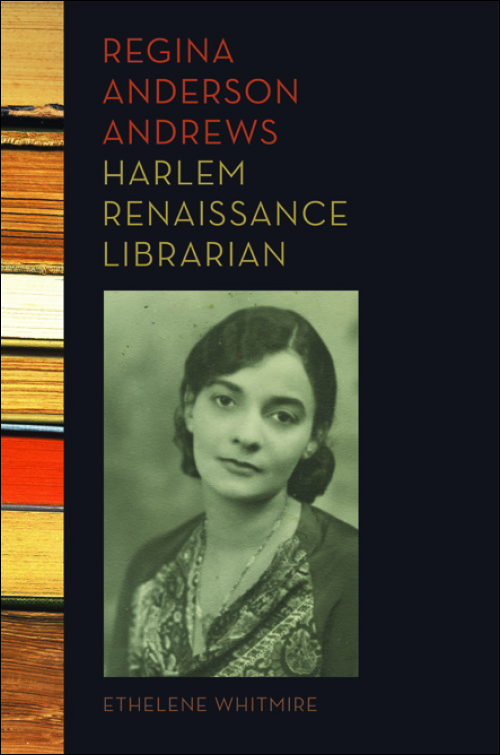
  • Regina Anderson Andrews, Harlem Renaissance Librarian

    University of Illinois Press
    May 2014
    176 pages
    6 x 9 in.
    23 black & white photographs

    Ethelene Whitmire, Associate Professor of Library & Information Studies
    University of Wisconsin, Madison

    The life of a groundbreaking librarian and Harlem Renaissance figure

    The first African American to head a branch of the New York Public Library (NYPL), Regina Andrews led an extraordinary life. Allied with W. E. B. Du Bois, Andrews fought for promotion and equal pay against entrenched sexism and racism and battled institutional restrictions confining African American librarians to only a few neighborhoods within New York City.

    Andrews also played a key role in the Harlem Renaissance, supporting writers and intellectuals with dedicated workspace at her 135th Street Branch Library. After hours she cohosted a legendary salon that drew the likes of Langston Hughes and Zora Neale Hurston. Her work as an actress and playwright helped establish the Harlem Experimental Theater, where she wrote plays about lynching, passing, and the Underground Railroad.

    Ethelene Whitmire’s new biography offers the first full-length study of Andrews’ activism and pioneering work with the NYPL. Whitmire’s portrait of her sustained efforts to break down barriers reveals Andrews’s legacy and places her within the NYPL’s larger history.

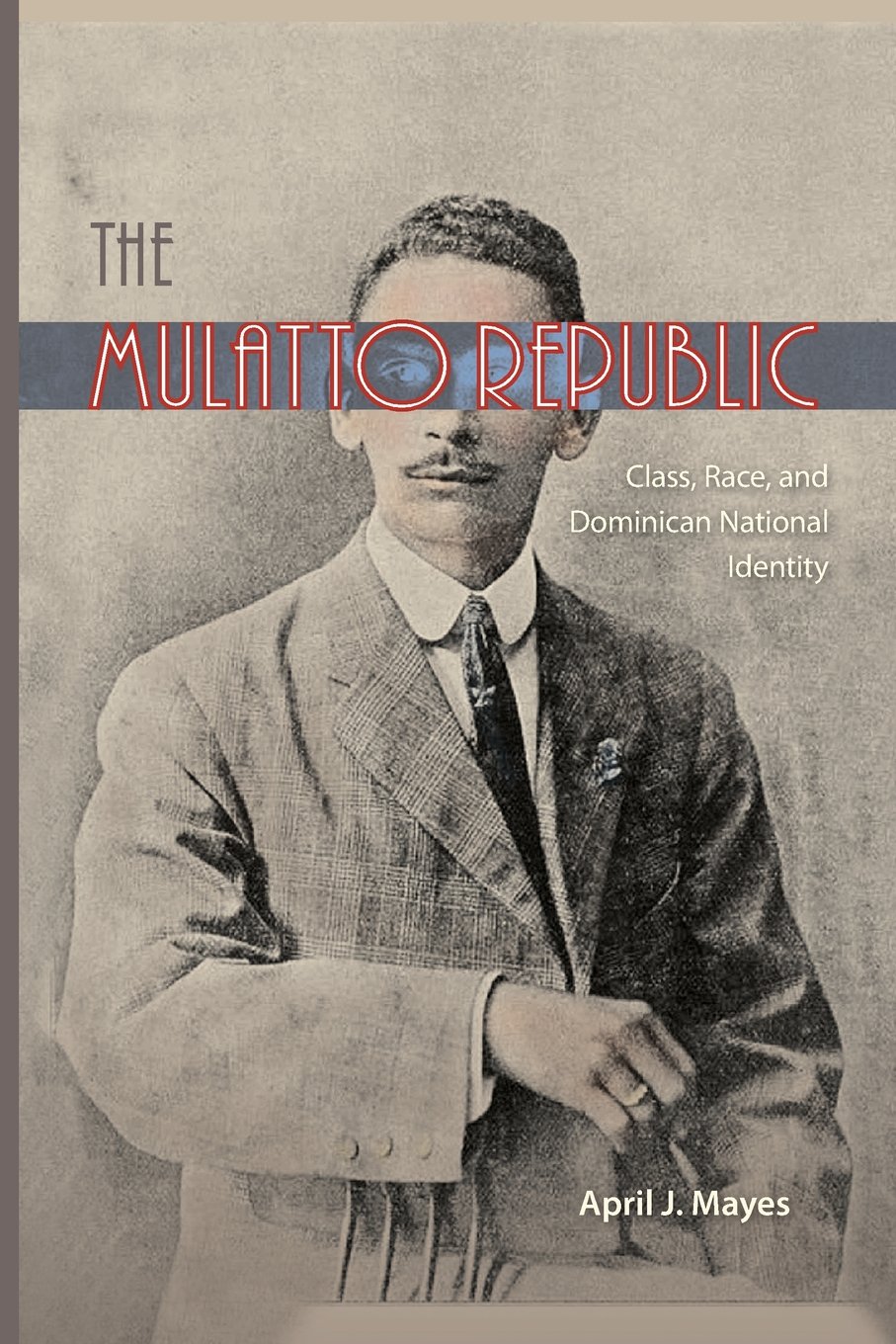
  • The Mulatto Republic: Class, Race, and Dominican National Identity

    University Press of Florida
    2014-03-24
    224 pages
    6×9
    Cloth ISBN 13: 978-0-8130-4919-9

    April J. Mayes, Associate Professor of History and Africana Studies
    Pomona College, Claremont, California

    The Dominican Republic was once celebrated as a mulatto racial paradise. Now the island nation is idealized as a white, Hispanic nation, having abandoned its many Haitian and black influences. The possible causes of this shift in ideologies between popular expressions of Dominican identity and official nationalism has long been debated by historians, political scientists, and journalists.

    In The Mulatto Republic, April Mayes looks at the many ways Dominicans define themselves through race, skin color, and culture. She explores significant historical factors and events that have led the nation, for much of the twentieth century, to favor privileged European ancestry and Hispanic cultural norms such as the Spanish language and Catholicism.

    Mayes seeks to discern whether contemporary Dominican identity is a product of the Trujillo regime—and, therefore, only a legacy of authoritarian rule—or is representative of a nationalism unique to an island divided into two countries long engaged with each other in ways that are sometimes cooperative and at other times conflicted. Her answers enrich and enliven an ongoing debate.

  • Mestizo Genomics: Race Mixture, Nation, and Science in Latin America

    Duke University Press
    April 2014
    320 pages
    4 photos, 2 tables, 6 figures
    Cloth ISBN: 978-0-8223-5648-6
    Paperback ISBN: 978-0-8223-5659-2

    Edited by:

    Peter Wade, Professor of Social Anthropology
    University of Manchester

    Carlos López Beltrán, Researcher
    Instituto de Investigaciones Filosóficas, Coyoacán, México, D.F.

    Eduardo Restrepo
    Universidad Javeriana, Estudios Culturales

    Ricardo Ventura Santos
    Fundação Oswaldo Cruz, Escola Nacional de Saúde Pública
    Universidade Federal do Rio de Janeiro (UFRJ)

    In genetics laboratories in Latin America, scientists have been mapping the genomes of local populations, seeking to locate the genetic basis of complex diseases and to trace population histories. As part of their work, geneticists often calculate the European, African, and Amerindian genetic ancestry of populations. Some researchers explicitly connect their findings to questions of national identity and racial and ethnic difference, bringing their research to bear on issues of politics and identity.

    Based on ethnographic research in Brazil, Colombia, and Mexico, the contributors to Mestizo Genomics explore how the concepts of race, ethnicity, nation, and gender enter into and are affected by genomic research. In Latin America, national identities are often based on ideas about mestizaje (race mixture), rather than racial division. Since mestizaje is said to involve relations between European men and indigenous or African women, gender is a key factor in Latin American genomics and the analyses in this book. Also important are links between contemporary genomics and recent moves toward official multiculturalism in Brazil, Colombia, and Mexico. One of the first studies of its kind, Mestizo Genomics sheds new light on the interrelations between “race,” identity, and genomics in Latin America.

    Contributors: Adriana Díaz del Castillo H., Roosbelinda Cárdenas, Vivette García Deister, Verlan Valle Gaspar Neto, Michael Kent, Carlos López Beltrán, María Fernanda Olarte Sierra, Eduardo Restrepo, Mariana Rios Sandoval, Ernesto Schwartz-Marín, Ricardo Ventura Santos, Peter Wade

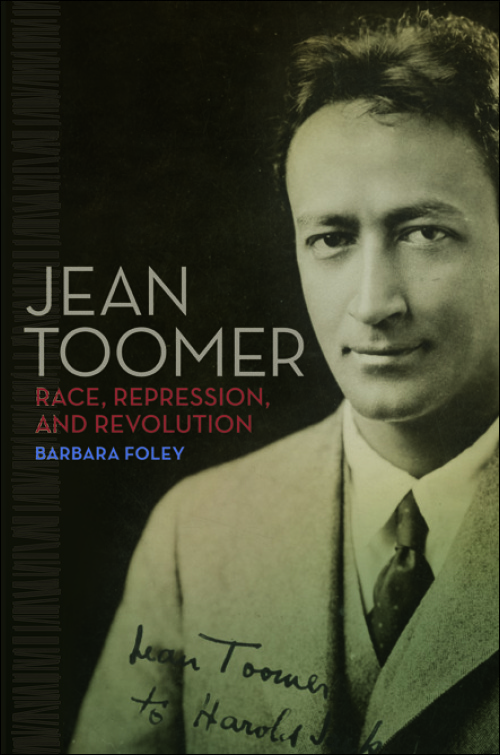
  • Jean Toomer: Race, Repression, and Revolution

    University of Illinois Press
    July 2014
    336 pages
    6.125 x 9.25 in.
    10 black & white photographs, 1 chart
    Cloth ISBN: 978-0-252-03844-0

    Barbara Foley, Professor of English
    Rutgers, The State University of New Jersey, Newark

    Political and personal repression and its effect on the work of a Harlem Renaissance luminary

    The 1923 publication of Cane established Jean Toomer as a modernist master and one of the key literary figures of the emerging Harlem Renaissance. Though critics and biographers alike have praised his artistic experimentation and unflinching eyewitness portraits of Jim Crow violence, few seem to recognize how much Toomer’s interest in class struggle, catalyzed by the Russian Revolution and the post–World War One radical upsurge, situate his masterwork in its immediate historical context.

    In Jean Toomer: Race, Repression, and Revolution, Barbara Foley explores Toomer’s political and intellectual connections with socialism, the New Negro movement, and the project of Young America. Examining his rarely scrutinized early creative and journalistic writings, as well as unpublished versions of his autobiography, she recreates the complex and contradictory consciousness that produced Cane.

    Foley’s discussion of political repression runs parallel with a portrait of repression on a personal level. Examining family secrets heretofore unexplored in Toomer scholarship, she traces their sporadic surfacing in Cane. Toomer’s text, she argues, exhibits a political unconscious that is at once public and private.