Mixed Race Studies

Scholarly perspectives on the mixed race experience.

    • About This Site
    • Bibliography
    • Contact Information
    • Date and Time Formats
    • Forthcoming… (Updated 2021-09-01)
    • Likely Asked Questions
    • List of Book Publishers
    • List of Definitions and Terms
    • My Favorite Articles and Papers
    • My Favorite Posts
    • My Recent Activities
    • Praise for Mixed Race Studies
    • Tag Listing
      • Tag Listing (Ordered by Count)
    • US Census Race Categories, 1790-2010
    • 1661: The First ‘Mixed-Race’ Milestone
    • 2010 U.S. Census – Some Thoughts

recent posts

  • The Routledge International Handbook of Interracial and Intercultural Relationships and Mental Health
  • Loving Across Racial and Cultural Boundaries: Interracial and Intercultural Relationships and Mental Health Conference
  • Call for Proposals: 2026 Critical Mixed Race Studies Conference at UCLA
  • Participants Needed for a Paid Research Study: Up to $100
  • You were either Black or white. To claim whiteness as a mixed child was to deny and hide Blackness. Our families understood that the world we were growing into would seek to denigrate this part of us and we would need a community that was made up, always and already, of all shades of Blackness.

about

  • Twitter
  • Facebook
  • Instagram
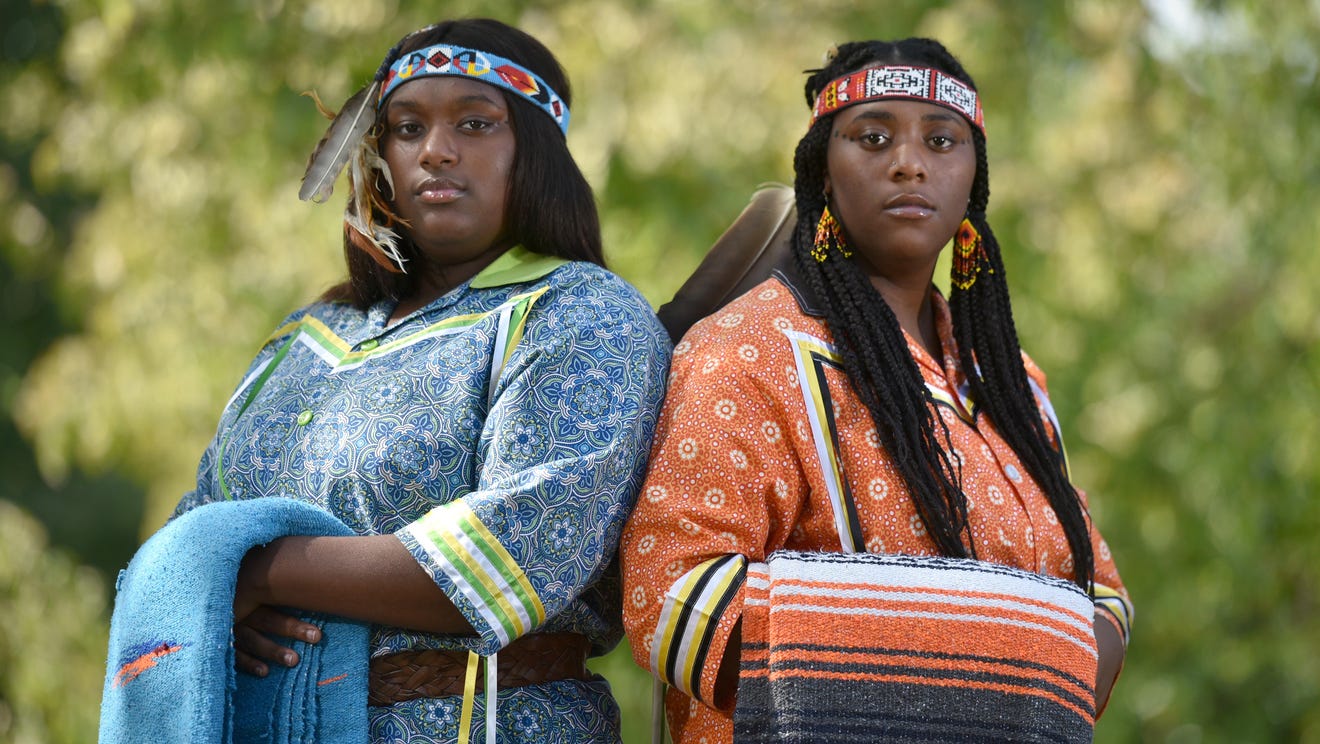
  • Twin sisters sue Wampanoag Tribe over disputed membership

    2021-02-14

    Twin sisters sue Wampanoag Tribe over disputed membership

    Cape Cod Times
    Hyannis, Massachusetts
    2020-09-27

    Jessica Hill, News Reporter


    Twin sisters Kayla, left, and Katie Balbuena outside their East Falmouth home. The sisters have filed suit against the Mashpee Wampanoag Tribe, arguing that tribe has wrongly taken them off its membership roll. Steve Heaslip/Cape Cod Times

    MASHPEE — Twin 20-year-old sisters are taking Wampanoag tribal leaders to court after they were removed from the tribal membership roll.

    Kayla and Kaitlyn Balbuena are suing the Mashpee Wampanoag Tribe Enrollment Committee in Tribal Court after the committee removed them from the tribal roll about a month ago.

    “We don’t want to sue our tribe,” Kayla said, “but we just want to fight for our rights back.”

    The Balbuena sisters filed the lawsuit on Sept. 15. The sisters, who live in East Falmouth, argue that the tribe’s enrollment department placed them on a pending list and have taken away their rights as tribal members based on hearsay and falsehood.

    The enrollment committee and Rita Lopez, the enrollment department director, did not respond to a request for comment. Jessie “Little Doe” Baird, vice chairwoman of the Mashpee Wampanoag Tribal Council, also did not respond to a request for comment.

    Read the entire article here.

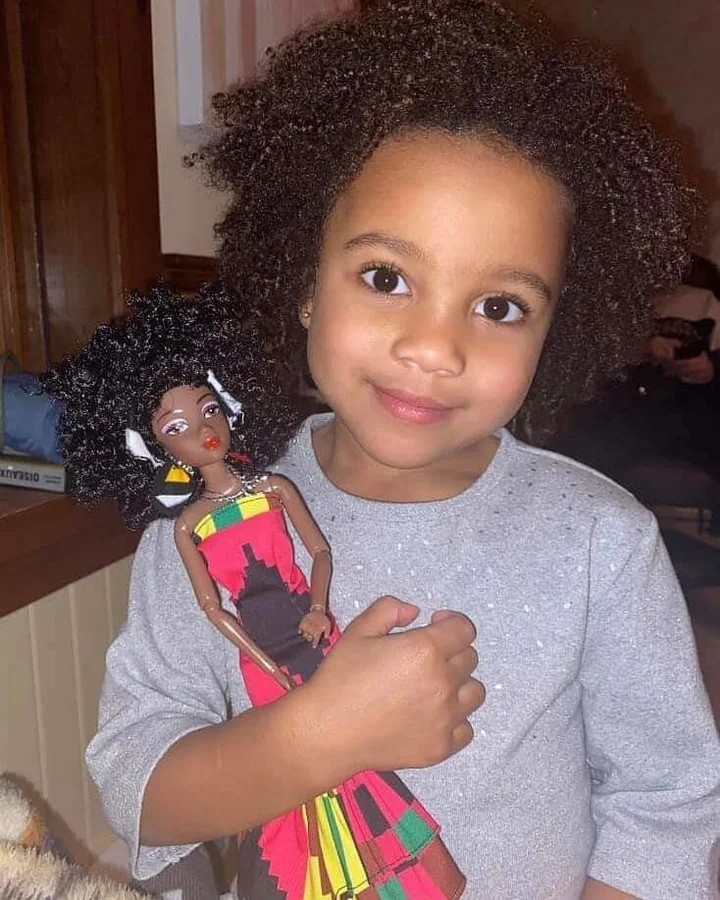
  • Meet The Quebec Dads Making Beautiful Black And Mixed-Race Dolls

    2021-02-13

    Meet The Quebec Dads Making Beautiful Black And Mixed-Race Dolls

    The Huffington Post
    2021-02-10

    Amélie Hubert-Rouleau


    A little girl with her Ymma doll. INSTAGRAM/YMMA.WORLD

    “We realized that the Black dolls were missing.”

    Ymma’s website prominently features a Nelson Mandela quote: “It is in your hands to make a better world for all who live in it.”

    Gaëtan Etoga and Yannick Nguepdjop take that literally. The two Quebec dads founded the company, which makes Black and mixed-race dolls, to inspire children and expose them to difference…

    Read the entire article here.

  • Still the tragic mulatto? Manufacturing multiracialization in magazine media, 1961–2011

    2021-02-13

    Still the tragic mulatto? Manufacturing multiracialization in magazine media, 1961–2011

    Ethnic and Racial Studies
    Volume 42, 2019 – Issue 4: Special Issue: The mechanisms of racialization beyond the black/white binary
    pages 645-665
    DOI: 10.1080/01419870.2017.1380212

    Sheena K. Gardner, Assistant Research Professor
    Mississippi State University
    Social Research Center

    Matthew W. Hughey, Professor of Sociology
    University of Connecticut

    On the heels of the 2000 US Census allowance of multiracial categorization and with rising mainstream discussion of multiracial heritage, questions over the meanings of multiracialism are quite prevalent. Scholars have highlighted how mainstream-oriented and black-oriented media structure (multi)racial conflicts, concepts, and categories. However, sociological analysis has neither examined qualitative differences and nuance among multiracial-oriented media sources nor specified the precise qualitative themes, frames, and discourse of that representation across time and media format. A content analysis of mainstream-, black-, and multiracial-oriented magazine articles demonstrates how varied media sources differently drew upon, resisted, and reproduced distinct understandings of multiracialism to reproduce the dominance of the “Tragic Mulatto” trope. The implications for this study illuminate the import of multiracial self-esteem, the intersection of conservative political movements and black interest groups in the fight for and against a multiracial movement, and the paradoxical role of anti-black stereotypes in multiracial representations.

    Read or purchase the article here.

  • The complex history of Alexander Twilight, nation’s first African American to earn a bachelor’s degree

    2021-02-11

    The complex history of Alexander Twilight, nation’s first African American to earn a bachelor’s degree

    USA Today
    2021-02-08

    Marina Affo, Reporter
    Delaware News Journal, New Castle, Delaware

    Though Twilight is lauded today as an African American scholar, preacher and educator, for much of his life he was marked as white on census records.

    Tucked away on Franklin Street at Vermont’s Middlebury College sits a modest, red-bricked building bearing the name of Twilight Hall.

    It pays homage to the first student of African descent who graduated from Middlebury in 1823. Alexander Twilight was also the first Black person to obtain a bachelor’s degree across America – a piece of history Middlebury is proud to represent.

    At Northern Vermont University, there is Alexander Twilight Theater and in Boston, there is Alexander Twilight Academy, which offers year-round academic programming for middle school students from under-resourced backgrounds to prepare them for high school and college.

    Though not widely know, Twilight is celebrated as an accomplished African American man whose achievements paved the way for others like him.

    But consider this: Though Twilight is lauded today as an African American scholar, preacher and educator, for much of his life he was marked as white on census records…

    Read the entire article here.

  • Race and Authenticity: A Film Study on Douglas Sirk’s Imitation of Life

    2021-02-10

    Race and Authenticity: A Film Study on Douglas Sirk’s Imitation of Life

    Drunk Monkeys
    2020-05-18

    Ilari Pass


    Image © Universal Pictures

    “It’s a sin to be ashamed of what you are.”
    —Annie Johnson, Imitation of Life

    Literature helps the reader travel inside the skin of the character—the mystery of another human being—and this understanding unsettles the reader’s received notion about the ‘other,’ a person who might be otherwise judged. The same can be applied to studying a film, allowing us to enhance our appreciation of subject matter that depicts a range of human experience by carefully looking at the artistic systems, such as cinematography, lighting, costume, and acting, that produce a rich and textured work of art. Douglas Sirk’s 1959 melodramatic film Imitation of Life, which depicts the lives of four different people living in a world that is beyond their control, is a film that operates at the level of art. The first half of the film deals with a question from a feminism perspective, about what it means to be a woman living in a male-dominated society, and the second half addresses the perspective of how women of color are affected by racism. It is a story about imitating, pretending to be something that isn’t true. However, what is true is what the characters literally see—gender and race—something no one can walk away from…

    Read the entire article here.

  • Understanding the Legacy of Nella Larsen’s Passing

    2021-02-10

    Understanding the Legacy of Nella Larsen’s Passing

    The Mary Sue
    2021-02-04

    Princess Weekes, Assistant Editor

    Right now on the Sundance circuit is the Rebecca Hall-directed film Passing, starring Tessa Thompson and Ruth Negga. It is an adaptation of the Harlem Renaissance classic Passing by Nella Larsen. Embedded into the text is a rich powerful narrative about the Black American experience and the lengths people go to survive in America.

    Nella Larsen was both in 1890s Chicago as the daughter of a mixed-race Afro-Caribbean man and a white Danish immigrant woman. Larsen didn’t grow up with her father and in 1891 the Great Migration hasn’t happened yet, so the Black population was less than 2%. After her mother remarried, they moved to a mostly white neighborhood filled with German and Scandinavian immigrants. As a result, Larsen did not grow up in the usual world of Black Americanness. Or Blackness period…

    …While it would be easy to dismiss Passing as a typical “tragical mulatto” story, I have always felt that it was more Larsen reflecting on the ultimate tragedy of those who have passed.

    In A Chosen Exile: A History of Racial Passing in American Life by Allyson Hobbs, the author explains that this is a narrative of loss. “I started to realize that writing this history of passing is really writing a history of loss,” Hobbs told NPR….

    Read the article here.

  • Brazilian butt lift: behind the world’s most dangerous cosmetic surgery

    2021-02-10

    Brazilian butt lift: behind the world’s most dangerous cosmetic surgery

    The Guardian
    2021-02-09

    Sophie Elmhirst

    The BBL is the fastest growing cosmetic surgery in the world, despite the mounting number of deaths resulting from the procedure. What is driving its astonishing rise?

    The quest was simple: Melissa wanted the perfect bottom. In her mind, it resembled a plump, ripe peach, like the emoji. She was already halfway there. In 2018, she’d had a Brazilian butt lift, known as a BBL, a surgical procedure in which fat is removed from various parts of the body and then injected back into the buttocks. Melissa’s bottom was already rounder and fuller than before, and she was delighted by the effect, with how it made her feel and how it made her look. But it could be better. It could always be better.

    On a recent afternoon, Melissa visited the British aesthetic surgeon Dr Lucy Glancey for a consultation. Glancey had performed Melissa’s first BBL at her clinic on the Essex-Suffolk borders, a suite of rooms boasting shining white cupboards, a full-length mirror and drawers stuffed with syringes. As she waited for Melissa to arrive, Glancey showed me a picture of Melissa on the beach in Dubai, wearing a palm-print bikini and posing in a kind of provocative crouch – arms, breasts, thighs and buttocks all arranged for optimum effect. “Look how good she looks,” said Glancey, admiring Melissa and her own work. “I said to her, I don’t see what else we can do.”

    When Melissa walked into the room, she didn’t exactly resemble her digital self, but then, who does? She’d swapped Dubai-luxe for Suffolk-casual – blue jeans and a pink sweater. After a quick chat, Glancey – dark blue scrubs, coral toenails – asked Melissa to take off her clothes. Together, doctor and patient stood in front of the mirror and stared.

    …Like anyone inspecting their own body, Melissa could see things no one else could see. She wasn’t seeing just its current form in the mirror, but multiple versions: her former body, her desired body, her digital body. In her teens, nearly a decade ago, when Cara Delevingne’s thigh gap had its own Twitter account, Melissa had wanted to be thin and flat like everyone else. Then fashions changed. Explaining why she got her first BBL, Melissa, who is white, said she had wanted to fill out a pair of jeans and appeal to the kind of men she liked. “I felt attracted to black men and mixed-race men, and they liked curvier women,” she told me…

    …Not everyone can achieve the Kardashian body. As with much of the Kardashian West oeuvre, her bottom has its own attendant controversies, not least because it appears to want to be an idealised version of a black woman’s bottom. Kardashian West, who has Armenian heritage and has always denied having had bottom surgery, has long been accused of “blackfishing” – mimicking and appropriating black culture to enhance her brand. “It’s completely constructed, a kind of fiction,” said Alisha Gaines, professor of English at Florida State University, and the author of Black for a Day: White Fantasies of Race and Empathy. “She’s made an empire on appropriating blackness and selling it to all types of people, including black folks.”…

    Read the entire article here.
  • The Hidden History of Black Argentina

    2021-02-10

    The Hidden History of Black Argentina

    The New York Review
    2021-02-08

    Uki Goñi


    Allsport via Getty Images
    Diego Maradona (front, center) with family and friends in Villa Fiorito, Argentina, 1980

    A century of European immigration brought with it a comprehensive effort to erase the country’s multiracial past. Only recently has that been reversed.

    Erika Denise Edwards, Hiding in Plain Sight: Black Women, the Law, and the Making of a White Argentine Republic (Tuscaloosa: University Alabama Press, 2020).

    “This country has no tradition of its own,” Argentina’s master writer, Jorge Luis Borges, told me in an interview in 1975. “There’s no native tradition of any kind since the Indians here were mere barbarians. We have to fall back on the European tradition, why not? It’s a very fine tradition.” The words grate to modern ears, but they seemed true to Borges’s world. His own grandmother, Frances Anne Haslam, had come from Staffordshire, England. And by 1920, when Borges turned twenty-one, over half the population of his native Buenos Aires had been born in Europe, the result of a vast wave of late nineteenth-century and early twentieth-century immigration.

    According to this idea of Argentina’s roots, our capital city of Buenos Aires is “the Paris of South America,” and “we are all descendants from Europe,” as then President Mauricio Macri said at the World Economic Forum in Davos, Switzerland, in 2018. A corollary of this claim is one made by an earlier president, Carlos Menem, to a Dutch audience at Maastricht University in 1993 that, because Argentina had abolished slavery as early as 1813, “we don’t have blacks.” At a later lecture—bizarrely enough, at Howard University in Washington, D.C.—Menem added, “that is a Brazilian problem.”

    For me, the myth of a European-only Argentina reached its breaking point last November, with the death of the soccer star Diego Maradona, arguably the greatest player who ever lived. He transcended the world of sports to become a figure of hope and defiance for millions of Argentines…

    Read the entire review here.

  • A Family History of British Empire

    2021-02-10

    A Family History of British Empire

    Black Perspectives
    2021-02-05

    Mary Hicks, Assistant Professor of Black Studies and History
    Amherst College, Amherst, Massachusetts

    “Where are you from?”—The deceptively simple question looms over the sprawling narrative of Imperial Intimacies: A Tale of Two Islands, the newest work by Black feminist theorist, literary critic, and historian Hazel Carby. This historical and existential query frames Carby’s gripping exploration of her ambivalent relationship to idealized “Britishness” as the child of a white, working-class Welsh mother and a Black, Jamaican father born in 1940s London. The omnipresent demand by strangers that she produce a satisfying account of her origins exemplifies her experiences as an unlocatable and thus unimaginable subject (98). Her own emotionally charged childhood memories ground Carby’s evocative examination of the intertwined nature of intimacy, race, and labor in the British Empire, stretching from the period following World War II back to the revolutionary wars of the late eighteenth century.

    Imperial Intimacies begins with the Gramscian imperative to reconstruct, and at times invent, one’s personal genealogy, not only in fact but in feeling…

    Read the entire review here.

  • “We tend to believe that people can have only one ethno-racial background and that this identity is fixed when in fact it can be quite fluid.”

    2021-02-09

    “We’ve allowed ideas about race to loom very large,” says Mr. [Richard] Alba. “We tend to believe that people can have only one ethno-racial background and that this identity is fixed when in fact it can be quite fluid.” This in turn has corrupted political thinking, especially among Democrats who accept the demography-is-destiny theory—the notion that they need only bide their time and minority voters will put them into a position of unassailable political power.

    John J. Miller, “‘Majority Minority’ America? Don’t Bet on It,” The Wall Street Journal, February 7, 2021. https://www.wsj.com/articles/majority-minority-america-dont-bet-on-it-11612549609.

Previous Page
1 … 91 92 93 94 95 … 1,428
Next Page

Designed with WordPress