Pageant Press
1952
254 pages
Dorothy Lee Dickens
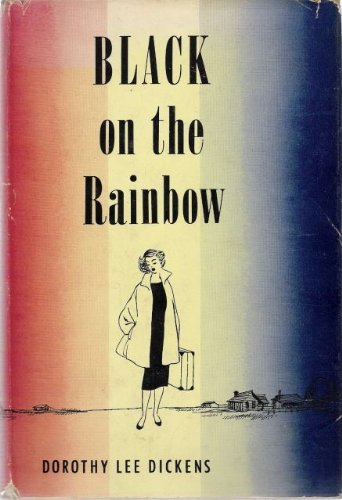
This book tells the story of Hilda, a lovely Negro girl, who is given a choice of “passing” as white or remaining loyal to her race.
Read the entire book here.
Scholarly perspectives on the mixed race experience.
Pageant Press
1952
254 pages
Dorothy Lee Dickens
This book tells the story of Hilda, a lovely Negro girl, who is given a choice of “passing” as white or remaining loyal to her race.
Read the entire book here.
Creighton hosts two-day event to commemorate Loving v. Virginia ruling
News Center
Creighton University, Omaha Nebraska
2017-03-27
Race. Identity. Relationships. Power. These were the main themes in last week’s two-day event, “50 Years of Loving: Seeking Justice Through Love and Relationships,” hosted by Creighton University’s 2040 Initiative and the Werner Institute. More than 150 people participated in the event.
Loving v. Virginia is a 1967 U.S. Supreme Court decision that ruled anti-miscegenation laws unconstitutional. The case involved Richard Loving, a white man, and Mildred Loving, a black woman. They were charged in Virginia with the felony of miscegenation – or mixing races – and were told their marriage was invalid.
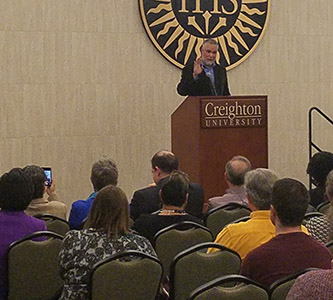
Creighton’s two-day event kicked off last Thursday with a talk by Mat Johnson, author of the 2015 book Loving Day. Semi-autobiographical in nature, Johnson read passages from his book and spoke about his own upbringing and struggles with race and identity…
Read the entire article here.
America’s “one-drop rule” historically identified any individual with a single black ancestor as black, and therefore inferior. And while most of us these days know that “racial purity” is as grounded in reality as mermaids and unicorns, the “one-drop” idea continues. Harvard University psychologists found that mixed-race individuals are still perceived as belonging to the racial group of their “lower-status” parent. Imagine the world classifying Barack Obama as a white man as a result of his white heritage? It would never happen.
Claire Hynes, “Rachel Dolezal’s pick-your-race policy works brilliantly – as long as you’re white,” The Guardian, March 27, 2017. https://www.theguardian.com/commentisfree/2017/mar/27/rachel-dolezal-race-white.
Rachel Dolezal’s pick-your-race policy works brilliantly – as long as you’re white
The Guardian
2017-03-27
Claire Hynes, Tutor in Literature and Creative Writing
University of East Anglia, Norwich, Norfolk, United Kingdom
 ‘Great for Dolezal that she got to realise her ambition to be black. But reverse the situation, and European-style hair extensions and a white parent would not facilitate the switch.’ Photograph: Colin Mulvany/AP |
Dolezal’s idea that we all ‘write our own stories’ is easy for her to say. In reality, the racial fluidity she preaches is a one-way street
Rachel Dolezal, the white woman who for more than 10 years pretended she was black, promotes herself as transracial in her new memoir, published this week. How seriously are we expected to take this latest incarnation?
Dolezal, who recently changed her name to Nkechi Diallo, a mixture of Nigerian Igbo and Fula, claims that her book, In Full Color: Finding My Place in a Black and White World, was written partly “to just encourage people to be exactly who they are”. This comes two years after she was found to have deceived the people of Spokane, Washington, where she was a race activist and branch president of the National Association for the Advancement of Colored People…
Read the entire article here.
Half-Japanese, half-Ghanaian brothers sing about prejudice they faced
The Mainichi: Japan’s National Daily Since 1922
2017-03-26
Hiromi Nagano, Los Angeles Bureau
 The Yano Brothers, from left, eldest brother Michael, middle brother David, and youngest brother Sanshiro, are seen in Los Angeles, on Feb. 22, 2017. (Mainichi) |
LOS ANGELES — Three half-Japanese, half-Ghanaian brothers who moved from Ghana to Japan as young children and grew up experiencing prejudice and feeling they were different have put their experiences into song.
Forming a musical unit called the Yano Brothers, the three men, born to a Japanese father and a Ghanaian mother, say they were discriminated against as “gaijin“ (foreigners) since they were young, due to their dark skin. Last month, the three spoke about these experiences and sang at the Japanese American National Museum in Los Angeles. Drawn in by their words and their heart-moving music, I could not bring myself to move from my spot for a while…
Read the entire article here.
México’s Nobodies: The Cultural Legacy of the Soldadera and Afro-Mexican Women
State University of New York Press
February 2017
350 pages
Hardcover ISBN13: 978-1-4384-6357-5
B. Christine Arce, Assistant Professor of Latin American Literature and Culture
University of Miami, Miami, Florida

2016 Victoria Urbano Critical Monograph Book Prize, presented by the International Association of Hispanic Feminine Literature and Culture
Analyzes cultural materials that grapple with gender and blackness to revise traditional interpretations of Mexicanness.
México’s Nobodies examines two key figures in Mexican history that have remained anonymous despite their proliferation in the arts: the soldadera and the figure of the mulata. B. Christine Arce unravels the stunning paradox evident in the simultaneous erasure (in official circles) and ongoing fascination (in the popular imagination) with the nameless people who both define and fall outside of traditional norms of national identity. The book traces the legacy of these extraordinary figures in popular histories and legends, the Inquisition, ballads such as “La Adelita” and “La Cucaracha,” iconic performers like Toña la Negra, and musical genres such as the son jarocho and danzón. This study is the first of its kind to draw attention to art’s crucial role in bearing witness to the rich heritage of blacks and women in contemporary México.
Table of Contents
Race takes on a particular relevance in the United States, given our history and also the political climate now. In science, we see the way race has become this enduring variable that explains things like oppression. It’s very powerful and it resonates, so there’s even more responsibility to use it carefully and to really uncouple and deconstruct what it’s a proxy for. While most people would argue that we need to break down what race is standing in for in those studies, that research doesn’t actually happen. So what we’re left with is race as this very crude proxy for difference that has all the power to explain issues that relate very directly to social justice. We need to really move beyond race. —Sandra Soo-Jin Lee
Lynette Chiu, “Dr. Sandra Soo-Jin Lee: Toward a More Precise Genetics,” Guernica / a magazine of global arts & politics, February 27, 2017. https://www.guernicamag.com/dr-sandra-soo-jin-lee-toward-a-more-precise-genetics/.
Palma Joy Strand: The politics of Loving v. Virginia
Omaha World-Herald
Omaha, Nebraska
2017-03-16
Palma Joy Strand, Professor of Law
Creighton University, Omaha, Nebraska
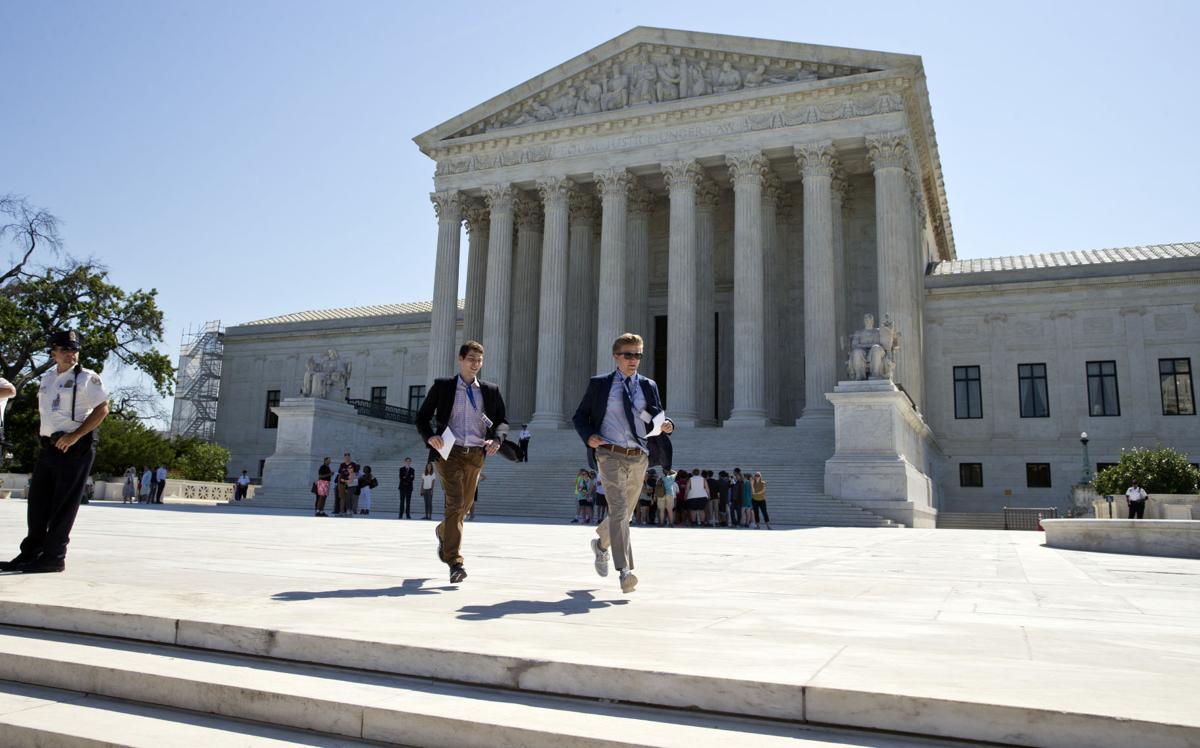
Alex Brandon
The writer is a law professor and director of the 2040 Initiative at the Creighton University School of Law.
The year 2017 marks the golden anniversary of the landmark court decision Loving v. Virginia. Fifty years ago, the U.S. Supreme Court held that Richard Loving (who happened to be white) and Mildred Jeter (who happened to be black) had a constitutional right to marry.
The right to marry someone of a different race has put down roots. In his book “Racing to Justice,” the writer and social justice advocate john a. powell notes, “Nearly 15 percent, or one in seven, of all new marriages in 2008 were between people of different races or ethnicities.”
These interracial marriages create social ripples. Powell continues, “(M)ore than a third of all adults surveyed reported having a family member whose spouse is of a different race or ethnicity — up from less than a quarter in 2005.” We have moved beyond “Guess Who’s Coming to Dinner” to routinely having folks of more than one race around our Thanksgiving tables.
Along with mixed-race marriages and families, the proportion of the U.S. population with multiple racial heritages has grown dramatically. The Pew Research Center found in 2013 that the share of multiracial babies had risen from 1 percent in 1970 to 10 percent in 2013.
Loving marriages and Loving families and Loving children have transformed who we are as a nation. In the midst of continued racial separation, there are racial connections — connections that disrupt the same-old, same-old stories.
Yet the relevance of Richard and Mildred Loving and Loving v. Virginia today transcends both marriage and race…
Read the entire article here.
The Fight for Interracial Marriage Rights in Antebellum Massachusetts by Amber D. Moulton (review)
Journal of the Early Republic
Volume 37, Number 1, Spring 2017
pages 183-185
DOI: 10.1353/jer.2017.0015
Terri L. Snyder, Professor of American Studies
California State University, Fullerton
The Fight for Interracial Marriage Rights in Antebellum Massachusetts. By Amber D. Moulton. (Cambridge, MA: Harvard University Press, 2015. Pp. 288. Cloth, $45.00.)
In this sharply focused study, Amber D. Moulton examines the battle to overturn the Massachusetts statute banning interracial marriage, originally enacted in 1705 and repealed in 1843, and offers a penetrating analysis of early arguments over the right to marry. Each chapter critically foregrounds existing studies of miscegenation law, and the epilogue usefully links the legal histories of interracial and same-sex marriage. Long before Loving v. Virginia (1967) or Obergefell v. Hodges (2015), some antebellum activists in Massachusetts argued that marriage was a constitutional right and an essential element of social and political equality. The claim of equal rights alone did not carry the day, however. As Moulton demonstrates, the most persuasive arguments against the law were rooted in appeals to moral reform rather than in demands for racial civil rights.
The Fight for Interracial Marriage Rights is a skillful blend of legal history and lived experience. In her first chapter, Moulton offers a history of the ban and analyzes its consequences for interracial families. Colonial Massachusetts, following the lead of the slave societies of the Caribbean and the Chesapeake, banned interracial marriage in 1705. The statute was expanded in scope and severity in 1786 and remained in place until 1843, when it was overturned. Despite the legal prohibition against interracial unions, women and men of different races continued to marry in Massachusetts. The legal ban was clear-cut in theory, but interracial couples pursued varying strategies in their marriage practices. Some couples gained the protection of legal marriage when they wed outside of Massachusetts and returned to the colony or state as husband and wife. If partners could not be legally married, they established informal unions and protected children through carefully delineated inheritance strategies. Others shunned the law altogether. However, once an informally married interracial couple came to the attention of the courts—particularly when they or their children petitioned for support—their union could be voided and their children declared illegitimate. Class was a clear factor: The poorest couples were more at risk for having their claims to wedlock invalidated. Moreover, the official ban on interracial marriages sometimes existed in opposition to local culture. At least some interracial couples who attained middling status appear to have been accepted in their neighborhoods.
Subsequent chapters investigate the range of advocates who fought against the ban on interracial marriage. In some of the more fascinating examples in her study, Moulton investigates and highlights the transmission of activist aims in African American families. In 1837, for instance, African American activists made the right to interracial marriage a plank on their antislavery platform; some of these activists were either spouses in or children born to interracial unions. The study is also strong in its analysis of gender. Regardless of race, women activists who opposed the ban were charged with indecency. Some opponents claimed that political petitioning in support of interracial marriage—and the racial mixing it implied—was anathema to white femininity. However, some women activists countered that interracial marriage protected women. Marriage, they argued, was a bulwark against licentiousness (which could lead to promiscuity and prostitution), provided the security of patriarchal family structure, and offered official legitimacy for children of these unions as well.
Rather than claims of equal rights, then, the most persuasive arguments in overturning interracial marriage prohibitions in Massachusetts were rooted in the values of traditional marriage and gender roles, patriarchal ideologies and feminine duty, and the importance of Christian morality. At the same time, unforeseen events, such as the Latimer case, which aroused indignation over southern demands that Boston’s officials hunt fugitive slaves, galvanized public opinion in favor of overturning the law. Ultimately, prohibiting interracial marriage was viewed as immoral, unconstitutional, and unjust, as well as a uniquely southern encroachment on individual freedom from which northerners wanted to distance themselves. Despite its innovation, however, Massachusetts did not become a model for the nation: Twenty years after that state legalized interracial marriage, over…
Dr. Sandra Soo-Jin Lee: Toward a More Precise Genetics
Guernica / a magazine of global arts & politics
2017-02-27
Lynette Chiu
Brooklyn, New York
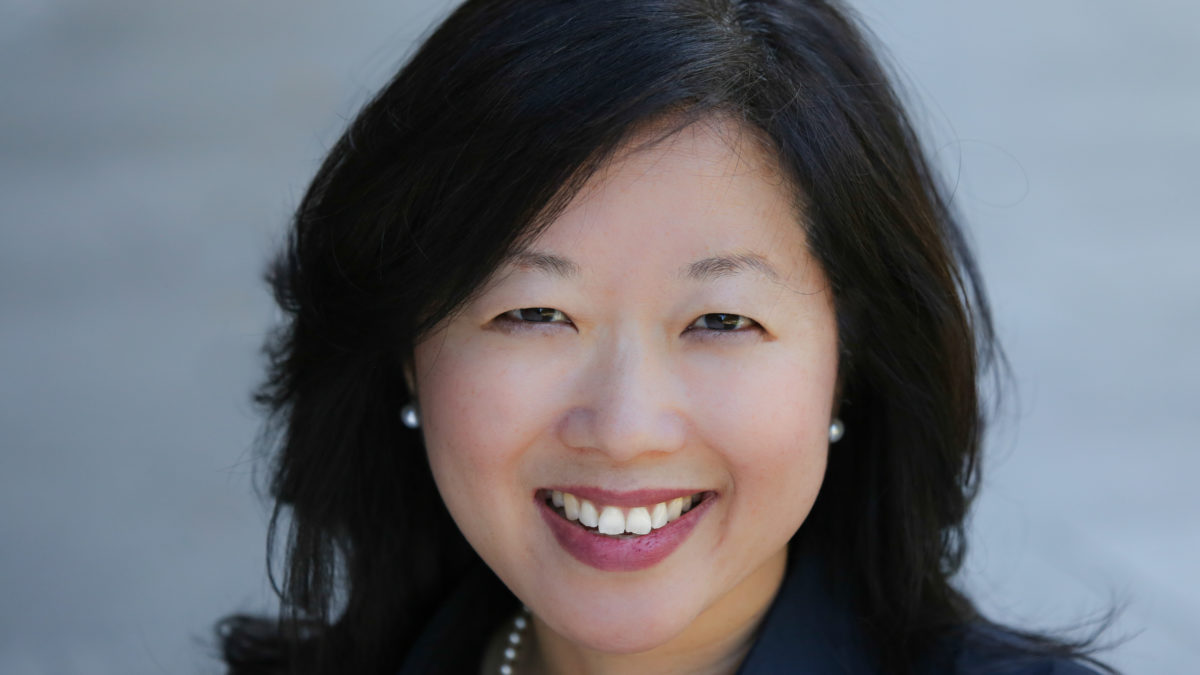
The medical anthropologist on the imperative to move beyond race in genetic research and the explanatory power of life experience and inequality.
For decades, the idea that excavating the genetic origins of disease could transform treatment of the body has lived in the sea of public imagination, buoyant but as yet unrealized. The Human Genome Project, a landmark initiative undertaken between 1990 and 2003, identified and analyzed all the genes found in humans, and sowed the potential for new understanding of major illnesses. It engendered hope of a future in which genetic makeup could be the primary factor in determining a person’s care. Researchers could make endless shapes out of a sandbox of data that was blind to race—that problematic and omnipresent variable in the biomedical sphere.
But it is not a simple thing to scrub race from human tissue samples or from the minds of the experts seeking answers, and it remains stubbornly inextricable from genetic research. Investigating the history, intricacies, and implications of this is Dr. Sandra Soo-Jin Lee, a medical anthropologist and senior research scholar at the Center for Biomedical Ethics at Stanford University, who has been studying the role of race in genomic science since the late 1990s. One of her principal interests is biobanks—the various repositories of samples that scientists turn to to test their hypotheses. She identifies them as chronicles of society’s evolving efforts to distinguish between groups; the sorting and labeling of their contents are a collision of the biological and the sociopolitical. The result is the physical matter of thousands upon thousands of individuals demarcated by an inconsistent jumble of terms such as “nationality,” “ethnicity,” and “skin color.”.
In her 2015 paper “The Biobank as Political Artifact: The Struggle Over Race in Categorizing Genetic Difference,” published in The Annals of the American Academy of Political and Social Science, Dr. Lee is forthright about the dangers of genetic studies built around samples identified by race. “The unqualified racial labeling of DNA that strips genes of the social context and experience of those who have donated these materials,” she writes, “allows for a pendulum shift in scientific discourse that racializes genes.” Race can end up standing in for factors, such as diet and environment, that go unaccounted for in gene-focused studies. The subsequent findings can then trickle down to affect how we explain differences in disease burden, create health policy, and progress toward eliminating health disparities between populations. With the term “precision medicine” on the rise, referring to a care model that translates insights around genetic variation into clinical practice, the need to inspect and augment how those insights come about has grown more urgent…
Read the entire article here.