• AIA Evening Lecture: An Overlooked Chapter in the History of Egyptology: W.E.B. DuBois, Marcus Garvey & Pauline Hopkins

    Penn Museum
    University of Pennsylvania Museum of Archaeology and Anthropology
    3260 South Street
    Philadelphia, Pennsylvania 19104
    Thursday, 2017-03-30, 18:00-19:00 EDT (Local Time)

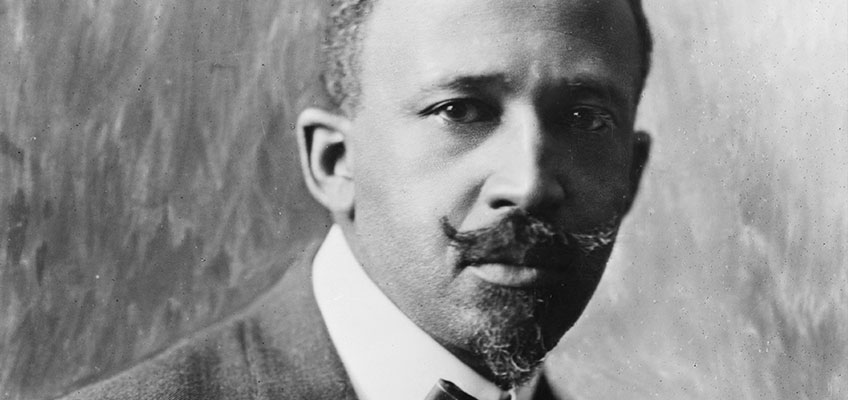
    Vanessa Davies, Visiting Research Scholar at the University of California, Berkeley, speaks at this Archaeological Institute of America Philadelphia Society lecture. Three prominent black writers of the early 20th century—W.E.B. Du Bois, Marcus Garvey, and Pauline Hopkins—incorporated ancient Egyptian culture into their writings. Attacking a common theory of their day, DuBois and Garvey used ancient Egyptian culture to argue for the humanity of black people, marshaling evidence of Egypt’s glorious past to inspire black people in the Americas with feelings of hope and self-worth. They also engaged with the contemporary work of prominent archaeologists, a fact lost in most histories of Egyptology. Hopkins’ novel Of One Blood places the reality of the racial discrimination and the racial “passing” of her day against the backdrop of ancient Egypt. Like Du Bois, she advocates for the education of black Americans, and like Garvey, she constructs an African safe haven for her novel’s protagonist. Understanding these three writers’ treatments of ancient Egypt, Davies argues, provides a richer perspective on the history of the discipline of Egyptology. Reception with opportunity to meet the speaker follows.

    For more information, click here.

  • Krazy: George Herriman, A Life in Black and White by Michael Tisserand (review)

    Inks: The Journal of the Comics Studies Society
    Volume 1, Issue 1, Spring 2017
    pages 117-120

    Christopher Jeansonne, University Fellow, Graduate Teaching Associate
    Department of Arts Administration, Education and Policy
    Ohio State University

    Michael Tisserand, Krazy: George Herriman, A Life in Black and White. Harper, 2016. 550 pp, $35.

    Michael Tisserand’s Krazy: George Herriman, a Life in Black and White, a work of passion and sagacity, not only gives a comprehensive overview of Herriman’s oeuvre but insightfully situates it in personal and socio-cultural context. Krazy Kat is perhaps one of the most lauded newspaper comic strips of all time, and yet this is the first book-length biography of its creator. Nine years in the making, Tisserand’s book has been much anticipated by scholars and fans of the artist. As suggested by the double meaning of the title, Tisserand argues that an awareness of Herriman’s complex racial background is central to reading both Herriman’s life and his work. Herriman was listed as “col.” (or “colored”) on his New Orleans birth certificate and “Caucasian” on his California death certificate—and these two arbitrary classifications form the frame to Tisserand’s study.

    Tisserand’s prose has a lively clarity learned from a career working extensively as a journalist, and this comprehensive biography will certainly be sought out by both academic and lay audiences interested in newspaper comics, or comics in general. As an exhaustive historical account of Herriman’s life, it will be an indispensable resource for scholars working in sequential art; thanks to Tisserand’s meticulous research, even those deeply familiar with Krazy Kat will cull new insights from the details he has unearthed. Perhaps most importantly, this comprehensive and nuanced account of Herriman’s life and work in parallel in a single volume reveals new depths to the “komplexities” of the Krazy Kat with whose challenges many of us thought we had already grappled.

    Part 1, “Watta Woil,” opens with an account of the posthumous uncovering of Herriman’s ambiguous racial heritage by scholars in the 1970s, and the debates that ensued: How reliable was this information? To what degree was Herriman aware of his racially mixed background? What is the relevance of racial identity for understanding Herriman’s work? Tisserand ends the opening chapter with a question that resonates throughout the rest of the book: “Did this revelation, whatever it was, find its way into his wondrous comics? Is it a source of the wonder?” Tisserand then describes in detail the complicated web of Herriman’s mixed-race ancestry and the challenges his ancestors faced during the post-Civil War and Jim Crow eras; some of the most powerful moments in this section are provided by the concrete, personal, and tragic features of the racist and reactionary post-slavery Deep South. These challenges finally led to his parents’ decision to move to California and pass as white. Throughout the remainder of Part 1, we follow Herriman’s early life and schooling, and his budding interest in a life of drawing comics—opportunities, Tisserand notes, that he may not have had as a “colored” youth in the New Orleans of the time.

    Part 2, “The Greek,” traces Herriman’s development as a professional cartoonist. For many hectic years he lived like a bi-coastal yo-yo, moving from Los Angeles to New York and back again as he switched jobs from newspaper to newspaper. He worked in the macho world of first-generation newspaper comics, with cartooning greats such as Tad Dorgan and Jimmy Swinnerton, building a name for himself with his inventive sports and political comics even as he struggled to find an audience for his numerous daily strip comic ideas. In this period Herriman’s work became increasingly concerned with social pretense, language, and mistaken or fluid identities, and central motifs such as minstrelsy began to take hold. While careful to note that “at times his comics did not rise above the ugly stereotypes of the day,” Tisserand also provides insightful readings of the ways Herriman was already challenging racism and complicating notions of racial identity even in his early comics (188). Particularly memorable are Tisserand’s passages on the “impussanations” from Herriman’s short-lived Musical Mose strip (in which a black musician poses as a Scotsman), and his cartoon coverage of interracial boxing matches, most notably…
  • “I eventually realized I could never make everyone happy with how I saw myself and my own relation to race,” Johnson continued. “I focused on making myself happy with how I identified. Ultimately, race is a strategy. Race doesn’t exist. It’s something we use to deal with ethnicity and class. We use it to keep one race or class in power.” —Matt Johnson

    Creighton hosts two-day event to commemorate Loving v. Virginia ruling,” Creighton University News Center, March 27, 2017. http://www.creighton.edu/publicrelations/newscenter/news/2017/march2017/march272017/lovingeventnr032717/.

  • Race, Place and Community: A Conversation with Author Emily Raboteau

    DCORE: Duke Council on Race and Ethnicity
    Duke University, Durham, North Carolina
    2017-03-28

    Micah English, T ’17


    Emily Raboteau

    Award-winning author Emily Raboteau will visit Duke and Durham this week as part of the Duke School of Medicine’s ongoing series, A Conversation about Race.

    She will be interviewed by Mark Anthony Neal, a professor of black popular culture in the Department of African and African American studies. Neal, is also the co-director of the Duke Council on Race and Ethnicity and the host of the weekly webcast, Left of Black. A portion of the event will be recorded live for a future episode of Left of Black.

    The event, “Race, Place and Community,” is free and open to the public and will be held at 8 a.m., Thursday, March 30 in the Great Hall at Trent Semans Center. Light breakfast will be served. Those unable to attend can watch a live webcast of the event at bit.ly/EmilyRaboteau.

    Raboteau, an English professor at the City College of New York, will sign copies of her latest book, Searching for Zion, following the talk.

    Organized by the Duke Clinical Research Institute, the event co-sponsors include the Duke School of Medicine, the Office of Diversity and Inclusion, the Center on Arts, Digital Culture and Entrepreneurship, and Left of Black.

    Searching for Zion is a work of creative nonfiction that chronicles Raboteau’s search for a place to call “home,” as a biracial woman who never felt at home in America. Recently DCORE was able to speak with Raboteau about being of mixed race, blackness and the racial color line…

    Read the entire interview here.

  • Race and Rachel Doležal: An Interview

    Contexts: understanding people in their social world
    2017-03-28

    Ann Morning, Associate Professor of Sociology
    New York University

    In June 2015, I got an email from a California radio station asking me for an interview about a person I had never heard of: Rachel Doležal. I quickly Googled her, and based on a brief news item, agreed to the interview. She seemed to be a White woman passing as Black, working as the president of the Spokane NAACP chapter to boot. I didn’t really see why this was national news, but I figured even a fluff piece could be an opportunity to foster public conversation about the fluidity of racial identities and the constructed nature of racial categories.

    The slow summer news day turned into a weeklong media frenzy, with shockingly intense public attention focused on Ms. Doležal’s racial self-identification. My Soc 101 lesson about racial construction turned into a dozen interviews with incredulous reporters, fascinated by the notion of “transracial” people. And based on Ms. Doležal’s comments at the time as well as her new book, In Full Color: Finding My Place in a Black and White World, the term “passing”—with its connotation of masquerading—couldn’t quite capture the gradual and deeply-felt process of Black affiliation that she underwent. In my view, she is not a passer—someone who seeks to turn existing racial categories to their advantage—so much as a person who rejects widespread beliefs about the criteria for racial categorization.

    The concept of race as a social construct is one that Rachel Doležal invokes repeatedly as she explains and defends her self-identification with a race different from the one claimed by her biological parents. Is she wrong? Has she misinterpreted something fundamental to our discipline’s contemporary teaching on race? And can her case shed any light on the millions of people who alter their racial self-reporting from one decennial census to the next, according to research by sociologist Carolyn Liebler and colleagues at the U.S. Census Bureau? I expect sociologists will vary in their answers to these questions, but I also suspect that many of us have found a teaching opportunity in what Rogers Brubaker calls “the Doležal affair.” I’m grateful that Doležal agreed to share an advance copy of In Full Color and answer a series of questions for the Contexts audience…

    AM [Ann Morning]: In the press and in your new book, you really double down on claiming a Black identity. In the very first pages of In Full Color, for example, you write about your “identity as a Black woman.” But if you could create a longer, more complex label that more fully captured your experience or viewpoint, what might that look like?

    RD [Rachel Doležal]: I get fatigued by the overly simplistic race labels, as if people are only one aspect of who they are at a time and not able to be simultaneously a person with a gender/race/age/class/religion/sexual orientation/nationality/disability/language. Yes, Black is the closest descriptive race or culture category that represents the essential essence of who I am, and I stand unapologetically on the “Black side” of the racially constructed Black/White divide. But, if I could choose a more complex label with my own terms, it might be “A pro-Black, Pan-African, bisexual artist, activist, and mother.”…

    Read the entire interview here.

  • mao ishikawa’s stunning photographs of her friends in 70s okinawa

    i-D
    2017-03-27

    Paige Silveria

    The cult Japanese photographer gives her first-ever English language interview, about her new book ‘Red Flower, The Women of Okinawa.’

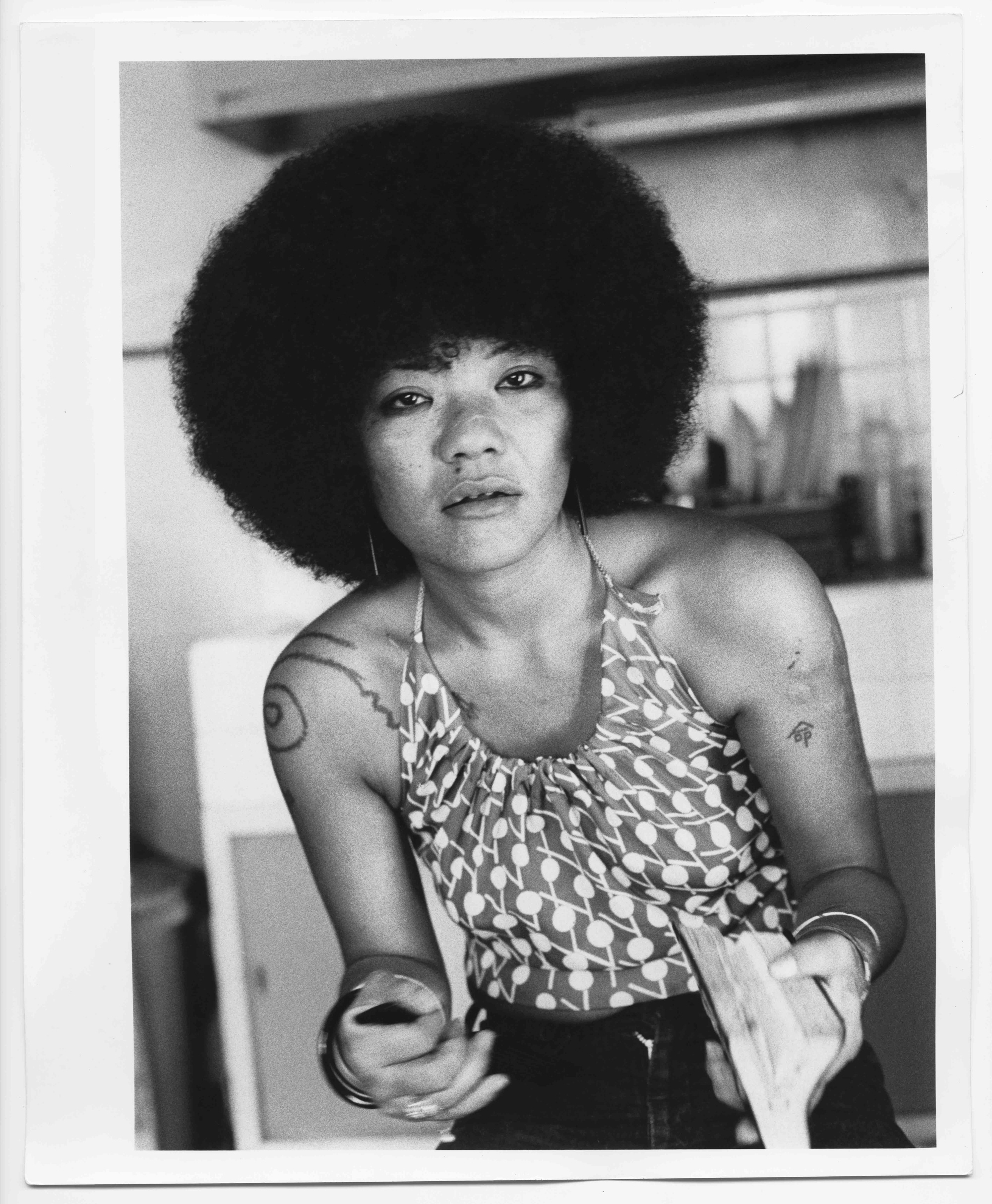
    This Tuesday, at New York’s subterranean photobook shop Dashwood, cult Japanese photographer Mao Ishikawa is signing her first monograph to be published in the United States: Red Flower, The Women of Okinawa. The newly released silkscreen book features striking black-and-white photographs of Mao and her girl friends, who worked in segregated GI bars, along with their boyfriends – the black army soldiers who frequented those bars in American-occupied Okinawa from 1975 to 1977. The images of carefree 20-year-olds as they laugh and cry, drink and fall in love, contrast sharply with the divisive tensions of the militarily controlled island…

    Read the entire article here.

  • INTO THE NEXT STAGE: Hapa Documentaries — Twin Takes on Similar Subject

    The Rafu Shimpo: Los Angeles Japanese Daily News
    2017-03-16

    George Toshio Johnston

    As part of last month’s Hapa Japan Festival 2017 was a screening of a pair of documentaries I was very interested in viewing: “Fall Seven Times, Get Up Eight: The Japanese War Brides” and “Rising Sun, Rising Soul.”

    Both screened Thursday, Feb. 23, in Little Tokyo at the Japanese American National Museum’s Tateuchi Democracy Forum, with filmmakers from each in attendance to speak about the respective documentaries afterwards and to take audience questions.

    While different in emphasis, both “Fall Seven Times” and “Rising Sun” had at their respective cores a shared source, namely the so-called Japanese war bride phenomenon that occurred following Japan’s defeat after World War II.

    It was during that post-war occupation period when thousands upon thousands of U.S. military personnel from all branches of the Armed Forces, as well as civil service employees, went to Japan and Okinawa, the latter of which was a quasi-U.S. military colony that didn’t regain Japanese prefectural status until 1972…

    …In today’s environment, when no one in California, the West Coast or big cities pauses when seeing a mixed-race couple in which one of the two is an Asian, these two documentaries do underscore what a big deal the Japanese war bride phenomenon really was…

    Read the entire article here.

  • Rachel Dolezal’s TEDx Talk

    TED Blog
    TED (Technology, Entertainment, and Design)
    2016-11-02

    The TED Editors

    In April 2016, Rachel Dolezal spoke at an independently organized TEDx event held at a university. As you may know, Ms. Dolezal is a former president of the NAACP’s Spokane chapter who sparked a national debate and resigned after the public discovered that she was a white woman identifying herself as a black woman.

    Recently she announced on TV that she had recorded “a TED Talk.” Some of you were upset by this. Indeed, the news surprised us too, because we knew she hadn’t spoken at a TED event. But it turned out she had spoken at one of the thousands of TEDx events that are held around the world.

    TEDx organizers host events independent of TED, and they have the freedom to invite speakers they feel are relevant to their communities. These volunteers find thousands of new voices all over the world — many of which would not otherwise be heard — including some of our most beloved, well-known speakers, people like Brene Brown and Simon Sinek.

    What TEDx organizers have achieved collectively is remarkable. But, yes, some of them occasionally share ideas we don’t stand behind…

    Read the entire letter and watch the talk here.

  • Red Flower, The Women of Okinawa

    Session Press
    2017
    112 pages
    Photography: Mao Ishikawa
    Text: Mao Ishikawa
    English Translation: Jun Sato
    Design: Studio Lin, NYC
    Printing: Die Keure, Brugge, BE
    Color Proofing: Colour & Books, Apeldoorn, NL
    Silkscreen soft cover covers and silkscreen text pages
    closed 229 x 330 mm (9.02 x 12.99 inches), open 458 x 330 mm (18.03 x 12.99 inches), 3 lbs
    ISBN: 978-0-692-81744-5

    Mao Ishikawa

    Session Press presents Red Flower, The Women of Okinawa, the first United States monograph by Okinawan photographer Mao Ishikawa. Red Flower consists of 80 b/w photographs that date from 1975 to 1977 in Koza and Kin, Okinawa, primarily from Ishikawa’s first book Hot Days in Camp Hansen by A-man Shuppan in 1982, but it also includes unpublished work from the same period. Red Flower exhibits Ishikawa’s celebration of the courageous and honest lives of women she met and befriended while working at military bars at a time when social and political tensions between the US and Japan were on high alert. It consists of five chapters of pictures, followed by her essay dedicated to the publication: girls gossiping about boys, working at bar, meeting their boyfriends at home, enjoying themselves at the beach, and their children for the future of Okinawa. Red Flower is the pivotal work for Ishikawa, since it marks the starting point of her subsequent long career as a photographer.

    Her attendance of Shomei Tomatsu’s class at WORKSHOP photography school in spring 1974 seems to have had a strong influence on her style; their close association as friends and teacher/student continued till his death in 2012. Martin Parr identifies her work as ‘post-Provoke’ in The Photobook: A History Volume III (page 90), observing the strength of her photography is charged by its directness and rawness, in contrast to the stylized symbolism preferred by the previous generation of Provoke photographers. Most importantly, it is crucial to note that her work is often delivered from the result of her pure pursuit of her subject matter. Especially for this particular project, Ishikawa’s engagement to the subject was enormous; she worked as a server at the bars along with the other girls and had relationships with boys she met there for two years. Thus, her personal involvement enables her to capture the actual events and scene without theorizing or romanticizing. In Red Flower, Ishikawa reveals her very honest personal documentary in all sincerity, while still maintaining enough detachment from the subject to be able to perfectly capture the scenes with her sharp eyes.

    Okinawa has been one of the most popular subjects in the history of Japanese photography, having attracted many renowned Japanese photography masters such as Tomatsu Shomei, Daido Moriyama, Nobuyoshi Araki, and Keizo Kitajima. Born and raised in Okinawa, Ishikawa is, however, the only female photographer for still vigorously making work of Okinawa (and living in Okinawa) in spite of whatever taboo or challenges she came across along the way.

    Previously Ishikawa made two publications on the same subject. Her first book, Camp Hansen is not, in fact, her monograph since another photographer, Toyomitsu Higa took the photos in the second half of the book. Also, it was regretfully banned due to claims from two girls in the book shortly after it was released, so it is extremely rare and expensive. The other volume of Ishikawa’s Okinawa work was published on the occasion of her exhibition at Yokohama Civic Art Gallery Azamino in 2013. Since it mainly functions as reference to her general work, and it was laid out with large white framing surrounding smaller format photos, it loses the boldness, honesty and urgency which are characteristic of her work. Red Flower features full-bleed images in a large format with intense black and white printing, and successfully makes the original lively spirit and tension of Ishikawa’s legendary Camp Hansen work available again for wider public appreciation.

  • When saying you’re black and being black are two different things

    The Washington Post
    2017-03-24

    Baz Dreisinger, Associate Professor of English
    John Jay College of Criminal Justice, City University of New York


    Rachel Dolezal faced a backlash when it was revealed in 2015 that the NAACP and Black Lives Matter activist was not black, as she presented herself to be, but in fact white. (Colin Mulvany/Associated Press)

    Baz Dreisinger, a professor of English at John Jay College of Criminal Justice, is the author of “Near Black: White-to-Black Passing in American Culture” and “Incarceration Nations: A Journey to Justice in Prisons Around the World.”

    Back in 2015, I was fascinated by the scandal that swirled around Rachel Dolezal, the NAACP and Black Lives Matter activist who turned out to be a once-blonde white woman from Montana passing herself off as black. Dolezal went further than that: She said she wasn’t posing as black but actually was black — because she feels black. I made the rounds on the talk shows at the time, having published a book about the cultural history of such reverse racial passing, and avidly tried to explain notions of transraciality.

    Now Dolezal has published a memoir, “In Full Color: Finding My Place in a Black and White World.” I hesitated to review it. Expending intellectual energy on one woman’s racial hoax seems a luxury of the pre-Trump era. And Dolezal’s increasingly bizarre story seems more tabloid fodder than a subject for serious analysis. But then I read her book, and the educator in me felt compelled to speak out. Dolezal has written an important book, one that belongs on syllabi as a case study in the mechanisms of white liberal racism. She has provided a teachable moment to expose the dodgy ideologies she may not even realize she’s espousing…

    Read the entire article here.