• Four Queer Black Canadian Women Writers You Should Be Reading for Black History Month

    Casey the Canadian Lesbrarian: A Queer Canadian Book Blog: News and Reviews of Queer Canadian Writers and Books
    2017-02-03

    Casey Stepaniuk

    It’s February, and that means it’s Black History Month! Check out these four queer Black Canadian women authors whose books you should definitely have on your shelves.
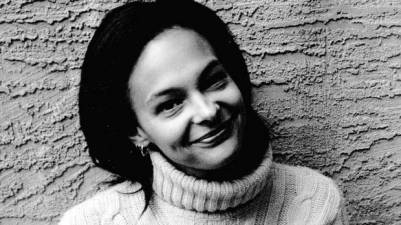
    Suzette Mayr

    I only recently read my first book by Calgary fiction writer and academic Suzette Mayr, who’s got mixed Afro-Caribbean and German background. Venous Hum is a satire set in Calgary full of wacky stuff like vegetarian vampires, extramarital affairs, and high school reunions, while the African-Canadian mixed race lesbian main character Lai Fun (named because her father loves the Chinese noodle of the same name) stumbles through her late thirties. It’s weird, and really funny. Mayr’s most recent novel is Monocerous, which has won and been nominated for lots of awards like the 2012 ReLit Award, the City of Calgary W.O. Mitchell Award, and more! It’s a tragicomic story about the aftermath of the suicide of a 17-year-old bullied gay boy and how his death affects everyone around him. Her previous novels are The Widows and Moon Honey—don’t you just love her unique, inventive book titles?—are about topics as diverse as three older women deciding to go over Niagara Falls in a bright orange space-age barrel and white lovers magically waking up Black. Hers is fiction to read if you are looking for a new take on magical realism and are bored of all the same-old, same-old tales about lesbian relationships. Her next book is due out later this year, and is called Dr. Edith Vane and the Hares of Crawley Hall

    Read the entire article here.

  • Duncan McDonald: Flathead Indian Reservation Leader and Cultural Broker, 1849-1937

    University of Nebraska Press
    2016-03-31
    256 pages
    28 illustrations, 6 maps, index
    Paperback ISBN: 978-1-934594-15-5

    Robert Bigart, Librarian Emeritus
    Salish Kootenai College, Pablo, Montana

    Joseph McDonald, President Emeritus (and grandnephew of Duncan McDonald)
    Salish Kootenai College, Pablo, Montana

    Duncan McDonald (1849–1937) led a remarkable life as an entrepreneur, tribal leader, historian, and cultural broker on the Flathead Indian Reservation in western Montana. The mixed-blood son of a Hudson’s Bay Company fur trader and a Nez Perce Indian woman, Duncan accompanied the Pend d’Oreille Indians on a buffalo hunt and horse-stealing expedition to the Montana plains during the early 1870s. During the late nineteenth century he was put in charge of Fort Connah, the Hudson’s Bay Company post on the Flathead Indian Reservation, and worked as an independent trader across the northern Rocky Mountains.

    Duncan established a hotel and restaurant, among other businesses, on the Flathead Reservation. In 1878 and 1879 he wrote a history of the 1877 Nez Perce Indian War, which was published in a Deer Lodge, Montana, newspaper. Long a thorn in the side of Flathead Indian agents, Duncan was chairman of the Flathead Business Committee between 1909 and 1924 and for many years represented the interests and views of tribal members to the Montana white community.

  • The Checkered Past of Brazil’s New Race Court (JWJI Race & Difference Colloquium Series)

    Jones Room, Woodruff Library
    The James Weldon Johnson Institute for the Study of Race and Difference
    Emory University
    Atlanta, Georgia 30322
    Monday, 2017-02-06, 12:00-13:30 EST (Local Time)

    Ruth Hill, Andrew W. Mellon Chair in the Humanities, Professor of Spanish
    Vanderbilt University, Nashville, Tennessee

    A categorical crisis around racially-mixed persons has become a legal quagmire in Brazil. In August 2016, the Brazilian government announced the formation of the Racial Court (Tribunal Racial) to confront the steady stream of legal challenges that has beset the racial segment of the country’s Quotas System (Sistema de Cotas). The latter is an affirmative-action program giving preference to the disabled, the economically-disadvantaged, graduates of public schools, and specific racial groups (Amerindians and persons of African ancestry) in government offices and higher education. Litigation and media attention are centered on the program’s interstitial racial category, pardo. The category preto—the straightforward “black” in Brazil until it was jettisoned in educated quarters for negro, “negro”—and the category pardo (of European and an undefined amount of African and/or native origins) are often treated as subsets of the category negro. Still, color not descent is invoked when it is stated that persons “of pardo color” or “preto color” are eligible for the racial quotas for government posts, which are set aside “for negros and pardos.”

    Whether colors or categories, where does pardo end and branco (“white”) or negro begin? In other words, when does afrodescendente (“Afro-descendant”) end and branco begin? In this Race and Difference Colloquium, Ruth Hill (Andrew W. Mellon Chair in the Humanities, Professor of Spanish, Vanderbilt University) argues that the pardo problem of today streams from the first global and systematic investigation into racial admixture, in the sixteenth century, which came on the heels of legislation to “uplift” Catholic neophytes in the Iberian empires. Those centuries-old arguments over mixed-race neophytes anticipated the moral and legal dilemmas of Brazil’s present-day affirmative-action program.

    The Race and Difference Colloquium Series, a weekly event on the Emory University campus, features local and national speakers presenting academic research on contemporary questions of race and intersecting dimensions of difference. The James Weldon Johnson Institute is pleased to have the Robert W. Woodruff Library and the Stuart A. Rose Manuscript and Rare Book Library as major co-sponsors of the Colloquium Series.

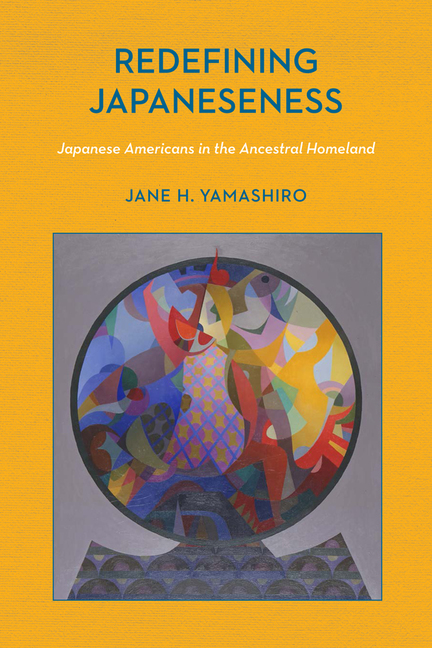
  • Redefining Japaneseness: Japanese Americans in the Ancestral Homeland

    Rutgers University Press
    2017-01-24
    224 pages
    6 x 9
    Cloth ISBN: 978-0-8135-7637-4
    Paper ISBN: 978-0-8135-7636-7
    Web PDF ISBN: 978-0-8135-7639-8
    ePub ISBN: 978-0-8135-7638-1

    Jane H. Yamashiro, Visiting Scholar
    Asian American Studies Center
    University of California, Los Angeles

    There is a rich body of literature on the experience of Japanese immigrants in the United States, and there are also numerous accounts of the cultural dislocation felt by American expats in Japan. But what happens when Japanese Americans, born and raised in the United States, are the ones living abroad in Japan?

    Redefining Japaneseness chronicles how Japanese American migrants to Japan navigate and complicate the categories of Japanese and “foreigner.” Drawing from extensive interviews and fieldwork in the Tokyo area, Jane H. Yamashiro tracks the multiple ways these migrants strategically negotiate and interpret their daily interactions. Following a diverse group of subjects—some of only Japanese ancestry and others of mixed heritage, some fluent in Japanese and others struggling with the language, some from Hawaii and others from the US continent—her study reveals wide variations in how Japanese Americans perceive both Japaneseness and Americanness.

    Making an important contribution to both Asian American studies and scholarship on transnational migration, Redefining Japaneseness critically interrogates the common assumption that people of Japanese ancestry identify as members of a global diaspora. Furthermore, through its close examination of subjects who migrate from one highly-industrialized nation to another, it dramatically expands our picture of the migrant experience.

    Table Of Contents

    • Preface
    • Acknowledgments
    • Note on Terminology
    • 1. Introduction
    • 2. Japanese as a Global Ancestral Group: Japaneseness on the US Continent, Hawaii, and Japan
    • 3. Differentiated Japanese American Identities: The Continent Versus Hawaii
    • 4. From Hapa to Hafu: Mixed Japanese American Identities in Japan
    • 5. Language and Names in Shifting Assertions of Japaneseness
    • 6. Back in the United States: Japanese American Interpretations of Their Experiences in Japan
    • Conclusion
    • Appendix A: Methodology: Studying Japanese American Experiences in Tokyo
    • Appendix B: List of Japanese American Interviewees Who Have Lived in Japan
    • Notes
    • Glossary
    • Bibliography
    • Index
  • Safe space for multiracial students

    The Sagamore: Brookline High School’s student newspaper
    Brookline, Massachusetts
    2017-02-04

    Sofia Reynoso, Staff Writer

    According to the Massachusetts Department of Elementary and Secondary Education’s 2016-2016 data, 7.5 percent of the high school’s student body consists of multiracial students. A new club known as the Multiracial Identifying Community (MIC) is forming from this growing population.
    MIC provides students with a safe space to discuss unique issues pertaining to the multiracial experience.

    Meetings are every other Monday around 3 p.m. in room 340. Junior Lena Harris, an active member of the club, said that they are trying to work around varying schedules.

    “We’re going to be trying in the future to get more meeting times because we do feel like this is an important issue, and we really want to get out there at the high school,” Harris says…

    Read the entire article here.

  • A Family That Pushed Racial Boundaries Through Generations

    The New York Times
    2017-01-27

    Caitlin Dickerson, National Reporter


    From left: Blake, Jared, Bryan and Deborah Treadwell, photographed in Eastham, Mass.
    Credit Erik Jacobs for The New York Times

    When Lizzie Connor kissed her husband goodbye and hopped on a train at Grand Central Depot, The New York Times took note. An article written about the couple in 1885 was not a wedding announcement, but a news story that noted a serious peculiarity at the time.

    Ms. Connor was white; her husband, Titus Poole, was black. And we believe that the article, headlined “Married to a Negro,” was one of the newspaper’s earliest mentions of an interracial couple. Four generations later, the couple’s descendants have drawn the attention, and sometimes scorn, of outsiders because of several boundary-defying unions that followed. Today, they have roots that are black, white and Native American.

    It appears the writer of the article did not interview the Pooles, but instead retraced their steps across southern New York State over several days, stringing together a dispatch that reads like a gossip column, with bits of information, like Mr. Poole’s “handsome suit of broadcloth, with white vest, white necktie, and buff kid gloves,” from those who had observed the couple. The article also misspelled Mr. Poole’s surname and misreported the couple’s ages.

    Even more rare than their interracial relationship was the Pooles’ adoption of a white baby girl, named Lillian. “Simply unheard-of,” is how E. Wayne Carp, an emeritus history professor at Pacific Lutheran University, recently described the adoption, which he called a “one-in-a-million case,” because of the “raging racism against mix-race married couples” at the time…

    …Bryan Treadwell, the Pooles’ great-grandson, now 68, says he identifies racially as “other.” He hadn’t known until The Times tracked him down last year that his great-grandparents were an interracial couple, but he did know that Lillian Poole, his white grandmother (and the Pooles’ adopted daughter), defied racial mores by marrying Harold Treadwell Sr., who was part black and part Native American. They gave birth to Mr. Treadwell’s father, Harold Marvin Treadwell Jr., in 1925…

    Read the entire article here.

  • MARRIED TO A NEGRO.

    The New York Times
    Thursday, 1885-05-14
    Page 8, column 5

    A few days ago passengers waiting in the New-Haven Railroad rooms at the Grand Central Station were surprised at the attention paid a young white woman by a colored man, who was dressed in the height of fashion. They were more surprised to see the couple kiss each other good-bye when the woman went to take a train. The colored man appeared yesterday in the little village of Harrison, Westchester County, attired in a handsome suit of broadcloth, with white vest,, white necktie, and buff kid gloves. He inquired for the Matthews mansion, which is one of the finest dwellings in Westchester County, and went there. He was met at the house by the woman from whom he had parted at the Grand Central Station. She was a waitress in the Matthews family, and a general favorite. Her name was Lizzie Connor. She introduced the new arrival to her mistress as her husband, Titus Poole, and said they were about to depart together. The couple walked to the railway station, about a mile distant, where they purchased tickets for Mount Vernon. At that station they took the stage to Yonkers, where they said they intended to live. The woman is about 22 years of age and her husband is 36.

  • ‘Hidden’ no more: Katherine Johnson, a black NASA pioneer, finds acclaim at 98

    The Washington Post
    2017-01-27

    Victoria St. Martin

    Fame has finally found Katherine Johnson — and it only took a half-century, six manned moon landings, a best-selling book and an Oscar-nominated movie.

    For more than 30 years, Johnson worked as a NASA mathematician at Langley Research Center in Hampton, Va., where she played an unseen but pivotal role in the country’s space missions. That she was an African American woman in an almost all-male and white workforce made her career even more remarkable.

    Now, three decades after retiring from the agency, Johnson is portrayed by actress Taraji P. Henson in “Hidden Figures,” a film based on a book of the same name. The movie tells how a group of black women — world-class mathematicians all — helped provide NASA with data crucial to the success of the agency’s early spaceflights. “Hidden Figures” was nominated Tuesday for an Academy Award for best picture.

    Suddenly Johnson, who will turn 99 in August, finds herself inundated with interview requests, award banquet invitations and people who just want to stop by and shake her hand.

    “I’m glad that I’m young enough still to be living and that they are, so they can look and see, ‘That’s who that is,’ ” she said. “And they are as excited as I am.”

    For many people, especially African Americans, her tale of overcoming racism and sexism is inspirational…

    Read the entire article here.

  • The future is mixed-race

    Aeon
    2017-02-02

    Scott Solomon, Professor in the Practice
    Department of BioSciences
    Rice University, Houston, Texas

    Edited by Sam Dresser


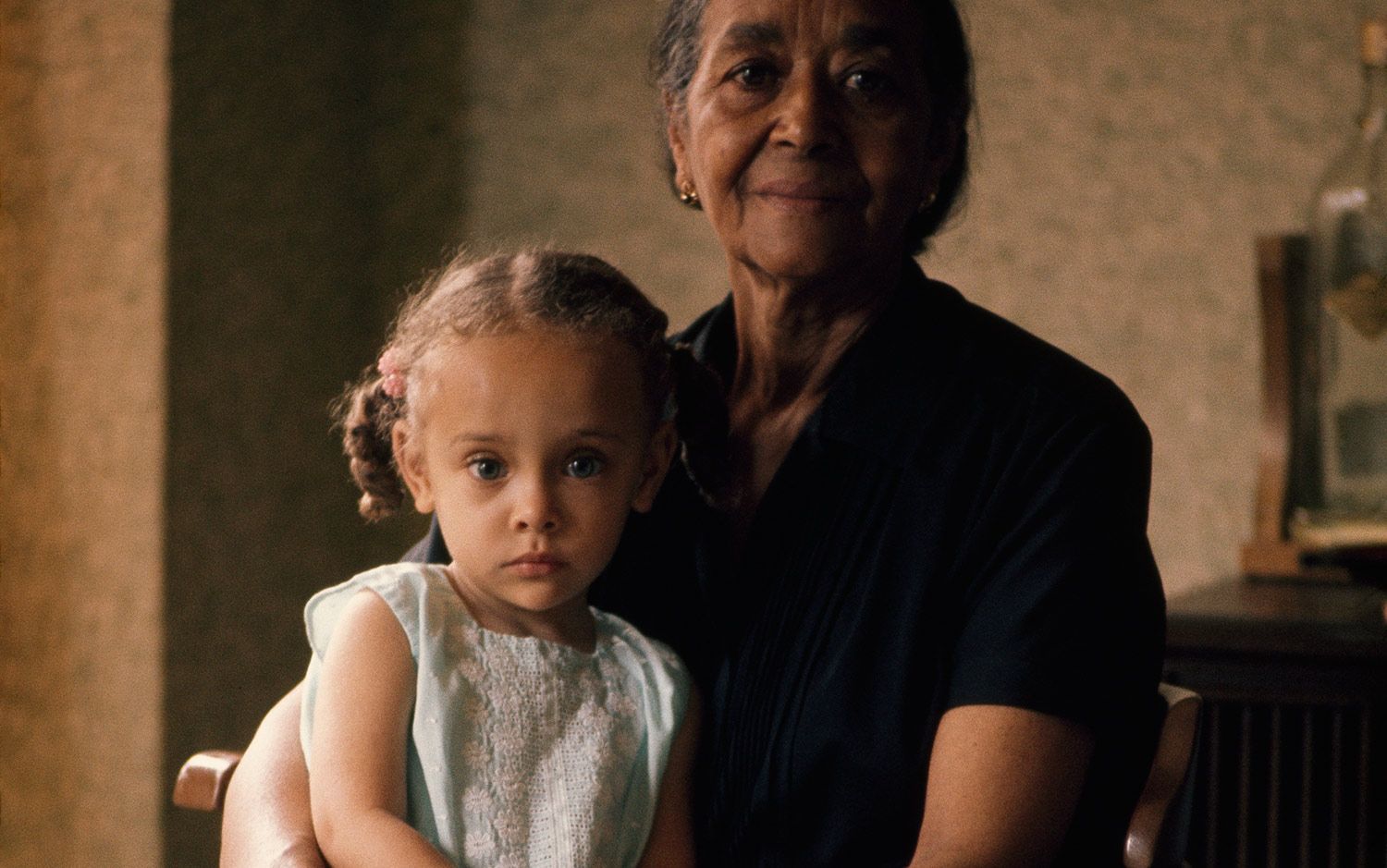
    A grandmother and granddaughter from Cape Verde. Photo by O. Louis Mazzatenta/National Geographic

    And so is the past. Migration and mingling are essential to human success in the past, the present and into the future

    In the future, a lot of people might look like Danielle Shewmake, a 21-year-old college student from Fort Worth, Texas. Shewmake has dark, curly hair, brown eyes, and an olive skin tone that causes many to mistake her heritage as Mediterranean. Her actual pedigree is more complex. Her father is half-Cherokee and half-Caucasian, and her mother, who was born in Jamaica, is the child of an Indian mother and an African and Scottish father.

    ‘My sister and I are just a combination of all that,’ she says, adding that she dislikes having to pick a particular racial identity. She prefers the term ‘mixed’.

    Differences in physical traits between human populations accumulated slowly over tens of thousands of years. As people spread across the globe and adapted to local conditions, a combination of natural selection and cultural innovation led to physical distinctions. But these groups did not remain apart. Contact between groups, whether through trade or conflict, led to the exchange of both genes and ideas. Recent insights from the sequencing of hundreds of thousands of human genomes in the past decade have revealed that our species’ history has been punctuated by many episodes of migration and genetic exchange. The mixing of human groups is nothing new.

    What is new is the rate of mixing currently underway. Globalisation means that our species is more mobile than ever before. International migration has reached record highs, as has the number of interracial marriages, leading to a surge of multiracial people such as Shewmake. While genetic differences between human populations do not fall neatly along racial lines, race nevertheless provides insight into the extent of population hybridisation currently underway. This reshuffling of human populations is affecting the very structure of the human gene pool…

    Read the entire article here.

  • Iconic Fine Arts Sculptor Edmonia Lewis Honored In Google Doodle

    The Huffington Post
    2017-02-01

    Zahara Hill, Black Voices Editorial Fellow


    Sophie Diao
    The artist’s dedication to portraying her African-American and Native-American ancestry separated her from other sculptors. 

    Black History Month began with the art of this lesser-known black icon.

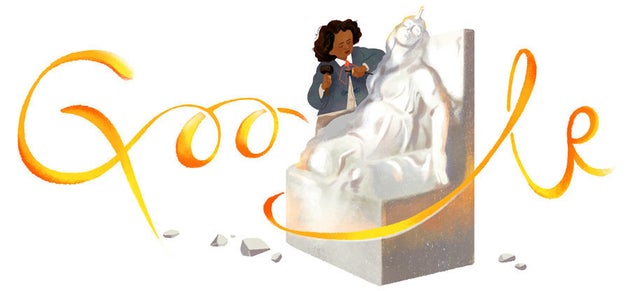
    In honor of the start of Black History Month on Wednesday, Google Doodle paid tribute to Edmonia Lewis, who is considered to be the first woman of African-American and Native American descent to earn global recognition as a fine arts sculptor.

    Lewis, who was born in Greenbush, New York in 1844, is particularly known for sculpting on “The Death of Cleopatra,” which is a graphic but highly praised depiction of the death of the former Egyptian Queen. Google Doodler Sophie Diao told HuffPost she drew the illustration on Google’s homepage in homage to Lewis because she has always been inspired by her work…

    Read the entire article here.