• ‘Passing’ Trailer: Tessa Thompson & Ruth Negga Star In Netflix Movie It Landed At Sundance

    Deadline Hollywood
    2021-09-21

    Patrick Hipes, Executive Managing Editor

    Netflix made a splash at this year’s Sundance Film Festival when it acquired Rebecca Hall’s Passing, the drama starring Tessa Thompson and Ruth Negga. Hall, making her directorial debut, adapted the film from the 1929 novel by Nella Larson. Now the streamer is prepping for the film’s New York Film Festival slot October 3, after which it will get a theatrical release followed by a debut on the service November 10.

    The pic, shot it black and white, tells the story of two Black women, Irene Redfield (Thompson) and Clare Kendry (Negga), who can “pass” as white but choose to live on opposite sides of the color line during the height of the Harlem Renaissance in late 1920s New York. After a chance encounter, Irene reluctantly allows Clare into her home, where she ingratiates herself to Irene’s husband (André Holland) and family, and soon her larger social circle as well. Irene soon finds her once-steady existence upended by Clare, and the the story becomes one about obsession, repression and the lies people tell themselves and others to protect their carefully constructed realities…

    Read the entire article here.

  • Genevieve Gaignard’s Timely Work Documents Racial Injustice and Calls for Change

    Artsy
    2020-10-13

    Dominique Clayton


    Genevieve Gaignard, ​Trailblazer (A Dream Deferred)​, 2017. ©Genevieve Gaignard. Courtesy of the artist and Vielmetter Los Angeles.

    In a period when many are glued to their devices, waiting for the latest updates on the upcoming election or ongoing pandemic, it’s hard for creatives to focus on new projects and work. Yet for artists like Genevieve Gaignard, who retreated to an artist residency shortly after the onset of the pandemic, this time has served as the catalyst for continuing to create groundbreaking work that speaks to our past, present, and future.

    Gaignard recently returned to Los Angeles, where she is based, after spending roughly five months at the Massachusetts College of Liberal Arts in North Adams, Massachusetts. There, she completed the inaugural Artist’s Laboratory residency program and opened a new exhibition at MCLA Gallery 51, titled “A Long Way From Home.” Both initiatives are led by the director of the Berkshire Cultural Resource Center Erica Wall, a Black gallerist and curator who previously ran her own space in Santa Ana, California. “Genevieve is such a deep and amazingly prolific artist, whose work reflects her laser focus and commitment to documenting and illuminating racial injustice in the U.S. over time, in real time,” Wall said. “Social media can hardly keep up with her!”

    While the effects of COVID-19 caused all of the programming around the residency and the exhibition to move online, Gaignard and Wall made virtual magic happen by pivoting to a series of workshops, sessions, and a lovely exhibition opening via Zoom. There, alongside other artists and supporters, I witnessed the big reveal of Gaignard’s latest work, which brought on a combination of laughter and tears…

    Read the entire article here.

  • We Are Owed.

    Grieveland
    2021-07-29
    98 pages
    6 x 0.21 x 9 inches
    ISBN: 978-1-7353527-6-3

    Ariana Brown

    We Are Owed. is the debut poetry collection of Ariana Brown, exploring Black relationality in Mexican and Mexican American spaces. Through poems about the author’s childhood in Texas and a trip to Mexico as an adult, Brown interrogates the accepted origin stories of Mexican identity. We Are Owed asks the reader to develop a Black consciousness by rejecting U.S., Chicano, and Mexican nationalism and confronting anti-Black erasure and empire-building. As Brown searches for other Black kin in the same spaces through which she moves, her experiences of Blackness are placed in conversation with the histories of formerly enslaved Africans in Texas and Mexico. Esteban Dorantes, Gaspar Yanga, and the author’s Black family members and friends populate the book as a protective and guiding force, building the “we” evoked in the title and linking Brown to all other African-descended peoples living in what Saidiya Hartman calls “the afterlife of slavery.”

  • The last humanist: how Paul Gilroy became the most vital guide to our age of crisis

    The Guardian
    2021-08-05

    Yohann Koshy, Assistant Opinion Editor


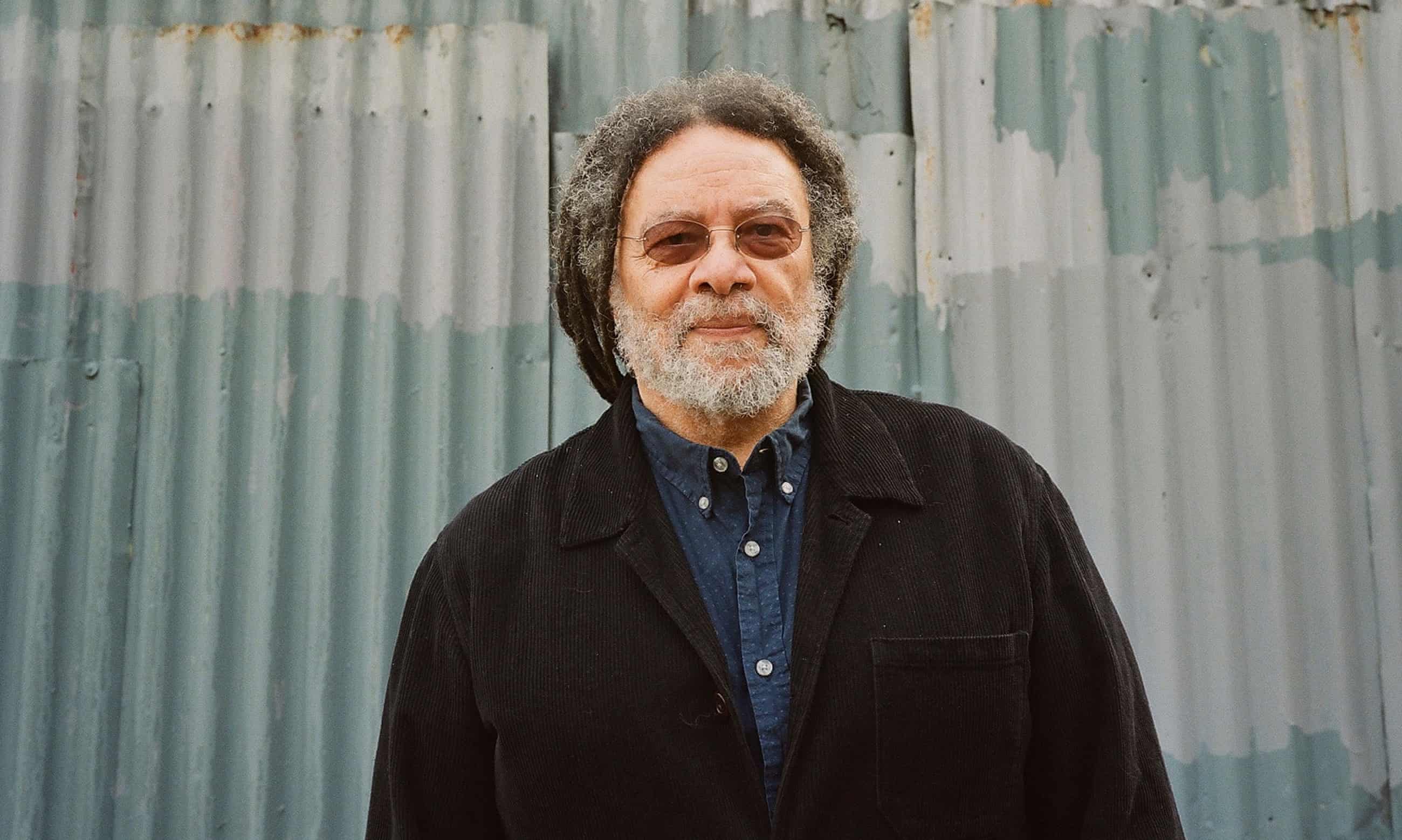
    Prof Paul Gilroy near his home in north London. Photograph: Eddie Otchere/The Guardian

    One of Britain’s most influential scholars has spent a lifetime trying to convince people to take race and racism seriously. Are we finally ready to listen?

    In 2000, the race equality thinktank the Runnymede Trust published a report about the “future of multi-ethnic Britain”. Launched by the Labour home secretary Jack Straw, it proposed ways to counter racial discrimination and rethink British identity. The report was nuanced and scholarly, the result of two years’ deliberation. It was honest about Britain’s racial inequalities and the legacy of empire, but also offered hope. It made the case for formally declaring the UK a multicultural society.

    The newspapers tore it to pieces. The Daily Telegraph ran a front-page article: “Straw wants to rewrite our history: ‘British’ is a racist word, says report.” The Sun and the Daily Mail joined in. The line was clear – a clique of leftwing academics, in cahoots with the government, wanted to make ordinary people feel ashamed of their country. In the Telegraph, Boris Johnson, then editor of the Spectator magazine, wrote that the report represented “a war over culture, which our side could lose”. Spooked by the intensity of the reaction, Straw distanced himself from any further debate about Britishness, recommending in his speech at the report’s launch that the left swallow some patriotic tonic.

    The Parekh report, as it was known – its chair was the political theorist Lord Bhikhu Parekh – was not a radical document. It was studiously considerate. Contrary to the Telegraph front page, it didn’t claim “British” was a racist word. It said that “Britishness, as much as Englishness, has … largely unspoken, racial connotations”. This was the sentence that launched a thousand tirades, but where did this idea come from? Follow the footnote in the offending paragraph and you arrive at the work of an academic called Paul Gilroy

    Read the entire article here.

  • Jews of color, once sidelined, now being recruited by Jewish agencies

    The Jewish News of Northern California
    2021-08-05

    Rachele Kanigel, Professor of Journalism
    San Francisco State University


    Paula Pretlow (right) with her daughter Alison in Jerusalem.

    During her 13 years as a lay leader in the Jewish community, Paula Pretlow couldn’t help but notice the obvious: When decisions were being made, she usually was the only Jew of color in the room.

    As a retired executive of an investment management firm, Pretlow was a “catch” for Jewish organizations. She was well versed in the language of finance, and she had impressive professional experience and connections.

    Shortly after she joined Temple Isaiah in Lafayette in 2007, her rabbi suggested she serve on its board of directors. Later, when she moved to San Francisco and joined Congregation Emanu-El, she was asked to join that board. And then a major national philanthropic organization, the Harry and Jeanette Weinberg Foundation, invited her to become a trustee.

    Other leaders in the Jewish community sought her counsel. She was a macher, a person of influence. But as a Black woman, she rarely saw other Jews of color in similar positions of power.

    That’s begun to change in the past year.

    In the 14 months since the brutal murder of George Floyd by a Minneapolis police officer transfixed and transformed the nation, Pretlow has seen local and national Jewish organizations not only reach out to Jews of color but start to grapple with the racism that has festered for years in corners of the community…

    Read the entire article here.

  • The Twelve-Mile Straight, A Novel

    Ecco (an imprint of HarperCollins)
    2017-09-12
    560 pages
    6x9in
    Hardcover ISBN: 978-0062422088
    Paperback ISBN: 978-0008158705
    Ebook ISBN: 9780062422101
    Digital Audio, MP3 ISBN: 9780062694874

    Eleanor Henderson

    From New York Times bestselling author Eleanor Henderson, an audacious American epic set in rural Georgia during the years of the Depression and Prohibition.

    Cotton County, Georgia, 1930: in a house full of secrets, two babies-one light-skinned, the other dark-are born to Elma Jesup, a white sharecropper’s daughter. Accused of her rape, field hand Genus Jackson is lynched and dragged behind a truck down the Twelve-Mile Straight, the road to the nearby town. In the aftermath, the farm’s inhabitants are forced to contend with their complicity in a series of events that left a man dead and a family irrevocably fractured.

    Despite the prying eyes and curious whispers of the townspeople, Elma begins to raise her babies as best as she can, under the roof of her mercurial father, Juke, and with the help of Nan, the young black housekeeper who is as close to Elma as a sister. But soon it becomes clear that the ties that bind all of them together are more intricate than any could have ever imagined. As startling revelations mount, a web of lies begins to collapse around the family, destabilizing their precarious world and forcing all to reckon with the painful truth.

    Acclaimed author Eleanor Henderson has returned with a novel that combines the intimacy of a family drama with the staggering presence of a great Southern saga. Tackling themes of racialized violence, social division, and financial crisis, The Twelve-Mile Straight is a startlingly timely, emotionally resonant, and magnificent tour de force.

  • Why Did Two People So Poorly Matched Stay Together So Long?

    The New York Times
    2021-09-06

    Eleanor Henderson


    Christopher Sorrentino’s parents, Gilbert and Vicki, circa 1972. Sorrentino examines their confounding marriage in his memoir, “Now Beacon, Now Sea.” via Christopher Sorrentino

    Christopher Sorrentino, Now Beacon, Now Sea: A Son’s Memoir (Catapult, 2021)

    As I was reading Christopher Sorrentino’sNow Beacon, Now Sea,” I heard Rodrigo Garcia, son of Gabriel García Márquez, on the radio, talking about his new memoir, “A Farewell to Gabo and Mercedes.” Garcia’s book is a loving chronicle of the last days of his larger-than-life father and loyal mother. Sorrentino’s book, too, is about his novelist father and his parents’ deaths. Both have the subtitle “A Son’s Memoir.” But “Now Beacon, Now Sea” is no tender tribute. Listening to Garcia speak, I realized that Sorrentino was working in a decidedly different genre: His “son’s memoir” is more autopsy than eulogy.

    Sorrentino’s father, Gilbert, was an avant-gardist more prolific than famous, who died in an under-resourced hospital in Brooklyn as his son was en route; his wife, Vicki, who is the real subject of this book and a truly fascinating one, died under even grimmer circumstances. Her decaying body, discovered by her son in her Bay Ridge apartment, is the striking opening image of the book. An autopsy was never ordered…

    Read the entire review here.

  • For many who came west, the war years brought increased opportunity, and rising expectations, which would help fuel the civil rights and women’s movements. For Ms. [Betty Reid] Soskin, who had grown up in racially mixed neighborhoods and schools, it also brought her first experiences with overt, formal segregation.

    When the war started, she took a job in an Air Force office, where she was surprised to realize she was passing for white. She set the record straight, and asked if she would still get her promotion. The answer was no. “I walked out on the U.S. government and told them to shove it,” she later wrote in her 2018 memoir “Sign My Name to Freedom.”

    That same week, her husband Mel, a star college athlete who’d enlisted in the Navy only to be relegated to working as a cook, left the service. “He was going to fight for his country,” she said. “But he found out he could only cook for his country.”

    Jennifer Schuessler, “‘America’s Oldest Park Ranger’ Is Only Her Latest Chapter,” The New York Times, September 20, 2021. https://www.nytimes.com/2021/09/20/us/betty-reid-soskin-100.html.

  • Now Beacon, Now Sea: A Son’s Memoir

    Catapult
    2021-09-07
    304 pages
    6.33 x 1.07 x 9.27 inches
    Hardcover ISBN: 9781646220427

    Christopher Sorrentino

    A wrenching debut memoir of familial grief by a National Book Award finalist—and a defining account of what it means to love and lose a difficult parent, for readers of Joan Didion and Dani Shapiro.

    When Christopher Sorrentino’s mother died in 2017, it marked the end of a journey that had begun eighty years earlier in the South Bronx. Victoria’s life took her to the heart of New York’s vibrant mid-century downtown artistic scene, to the sedate campus of Stanford, and finally back to Brooklyn—a journey witnessed by a son who watched, helpless, as she grew more and more isolated, distancing herself from everyone and everything she’d ever loved.

    In examining the mystery of his mother’s life, from her dysfunctional marriage to his heedless father, the writer Gilbert Sorrentino, to her ultimate withdrawal from the world, Christopher excavates his own memories and family folklore in an effort to discover her dreams, understand her disappointments, and peel back the ways in which she seemed forever trapped between two identities: the Puerto Rican girl identified on her birth certificate as Black, and the white woman she had seemingly decided to become. Meanwhile Christopher experiences his own transformation, emerging from under his father’s shadow and his mother’s thumb to establish his identity as a writer and individual—one who would soon make his own missteps and mistakes.

    Unfolding against the captivating backdrop of a vanished New York, a city of cheap bohemian enclaves and a thriving avant-garde—a dangerous, decaying, but liberated and potentially liberating place—Now Beacon, Now Sea is a matchless portrait of the beautiful, painful messiness of life, and the transformative power of even conflicted grief.

  • I wish I could ask my grandfather what drove his family to stake such a full claim to their Blackness. Why did they choose to celebrate it when they could have easily hid it? Not only did they choose to live in a Black world, my family rejected the idea that their proximity to whiteness made them better than their darker brothers and sisters. Even when they could take advantage of the privilege afforded to them by the Black community — joining elite Black organizations because their skin was indeed lighter than a paper bag — they didn’t. This kind of self-determination set the foundation for radical self-determination seen during the Civil Rights and Black power movements, decades before it was fashionable or even accepted.

    Elizabeth Wellington, “Choosing Blackness,” The The Philadelphia Inquirer, September 15, 2021. https://www.inquirer.com/life/inq2/black-identity-america-wildest-dreams-20210915.html.