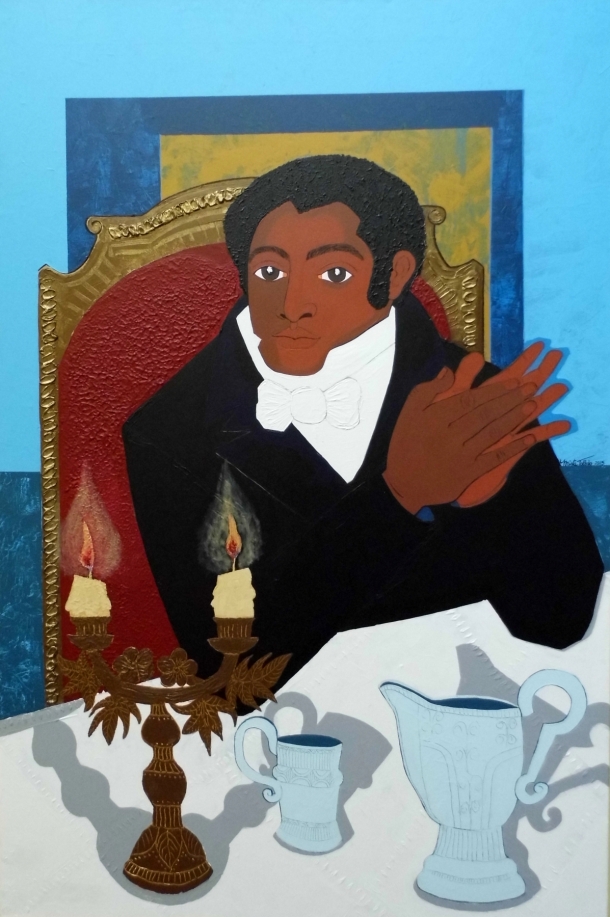
But God was only getting started. It was at this time, in 1783, that [Lemuel] Hayne’s ministry began to grow. A young white woman, good friend and schoolteacher, Elizabeth Babbitt, moved from her home in order to be near Haynes. Just 21 years old, she proposed to Haynes, breaking several barriers and cultural norms in the process. She waited to propose until they had reached Connecticut because of the several miscegenetic laws that Massachusetts had. He joyfully accepted and they had 10 children together.
It was a typical day, nothing out of the ordinary. I, a young, small-town girl had landed in a foreign country to begin my study abroad. I knew nothing about Argentina and was excited to discover the country. It did not take long for me to realize that my experience would be life changing. Black in a very white country, I stood out like a sore thumb. I was the “other.” At first I was uncomfortable, but then, I realized that my blackness was not the same in Argentina as in the United States. My blackness meant something else. I was exotic, if not exceptional, and surprisingly I was not black! Instead I was morocha (a non-offensive term referring to darker skin). How could that be? I had transformed into a lighter version of myself. As I grew accustomed to being called morocha, I could not help wondering who constituted a morocha. Over time the answer became apparent: anyone who was not white. Other countries had mestizos (Indian and white mixture/descendant), or mulattos (black and white), but Argentina had grouped African and Indian descendants and people with tanned skin tones, often descendants of immigrants from Mediterranean countries, into a single category. Argentines proclaimed there “were no blacks in their country,” but the country certainly had a lot of morochos! Despite the lack of African descendants’ visibility today, in 1778 they had a significant share of the national population. Concentrated in cities, African descendants amounted to 44 percent of the inhabitants of the provincial city of Córdoba, for instance.[1] The decline of this population a national question for Argentina, whose black population dwindled from roughly 30 percent of the total population to 0.37 percent according to the 2010 census…
Through both the biographical essay and the selections from Lemuel Haynes’s writings, readers are sure to perceive an Edwardsian sense of spirituality that ever lived in view of eternity. Well acquainted with difficulties, suffering, and death, Haynes’s ministry was infused with the unfailing hope of heaven.
Table of Contents:
The Life and Piety of Lemuel Haynes (1753-1833)
The Gospel and Slave-Keeping
The Necessity of Regeneration
The Nature of Regeneration
A Brief Sketch of a Tour into the State of Vermont
The Character of a Spiritual Watchmen
Meeting with God and Our people on the Day of Judgment
How Eternity Affects Daily Ministry
To Timothy Mather Cooley
To Timothy Mather Cooley
Reminders When a Faithful Minister Is Taken Away
Ministers and Their Families before the Bar of Christ
Government and Religion Stand Together
To Timothy Mather Cooley
True Greatness
To Timothy Mather Cooley
To Timothy Mather Cooley
To Timothy Mather Cooley
Confiding in God’s Government and the Use of Means
Lemuel Haynes of Rutland, Vermont was an incredible Vermonter. Haynes, an African-American man, was a great writer, thinker, and minister. In 1785, he was one of the first, if not the first, African-Americans to be ordained into the Congregational Church in the whole United States and led a mostly white congregation for over 30 years.
On April 19th, 1775 – war was coming to Lexington, Massachusetts. The 77 hastily armed colonists arrived first. The sun began to rise, and with it came the sound of a marching war machine. The militaristically-naked colonists gaped at the more than 700 redcoats that faced them, weapons drawn. A sneering British major had approached within shouting distance and yelled, “Throw down your arms! Ye villains, ye rebels.” Within moments, firing started on both sides. Eight colonists lay dead. The British force advanced and set fire to the town. As soon as they advanced beyond the town however, they were met with the veritable thousands of “minutemen” who had assembled nearby. Quickly deployed and burning to protect their freedom, the minutemen overwhelmed the British force. In the days after, thousands more men were recruited in the local region. One of these men was a newly freed slave named Lemuel Haynes. A passionate Christian and Calvanist, Lemuel helped fight and tend to the wounded during the subsequent engagements. Seeing the blood and combat on the following few days – he vowed in his heart that he would fight to extend freedom and liberty to all men and women in the new colonies…
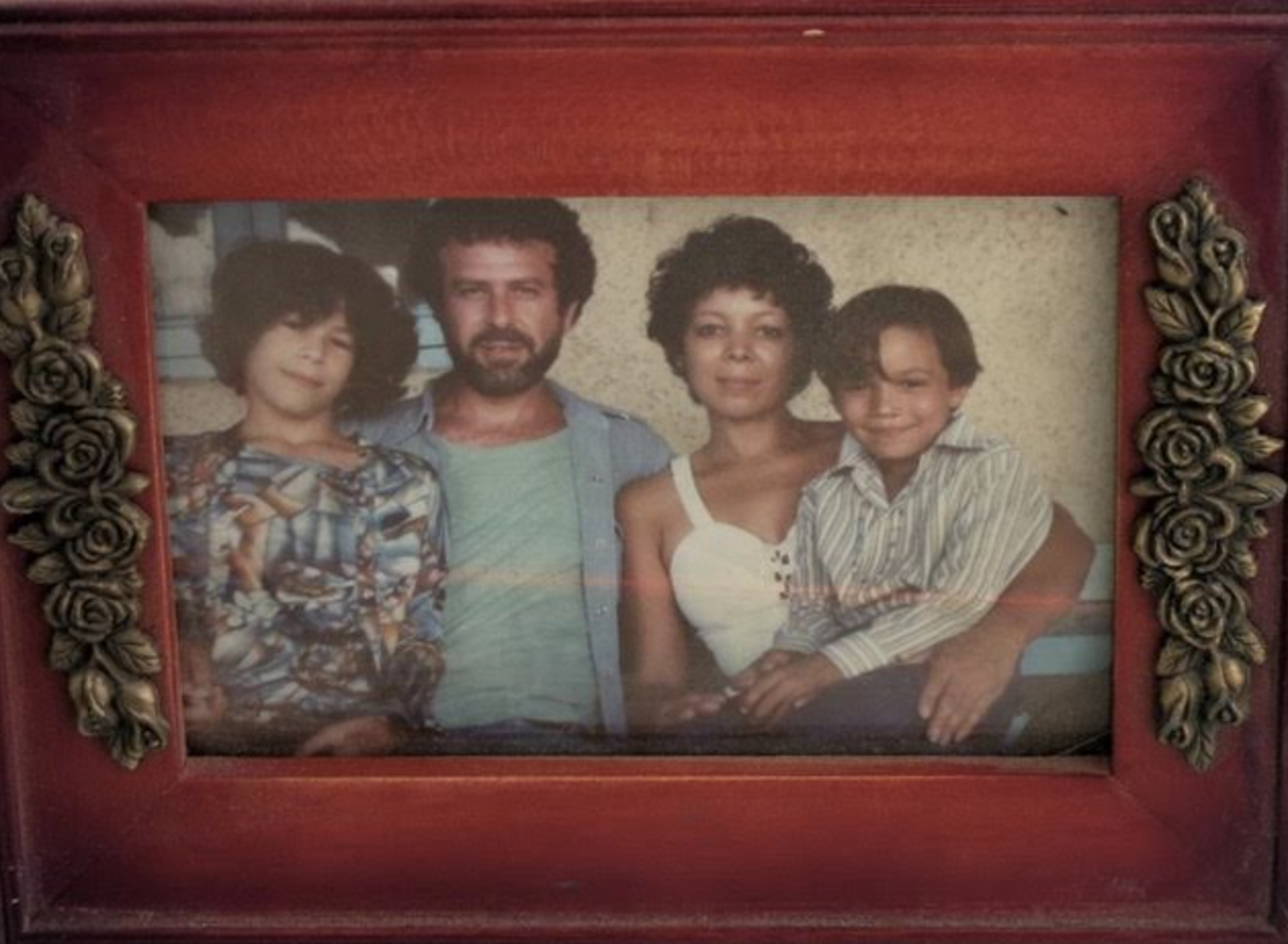
Lili Barsha, left, as a child with her parents, Tony and Yen, and younger brother Jake. (Courtesy of Lili Barsha)
I’m an American of African, Asian, European, and Native descent.
I’ve lived all over the world and have been taken for many things. I describe myself as multi-racial, Mixed in America, blended. I tend to reject the hyphen — I see it as a little plank that walks us off our citizen ship. By us, I mean we people of color other than white. I have too many planks to walk as a Black, white, red, yellow — therefore, tan — American.
I’m nobody’s All-American, a spy in the house of race.
Ethnicity shapes what I eat, what music I listen to, what I read, and who I keep as company. It defines culture, family, history, and aesthetics.
I am the bloom of my ancestors. A vessel filled with genetic memory. That, and memories of otherness. Here are some of them…
This summer’s controversy over the underrepresentation of dark-skinned Afro-Latinos in “In the Heights,” the Hollywood adaptation of the Broadway musical, laid bare the cancer of colorism in Latinx communities in the United States. The reckoning was long overdue, a pain that goes back as long as our community has existed. And the mainstream media was enraptured. It created what I think of as the spectacle — el espectáculo. I haven’t seen as high a demand for Latinx voices since the Pulse shooting.
“Latinidad” is the shared language, childhood references, music, food, inside jokes and idiosyncratic TV Spanglish among the Latinx in this country. It is the sameness that unites us no matter where we grow up, and no matter where our parents were from. But the idea of sameness can devastate as much as it can connect. An open wound in this world of Latinx has been the shame around darkness, our own and that of our family and neighbors and compatriots. According to media by us or for us, dark-skinned Afro-Latinos do not exist and if they do, they aren’t Latino. Not really…
Nur Saktiningrum
Department of English Gadjah Mada University of Yogyakarta, Indonesia
Race, as people understand it, is something that you were born with. One was born with specific physical features that by social construction, define one’s race. What if a person was born with physical features that enable him to choose whether to embrace the race defined by blood or the one defined by social construction? And are there any consequences of the choices made? This research studies the choice made by mulatto to pass as white and the consequences following the decision. The focus of the study is a poem written by Elizabeth Alexander entitled Race (2001). To answer the abovementioned questions, the poem is analyzed using a new historical approach. The approach enables the researcher to understand the historical background of and the author’s perspective on racial passing depicted in the poem and its relation to the reality of racial passing in American society. The results show that there are external and internal factors that make it possible for an individual to pass as a member of a different race from what he was. The external factors include the biological taxonomy that identifies him as belonging to a dominant race and the social construction that classifies people based on their physical features. The internal factor is the passer’s belief that by assuming a new racial identity, he will be able to lead a better life and be relieved from the oppression of the dominant race. Despite the privilege and opportunity that the new racial status can offer, racial passing can also bring some disadvantages such as the loss of the sense of belonging to the old racial identity, the feeling of insecurity, and the possibility of being disowned by one’s family.
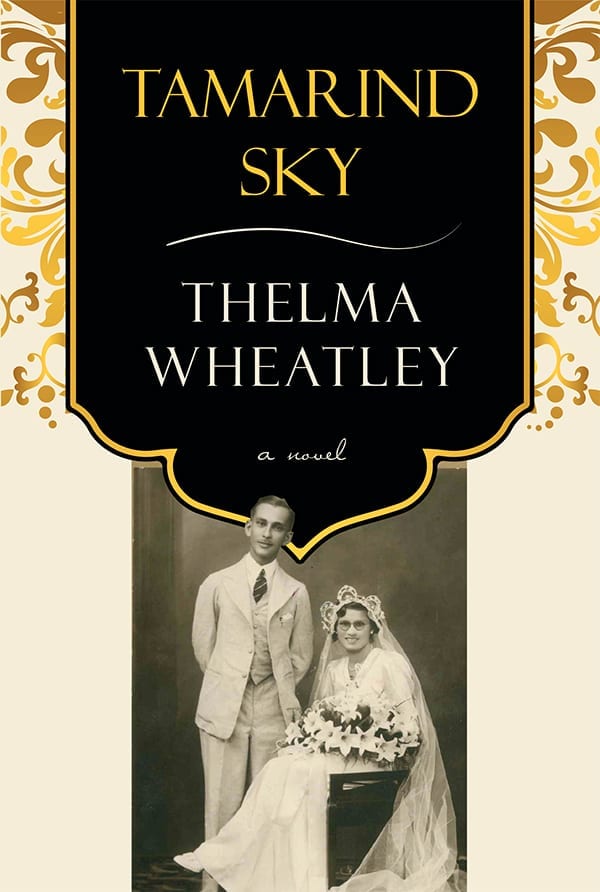
When British immigrant Selena Jones marries Aidan Gilmor, a Sinhalese-Eurasian — part British — from Sri Lanka in the 1960s in Toronto, a passionate clash of culture ensues. Selena’s mother in Wales is horrified when Selena brings Aidan home to Wales for the wedding. Back in Toronto, Selena faces further prejudice and disapproval of her “mixed marriage,” despite Pierre Elliott Trudeau’s new “multiculturalism,” which was being encouraged but also resented. She is shocked not only by the reaction of neighbours but by the teachers at the all-White school in Toronto where she teaches, and she pretends that Aidan is a White Canadian. When two poor West Indian and two East Indian children from a new government housing project nearby unexpectedly arrive at the school, Selena is forced to take a stand in their defence. Gradually she learns to face her fears and confront racism. She is drawn into a deeper understanding of her Sri Lankan family, and especially of her father-in-law, a former tea planter under the British, who left Ceylon after Independence in 1956. She sees the effect of colonialism on Aidan and his family, trying to be “British” while caught in the middle of the civil war conflict in Sri Lanka. The revelation of her father-in-law’s secret guilt about the past leads to an inevitable and shocking climax.
A powerful tale of violence, grief, resilience, and transformation, told in the voice of Janet Gallant, transcribed and lineated as a long poem by Sharon Thesen, The Wig-Maker gathers and weaves together themes and incidents that accumulate toward “the moan” of racism, sexual abuse, maternal abandonment, suicide, mental illness, and addiction.
Though the subject-matter ranges from a lengthy first-person account of sufferings both personal and cultural, historic and current, the pulse of the telling ultimately led to healing and reconciliation. Almost by magic — certainly with the assistance of the uncanny — the 18-month long process of Gallant’s telling/Thesen’s listening-writing resulted in Gallant’s discovery of her true genetic, and social, identity. In the early part of her story Janet longs to know the reasons that her mother abandoned the family when Gallant was three years old, leaving four young children with their abusive father. She also wants to know what turned her father into “the monster” he had become. Her mother, Valerie Johnson, is Black and grew up in the Black community of Wildwood, Alberta; her Canadian serviceman father, Tom McCrate, grew up in Irish-Catholic poverty in Nova Scotia. As a biracial child, Janet was unaware until she was eleven years old that her mother was Black; nor did she know until very recently that Tom McCrate was not her biological father.
The twists and turns of the narrative gather a range of topics and incidents; the human hair industry, Black immigration to Alberta and Saskatchewan in the early 1900’s, maternal abandonment, the stresses of military life, adoption search websites, the suicide of Gallant’s teenage brother, the sudden death of her young husband, the stress-disorder of alopecia, and the loneliness of surviving all this but never finding answers. But some important answers have been given and received as a result of Gallant’s research being inspired by the mysteriously healing process of the telling itself.
“The Wig-Maker” is Janet Gallant’s song; her story comes to life in Sharon Thesen’s poem.