Mixed Race Studies

Scholarly perspectives on the mixed race experience.

    • About This Site
    • Bibliography
    • Contact Information
    • Date and Time Formats
    • Forthcoming… (Updated 2021-09-01)
    • Likely Asked Questions
    • List of Book Publishers
    • List of Definitions and Terms
    • My Favorite Articles and Papers
    • My Favorite Posts
    • My Recent Activities
    • Praise for Mixed Race Studies
    • Tag Listing
      • Tag Listing (Ordered by Count)
    • US Census Race Categories, 1790-2010
    • 1661: The First ‘Mixed-Race’ Milestone
    • 2010 U.S. Census – Some Thoughts

recent posts

  • The Routledge International Handbook of Interracial and Intercultural Relationships and Mental Health
  • Loving Across Racial and Cultural Boundaries: Interracial and Intercultural Relationships and Mental Health Conference
  • Call for Proposals: 2026 Critical Mixed Race Studies Conference at UCLA
  • Participants Needed for a Paid Research Study: Up to $100
  • You were either Black or white. To claim whiteness as a mixed child was to deny and hide Blackness. Our families understood that the world we were growing into would seek to denigrate this part of us and we would need a community that was made up, always and already, of all shades of Blackness.

about

  • Twitter
  • Facebook
  • Instagram
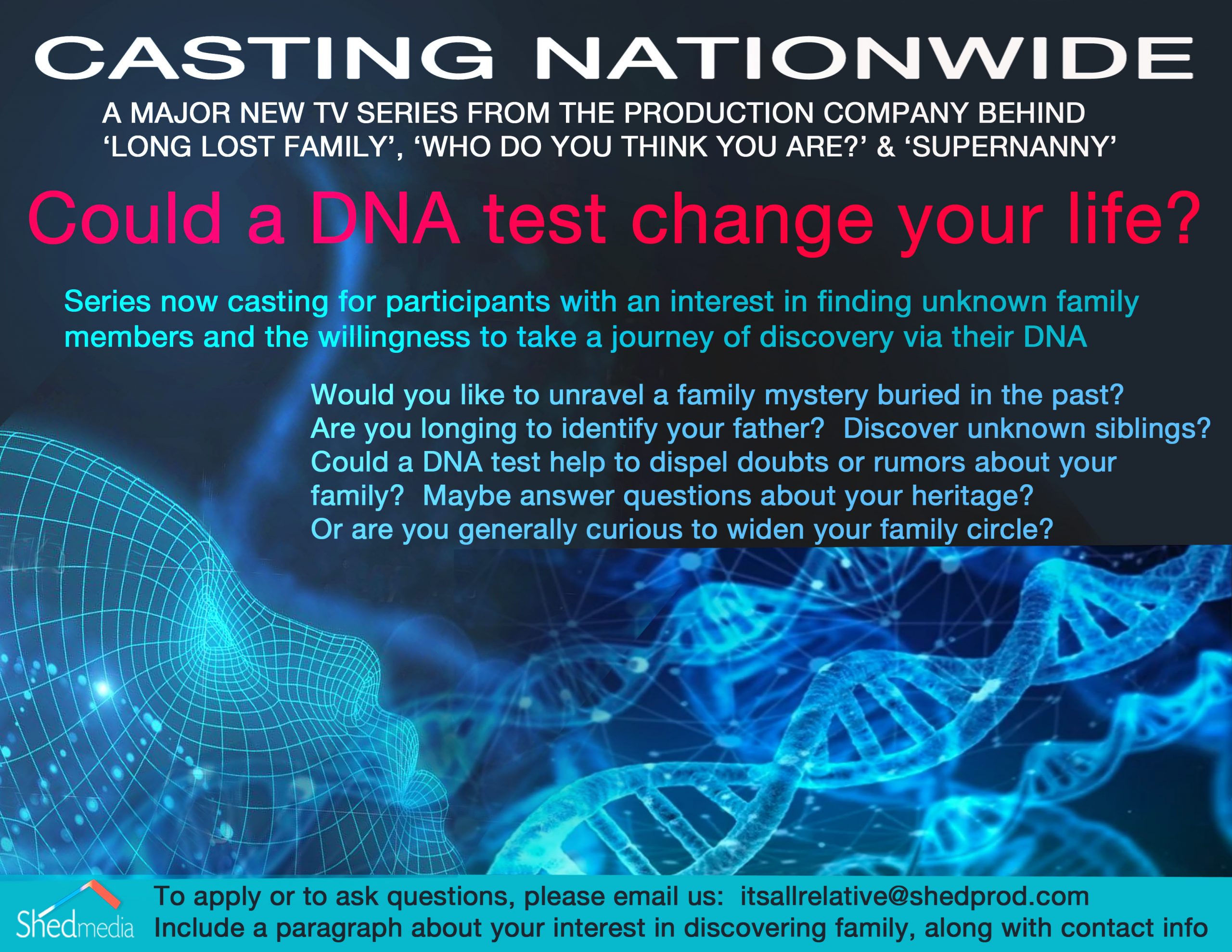
  • Now Casting Within the United States: Could a DNA test change your life?

    2021-05-05

    Now Casting Within the United States: Could a DNA test change your life?

    2021-05-01
    Shed Media
    Los Angeles, California

    A major new TV series from the production company behind “Long Lost Family”, “Who Do You Think You Are?” and “Supernanny”.

    Could a DNA test change your life?

    Series now casting for participants with an interest in finding unknown family members and the willingness to take a journey of discovery via their DNA.

    Would you like to unravel a family mystery buried in the past? Are you longing to identify your father? Discover unknown siblings? Could a DNA test help to dispel doubts or rumors about your family? Answer questions about your heritage? Or are you generally curious to widen your family circle?

    Interested applicants can apply here.

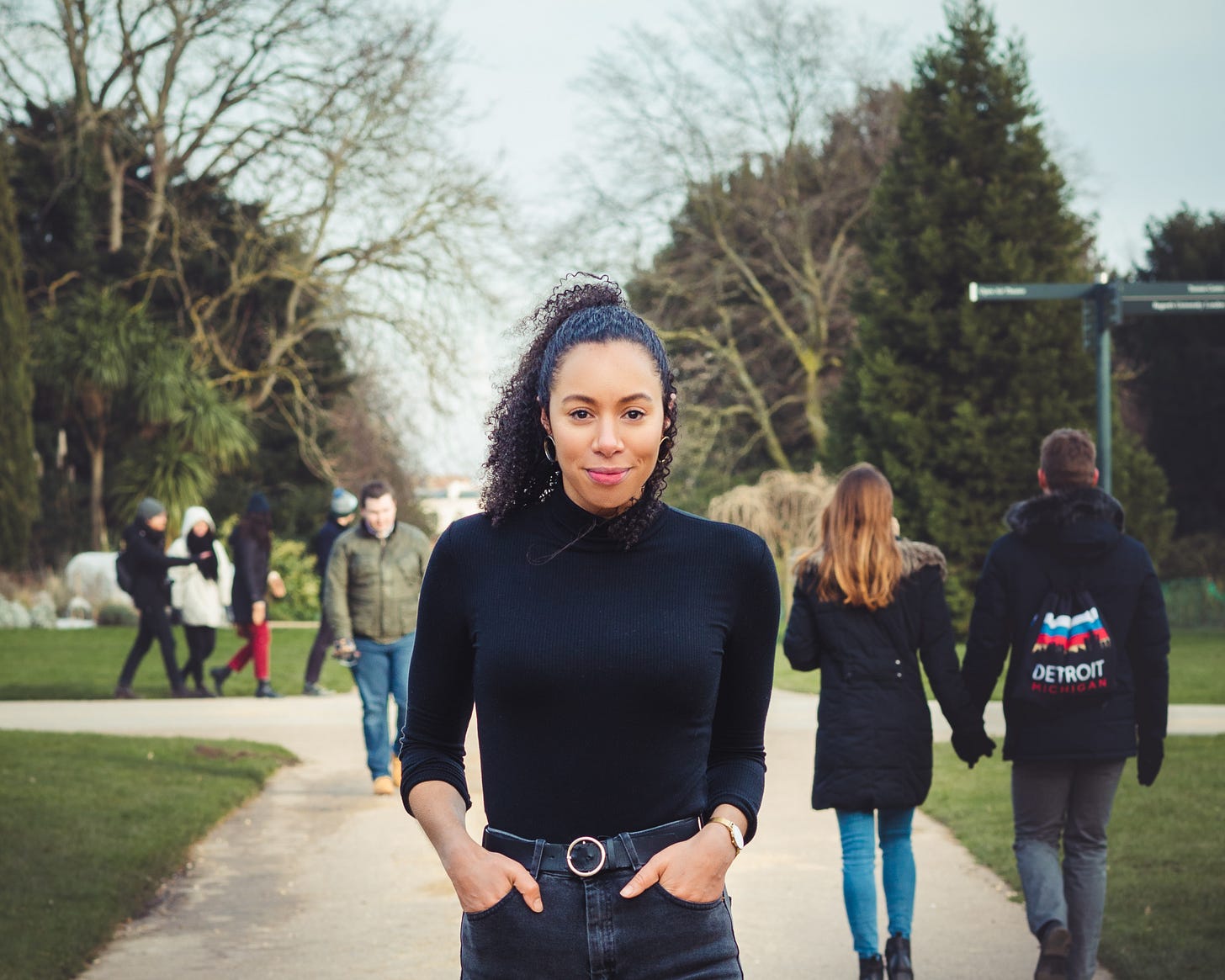
  • Mixed Messages Episode Two – Erika.

    2021-05-05

    Mixed Messages Episode Two – Erika.

    Mixed Messages
    2021-04-21

    Sarah Doneghy, Host

    Erika discusses being Mixed Race within her family, her jobs, and the places she’s lived. Erika shares her thoughts and personal experiences when it comes to code switching and light privilege.

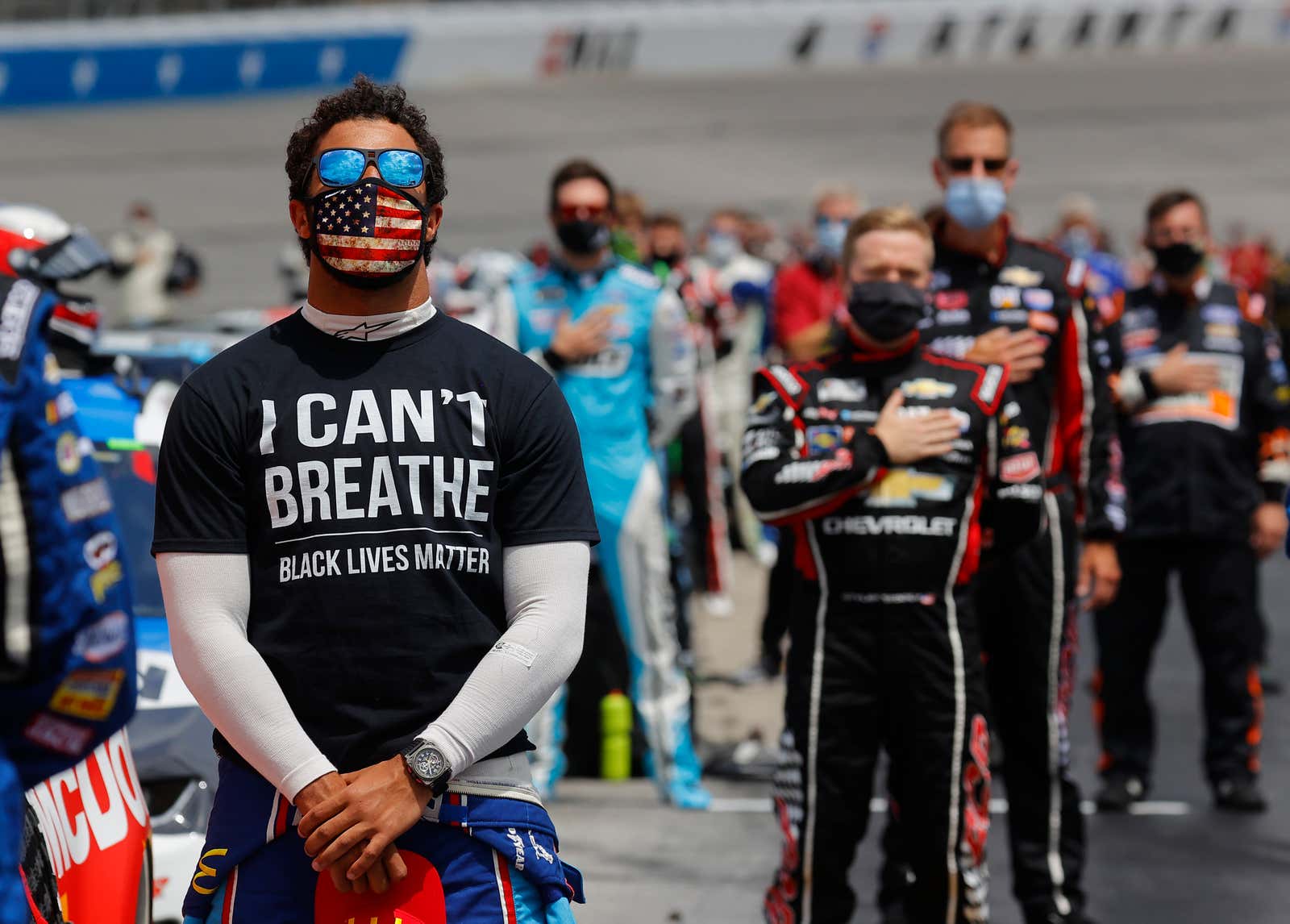
  • Bubba Wallace Welcomes Fans Into His Garage With New Netflix Docuseries

    2021-05-05

    Bubba Wallace Welcomes Fans Into His Garage With New Netflix Docuseries

    The Root
    2021-04-23

    Jay Connor


    Photo: Chris Graythen (Getty Images)

    Being the only Black driver in NASCAR’s top racing series comes with more than its fair share of trials and tribulations.

    In the last year alone, we’ve seen Bubba Wallace succeed in his quest to get Confederate flags banned from the sport and face subsequent backlash, endure the infamous noose saga, and have his own mother detail the racism he continually faces. But while the lows were low, he also had his fair share of triumphs.

    Wallace was named the 2020 Comcast Community Champion of the Year for his work “to lift up individuals seeking a means to fulfill their potential, no matter their race, gender, disabilities or socio-economical situation,” and joined Michael Jordan and Denny Hamlin’s 23XI Racing, with Jordan serving as the first Black principal owner of a full-time Cup team in nearly 50 years.

    Again, it’s been a hell of a year, and thankfully, it’s about to get a lot better…

    Read the entire article here.

  • “I See Me with Rebecca Carroll”

    2021-04-22

    “I See Me with Rebecca Carroll”

    Black America
    CUNY TV, New York, New York
    2021-02-08

    Carol Jenkins, Hosts

    Rebecca Carroll talks with us about her latest book, “Surviving the White Gaze: A Memoir” that walks us through her struggle with race and identity as she navigates life in a white world.

    Black America is an in-depth conversation that explores what it means to be Black in America. The show profiles Black activists, academics, business leaders, sports figures, elected officials, artists and writers to gauge this experience in a time of both turbulence and breakthroughs.

    Black America is hosted by Carol Jenkins, Emmy award winning New York City journalist, and founding president of The Women’s Media Center.

  • Natalie Morris: “Ideas of mixedness are binary and centred around whiteness”

    2021-04-19

    Natalie Morris: “Ideas of mixedness are binary and centred around whiteness”

    Substack
    2021-04-19

    Isabella Silvers

    Hi, welcome back to Mixed Messages! This week I’m speaking to journalist and author Natalie Morris, who is of Jamaican and white British heritage. I first came across Natalie with Mixed Up, a series on Metro exploring the nuances of mixed identity. Continuing this vital conversation, Natalie has just released her first book, Mixed/Other: Explorations of Multiraciality in Modern Britain. Read on to hear Natalie share her own experiences, plus what she hopes everyone can take from her important work.

    The author of Mixed/Other on the duality of holding two truths simultaneously and the isolation of being mixed

    How do you define your ethnicity?

    My dad’s family is Jamaican and my mum is white British, so I say I say mixed or mixed and Black. I’m trying to move away from ‘mixed-race’ as it implies a kind of essentialism.

    The terminology changes and develops, which is good, but it can be tricky to keep up with that. There’s no wrong or right way to describe yourself, but it’s important to be open to those changes. It’s important that people also listen to what mixed people want – so many things are forced on you when you’re mixed, and it can be hard to push back against that…

    Read the entire interview here.

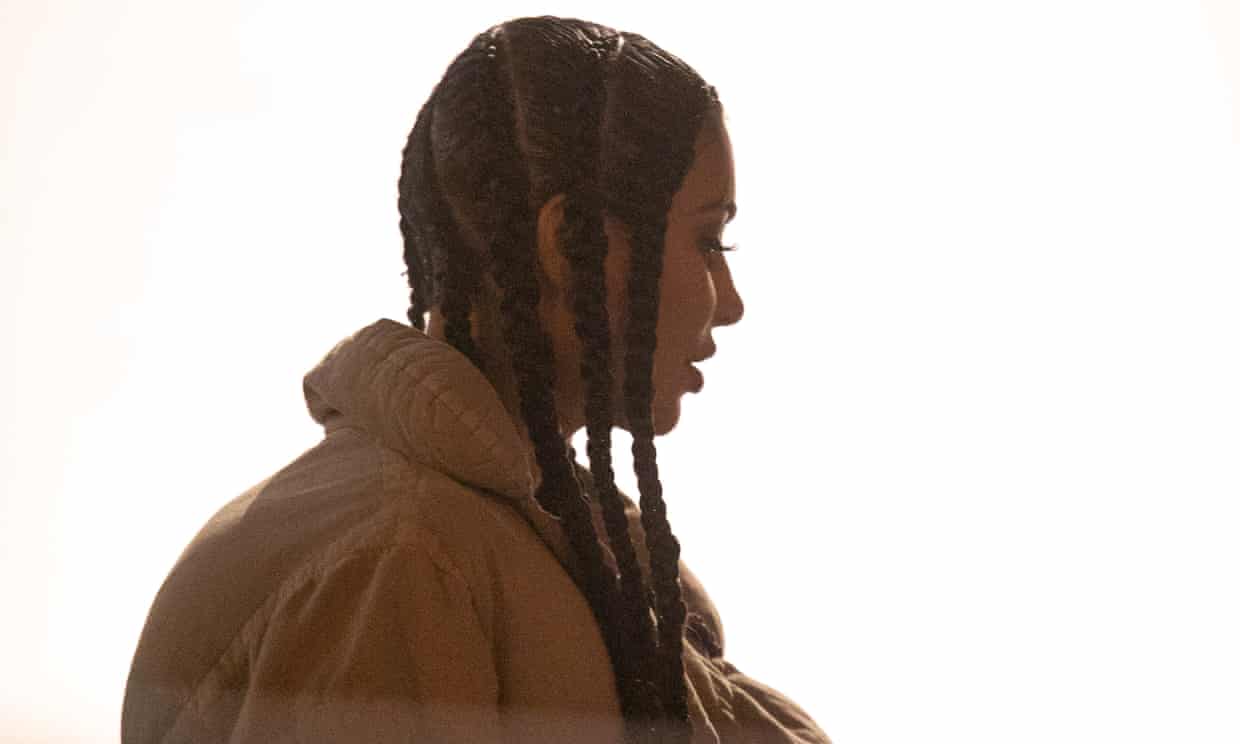
  • Why celebrating ‘mixed-race beauty’ has its problematic side

    2021-04-19

    Why celebrating ‘mixed-race beauty’ has its problematic side

    The Guardian
    2021-04-08

    Natalie Morris


    Kim Kardashian West at a Paris Fashion Week event on 2 March 2020. Photograph: Marc Piasecki/WireImage

    The trend personified by the Kardashians is driven by the aesthetics of ambiguity – and proximity to whiteness

    I was insecure about how I looked when I was younger. My hair was frizzy and embarrassingly enormous. My bum stuck out too much. My lips were too big. My thighs were too big.

    Everything about me – specifically my racialised features as a Black mixed woman – felt “too much”. I remember the distinct feeling of wanting to shrink myself, melt myself down into something neater, smaller, sleeker – which is how I saw my white friends, and the beautiful white people on TV.

    Then, in my early 20s, soon after moving to London from my home in Manchester, I began to notice a shift in how beauty was being represented. Suddenly, faces, hair and bodies that looked like mine were plastered on shop windows, grinning down from billboards, smizing (smiling with their eyes) from the pages of magazines. Every other TV ad featured mixed models or an interracial family.

    White influencers began plumping their lips, baking their skin, braiding their hair, even undergoing invasive surgical procedures to create curves where none existed. The things about myself I had wanted to disguise or alter in my youth were now in vogue – and I struggled to get my head around that. How did it become “trendy” to look like me? And should I feel pleased about it?…

    Read the entire article here.

  • Obamas Respond To Daunte Wright Shooting With A Plea For Police Reform

    2021-04-19

    Obamas Respond To Daunte Wright Shooting With A Plea For Police Reform

    The Huffington Post
    2021-04-13

    Ryan Grenoble, National Reporter

    “Our hearts are heavy over yet another shooting of a Black man, Daunte Wright, at the hands of police,” the former president and first lady wrote.

    Former President Barack Obama and first lady Michelle Obama on Tuesday responded to the killing of 20-year-old Daunte Wright with a call to “reimagine policing” in America, noting with some incredulity that Wright’s needless death came as jurors heard arguments in the trial of Derek Chauvin for the murder of George Floyd barely 10 miles away.

    “Our hearts are heavy over yet another shooting of a Black man, Daunte Wright, at the hands of police,” the two said in a written statement.

    “The fact that this could happen even as the city of Minneapolis is going through the trial of Derek Chauvin and reliving the heart-wrenching murder of George Floyd indicates not just how important it is to conduct a full and transparent investigation, but also just how badly we need to reimagine policing and public safety in this country.”…

    Read the entire article here.

  • Web Event: The great demographic illusion: Majority, minority, and the expanding American mainstream

    2021-04-19

    Web Event: The great demographic illusion: Majority, minority, and the expanding American mainstream

    American Enterprise Institute
    2021-04-19, 12:00-13:30 EDT

    The majority-minority thesis contends that increasing demographic change in America will inevitably lead to a nation where minorities replace whites as the majority. In his new book, “The Great Demographic Illusion: Majority, Minority, and the Expanding American Mainstream” (Princeton University Press, 2020), sociologist Richard Alba argues that this narrative distorts ongoing changes because it overlooks the surge of young Americans growing up with one white and one nonwhite parent.

    Please join AEI for a panel discussion, moderated by AEI’s Karlyn Bowman, on mixed-race families, US Census definitions, Hispanic identity across generations, personal definitions of race, and the implications for American politics.

    Agenda
    12:00 PM
    Introduction:
    Karlyn Bowman, Senior Fellow, AEI

    12:05 PM
    Presentation:
    Richard Alba, Distinguished Professor of Sociology, Graduate Center, City University of New York

    12:30 PM
    Discussion

    Panelists:

    • Musa al-Gharbi, Paul F. Lazarsfeld Fellow in Sociology, Columbia University
    • D’Vera Cohn, Senior Writer and Editor, Pew Research Center
    • Mark Hugo Lopez, Director, Global Migration and Demography Research, Pew Research Center
    • Ruy Teixeira, Senior Fellow, Center for American Progress

    Moderator:
    Karlyn Bowman, Senior Fellow, AEI

    1:10 PM
    Q&A

    1:30 PM
    Adjournment

    For more information, click here.

  • Would the Rev. Patrick Healy, Who Passed for White, Want to Be Celebrated as a Black Hero?

    2021-04-18

    Would the Rev. Patrick Healy, Who Passed for White, Want to Be Celebrated as a Black Hero?

    Faithfully Magazine
    2020-10-13

    Alexandria Griffin, Visiting Assistant Professor of Religion
    New College of Florida, Sarasota, Florida


    Father Patrick Francis Healy, S.J., was the first African American to receive a doctorate degree and the first to be president of a predominantly White university when he became president of Georgetown University in 1872. (Photo: Blake Photography/Public domain)

    Patrick Healy never directly addressed questions of what his racial identity might have been in the written record he left behind. However, he wrote on a few occasions about “blacks” or “negroes” in a tone that seems to indicate that he saw them as a group he did not belong to.

    In 2015 and 2016, Georgetown University became enmeshed in conversations about race taking place at college campuses across the United States. At Georgetown, conversation centered on the institution’s history with slavery, which had been an integral part of its early years, with much of the labor on campus falling to enslaved people.

    The focus was the sale of 272 enslaved African Americans in 1838, a sale undertaken by Jesuits Thomas F. Mulledy and William McSherry with the intent to accrue enough money to pay off some of the school’s debts and keep it open. This sale resulted in the breakup of numerous families, and the majority were sold into the Deep South, where they were subjected to harsher conditions of forced agricultural labor. The sale was controversial at the time but eventually largely faded from the memory of White Catholics. (As Shannen Dee Williams, historian at Villanova University and originator of the Twitter hashtag #BlackHistoryIsCatholicHistory, has pointed out, what many people now think of as new information about religious orders owning enslaved people never faded from the memories of Black Catholics.)

    Moreover, discussion also included broader issues around Georgetown’s relationship to slavery, including buildings named after slaveholding faculty, and on what actions might be taken to acknowledge and make amends for this history. A number of initiatives grew out of this; a working group made archival resources on slavery at Georgetown available online and researched the fates of those sold in 1838, the school held an apology ceremony attended by community members and descendants of those sold, and buildings named after Mulledy and McSherry were renamed. Additionally, the school opted to grant descendants of those sold in 1838 preferential admission. More recently, students voted to add a student fee to go toward reparations for descendants of those enslaved at Georgetown. The future of the fee and how or whether it will be implemented remains uncertain. The university has recently committed to raising $400,000 annually toward reparations, which some students feel is too little.

    Patrick Francis Healy: Legally Enslaved, Passing for White

    One figure has been strangely absent from this conversation: Patrick Francis Healy, the university’s 29th president. In November of 1853, Healy, then a young Jesuit in training, sent a letter to an older Jesuit and mentor, George Fenwick. He wrote from his teaching post at College of the Holy Cross: “Father, I will be candid with you. Placed in a college as I am, are boys who were well acquainted with by sight or hearsay, with me + my brothers, remarks are sometimes made (then if not in my hearing) which wound my very heart. You know to what I refer. The anxiety of mind caused by these is very intense.”…

    Read the entire article here.
  • Rebecca Carroll: “Surviving the White Gaze” & Transracial Adoption | The Daily Social Distancing Show

    2021-04-18

    Rebecca Carroll: “Surviving the White Gaze” & Transracial Adoption | The Daily Social Distancing Show

    The Daily Show with Trevor Noah
    2021-03-17

    Rebecca Carroll discusses her new memoir that examines transracial adoption and forging her own Black identity.

    Watch the video here.

Previous Page
1 … 87 88 89 90 91 … 1,428
Next Page

Designed with WordPress