• One and Half of You

    Talon Books
    2021-03-15
    88 pages
    6 W × 9 H × .237 D inches
    Paperback ISBN: 9781772012866

    Leanne Dunic

    From the talented multidisciplinary artist, musician, and writer Leanne Dunic comes the lyric memoir One and Half of You. In sinuous language, with candour, openness, and surprising humour, Dunic explores sibling and romantic love and the complexities of being a biracial person looking for completion in another.

    Including links to three songs written and performed for the book by tidepools.

  • Thinking in Colour: A BBC Radio Collection of Documentaries on Race, Society and Black History

    BBC Digital Audio
    2021-02-12
    00:57:00
    ISBN: 9781529143560

    Gary Younge, Professor of Sociology
    University of Manchester

    Gary Younge Gary Younge (Read by) Robin Miles (Read by) Amaka Okafor (Read by) Full Cast (Read by) Ricky Fearon (Read by)
    Gary Younge explores race, society and Black history in these five fascinating documentaries

    Author, broadcaster and sociology professor Gary Younge has won several awards for his books and journalism covering topics such as the civil rights movement, inequality and immigration. In this documentary collection, the former Guardian US correspondent turns his attention to current American political and social issues, including populist conservatism, and African-American identity.

    In Thinking in Colour, he examines racial ‘passing’: light-skinned African-Americans who decided to live their lives as white people. Looking at the topic through the prism of Nella Larsen’s 1929 novella Passing, Gary hears three astonishing personal stories, and probes the distinction between race and colour.

    Recorded shortly after the historic 2008 election, The Documentary: Opposing Obama follows Gary as he travels through Arkansas and Kentucky, talking to people who see Barack Obama’s presidency as nothing but bad news, and hearing their hopes and fears for the future.

    In The Wales Window of Alabama, Gary recounts how the people of Wales helped rebuild an Alabama church, where bombers killed four girls in 1963. Hearing of the atrocity, sculptor John Petts rallied his local community to raise money, and subsequently created a new stained glass window that has become a focus for worship and a symbol of hope.

    In Ebony: Black on White on Black, we hear the history of Ebony, the magazine that has charted and redefined African-American life since its launch in 1945. But what is its place in the world today, and does it still speak to contemporary African-Americans?

    And in Analysis: Tea Party Politics, Gary assesses the Tea Party movement, a US right-wing protest group that objects to big government and high taxes. He finds out what sparked this grass-roots insurgency, who its supporters are, and analyses its impact.

  • Mixed-race Brazilians increasingly embrace blackness

    France 24
    2021-11-19

    Brazilian philosopher and writer Djamila Ribeiro holds her book “Small Anti-Racist Manual” during an interview with AFP in Sao Paulo, Brazil, on November 8, 2021 NELSON ALMEIDA AFP

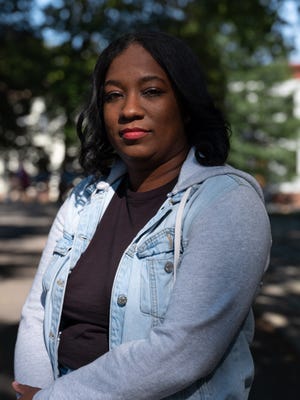
    Rio de Janeiro (AFP) – When Bianca Santana was little, her grandmother used to put her forearm alongside her mother’s and her own, proudly showing how the family’s skin had lightened across the generations.

    Now 37, Santana, a Brazilian writer and activist, sees the long-loaded issue of race in her country through a different lens: she is proud to call herself black.

    “When a child was born with lighter skin, that was cause for celebration,” says Santana, recalling the messages she received about race growing up.

    She remembers how her black grandmother used to make her pull her hair into a tight bun, so she wouldn’t look like “‘those little blackies.’”

    “She liked to talk about how my mother’s father had Italian blood, how his mother had blue eyes,” she says.

    Today, Santana, author of the book “How I Discovered I Was Black,” proudly wears her hair in an afro, a style she only embraced at age 30.

    Her shifting sense of identity is increasingly common in Brazil, the country with the largest black population outside Africa.

    Brazil, which will celebrate Black Consciousness Day Saturday, struggles with structural racism and the legacy of slavery, which it only abolished in 1888 — the last country in the Americas to do so.

    But for the large mixed-race population in this sprawling country of 213 million people, the stigma long attached to blackness is fading.

    “Mixed-race people in Brazil increasingly identify as black,” Santana says.

    “They’re straightening their hair less, they’re embracing black identity more and more.”…

    Read the entire article here.

  • On Passing and Not Trying to Pass

    My Jewish Learning
    2015-07-22

    Tema Smith

    I am black, and I am Jewish.

    I’ve always found comfort in the and of my identity — that simple part of speech that joins together two disparate things: two families, two histories, two cultures, two heritages, two skin colors, two lineages of trauma, two pathways to North America. As the offspring of both, I am equally neither.

    Lately, I spend a lot of time within the proverbial “walls” of the organized Jewish community. As a Jewish professional, my day-to-day life is dedicated to synagogue operations — specifically, membership and communications. While in many ways I am “at home” in the Jewish community, to this day I still feel out of place within the communal mainstream. And, contradictory as it may seem, it is the fact that I can easily pass for the Ashkenazi majority that leaves me feeling this way.

    I should say: I never asked to pass. The fact that I can walk into Jewish settings and instantly fit in leaves me with a bad taste. At the same time, I remember recognizing my own thoughts when I read Katya Gibel Azoulay quote her son in her seminal book, Black, Jewish, and Interracial: It’s Not the Color of Your Skin, but the Race of Your Kin, and Other Myths of Identity: “I’m not going to put up a sign that says I’m black just to be accepted,” she relays, writing, “as far as he was concerned, the idea of ‘learning how to act Black’ was the theater of the absurd.”…

    Read the entire article here.

  • John Agard becomes first poet to win BookTrust lifetime achievement award

    The Guardian
    2021-11-09

    Alison Flood

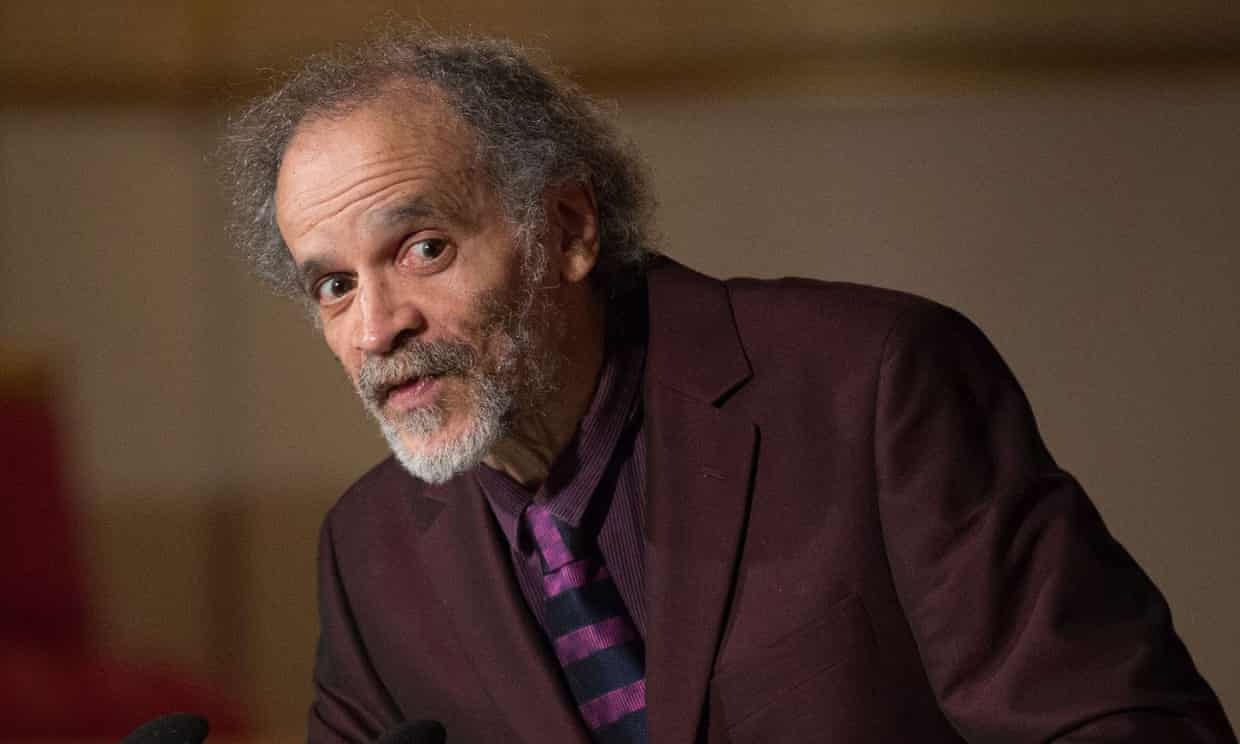
    ‘It’s not just me receiving this award’ … John Agard. Photograph: Rex

    Reading charity pays tribute to ‘incredible words’ of Afro-Guyanese author, who came to Britain in 1977 where he has become a staple of English lessons

    The Afro-Guyanese writer John Agard has become the first poet to receive the BookTrust lifetime achievement award.

    Agard, who was born in Georgetown, Guyana and moved to England in 1977, has been a fixture on the curriculum since 2002 for poems including Half-Caste (“Explain yuself / wha yu mean / when yu say half-caste / yu mean when picasso / mix red an green / is a half-caste canvas?”) and Checking Out Me History. Winning the Queen’s award for poetry in 2012, he is the author of more than 50 books for children and adults.

    “John’s incredible words have caught the imagination of a whole generation of children,” said Diana Gerald, chief executive of the reading charity, which has given its lifetime achievement award in the past to some of the biggest names in children’s literature, from Shirley Hughes to Raymond Briggs and the late Judith Kerr

    Read the entire article here.

  • Passing for white or the true colors of Cuban miscegenation

    OnCuba News
    2021-12-08

    Odette Casamayor, Associate Professor of Romance Languages
    University of Pennsylvania


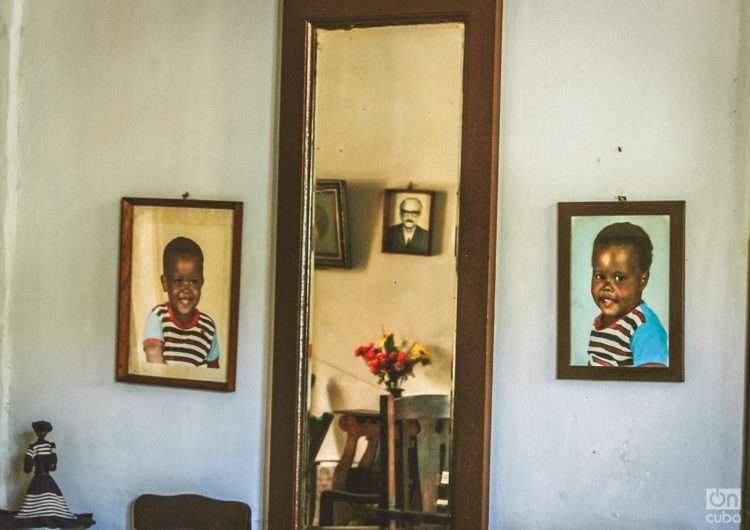
    Photo: Kaloian Santos.

    The miscegenation, in addition to being fierce and magical, painful or romantic, torment, fun, depending on how you want to interpret it, is one of the most insidious phenomena that exists.

    I am black, in all circumstances and scenarios. I could never pass for anything else. Perhaps that is why I have always been curious about the strategies deployed by many in what could be considered another national sport: “passing for white.”

    There is abundant magic and tragedy in each link of a complicated gear that, since colonial times, has operated relentlessly in Latin American societies. In the territories colonized by the Iberian metropolises, miscegenation would go beyond its primary biological dimension to, regardless of its intensity, become an important instrument of social mobility, promoting progress as the skin whitens and the negroid features become blurred or, as is commonly said, “the race is improved.” Meanwhile, in the Anglo-Saxon north equal opportunities were not granted to the mestizo subject. That is why what many call “the race,” because they choose to consider it a reality and not a historical, political and socio-economically determined construction, cannot in appearance be “improved” in the United States.

    However, miscegenation, in addition to being fierce and magical, painful or romantic, torment, fun, depending on how you want to interpret it, is one of the most insidious phenomena that exists. Miscegenation has always been a pandemic: it occurs everywhere when it is least expected and promoted. So, although much less structured than in Latin America, the mechanism of “passing for white” also has a following in the United States…

    Read the entire article here.

  • Human geneticists curb use of the term ‘race’ in their papers

    Science
    2021-12-02

    Rodrigo Pérez Ortega

    Geneticists are working to remove harmful racial categories from their descriptions of human populations. DAVIDE BONAZZI/@SALZMANART

    Field still struggles with how to accurately describe populations, study finds

    Human geneticists have mostly abandoned the word “race” when describing populations in their papers, according to a new study of research published in a leading genetics journal. That’s in line with the current scientific understanding that race is a social construct, and a welcome departure from research that in the past has often conflated genetic variation and racial categories, says Vence Bonham, a social scientist at the National Human Genome Research Institute who led the study.

    But alternative terms that have gained popularity, such as “ancestry” and “ethnicity,” can have ambiguous meanings or aren’t defined by genetics, suggesting researchers are still struggling to find the words to accurately describe groups delineated by their DNA, according to the study.

    In the 19th and 20th centuries, many geneticists embraced the idea that there were races, such as “Negroid” or “Caucasian,” that were distinct biological groups; such “race science” helped perpetuate discrimination and inequality. (Scientists have now thoroughly demonstrated the lack of a biological basis to racial categories.)…

    Read the entire article here.

  • I’m Black But Look White. Here Are The Horrible Things White People Feel Safe Telling Me.

    The Huffington Post
    2021-12-09

    Miriam Zinter

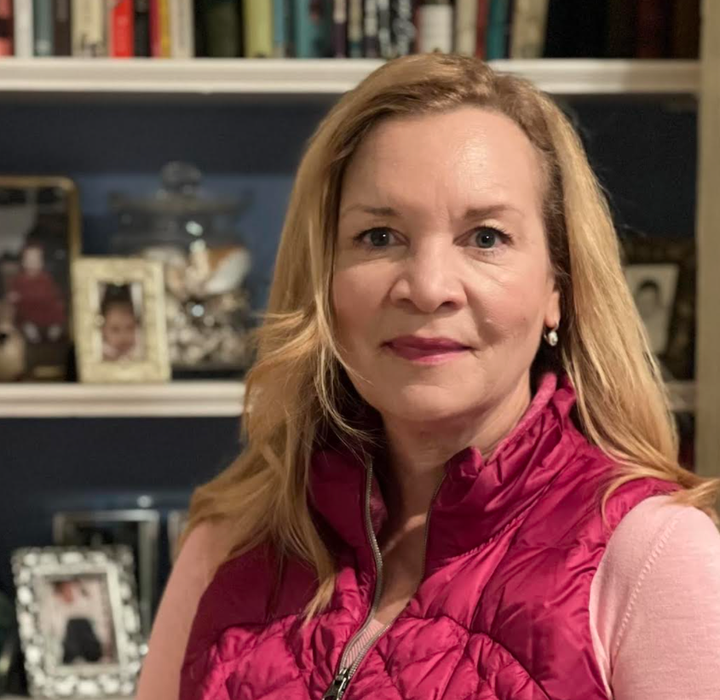
    The author. “I’ve had people tell me it ‘disgusts’ them to see interracial couples,” she writes. “They’ve told me they don’t understand why Black neighborhoods look so ‘ghetto.’” COURTESY OF MIRIAM ZINTER

    “Many of these people are educated, and hold jobs or positions that give them some form of power or influence over Black people.”

    I was outside my house gardening a few weekends ago when a neighbor, whom I had known for almost 30 years, stopped by so I could pet his large, fluffy dogs. I took my gloves off, squatted down to give the dogs a really good scratching around their ears and felt the sun on my back. What could be better? And then my neighbor said: “Why do you have a ‘Black Lives Matter’ sign on your front lawn when all those people do is kill each other?”

    My lovely day screeched to a halt.

    “You know I’m Black, right?” I said, standing up as tall as my 5’4” frame would allow, the sun shining on my blond hair. I continued to pet his dogs, because I needed the comfort of petting dogs at that moment, and because I needed to keep my hands busy so they didn’t slap that man’s face…

    Read the entire article here.

  • Brit Bennett’s novel ‘The Vanishing Half’ combines fiction, history in examining passing

    The Columbus Dispatch
    Columbus, Ohio
    2021-12-05

    Nancy Gilson, Special to The Columbus Dispatch


    Brit Bennett Miranda Barnes

    In Brit Bennett’s novel “The Vanishing Half,” light-skinned African American twin sisters are separated when one of them decides to pass as white, leaving her family behind.

    The novel, which delves deeply into the concept of identity, was a New York Times best-seller and designated as one of the newspaper’s best books of 2020.

    Bennett, 31, who grew up in southern California, attended Stanford University and the University of Michigan and now lives in New York. She published her debut novel, “The Mothers,” in 2016. She has written numerous essays, including “I Don’t Know What to Do With Good White People” and “Addy Walker, An American Girl,” about the Pleasant Company’s first Black doll.

    These days, Bennett is working on her third novel and occasionally appears in public events, mostly virtual, such as her event Sunday presented by the Columbus Metropolitan Library. She spoke recently by telephone with The Dispatch…

    Read the entire interview here.

  • A condensed history of multiracial identification in the United States

    Source
    2021-12-07

    Caitlin Gilbert, Jasmine Mithani, Lakshmi Sarah, and Kaitlyn Wells


    (Image by rawpixel.com / Freepik)

    How to write about mixed and multiracial people, Part 1

    Mixed-race identity is chic right now: Our fictionalized stories are bestsellers, and public figures such as Naomi Osaka and Kamala Harris are a regular part of the national conversation. Heck, we’ve even made the news as one of the fastest-growing populations in the 2020 United States Census. As our identities have become trendy and more journalists seek to write about our experiences, it’s important that they respect what we have to say and honor who we are.

    We multiracial people reject many assumptions, generalizations and categories. We are not a monolith, and we may even disagree on the terms multiracial versus mixed. Yet this is who we are—we’re both and neither, and our identities can be fluid depending on context.

    When it comes to writing about mixed-race and multiracial people, it is critical to understand the historical context behind the terms, learn how to speak to sources and write about them, and examine any bias throughout the journalistic process. To help journalists produce nuanced reporting about mixed-race and multiracial people we’ve compiled a two-part guide based on our SRCCON 2021 presentation, “When ‘Check One’ Does Not Apply: Covering and Being Mixed Race in Journalism.”

    In this article, we are going to review an abbreviated history of mixed-race people in the United States. If you are looking for a reporting guide, please see our companion article: Guidelines for reporting on multiracial people

    Read the entire article here.