Award-winning novelist and educator Jewell Parker Rhodes and her daughter, young adult author Kelly McWilliams, came together in conversation to discuss book bans and young adult literature. As individuals, it is our duty to provide the next generation of writers, teachers, journalists, activists, and readers with an education that includes all facets of life, an education that is free from unreasonable censorious threats. This discussion addressed the vital role that children’s and young adult literature plays in the process of education, and how we can work to protect our youth from the threats to free expression.
This discussion was presented in partnership with the Miami Book Fair.
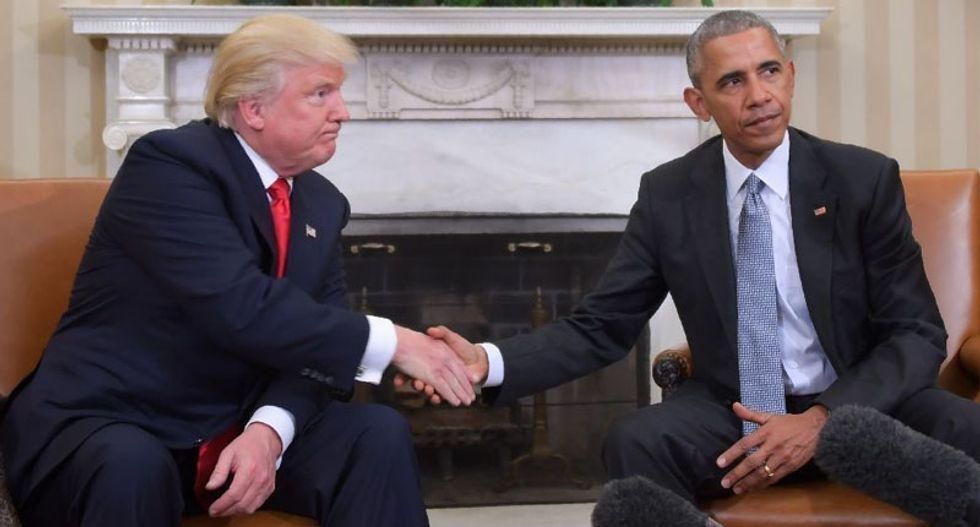
The “Morning Joe” host, a former Republican himself, said he had long been skeptical of that notion, but he said the evidence had become too obvious to deny.”I have been a skeptic for quite some time that the election of Barack Obama was such a shock to so many white Americans that they just never got over it,” Scarborough said.
“I was always a skeptic of that. I saw his election, even though they didn’t agree with him ideologically on a lot of things. I saw that as a moment that all Americans — Republicans and Democrats, conservatives and liberals — could stop and go, ‘Wow, okay, the United States of America is the first majority white country that elected a Black man as their leader,’ something to celebrate.”…
To be sure, there are other dimensions of this adaptation that deserve discussion—for example, the downplaying of Clare’s abusive childhood, which renders her passing a little more mercenary than it is in the novel—but I’ve already gone on too long. As is by now clear, I have my misgivings about [Rebecca] Hall’s recent film, but, above all, I’m very glad that she made it. If nothing else, it is a sign of [Nella] Larsen’s growing stature, a growth evident to any scholar who has been watching the ballooning scholarly interest in her work in the last decade. Having her novel adapted for the big screen constitutes a new stage in this evolution, for it makes her only the second novelist of the Harlem Renaissance to have her work adapted for film in a major way (Zora Neale Hurston was first, with Darnell Martin’s 2005 adaptation of Their Eyes Were Watching God).
For years, I passed as white. Only later did I realize the advantages I was getting made me complicit in a system that oppressed others.
I peered around the movie theater as soon as we sat down. Slowly, I began to pick out individuals who looked like my daughter and me — light complexioned Black and mixed-race people. They too, I reckoned, had come to see a movie that reflected our shared reality.
Passing, which recently moved from the big screen to Netflix and is based on Nella Larsen’s 1929 novel, tells the story of two light-skinned Black women in 1920s New York who, upon reconnecting, each grapple with the other’s relationship with race. One flouts societal and racial boundaries by “passing” as white. The other quietly wrestles with the limits imposed on her as a married Black woman.
The origins of passing stretch back to our country’s founding. For some Black people, crossing the color line meant a chance to improve their social status, economic opportunity, and marital prospects. Some scholars claim passing is no longer a phenomenon because of greater economic opportunity and stronger legal protections for Black Americans. But passing has never gone away. For many, it is a reality — but one that can be transformed into a powerful way to embrace our true identities.
For much of my life, I’ve passed as white. My “high yella” skin, as my grandmother called it, along with gray-green eyes and straight hair, hid the fact that I am mixed race. So did my family. In 1967, a year after I was born, the Supreme Court ruled in Loving v. Virginia that laws banning interracial marriage were unconstitutional. Still, mixed-race relationships remained socially unacceptable in some parts of the country. For me, growing up in a small town in western New York, my very existence as a mixed-race person was a personal affront to some…
Set on a North DakotaOjibwe reservation, Love Medicine—the first novel from master storyteller and National Book Award-winning author Louise Erdrich—is an epic story about the intertwined fates of two families: the Kashpaws and the Lamartines.
With astonishing virtuosity, each chapter of this stunning novel draws on a range of voices to limn its tales. Black humor mingles with magic, injustice bleeds into betrayal, and through it all, bonds of love and family marry the elements into a tightly woven whole that pulses with the drama of life.
Erdrich has written a multigenerational portrait of strong men and women caught in an unforgettable whirlwind of anger, desire, and the healing power that is love medicine.
University of Oklahoma Press
October 2001
282 pages
6 X 9
12 B&W Photos
Hardcover ISBN: 9780806133546
Paperback ISBN: 9780806190143
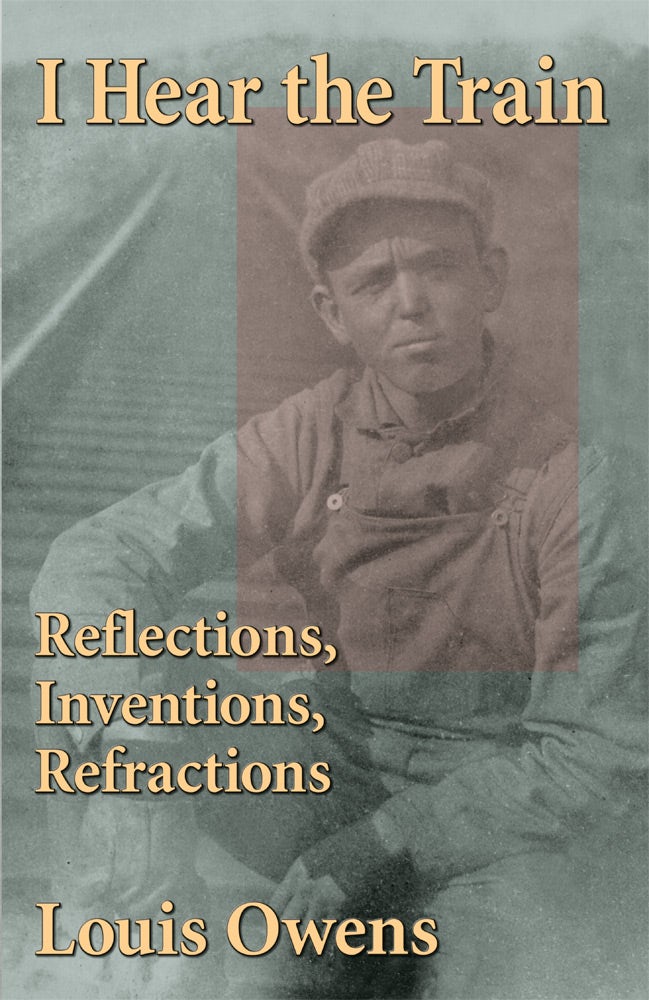
Louis Owens (1948-2002), Professor of English and Native American Studies University of California, Davis
In this innovative collection, Louis Owens blends autobiography, short fiction, and literary criticism to reflect on his experiences as a mixedblood Indian in America.
In sophisticated prose, Owens reveals the many timbres of his voice—humor, humility, love, joy, struggle, confusion, and clarity. We join him in the fields, farms, and ranches of California. We follow his search for a lost brother and contemplate along with him old family photographs from Indian Territory and early Oklahoma. In a final section, Owens reflects on the work and theories of other writers, including Gayatri Chakravorty Spivak, Gerald Vizenor, Michael Dorris, and Louise Erdrich.
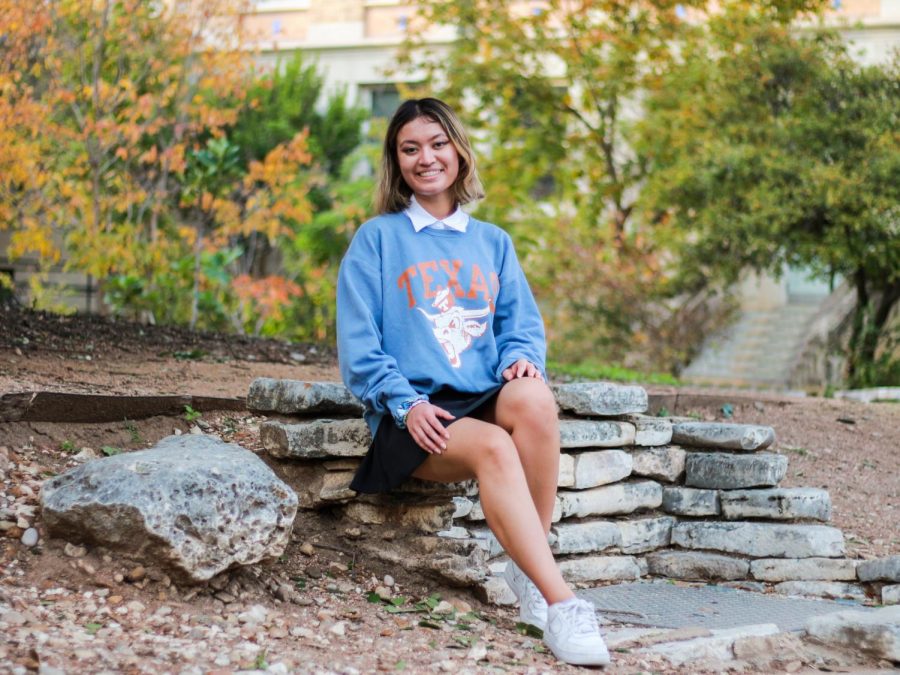
Disliking her paler skin compared to other darker-complected Hispanics growing up, Rachel González-Martin spent hours lying under the sun willing herself to tan. Only burning and turning red, she grew frustrated. González-Martin wanted others to easily recognize her as Hispanic.
“There’s who we know we are and how we tell our own story, but we can never escape from what people see in us or read from our appearance,” the associate professor of Mexican American and Latina/o studies said.
Racial passing — a term used to describe those perceived as a member of another racial group than their own — can affect how closely people connect to and feel a part of their communities. For UT students and staff, the process of navigating different cultural stereotypes and learning to embrace their identities regardless of their appearance remains a lifelong project.
Growing up in Oakland, California, with very few fellow Hispanics, González-Martin felt she needed to physically show her identity. However, as she’s grown older, she said she’s learned to accept her own meaning of belonging to a community aside from outside biases…
Elle-Máijá Tailfeathers explains the particular kind of pain revelations about Michelle Latimer have caused within the Indigenous film community
We were gathered for a filmmaking workshop at the Urban Native Youth Association in East Vancouver. I was co-facilitating with filmmaker Jessica Hallenbeck. One participant was that particular kind of shy brown-skinned Indigenous teenage boy who didn’t yet know his worth in this world. He wore sweatpants, a hoodie and sneakers, and had a head of thick black hair. He was afraid to smile, much less make eye contact with the other teens in the room.
I’d asked the young people to introduce themselves – to give us their names, where they come from and what they found most exciting about film. When his turn came, he kept his gaze steady on one spot on the floor as he quietly shared his name and that he was from Vancouver. I interjected. “And, what nation are you from?” He paused, and then whispered, “I don’t know.”
My heart sank to untold depths. I had just inadvertently implied that an Indigenous youth who grew up in foster care didn’t belong. Belonging is everything in Indigenous communities, but at that moment I made him feel so small. I still carry the shame from that interaction, knowing I could not undo that harm.
People wonder how former Trickster director Michelle Latimer, whose identity has recently come under scrutiny, could claim to be Indigenous for so long without skepticism. She was trusted because the Indigenous film community is protective. We want to avoid doing harm to those who have experienced the trauma of displacement…
New York University Press
December 2021
312 Pages
24 b/w illustrations
6.00 x 9.00 x 0.00 in
Paperback ISBN: 9781479802418
Hardcover ISBN: 9781479802401
eBook ISBN: 9781479802425
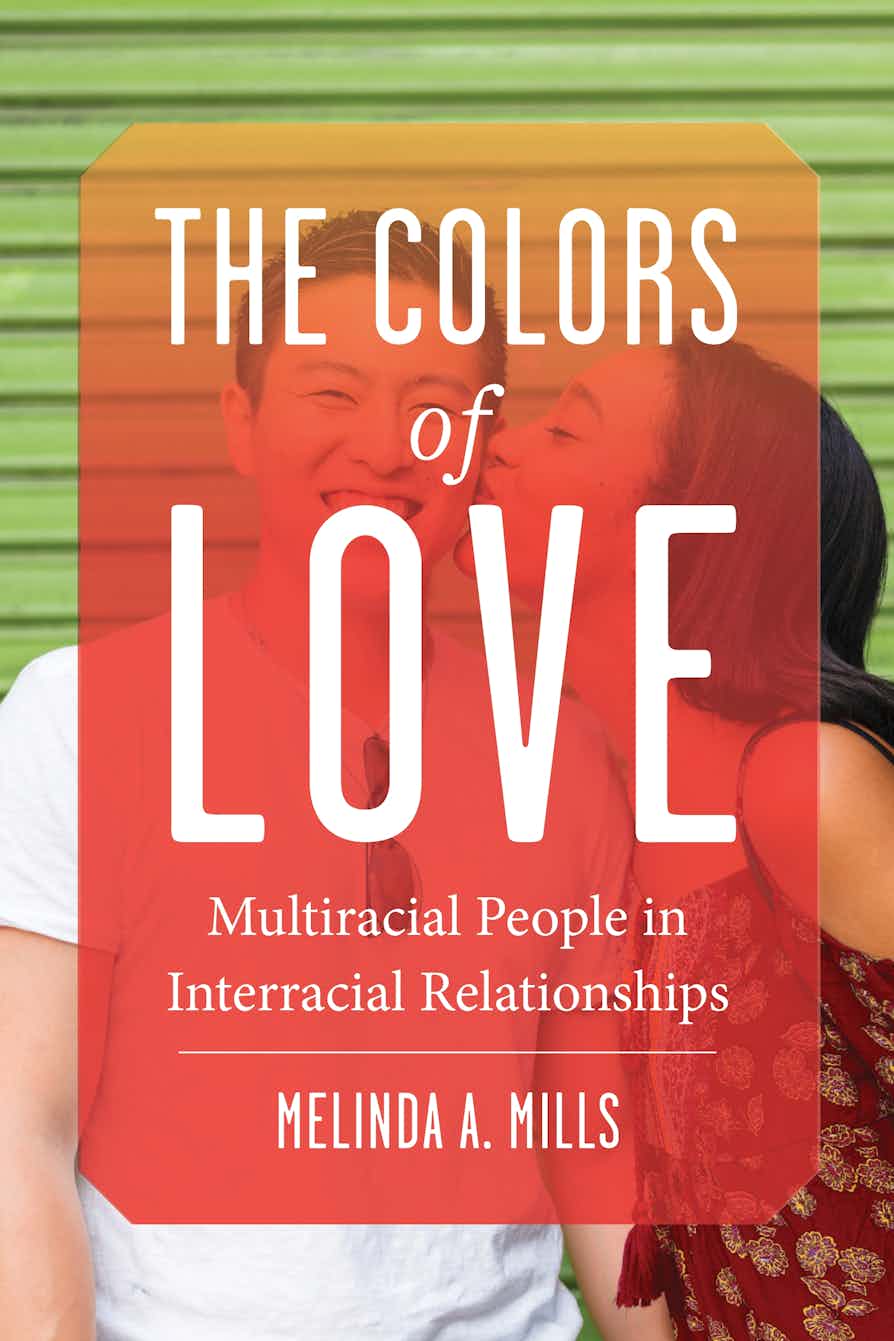
Melinda A. Mills, Associate Professor of Women’s and Gender Studies, Sociology, and Anthropology; Coordinator of Women’s and Gender Studies Castleton University, Castleton, Vermont
How multiracial people navigate the complexities of race and love
In the United States, more than seven million people claim to be multiracial, or have racially mixed heritage, parentage, or ancestry. In The Colors of Love, Melinda A. Mills explores how multiracial people navigate their complex—and often misunderstood—identities in romantic relationships.
Drawing on sixty interviews with multiracial people in interracial relationships, Mills explores how people define and assert their racial identities both on their own and with their partners. She shows us how similarities and differences in identity, skin color, and racial composition shape how multiracial people choose, experience, and navigate love.
Mills highlights the unexpected ways in which multiracial individuals choose to both support and subvert the borders of race as individuals and as romantic partners. The Colors of Love broadens our understanding about race and love in the twenty-first century.
Carrie Bourassa’s Instagram page describes her as an “Indigenous feminist” and “proud Metis” with an addiction to lattes.
Only her penchant for caffeine was true.
A statement from Carrie Bourassa’s team said “she has not falsely identified as Indigenous nor taken space away from Indigenous peoples.”
Bourassa, a professor in the department of community health and epidemiology at the University of Saskatchewan and a leading expert on indigenous issues, has been exposed as a fraud. A family tree prepared by a group of academics who were suspicious of her ancestral claims shows that Bourassa is of Swiss, Hungarian, Polish and Czechoslovakian origins and has not one ounce of indigenous blood…