Mixed Race Studies

Scholarly perspectives on the mixed race experience.

    • About This Site
    • Bibliography
    • Contact Information
    • Date and Time Formats
    • Forthcoming… (Updated 2021-09-01)
    • Likely Asked Questions
    • List of Book Publishers
    • List of Definitions and Terms
    • My Favorite Articles and Papers
    • My Favorite Posts
    • My Recent Activities
    • Praise for Mixed Race Studies
    • Tag Listing
      • Tag Listing (Ordered by Count)
    • US Census Race Categories, 1790-2010
    • 1661: The First ‘Mixed-Race’ Milestone
    • 2010 U.S. Census – Some Thoughts

recent posts

  • The Routledge International Handbook of Interracial and Intercultural Relationships and Mental Health
  • Loving Across Racial and Cultural Boundaries: Interracial and Intercultural Relationships and Mental Health Conference
  • Call for Proposals: 2026 Critical Mixed Race Studies Conference at UCLA
  • Participants Needed for a Paid Research Study: Up to $100
  • You were either Black or white. To claim whiteness as a mixed child was to deny and hide Blackness. Our families understood that the world we were growing into would seek to denigrate this part of us and we would need a community that was made up, always and already, of all shades of Blackness.

about

  • Twitter
  • Facebook
  • Instagram
  • “Colin in Black & White” writer on Kaepernick’s parents & awakening: “They didn’t see him as Black”

    2021-12-03

    “Colin in Black & White” writer on Kaepernick’s parents & awakening: “They didn’t see him as Black”

    Salon
    2021-11-28

    D. Watkins, Editor-at-Large
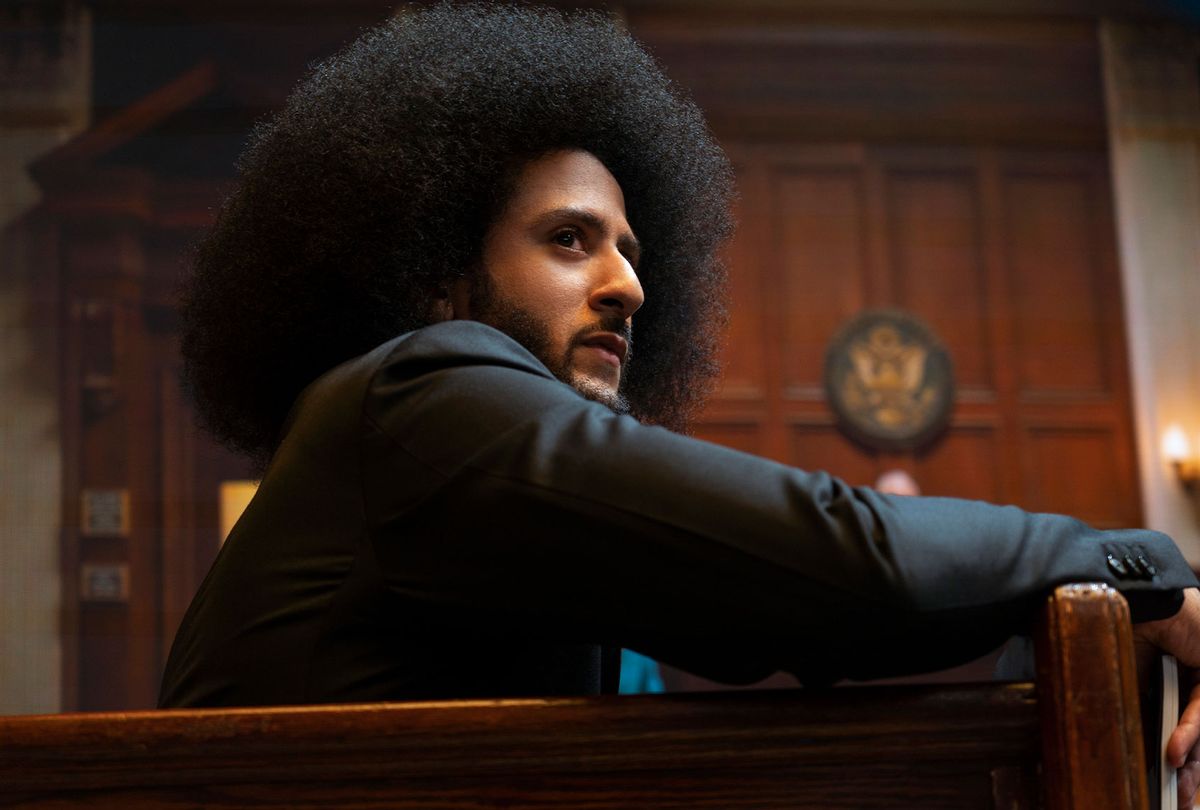
    Colin Kaepernick in “Colin in Black & White” (Ser Baffo/Netflix)

    Michael Starrbury appeared on “Salon Talks” to discuss how he wants to increase awareness of privilege and reality

    Back in 2016, the superstar NFL quarterback of the San Francisco 49ers, Colin Kaepernick, had become so fed up with racism, police violence against Black and Brown people, and the many injustices woven into the fabric of America, that he decided to begin his own silent protests, by taking a knee during the singing of the National Anthem.

    Since then, Kaepernick, 34, has been allegedly blackballed from the NFL, with every team refusing to sign him, even though he is arguably better than half of the quarterbacks in the league. He filed a lawsuit against the NFL for discrimination and won an undisclosed amount of money and then smoothly transitioned toward his second act as an activist. He started Kaepernick Publishing company, donated to grassroots organizations all over the world and launched the Know Your Rights Camp so that young people from improvised areas can get the resources they need to learn about the many types of racial injustices in America, challenge the system and become the next generation of leaders.

    Taking a knee during the anthem has bought Colin Kaepernick more hate than any of us could have probably imagined – from him being a constant target for conservative media to President Donald Trump calling him and other NFL anthem protestors who followed his lead a “sons of a bitch” just because they wanted to use their platform as a vehicle for raising awareness. Michael Starrbury, who was a writer on Netflix’s Emmy-nominated series “When they See Us,” had the difficult job of not only researching the impact of Kaepernick’s protest, but tying his decision to do so with some of the most traumatic incidents from Kaep’s childhood in the new Netflix series “Colin In Black and White.”…

    Read and/or watch the interview here.

  • ‘Passing’ filmmaker Rebecca Hall shares the personal story behind her movie

    2021-12-03

    ‘Passing’ filmmaker Rebecca Hall shares the personal story behind her movie

    Fresh Air
    National Public Radio
    2021-11-30

    Terri Gross, Host

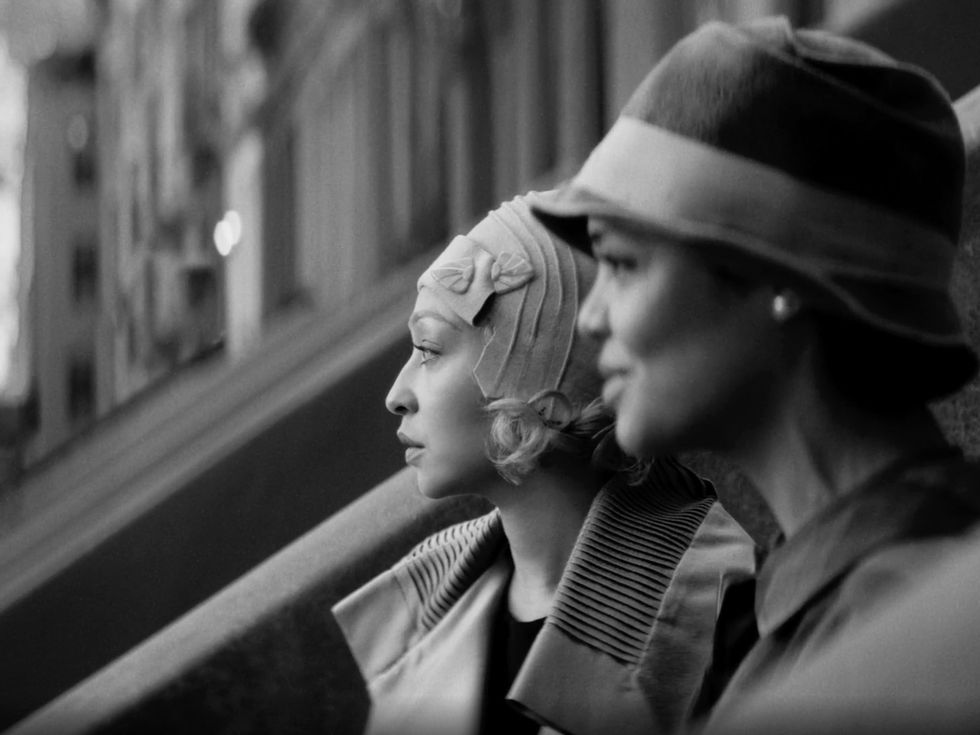
    Rebecca Hall (right) works on the set of Passing with actors Ruth Negga (left) and Tessa Thompson.
    Netflix

    Actor/filmmaker Rebecca Hall had what she describes as a “real gasp” moment when she first read Nella Larsen’s 1929 novel Passing.

    The book centers on two light-skinned African American women who run into each other after not having seen each other for many years. One of the women is an active member of Harlem’s Black community. The other is married to a white man and is passing as white.

    Reading the story of these fictional women, Hall realized that her maternal grandfather had also passed as white.

    “Suddenly, aspects of my family life that were tinged with so much mystery and obfuscation, there was a reason for that,” Hall says.

    Hall’s mother, acclaimed opera singer Maria Ewing, also passed as white, though not necessarily by her own volition. Instead, Hall says, Ewing tended to “be whatever people chose to see” — which sometimes meant being described as “exotic” by members of the opera community.

    Hall was so moved by Larsen’s novel that she drafted a script for a film adaptation — and then she put it away until she felt ready to do something with it. Now, 13 years later, her adaptation of Passing is available on Netflix…

    Read the entire interview here.

  • In 2002, the fifth-generation Afro-Argentine was kept from leaving the country by a customs officer who insisted there are no Black Argentines and asserted her passport was fake.

    2021-12-02

    This year’s November celebration of African culture in Argentina is dedicated to the memory of Maria Magdalena Lamadrid — “La Pocha” — an Afro-Argentine activist who died in September. In 2002, the fifth-generation Afro-Argentine was kept from leaving the country by a customs officer who insisted there are no Black Argentines and asserted her passport was fake.

    Christiana Sciaudone, “Argentine movement tries to make Black heritage more visible,” The Associated Press, November 26, 2021. https://apnews.com/article/immigration-entertainment-discrimination-migration-race-and-ethnicity-0d18920b22e0eab19f28202c591ef0ea.

  • Whereas Japanese enthusiastically embraced cultural mixing with the U.S., they rejected biological mixing outright, seeing mixed-race babies as a threat to their racial purity and tantamount to an assault on the Japanese race itself.

    2021-12-02

    The Japanese public echoed the state’s abhorrence for this population of biracial babies. Whereas Japanese enthusiastically embraced cultural mixing with the U.S., they rejected biological mixing outright, seeing mixed-race babies as a threat to their racial purity and tantamount to an assault on the Japanese race itself. Black-Japanese babies were especially despised, but all biracial mixtures encountered greater prejudice in Japan than did biracial “GI babies” in Germany and Britain.5 Even Sawada Miki (沢田美喜, 1901-80), who in 1948 founded an orphanage for occupation babies, defended the policy of separating Japanese and biracial orphans. Mixed-race children, she felt, possessed “mental and physical handicaps” and in any case would never be accepted into Japanese society due to “the people’s traditional dislike for Eurasian children.”6 By 1955, Sawada’s orphanage had accepted 468 babies and negotiated 262 adoptions in the U.S. No Japanese adoption service accepted Sawada’s children, however, and a Japanese couple who had adopted one “returned it when the neighborhood prejudice they encountered proved too strong.”7

    W. Puck Brecher, “Eurasians and Racial Capital in a “Race War”,” Asia Pacific Perspectives: A Publication of the Center for Asia Pacific Studies, Volume 14, Number 2 (Spring 2017). 4. https://jayna.usfca.edu/asia-pacific-perspectives/center-asia-pacific/perspectives/v14n2/brecher.html.

  • Understand the different experiences your child will have due to their intersectional identity. Their experiences will not mirror those of EITHER parent.

    2021-12-02

    I urge anyone who has a mixed-race family member to check in on them. If you are a parent to a mixed-race child, please acknowledge the responsibility you have. Understand the different experiences your child will have due to their intersectional identity. Their experiences will not mirror those of either parent. Just as it is your responsibility to keep them fed, clothed and healthy, it is your responsibility to educate yourselves on how the issues of race embed themselves deep within the history of the either parents’ lives, experiences, and mentalities. If you are the white parent, you must first learn to acknowledge your white privilege and know your child will never have the same experiences as you. Learn to recognise the racist language and beliefs within your own family, and most importantly yourself, because they do exist. It’s not about people uttering racial slurs, it is the misconceptions you and the people around you have about what it means to be black as well as recognising the flaws in the system which disadvantage those who are not white.

    Daniella Brookes, “We Need To Stop Leaving Mixed-Race People Out Of The Race Conversation,” Words of Integrity: Celebrating positivity and embracing the peaks and falls of life. November 25, 2021. https://wordsofintegrity.com/2021/11/25/we-need-to-stop-leaving-mixed-race-people-out-of-the-race-conversation/.

  • Passing Is a Film About Race from the Black Gaze

    2021-12-02

    Passing Is a Film About Race from the Black Gaze

    Harper’s Bazaar
    2021-11-11

    Imani Perry, Hughes-Rogers Professor of African American Studies
    Princeton University, Princeton, New Jersey


    Netflix

    Rebecca Hall’s adaptation of Passing expertly uses the craft of cinema to explore race and colorism from a Black point of view, Imani Perry argues.

    Nella Larsen’s 1929 novel, Passing, was part of a tradition. Writers, both Black and white, had been depicting the practice of extremely light-complexioned African Americans slipping into the white world for at least 70 years prior. Passing literature is the term critics have applied to it. In a racially segregated and stratified society, passing was powerful fodder for the literary imagination. Being discovered came with the risk of shame, violence, incarceration, and even death. In Black communities, passing itself was at once frowned upon and protected, as the secrets of passers were guarded.

    Understandably, depicting passing today, when the rules of racial membership have shifted, is challenging. Members of Generation Z are skeptical of the historic “one-drop rule” of African-American membership. Initially, that rule was a way of marking Blackness as inferiority and even a sort of contagion. Over time, African Americans used it to develop an expansive idea of what it meant to belong to “the race.” But today, young people often wonder how much one can claim to belong to a group without carrying the weight of being seen as such.

    Director Rebecca Hall, who adapted the 1929 novel for the screen nevertheless succeeds in making a film that brings contemporary viewers into the intimate realm of its Black women protagonists, both of whom “pass”; one completely, the other conditionally. Most impressively, Hall captures the tensions of passing in a manner that is effective in the 21st century. Whereas the novella is a masterpiece of sumptuous yet suggestive prose, the black-and-white film’s luxuriousness is found in texture, light, and gesture. Hall avoids a problem that all too often afflicts Black actors. When directors fail to shift light appropriately, bodies that are luminous too often are made muddy and shapeless. Hall’s effective light is not just visually satisfying; it is a narrative tool…

    Read the entire review here.

  • Getting into Character: Racial Passing and the Limitations of Performativity and Performance in Britt Bennett’s The Vanishing Half

    2021-11-30

    Getting into Character: Racial Passing and the Limitations of Performativity and Performance in Britt Bennett’s The Vanishing Half

    Critique: Studies in Contemporary Fiction
    Published online 2021-11-22
    DOI: 10.1080/00111619.2021.2007838

    Ohad Reznick, Ph.D. Candidate
    Department of Foreign Literatures and Linguistics
    Ben-Gurion University of the Negev, Beersheba, Israel

    Judith Butler’s notion of performativity has been criticized because of its overemphasis on the individual’s performance, while it remains questionable how it changes heteronormativity. In the same way that drag performance challenges the man/woman binary, racial passing challenges the White/Black binary. However, whether passing alters the societal perception of race remains debatable. Analyzing the tropes of acting and passing in Brit Bennett’s The Vanishing Half, I argue that the novel delineates a tension between a liberal mind-set, according to which passing exemplifies the performativity of identity and a close-minded perspective, according to which one cannot choose one’s racial identity. While the novel unsettles the line between acting and being authentic, and, analogously, the line between an original racial identity and an adopted one, it depicts most of its characters as refusing to accept racial transformations. Likewise, the novel presents gender identity as performative, but not in the eyes of society.

    Read or purchase the article here.

  • The Day I Passed for White

    2021-11-29

    The Day I Passed for White

    TIME
    2021-11-19

    Kelly McWilliams


    Illustration By Elizabeth Montero for TIME

    Kelly McWilliams is the author of the upcoming Mirror Girls, a novel about sisterhood and passing.

    As a light-skinned Black woman, I have purposefully passed for white only once in my life.

    Which is not to say I haven’t passed unintentionally many times—especially as a young adult, away from home for the first time. When white folks around me vented their subterranean racism (“Black kids only get into college because of affirmative action, you know”), I liked to consider myself a warrior—a masked superspy. I always pushed back against this covert racism—the off-color jokes, the insider whispers. (“I would never date a Black man, they’re all on drugs.” “My roommate’s hair smells, you know, like them.”) Importantly, I always revealed my own racial identity as quickly as possible…

    Read the entire article here.

  • Dancer, singer … spy: France’s Panthéon to honour Josephine Baker

    2021-11-29

    Dancer, singer … spy: France’s Panthéon to honour Josephine Baker

    The Guardian
    2021-11-28

    Jon Henley

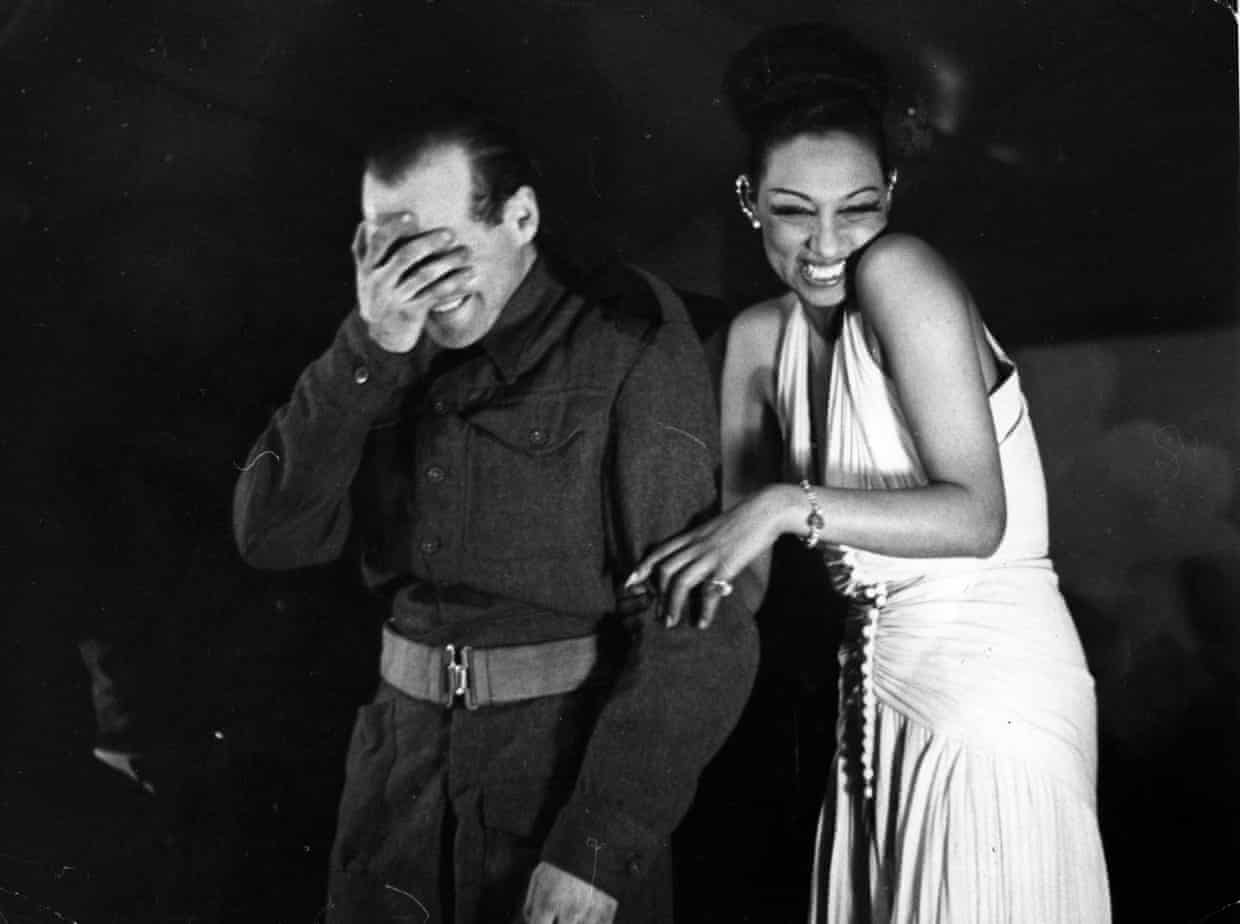
    ‘Resistance heroine’: Josephine Baker entertains the troops at a London victory party in 1945. Photograph: Jack Esten/Getty Images

    The performer will be the first Black woman to enter the mausoleum, in recognition of her wartime work

    In November 1940, two passengers boarded a train in Toulouse headed for Madrid, then onward to Lisbon. One was a striking Black woman in expensive furs; the other purportedly her secretary, a blonde Frenchman with moustache and thick glasses.

    Josephine Baker, toast of Paris, the world’s first Black female superstar, one of its most photographed women and Europe’s highest-paid entertainer, was travelling, openly and in her habitual style, as herself – but she was playing a brand new role.

    Her supposed assistant was Jacques Abtey, a French intelligence officer developing an underground counter-intelligence network to gather strategic information and funnel it to Charles de Gaulle’s London HQ, where the pair hoped to travel after Portugal.

    Ostensibly, they were on their way to scout venues for Baker’s planned tour of the Iberian peninsula. In reality, they carried secret details of German troops in western France, including photos of landing craft the Nazis were lining up to invade Britain.

    The information was mostly written on the singer’s musical scores in invisible ink, to be revealed with lemon juice. The photographs she had hidden in her underwear. The whole package was handed to British agents at the Lisbon embassy – who informed Abtey and Baker they would be far more valuable assets in France than in London.

    So back to occupied France Baker duly went. “She was immensely brave, and utterly committed,” Hanna Diamond, a Cardiff university professor, said of Baker, who on Tuesday will become the first Black woman to enter the Panthéon in Paris, the mausoleum for France’s “great men”….

    Read the entire article here.

  • Inventing the Science of Race

    2021-11-29

    Inventing the Science of Race

    The New York Review
    2021-12-16

    Henry Louis Gates Jr., Alfonse Fletcher Jr. University Professor; Director of the Hutchins Center for African and African American Research
    Harvard University, Cambridge, Massachusetts

    Andrew S. Curran, William Armstrong Professor of the Humanities
    Wesleyan University, Middletown, Connecticut

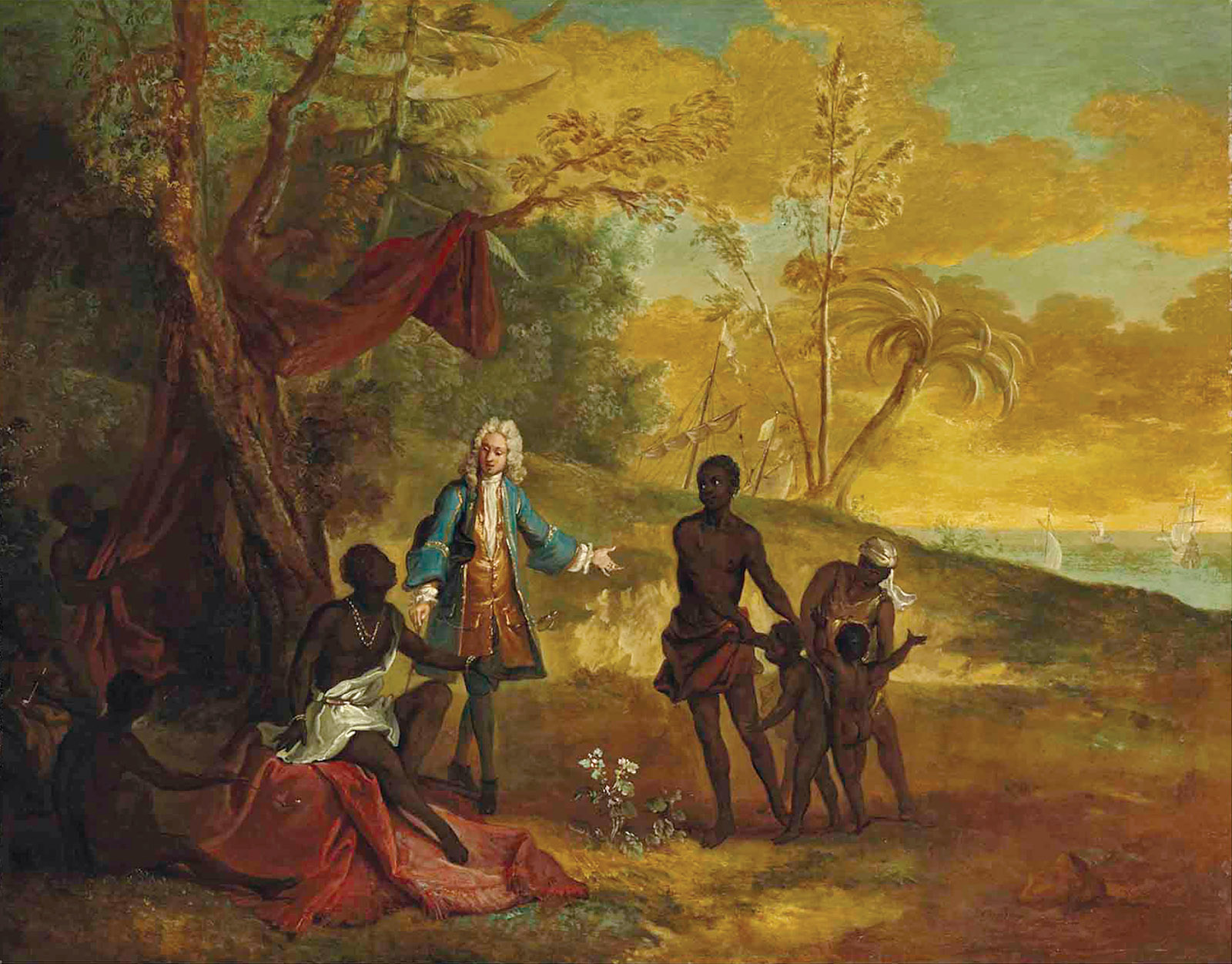
    Jean-Baptiste Oudry: Africa: A European Merchant Bartering with a Black Chief, from the Four Continents series, 1724

    In 1741, Bordeaux’s Royal Academy of Sciences held an essay contest searching for the origin of “blackness.” The results help us see how Enlightenment thinkers justified chattel slavery.

    In 1712 King Louis XIV of France signed the lettres patentes that formally established Bordeaux’s Royal Academy of Sciences, Belles Lettres, and Arts, a social club of intellectual inquiry and public edification. In contrast to the more conservative University of Bordeaux, whose primary objective was to educate the country’s priests, doctors, and lawyers through lessons compatible with Scripture, the Bordeaux Academy saw itself as “enlightened”: its objective was advancing scientific truth as part of a larger program intended to promote “mankind’s happiness.”

    Every year, the academy organized an essay contest that it publicized throughout Europe. In 1739 the members announced the subject of the competition for 1741: “Quelle est la cause physique de la couleur des nègres, de la qualité de leur cheveux, et de la dégénération de l’un et de l’autre?” (“What is the physical cause of the Negro’s color, the quality of [the Negro’s] hair, and the degeneration of both [Negro hair and skin]?”) Embedded in this question was the academy’s assumption that something had happened to “Negroes” that had caused them to degenerate, to turn black and grow unusual hair. In short, the academy wanted to know who is black, and why. It wanted to know, too, what being black signified. The winner was promised a gold medal worth three hundred livres, roughly the annual earnings of a common worker at the time.

    The 1741 contest was only the latest iteration of non-Africans’ fascination with dark skin. When the ancient Greeks, Romans, and Arabic peoples first described the inhabitants of Africa, it was Africans’ color that struck them most. Over many centuries, African “blackness” grew into an all-encompassing signifier that substituted for the range of reddish, yellowish, and blackish-brown colors that the skins of Africans actually express. The color black also became synonymous with the land itself; many of the geographical names that outsiders assigned to sub-Saharan Africa—Niger, Nigritia, Sudan, Zanzibar—contain the etymological roots of the word “black.” The most telling example is the name Ethiopia. Derived from the Greek aitho (I burn) and ops (face), it became the most widespread label for the entire sub-Saharan portion of the continent until the late seventeenth century. It even hinted at the cause of blackness itself…

    Read the entire article here.

Previous Page
1 … 48 49 50 51 52 … 1,428
Next Page

Designed with WordPress